REVIEW · CHIANG MAI
Private Tour: Sightseeing City walking Tour
Book on Viator →Operated by Private Guide in Chiang Mai · Bookable on Viator
Chiang Mai rewards slow walking. This private, English-speaking city walk is a practical way to see Wat Chedi Luang Varavihara and Wat Phra Singh plus two markets, with time to understand what you’re looking at instead of just snapping photos. I love the pacing (it feels calm, not rushed) and the fact that you get drinking water and admission tickets included along the way. One possible drawback: you will be doing a moderate walking circuit with temple stairs and uneven paths, and there’s no lunch built in.
What makes the tour feel worth it is the personal attention. Because it’s private, your guide can answer questions on the spot and adjust the flow to your interests. You also get travel insurance included, and the stops are placed so you can learn Chiang Mai’s old-city story without needing to piece it together yourself. Just note: private transportation and local taxi costs are not included, so you’ll want to plan how you’ll reach the meeting point.
In This Review
- Key points I’d plan around
- Why a 3-hour private walk works in Chiang Mai’s old city
- Wat Chedi Luang Varavihara: the royal temple stop that sets the tone
- Wat Phra Singh: spotting the Pra Buddha Sihing and the meaning behind it
- Three Kings Monument: the quick cultural connector you can’t skip
- Somphet Market: where the walk turns into real local life
- The guide experience: Oat’s storytelling and Lanna’s tailoring
- Price and value: what $60.30 really covers
- Practical walking tips: shoes, water, and temple pacing
- Who should book this Chiang Mai private city walk
- Should you book this private sightseeing walking tour
- FAQ
- How long is the private walking tour?
- What does the price include?
- Are admission tickets included for the temple and monument stops?
- Is this tour private or shared?
- What stops are included?
- Is lunch included?
- Is free cancellation available?
Key points I’d plan around
- Royal temple focus in the old city: two major temple stops anchor the walk.
- Market time that shows daily life: Somphet Market adds a local rhythm beyond temples.
- Admission tickets are included: you’re not hunting for cash or tickets mid-walk.
- Small-tour feel with private attention: only your group participates.
- Water and travel insurance included: comfort and basic protection are handled.
- English-speaking guidance: you’ll get context without needing Thai to follow along.
Why a 3-hour private walk works in Chiang Mai’s old city
Chiang Mai can overwhelm you fast—temples, signage in Thai, and a lot of advice that doesn’t tell you what matters first. This tour is built for getting your bearings. You cover the big, iconic highlights in about three hours, which keeps the experience enjoyable even if you’re tired from travel or heat.
The private format matters more than it sounds. When you’re walking, you notice details—carvings, layouts, guardian figures, and crowds thinning out around corners. With your own guide, you can ask why something is placed where it is, or what to pay attention to at each stop, instead of losing context while trying to keep up.
The other smart part: it’s not just temples. You also get market time, so the story of Chiang Mai isn’t only about religious sites. It’s also about how people live, shop, and move through the city.
You can also read our reviews of more walking tours in Chiang Mai

Wat Chedi Luang Varavihara: the royal temple stop that sets the tone
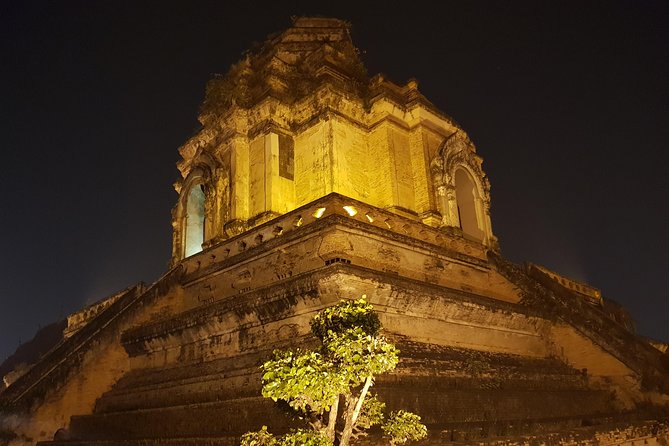
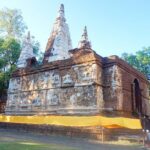
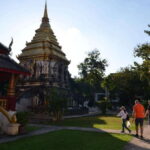
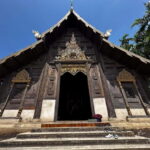
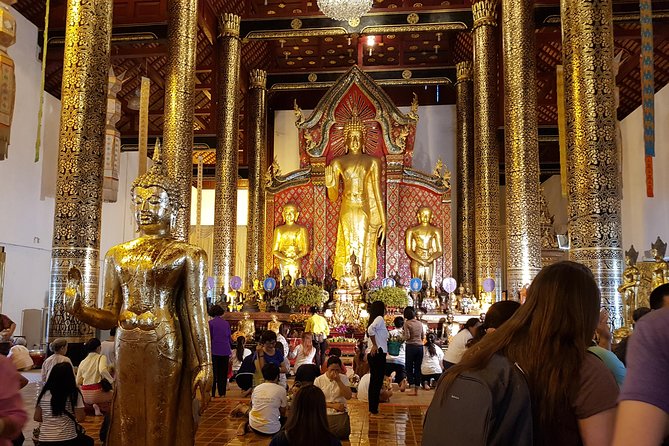
Wat Chedi Luang Varavihara is a center-of-the-old-city kind of place, and that placement changes how you experience it. The temple is described as one of Chiang Mai’s royal temples, so your guide can frame it as more than a pretty building—this is a landmark that carries weight in how the city thinks about power, culture, and tradition.
Expect roughly forty minutes here. That’s a good amount of time to slow down without feeling stuck. You can look closely at the temple’s main features, then step back and understand the “why” behind the design, rather than treating it like a checklist item.
A practical tip: plan for shaded moments and sun breaks. Temples often feel cooler in the interior spaces, but you’ll still spend time outdoors walking between viewpoints. Wear shoes you can trust on uneven surfaces, and you’ll have a much easier time enjoying the details.
Wat Phra Singh: spotting the Pra Buddha Sihing and the meaning behind it
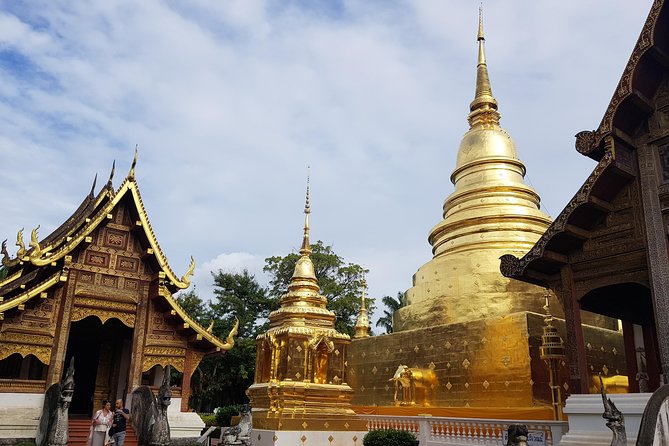
Your next major stop is Wat Phra Singh, also identified as one of the royal temples in the old city. The highlight tied to this temple is the Phra Buddha Sihing, sometimes written as Pra Singh, which is enshrined at the temple. That one detail is a big deal: it gives your visit an anchor. Instead of wandering, you have something specific to understand and notice.
You’ll spend about forty minutes here, which works well because you can observe the main areas, then listen for the explanation of how the site is connected to Chiang Mai’s identity. Even if you’re not religious, a temple like this becomes easier to appreciate when you understand its role as an important ceremonial and cultural location.
The main consideration is that Wat Phra Singh can be busy at certain times. Your guide will help you find the right moments for photos and for listening. It’s one of those stops where timing and crowd flow make a difference to your enjoyment.
Three Kings Monument: the quick cultural connector you can’t skip

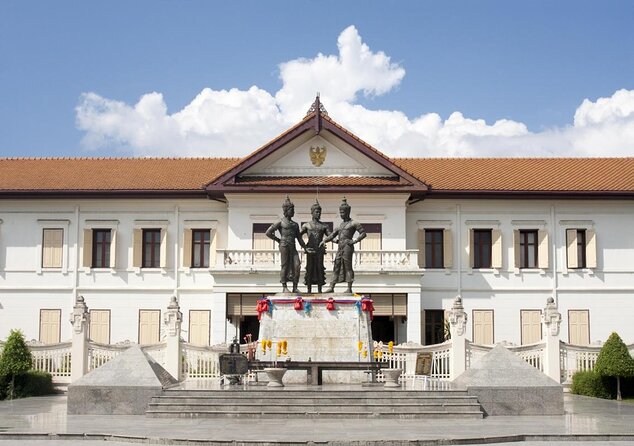
After the temples, you’ll head to the Three Kings Monument, a shorter stop at about twenty minutes. The concept is simple: it connects the city’s founding and legacy through the names of King Mang Rai, King Ramkhamhang, and King NgmMuang.
This stop is valuable because it bridges what you saw in the temples with a broader story of Chiang Mai’s roots. If you only visit religious sites, the city can feel like a collection of beautiful places. A monument like this helps you connect the dots so the old-city layout feels intentional rather than random.
Because it’s a shorter visit, you can also use it as a reset. Take a breath, rehydrate, and adjust your pace for the final market stop. If you’re sensitive to heat, this is the moment to catch shade and slow your breathing before the next phase.
Somphet Market: where the walk turns into real local life
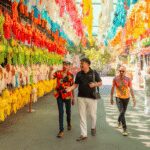
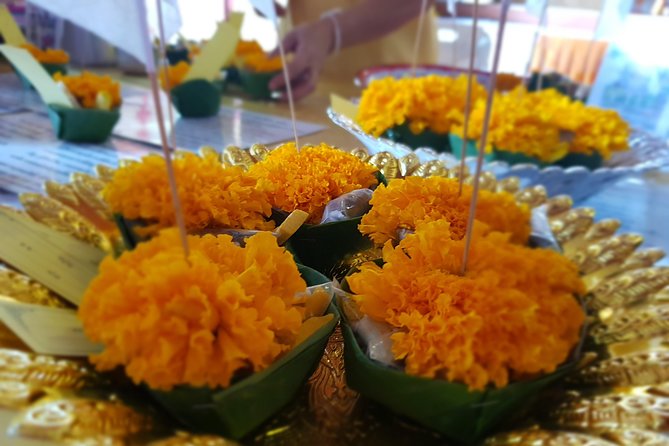
Somphet Market is your “outside-the-temple” experience, with about thirty minutes to browse. It’s described as a fresh market where you can see the lifestyle of local people, and that’s exactly why it works. Temples tell one part of the story. Markets show the daily part.
What I like about including a market in a tour like this is that it changes your pace. You stop looking for architecture and start noticing everyday textures: what people buy, how they package it, and how locals move through the space. Even if you don’t plan to shop, you’ll still learn something by observing.
One practical caution: don’t force a big shopping plan if you’re also planning meals later. Since lunch isn’t included, you’ll want to decide whether the market is for browsing only or for a light snack. Either way, keep some small cash on hand just in case you want to buy something—your guide can help you navigate simple choices during your time there.
You can also read our reviews of more city tours in Chiang Mai

The guide experience: Oat’s storytelling and Lanna’s tailoring
A private walk is only as good as the guide, and the strongest theme here is how the narrative changes the experience. For example, Oat’s storytelling is highlighted as the thing that lifts the tour from seeing places to actually understanding them. That means less guessing, fewer blank moments, and more “oh, that’s why they built it like that.”
Another standout pattern is tailoring. Lanna is described as taking great care of guests and customizing the tour based on what you want to see. Even if this particular walk follows set stops, the guide can still adjust how much time you spend listening versus looking, and what questions you should ask at each place.
This is also where the English-speaking part helps. Chiang Mai is full of signage and temple details that are hard to interpret if you only have basic Thai. With a guide, you can ask follow-ups in real time and build a clearer mental map as you go.
Price and value: what $60.30 really covers
At $60.30 per person for about three hours, the value is strongest when you compare what’s included versus what you’d pay (and organize) on your own. Your tour price includes all fees and taxes, drinking water, and travel insurance. You also get admission tickets included for the temple and monument stops.
What’s not included is just as important: there’s no private transportation, no local taxi, no lunch, and no personal expenses. That means you’re paying mainly for the guide and the included admissions, not for a driver or full day meal plan.
In practice, this works well if you’re already staying nearby or can reach the meeting point easily using public transportation. The tour is near public transportation, which helps you keep costs down and avoid wasting time on logistical detours.
If you’re trying to see the old city efficiently, I think this price makes sense—especially because it’s private. You’re not sharing your guide’s attention with a large group, so your questions and your pacing matter more.
Practical walking tips: shoes, water, and temple pacing
Since this is a walking tour with a moderate physical fitness level, your comfort choices matter. Wear closed-toe shoes with grip. Temple areas often have uneven ground, and you’ll be doing repeated short climbs and descents between stops.
Bring light layers. Even when Chiang Mai weather feels manageable in the morning, you’ll still be outside for chunks of time. The tour includes drinking water, which is a big help, but it won’t replace smart pacing.
Also think about what to do at each stop. At Wat Chedi Luang and Wat Phra Singh, plan to slow down and listen before you move on. At the Three Kings Monument, you can treat it like a short story beat. At Somphet Market, browse with curiosity rather than trying to see everything in one quick sweep.
Finally, remember that the tour starts and ends back at the meeting point. That makes it easier to plan the rest of your day, since you won’t need to figure out a final pickup.
Who should book this Chiang Mai private city walk
This tour fits best if you want a clear, guided route through Chiang Mai’s old city highlights—temples and markets—without needing to translate everything yourself. It’s also a good match if you prefer not to stress about logistics like buying admissions or figuring out what to prioritize.
You’ll probably enjoy it most if:
- You like Thai history and culture and want explanations in English
- You want a guided route you can trust for first-time planning
- You’re traveling as a couple or small group and want private attention
It may feel less ideal if you want a slow, open-ended day with lots of free time at one place. The structure is designed to cover several key stops within about three hours, so you’ll spend less time lingering than you might on a fully flexible self-guided plan.
Should you book this private sightseeing walking tour
If you’re weighing options, I’d book this when your goal is clarity and context in a short window. The combo of royal temple visits, a quick founding-story stop at the Three Kings Monument, and real-life market time at Somphet Market makes the tour feel balanced.
I’d also consider it strongly if you value a guide who can make the details click—like the praised storytelling style of Oat and the tailoring and care described around Lanna. That kind of guidance is what turns old stone and crowded alleys into a coherent understanding of Chiang Mai.
Skip it or swap it for something else if you’re looking for a full-day experience with lunch included, or if walking at a moderate level would be uncomfortable for you. In that case, you may prefer a different format with more breaks and transport.
FAQ
How long is the private walking tour?
The tour is about 3 hours.
What does the price include?
It includes all fees and taxes, drinking water, and travel insurance, plus admission tickets for the listed stops.
Are admission tickets included for the temple and monument stops?
Yes. Admission tickets are included for Wat Chedi Luang Varavihara, Wat Phra Singh, and the Three Kings Monument.
Is this tour private or shared?
It’s private. Only your group will participate.
What stops are included?
You’ll visit Wat Chedi Luang Varavihara, Wat Phra Singh, the Three Kings Monument, and Somphet Market.
Is lunch included?
No. Lunch and personal expenses are not included.
Is free cancellation available?
Yes, you can cancel for a full refund up to 24 hours in advance of the experience start time.