REVIEW · CHIANG MAI
Private Chiang Mai Old City Half Day Tuk Tuk Tour
Book on Viator →Operated by Oh-Hoo · Bookable on Viator
Tuk-tuks make Old City fast and personal. This private half-day tour strings together Chiang Mai’s moat-side streets, major temples, and end-point markets without you doing the slow, sweaty walking shuffle. I like the hotel pickup/drop-off that saves you from playing meeting-point roulette, and I like how you get to cover several big sights in one 4-hour loop.
The main trade-off to think about is that an English-speaking guide is not included. In many cases you’ll still get good help from the driver, but the depth of explanations can vary a lot depending on the person driving, and some departures may include extra shop or craft stops that can feel sales-focused.
In This Review
- Quick take
- Why a private tuk-tuk is a smart move in Chiang Mai Old City
- Price and value: what $37.61 gets you (and what it doesn’t)
- Pickup, timing, and how a “half day” plays out
- Stop 1: Tha Phae Gate and the canal ring
- Stop 2: Wat Chedi Luang Varavihara (the Big Stupa temple)
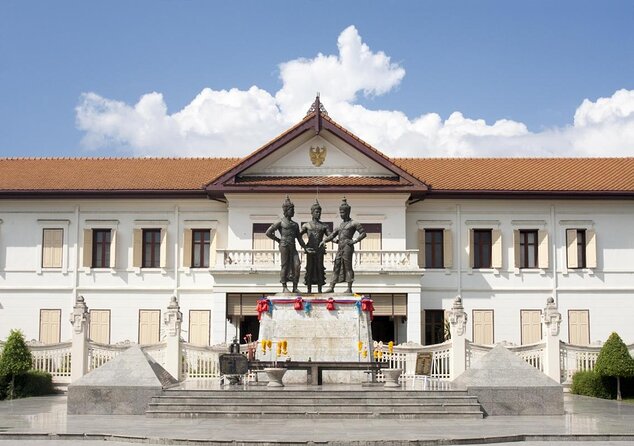
- Stop 3: Three Kings Monument in the old city heart
- Stop 4: Wat Sri Suphan (Silver Temple) and why it hits in the afternoon
- Stop 5: Wat Phra Singh and northern-style chapel beauty
- Stop 6: Muang Mai Market, where browsing feels like part of the culture
- Stop 7: Warorot Market (Kad Luang) and the classic night-bazaar feel
- The part that can make or break your day: shop and craft pressure
- Driver English and information quality: why it varies so much
- Comfort, heat, and air quality in tuk-tuks
- Who this tuk-tuk loop suits best (and who should skip it)
- Should you book the Private Chiang Mai Old City Half Day Tuk Tuk Tour?
- FAQ
- Is hotel pickup and drop-off included?
- How long is the tour?
- Are entrance fees included?
- Is an English-speaking guide included?
- How many people can fit in one tuk-tuk?
- What happens if the tour is canceled due to poor weather?
Quick take
- Hotel pickup within 5 km means you start sightseeing without hunting
- Tuk-tuk hopping keeps you in the action and off your feet
- Temple sequence hits the big names: Chedi Luang, Sri Suphan (Silver Temple), Phra Singh
- Market finish at places like Muang Mai and Warorot (Kad Luang) for snacks and browsing
- Plan for entrance fees (listed as 90 THB) and bring temple-appropriate clothes
Why a private tuk-tuk is a smart move in Chiang Mai Old City
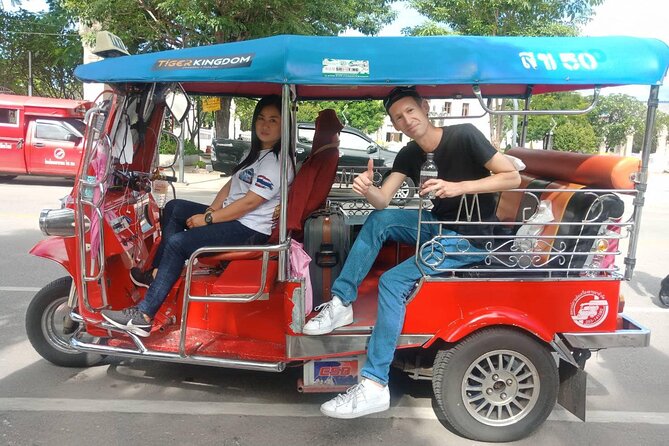
Chiang Mai’s Old City is laid out in a way that rewards short trips and quick turnarounds. You’ll be moving between gates, temple compounds, and the streets where food and shopping cluster. A tuk-tuk is ideal here because it shortens the gaps. Instead of timing your day around long walks, you can treat it like a city “sightseeing relay.”
Also, Old City mornings and afternoons can be hot and dusty. On a tuk-tuk, you can keep going even when the weather swings from cloudy to blazing. One driver even adjusted pacing to help avoid the worst sun, which makes a difference when your itinerary includes several temple stops.
That said, tuk-tuks are open-air. If you have asthma or sensitive lungs, you may want to skip the tuk-tuk and take an air-conditioned taxi for the day. One review pointed out the air quality concern in Chiang Mai, and that’s a real thing to consider.
You can also read our reviews of more city tours in Chiang Mai


Price and value: what $37.61 gets you (and what it doesn’t)
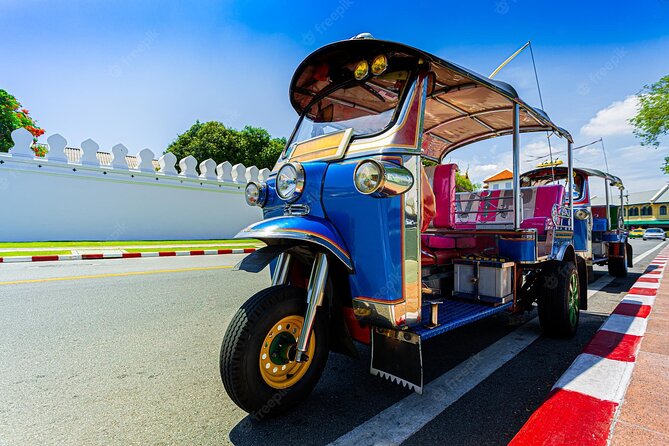
At about $37.61 per group (up to 2 people), you’re paying for a private tuk-tuk ride plus pickup/drop-off within 5 km of the Old City, along with travel accident insurance. Entrance fees are listed separately (90 THB), so the day isn’t “all-in” like some tours with everything packaged.
What makes the price feel fair is the private format. You don’t have to fit into a fixed group schedule, and you can usually steer the order of stops (at least within reason). Multiple reviews praised drivers who were flexible with requests, including skipping certain stops and adding more temple time.
The part to scrutinize is the expectation of a full guide. The tour does not include an English-speaking guide, and the driver’s English can range from excellent to very limited. If you want a deep, continuous narration throughout every temple, you may find you need a guide service separately—or you’ll need to do a bit of reading beforehand so you’re not relying on spoken explanations alone.
Pickup, timing, and how a “half day” plays out
The tour runs about 4 hours. The stops are slotted for roughly 40 minutes each, which keeps the pace from dragging. In real life, it can run closer to 5 hours depending on traffic, photo stops, and how much time you spend at markets.
Pickup is built for convenience: you get hotel pickup and drop-off within 5 km of the Old City. There’s also mobile ticket access, which is handy when you’re bouncing between markets and temples.
Two practical timing tips:
- Start the tour early if you can. Temples and street shade are easier to handle before the afternoon heat ramps up.
- Don’t underestimate getting temples “right.” You’ll want time to enter, adjust clothing, and take a few calm photos—not just pose at the gate.
Stop 1: Tha Phae Gate and the canal ring
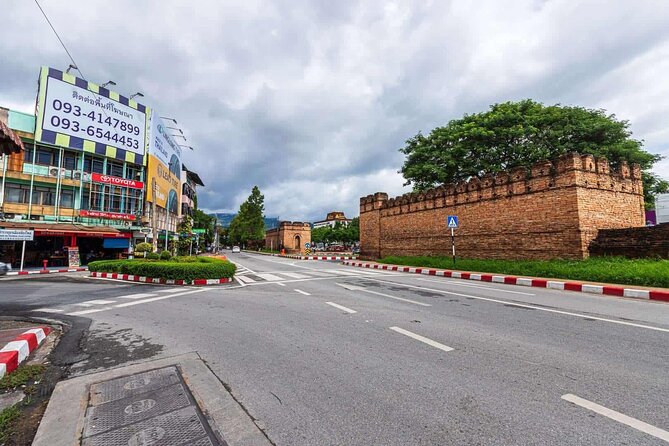
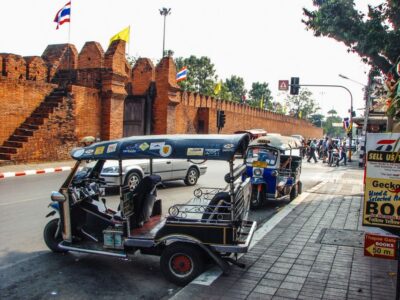
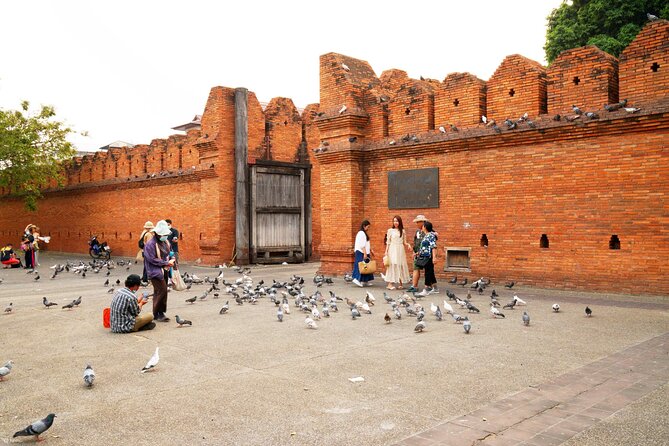
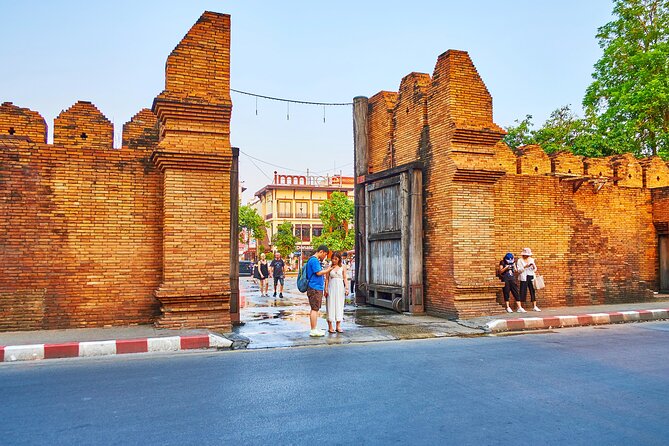
The day often begins at Tha Phae Gate, right by the canal that surrounds the Old City. This is a great first stop because it gives you the city’s shape. Once you understand where the walls and gates are, the rest of the Old City makes more sense—like the streets stop feeling random.
Tha Phae Gate was part of the historic defenses of Chiang Mai. Even if you’re not a history nerd, you’ll still enjoy the atmosphere: people moving through, the sense of a major entry point, and the visual anchor for the day.
Practical note: this is also a good segment for orientation photos—get your bearings, then you can relax into the temple rhythm.
Stop 2: Wat Chedi Luang Varavihara (the Big Stupa temple)
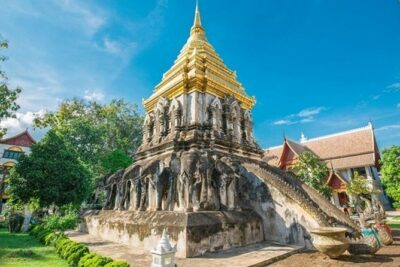
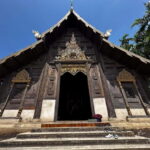
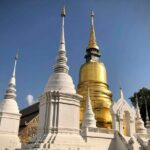
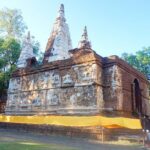
Next up is Wat Chedi Luang Varavihara, often described as the Temple of the Big Stupa. This is one of Chiang Mai’s signature temple sites, and it’s a strong choice early in your route because the main structures give you that “wow, okay, I get why people come here” feeling.
The tour time gives you room to see the temple grounds at a non-rushed pace. Entrance fees may apply here (entrance fees are not included overall), so budget for that.
Temple-visit basics you’ll thank yourself for:
- Dress with shoulders and legs covered.
- Carry something light you can throw on quickly if you’re wearing tank tops or short shorts.
You can also read our reviews of more private tours in Chiang Mai
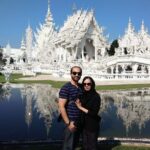





Stop 3: Three Kings Monument in the old city heart
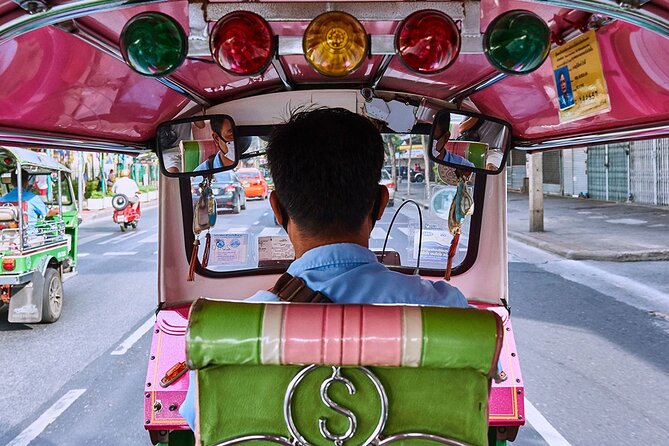
A quick hop brings you to the Three Kings Monument area, an open square near the middle of the walled Old Town. This stop works well because it’s not all “temple walking.” It gives you a breather and a landmark that helps tie the city map together.
If you like architecture, you’ll get enough viewing time to spot details and take photos. If you don’t, it’s still useful as a reference point: you’ll recognize this area later when you’re navigating on your own.
This is also the part of the tour where timing can help. An open-air stop is easier when you’re trying to keep the day smooth.
Stop 4: Wat Sri Suphan (Silver Temple) and why it hits in the afternoon
Then comes Wat Sri Suphan, known as the Silver Temple. The temple’s materials give it a distinct look, and there’s a practical reason people visit in the afternoon: it can look especially bright then.
Inside, you may see modern silversmiths at work using techniques passed down over generations. That’s one of the better contrasts in the itinerary—temple space paired with a living craft tradition, not just another static souvenir shop.
As with other temples, bring covered clothing. Entrance fees aren’t included for this stop.
If you care about details, use your tuk-tuk time to slow down here. It’s one of the stops where a little extra looking pays off.
Stop 5: Wat Phra Singh and northern-style chapel beauty
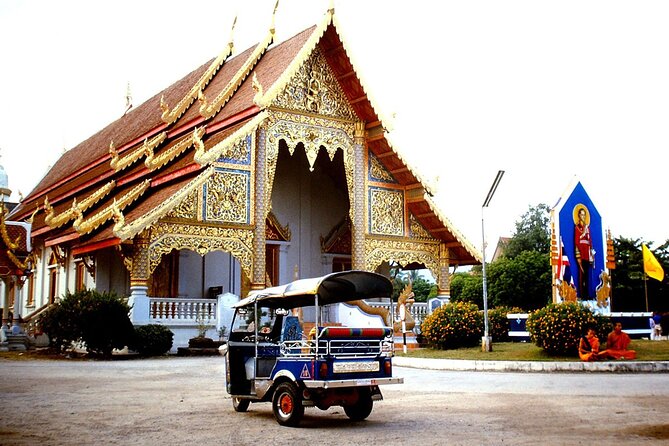
Wat Phra Singh is a highlight for many people because the northern-style architecture in the chapel is visually strong even if you’re not reading every sign. This is where you start seeing how Chiang Mai temple design differs from what you might expect elsewhere in Thailand.
You get about a 40-minute window, which is long enough to enter, walk through key areas, and soak up atmosphere without feeling trapped in a line.
Entrance fees may apply, since entrance fees are listed as not included overall.
If you’re sensitive to crowds, aim for a calm pace. Temple entrances can get busy, but you can usually find quiet corners for photos if you’re not rushing.
Stop 6: Muang Mai Market, where browsing feels like part of the culture
The market portion is one of the best parts of the tour day, especially if you like snacks, produce, and everyday life instead of only staged tourist stops.
Muang Mai Market is known for variety—fruit, vegetables, and lots of everyday goods. One nice thing about having the tuk-tuk earlier is that your legs aren’t tired by the time you reach the stalls. You can actually browse instead of just power-walking to the next photo.
Practical buying advice:
- If you want souvenirs, compare prices fast and don’t grab the first item you like.
- If you’re unsure about quality, stick to small, easy-to-check purchases and leave big-ticket buys for later.
Stop 7: Warorot Market (Kad Luang) and the classic night-bazaar feel
The finale often includes Warorot Market (Kad Luang). This is a strong end cap because the atmosphere is lively and the selection is wide.
You’ll likely feel the difference between market browsing and market shopping. Market browsing is about textures and smells and quick conversations. Market shopping is when you decide what you want and then negotiate politely.
One review highlighted that the market was the tour highlight. That tracks with what this ending is good for: you finish with something Thailand-specific that you can do at your own speed.
Entrance/ticket rules may apply here, but this stop is listed with admission ticket included.
The part that can make or break your day: shop and craft pressure
Here’s the big “read this before you book” section.
Even though the core idea is temples plus Old City sights, some versions of the experience may include visits to craft or shopping-focused stops—silk, silver, jewelry, and similar outlets. Multiple reviews called out pressure to buy and felt that these stops weren’t clearly matched to what they expected from a sightseeing tour.
Sometimes the driver also tries to run the schedule faster to make time for those sales stops. That’s where the day can feel like you’re in transport mode more than sightseeing mode.
How to protect yourself (and still enjoy the tour):
- Tell the driver at the start you want more temple time and less factory or showroom time.
- Repeat your priorities before the first shopping stop appears, not after.
- If you see a sales-heavy location coming, ask to switch directly to a market segment or an additional temple stop.
Some drivers were clearly willing to honor requests, including skipping tourist-trap stops. Others had limited English and couldn’t explain options well. Your best defense is setting expectations early and communicating clearly.
Driver English and information quality: why it varies so much
This tour doesn’t include an English-speaking guide. So the “how much you learn” factor depends on the driver.
In great cases, you’ll get solid help from the person driving. Reviews mention drivers like Alan and Mr D, who offered enough English to make the day feel guided and smooth. In those situations, you’ll still get practical context like what you’re looking at, why the gate matters, and how to read the Old City layout.
But in weaker cases, you might get limited English or only basic direction using a card. If that happens, the tour can become more like a taxi service with drop-offs rather than a guided experience.
A smart move: do a tiny bit of prep before your tour. Read quick notes about Chedi Luang, Phra Singh, and Sri Suphan so you recognize the big visual features even if explanations are minimal.
Comfort, heat, and air quality in tuk-tuks
Tuk-tuks are fun. They’re also not climate-controlled.
If you’re arriving from a cooler place or you’re used to air-conditioned tours, you may feel the difference. One review suggested switching to a taxi if you have asthma or lung issues due to air quality. Also, the afternoon sun can be intense, so you’ll do better if you’re okay with a slower pace and a bit more shade-hunting.
Good news: drivers can sometimes adapt. Reviews included examples of a driver pacing the day to avoid peak sun.
My advice: wear breathable clothes, bring water, and plan for quick breaks rather than expecting the tour to feel effortless in July-style heat.
Who this tuk-tuk loop suits best (and who should skip it)
This is a great fit if:
- You’re on your first day in Chiang Mai and you want an efficient orientation to the Old City.
- You’d rather reduce walking between temples and gateways.
- You want a flexible private ride and you’re okay with the driver doing varying levels of explaining.
- You like markets and want a strong end to your route.
You might want a different option if:
- You specifically want an English guide who explains every temple in detail.
- You strongly dislike shopping pressure or any craft/outlet detours.
- You have health concerns related to air quality and you’re not comfortable in open tuk-tuks.
Should you book the Private Chiang Mai Old City Half Day Tuk Tuk Tour?
If your goal is to get your bearings fast, hit the major temple stops, and finish at the markets with minimal walking, this tour can be good value. The private format, hotel pickup, and tuk-tuk mobility make it a strong “first-day” move.
Before booking, I’d do two things:
- Decide in advance what you want more of: temples, gates, markets, or shopping. Then tell the driver right away.
- If you want deeper English explanations, be realistic about the fact that an English-speaking guide is not included. A driver with solid English (like the examples of Alan or Mr D) makes the day feel much more worthwhile.
Book it if you want a flexible half-day ride that helps you see the Old City quickly. Skip it or choose something else if shopping pressure would ruin your day.
FAQ
Is hotel pickup and drop-off included?
Yes. Pickup and drop-off are included within a 5 km radius of Chiang Mai Old City.
How long is the tour?
It’s listed as about 4 hours.
Are entrance fees included?
No. Entrance fees are listed as 90 THB and are not included.
Is an English-speaking guide included?
No. An English speaking guide is listed as not included.
How many people can fit in one tuk-tuk?
The tour notes 2 adventurers per tuk-tuk, with the possibility of fitting a third person if they are under around 12, depending on size.
What happens if the tour is canceled due to poor weather?
If weather causes cancellation, you’ll be offered a different date or a full refund.