REVIEW · CHIANG MAI
Chiang Mai: 3 Hour Old City and Temples Guided Walking Tour
Book on GetYourGuide →Operated by TripGuru Thailand · Bookable on GetYourGuide
Temple footsteps in old Chiang Mai. This short guided walk helps you read the city’s past on the ground, with stops that mix big royal-era landmarks and fine everyday craftsmanship. I love the contrast between Wat Chedi Luang and the teak-carved Wat Phan Tao, and I also love how the English-speaking guide links Buddhism and local beliefs to what you’re seeing (guides like Nana, Boon, and TomTam tend to hit that balance well). The main thing to plan for is the dress code: shoulders and knees need covering, and the walking can feel warm even when the air seems mild.
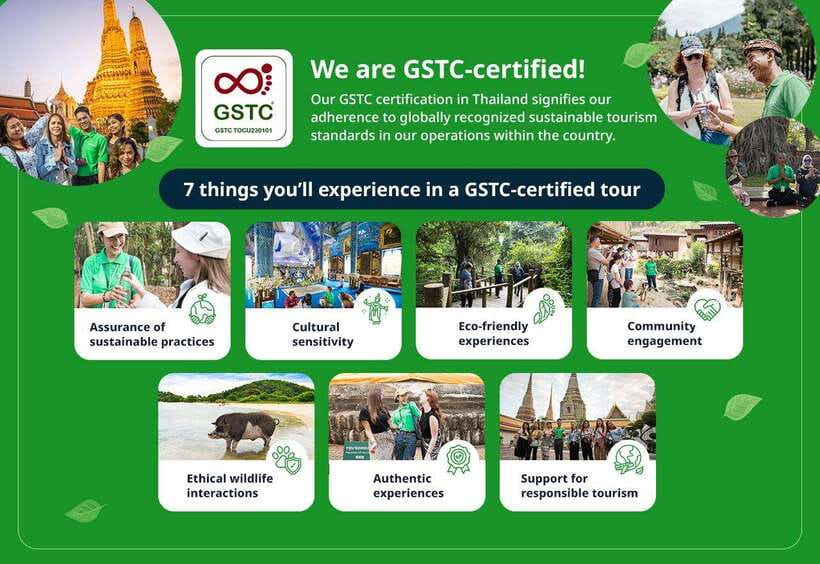
The route is built for efficient sightseeing in about 3 hours, starting at Wat Chedi Luang and ending at Wat Phra Singh Woramahawihan, with time to look closely rather than just speed-past photos. You’ll also get a more responsible approach through GSTC-certified practices and carbon-offset efforts tied to the tour. If you’re sensitive to heat, or you dislike shoe-off rules at temples, bring your patience as well as your camera.
In This Review
- Key Takeaways Before You Walk
- Getting Oriented: Old City Temples on Foot
- Wat Chedi Luang: Chiang Mai’s Largest Stupa First
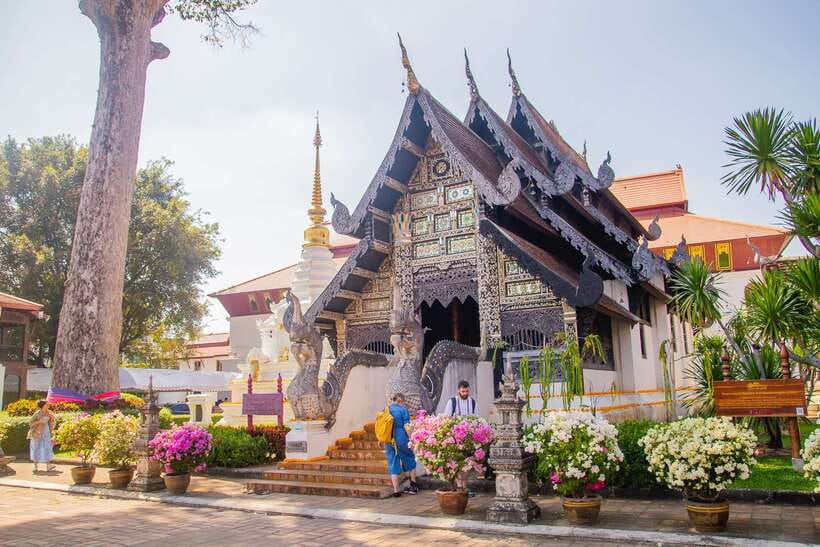
- Wat Phan Tao: Teak Wood Carving That Punches Above Its Size
- Wat Phan Lao: A Humble Pause for Context
- Wat Phra Singh: Mosaic Sanctuary, Lion Buddha, and Gold
- The Guide Factor: Why Explanations Change Everything
- Price and Value: What $16 Buys in Chiang Mai
- Timing and Pacing: A 3-Hour Walk That Doesn’t Fry Your Day
- What to Wear and Bring: Shoes Off, Shoulders Covered
- Who Should Book This Temple Walk
- Should You Book This Chiang Mai Old City Temple Tour?
- FAQ
- How long is the Chiang Mai Old City and Temples guided walking tour?
- Where does the tour start, and how do I find the guide?
- How much does the tour cost?
- Are entrance fees included for the temples?
- What’s included in the tour?
- What should I bring?
- Is the tour suitable for everyone?
- What’s the cancellation policy?
Key Takeaways Before You Walk
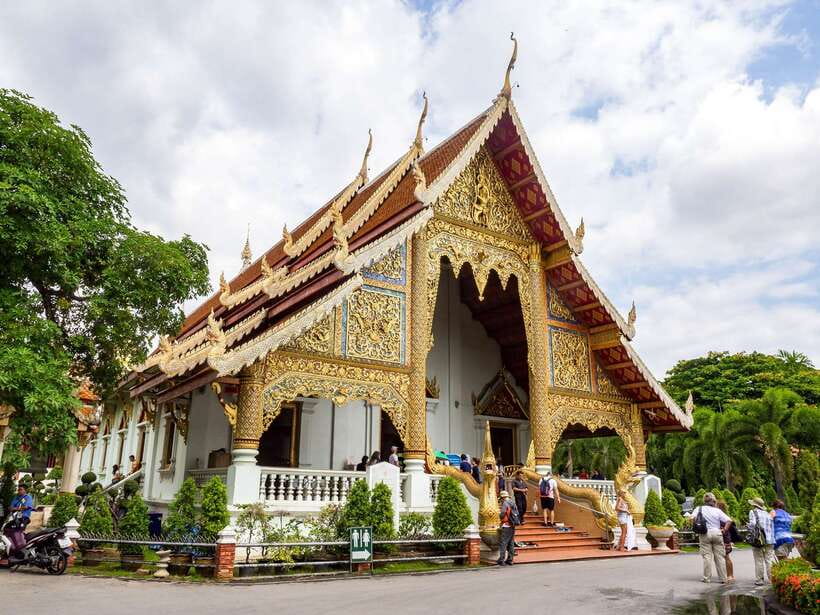
- Wat Chedi Luang sets the tone with Chiang Mai’s largest stupa and Lanna-style details you’ll notice more with a guide.
- Wat Phan Tao is all about precision: small in size, huge in teak wood carvings.
- Wat Phra Singh is the showstopper for mosaic-inlaid sanctuary, gilded pagodas, and a big Lion Buddha statue.
- The guide makes Buddhism make sense through clear explanations and cultural context, not just temple facts.
- You’re walking, not sprinting in a loop that’s short enough to fit early or mid-day plans.
- Responsible travel is part of the package with GSTC-aligned practices and carbon offsets.
Getting Oriented: Old City Temples on Foot
Chiang Mai’s old city has a way of rewarding slow looking. This tour is designed for exactly that: you’re on foot long enough to notice architectural differences, but the time is short enough to keep your energy for photos and respectful temple time.
You start at the entrance of Wat Chedi Luang and meet your guide holding a TripGuru sign. Plan to arrive about 10 minutes early so you’re not rushing in when the group gathers. The tour is in English, and you’ll move at a moderate pace—comfortable for a typical walking day, but not ideal if stairs and uneven temple paths are an issue.
This is also one of those experiences where the “story” matters as much as the “sight.” If you’ve visited temples on your own before, you’ll probably appreciate the difference here: the guide helps you connect design details to the beliefs behind them, so the buildings feel less random and more intentional.
You can also read our reviews of more walking tours in Chiang Mai

Wat Chedi Luang: Chiang Mai’s Largest Stupa First
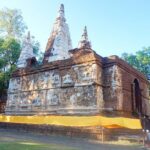
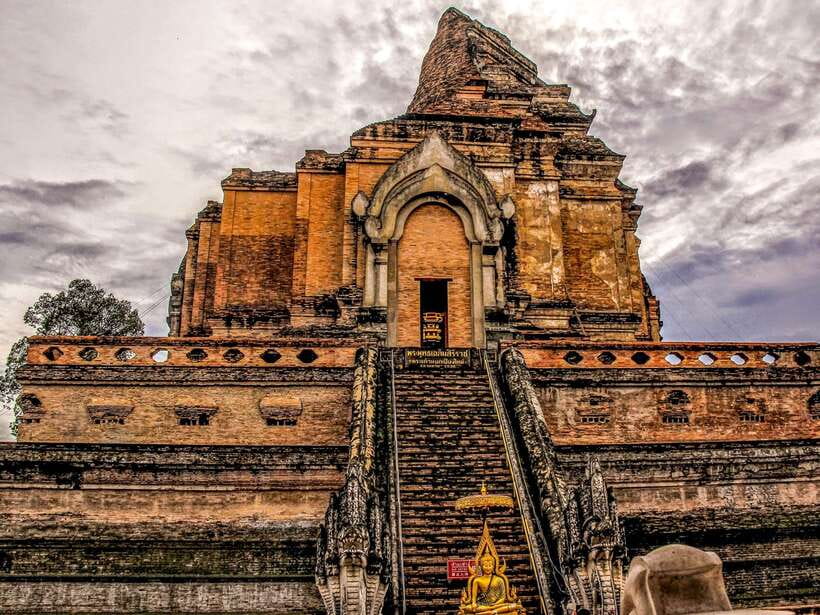
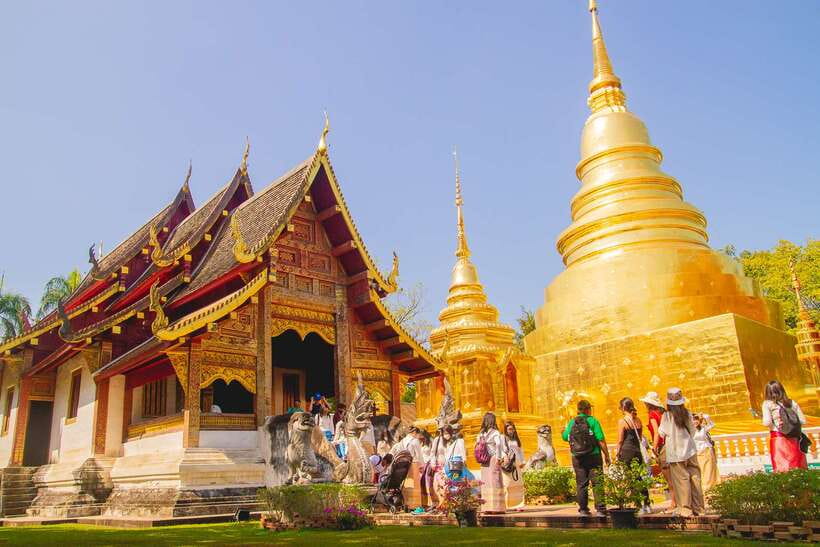
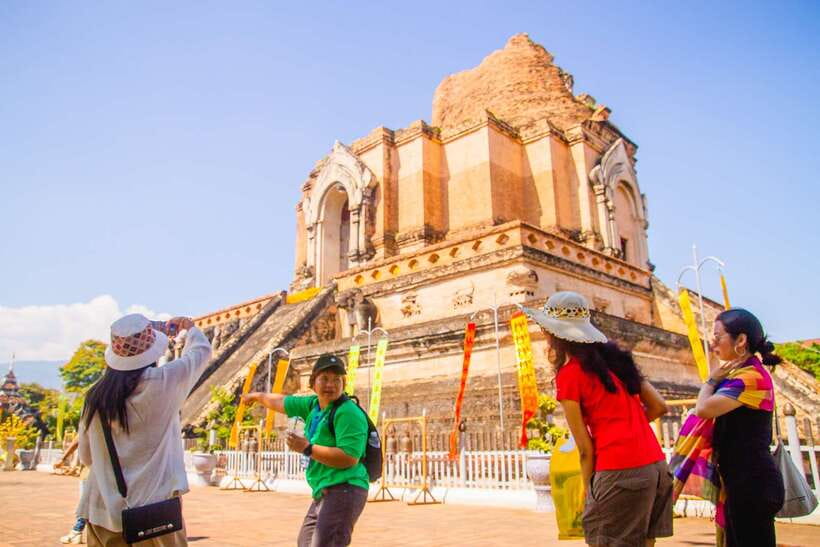
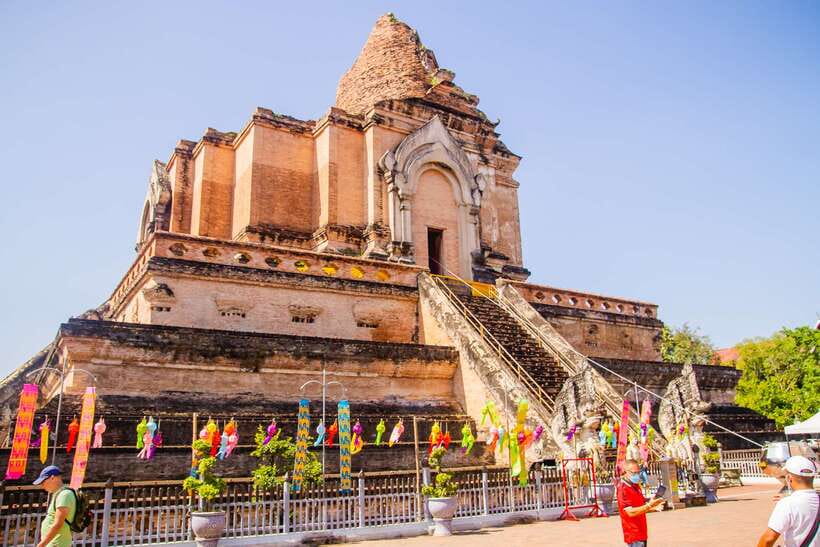
Your first big moment is Wat Chedi Luang, a temple built between the 14th and 15th centuries. The highlight is the huge stupa—described as the largest stupa in Chiang Mai—which immediately gives you a sense of the temple’s importance.
What I like about starting here is the scale lesson. It’s easy to see “a large temple” anywhere, but Wat Chedi Luang teaches you what “Lanna-style” design looks like in real space. Up close, you can spot carved and patterned elements across the compound. On your own, you might drift toward the main stupa and call it done. With a guide, you’re pushed to look around the edges too, where the details live.
Practical note: Wat Chedi Luang’s entrance fee is not included (50 THB), so if you want to avoid awkward delays mid-walk, keep cash ready. Also expect the temple environment to require a bit of calm: you’ll be asked to dress respectfully and follow the usual temple etiquette.
Wat Phan Tao: Teak Wood Carving That Punches Above Its Size
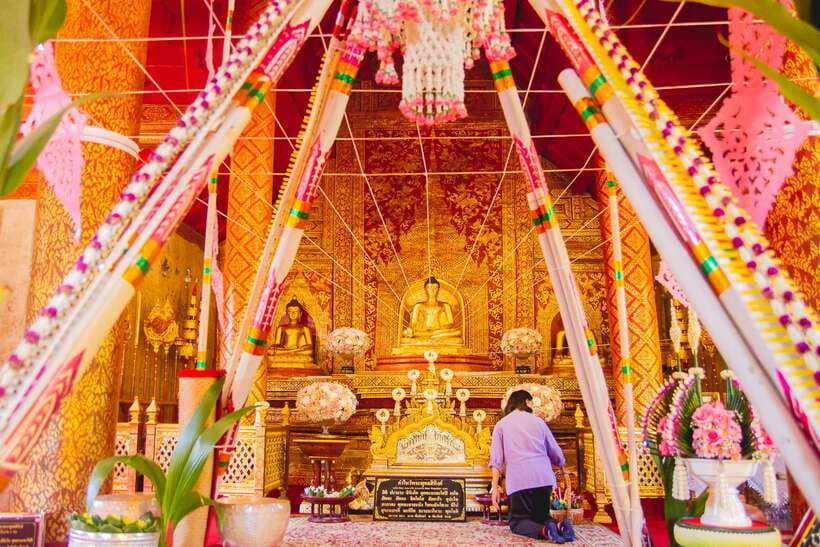
After the larger feel of Wat Chedi Luang, Wat Phan Tao can look modest at first glance. That’s the trap. This is the kind of temple where small turns out to mean “more intricate.”
The key feature is the carved teak wood facades. The woodwork is detailed enough that you’ll likely spend extra time looking at patterns, not just structures. This is also where the story adds texture: Wat Phan Tao was once a throne hall for King Mahotara Prateth, before it became a dedicated house of prayer. That history matters because you can feel the blend of royal space and religious function in the way the building was used.
This stop also helps you slow down. If you’re doing Chiang Mai temples as a checklist, you’ll miss the point. If you’re willing to stare at wood for a few minutes, you’ll come away with at least one specific design feature you can remember later.
Like the other temples on the route, entrance fees may apply here too (Wat Phan Tao is 20 THB, not included). Carrying a small amount of cash makes the experience smoother.
Wat Phan Lao: A Humble Pause for Context
Your route also includes Wat Phan Lao, described as a humble stop compared to the nearby bigger temples. That change of scale is useful. The old city can otherwise feel like it’s shouting at you nonstop: big roofs, big walls, big statues. A smaller temple works like a palate cleanser, giving you time to absorb the quieter rhythm of a prayer space.
Even when the tour time is tight, a smaller site gives you something bigger trips don’t: a chance to notice how people behave in a working religious environment, not just as sightseeing consumers. You’ll likely get a short, focused explanation of its place in the broader temple world around it.
In other words, Wat Phan Lao is where you learn to look less for fireworks and more for meaning.
Wat Phra Singh: Mosaic Sanctuary, Lion Buddha, and Gold
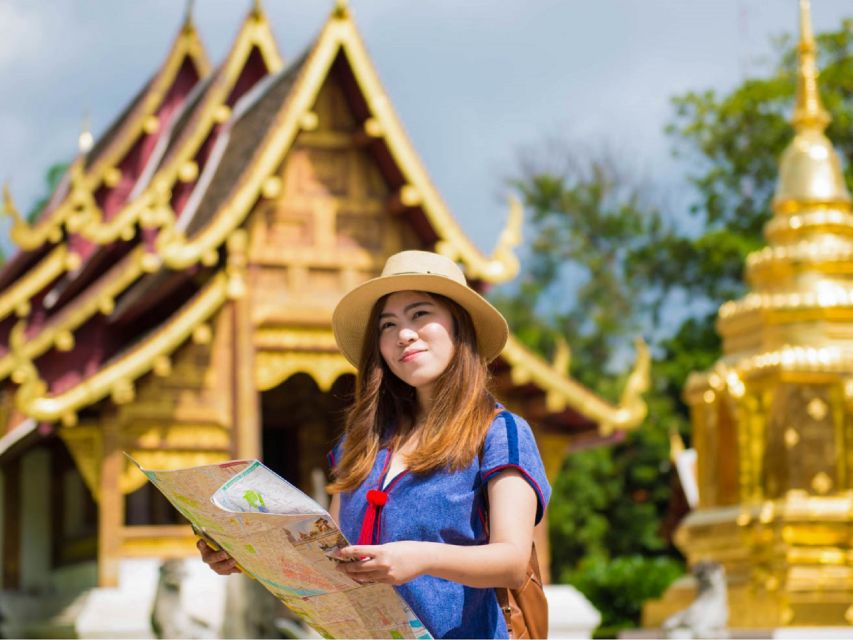
The final main highlight is Wat Phra Singh, one of Chiang Mai’s finest temples, built in the 14th century. If Wat Chedi Luang teaches you scale and Wat Phan Tao teaches you craft, Wat Phra Singh is where the whole experience turns cinematic.
Here’s what you can expect to see:
- mosaic-decorated sanctuary (the kind of surface that turns photos into a “why does this look better than my camera” moment)
- a large Lion Buddha statue
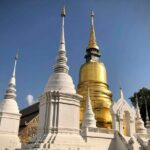
- gilded pagodas and impressive grounds
- plenty of photo opportunities around almost every bend
This stop is often the one people remember first, but it’s also where the guide’s explanations really pay off. If you understand the religious purpose of the space, you stop treating it like a backdrop. You start treating it like a place with rules, reverence, and symbolism.
Your tour ends at Wat Phra Singh Woramahawihan, which is part of the same wider temple area. Entrance fees apply at Wat Pha Singh (50 THB, not included), so again, plan for cash.
You can also read our reviews of more guided tours in Chiang Mai





The Guide Factor: Why Explanations Change Everything
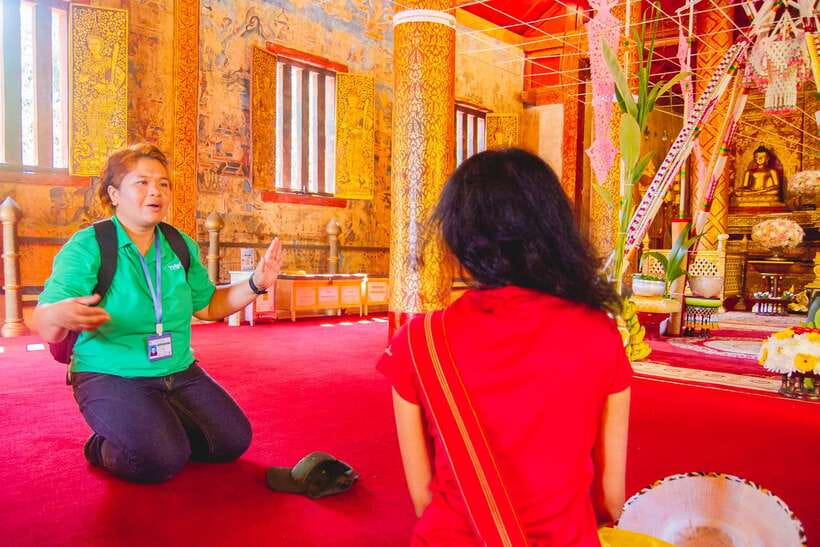
This is one of those tours where the guide is the difference between seeing temples and understanding them.
In the guide style you’ll encounter, the best moments tend to come when your guide connects what you’re looking at to broader Thai beliefs and Buddhism. Multiple guides on similar tours have explained things clearly enough that it sticks beyond the walk—Dana’s experience highlights learning about Buddhism and Thai beliefs, while Boon and Popkorn are examples of guides who also add meditation or personal reflections tied to temple life.
A few practical benefits you get from a strong guide:
- You avoid “random photo shooting” and instead know what details are worth your attention.
- You learn what the design elements mean, not just what they are called.
- You get quick cultural context that helps you stay respectful without overthinking it.
If you’re the type who likes asking questions, this tour generally rewards that. You’ll see that in how guides respond, not just in the scripted explanations.
Price and Value: What $16 Buys in Chiang Mai
At $16 per person for about 3 hours, this is priced like a smart sampler: you’re paying for an English-speaking guide plus a focused walking route through major old-city temples.
The key value isn’t only the guide—it’s the efficiency. Without a guide, you can visit temples on your own, but you might spend extra time figuring out what to look for, and you may miss the context that makes details feel relevant. Here, you get a structured route that keeps you moving through the most important sites without turning the experience into a stampede.
One catch: entrance fees are separate. Wat Chedi Luang is 50 THB, Wat Phan Tao is 20 THB, and Wat Pha Singh is 50 THB. Your total cost will depend on those fees and any small purchases you make, so it’s worth budgeting for them. Still, even with entrance fees, the guide + time efficiency tends to keep the overall deal strong.
Also, the tour includes responsible travel elements like carbon offsetting per tour. If you care about tourism’s footprint, that’s not a small detail. It’s baked into the experience rather than tacked on later.
Timing and Pacing: A 3-Hour Walk That Doesn’t Fry Your Day
The tour is about 3 hours long, which is an underrated sweet spot in Chiang Mai. It’s long enough to see the big names—Wat Chedi Luang, Wat Phan Tao, Wat Phan Lao, and Wat Phra Singh—yet short enough that you don’t have to rearrange your whole day.
Still, pacing matters. Even in cooler months, Chiang Mai can feel warm, and temple compounds often have bright sun with limited shade. The most practical advice from real-world experience is simple: bring water and dress for heat. One review specifically called out that it can be warm even in February in the shade. In practice, that means you should treat comfort gear as part of your planning, not an afterthought.
Expect periods where you pause and remove shoes, then walk again. It’s not nonstop, so you get small breathing breaks, but you should still be ready for the rhythm.
What to Wear and Bring: Shoes Off, Shoulders Covered
This tour has a clear dress code rule: clothes revealing shoulders, underarm, back, or knees are not permitted at some sights. That means you should plan outfits with full respect in mind—especially if you’re traveling in shorts and tank tops.
Bring a scarf if you’re the kind of person who plans on staying flexible. Sunglasses and sunscreen are also smart because temple courtyards can catch the sun. Add insect repellent too; you’re outside, walking, and stopping in open areas.
Shoes are a big practical point. Temple etiquette typically includes removing footwear, and many people find it easiest if you wear slip-on sandals or shoes that come off quickly. Socks can help if you expect bare floors to feel cool or if you’re sensitive to comfort. Keep this simple: your goal is to do the shoe routine without turning it into a five-minute negotiation with your laces.
Who Should Book This Temple Walk
This experience fits best if you want:
- a focused old-city introduction that hits the top temples in a short time
- an English guide who can explain Buddhism and Thai cultural context
- a walking plan that feels like a guided “orientation,” not a rushed bus tour
- a respectful, lower-impact way to see major sites
It’s not suitable for pregnant women, people with mobility impairments, or anyone with heart problems or respiratory issues. The walking is described as moderate fitness, which also means heat + temple steps can add up.
If you’re traveling solo, as a couple, or with a small group, it’s also a good choice because you can ask questions and get quick answers from the guide rather than being stuck watching only for group-control moments.
Should You Book This Chiang Mai Old City Temple Tour?
Book it if you want your Chiang Mai temples to make sense. This tour’s value comes from the combination: major sites you can recognize fast, plus explanations that help you understand what you’re seeing. The $16 price feels fair for a guided route that packs in the essentials without dragging into a full day.
Skip or rethink it if you can’t handle the dress code constraints or you know you’ll struggle with repeated shoe-off moments and outdoor walking. Also, if you’re hoping for a super-long stay at one temple for deep wandering, this may feel a bit tight—3 hours is designed to cover several sites, not one in detail.
If your goal is to get your bearings quickly and see the best of the old city with context, this is a strong pick.
FAQ
How long is the Chiang Mai Old City and Temples guided walking tour?
The tour lasts 3 hours.
Where does the tour start, and how do I find the guide?
You meet at the entrance of Wat Chedi Luang. The guide will be holding a TripGuru sign, and you should arrive about 10 minutes before pickup time.
How much does the tour cost?
The price is $16 per person.
Are entrance fees included for the temples?
No. Entrance fees are not included: Wat Chedi Luang is 50 THB, Wat Phan Tao is 20 THB, and Wat Pha Singh is 50 THB.
What’s included in the tour?
Included are a local guide and the walking tour.
What should I bring?
Bring comfortable shoes, sunglasses, a hat, a camera, sunscreen, insect repellent, cash, and a scarf.
Is the tour suitable for everyone?
It’s not suitable for pregnant women, people with mobility impairments, people with heart problems, or people with respiratory issues. Moderate fitness levels are recommended.
What’s the cancellation policy?
You can cancel up to 24 hours in advance for a full refund.