REVIEW · CHIANG MAI
Chiang Mai: Historical and Culture Exploration Walking Tour
Book on GetYourGuide →Operated by Discova Thailand · Bookable on GetYourGuide
Chiang Mai’s old city rewards slow steps. This walking tour maps the spiritual roots of the Lanna Kingdom right onto the streets, starting at the Three Kings Monument and moving temple to temple with a guide who explains what you’re actually looking at.
I especially like how the route hits two of Chiang Mai’s most important stops without turning it into a rushed checklist. Wat Phra Singh shines for its northern Thai-style murals and detailed woodcarving, and Wat Chedi Luang gives you that rare mix of old ruins plus a look inside at the Buddha.
One thing to plan for: this is a walking tour and it’s not set up for wheelchair users. You’ll also need to dress correctly for temples, since shorts and short skirts aren’t allowed.
In This Review
- Key things to know before you go
- Entering Chiang Mai’s old city at Three Kings Monument
- Wat Phra Singh: northern Thai style you can spot in minutes
- Wat Chedi Luang: ruins, a chedi scale-up, and a Buddha inside
- What the guide actually adds (and why small groups matter)
- Timing, walking pace, and what to wear in the old town
- Tickets, water, and the real meaning of value at $15
- Who this tour suits best (and who should consider another plan)
- Should you book this Chiang Mai old city walking tour?
- FAQ
- Where is the meeting point for the tour?
- How long is the guided tour?
- Which temples and sites are included?
- What’s included in the $15 price?
- Do I need hotel pickup or drop-off?
- Is the tour suitable for wheelchair users?
Key things to know before you go
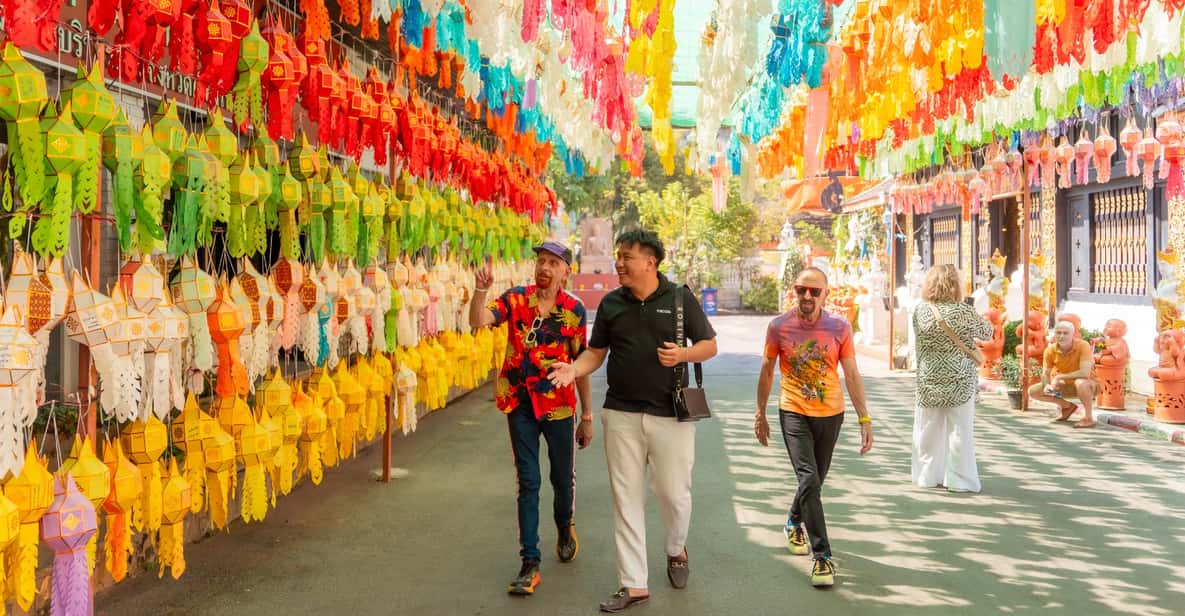
- Three Kings Monument as your history starting point: learn about King Mangrai and the founding story that shaped Chiang Mai’s old town.
- Wat Phra Singh’s northern Thai details: expect time to see the Lai Kam Assembly Hall area and distinctive temple artwork.
- Wat Chedi Luang’s 600-year-old ruins: you’ll get a guided look at the chedi complex and what remains.
- A chance to listen to monks: you may hear talks during your visit, which makes the temple experience feel more lived-in.
- Small group pace: limited to 8 participants, so questions stay easy (and the stops feel human-sized).
- Practical inclusions: English-speaking guide, entrance tickets, water, and tour insurance are included in the price.
Entering Chiang Mai’s old city at Three Kings Monument
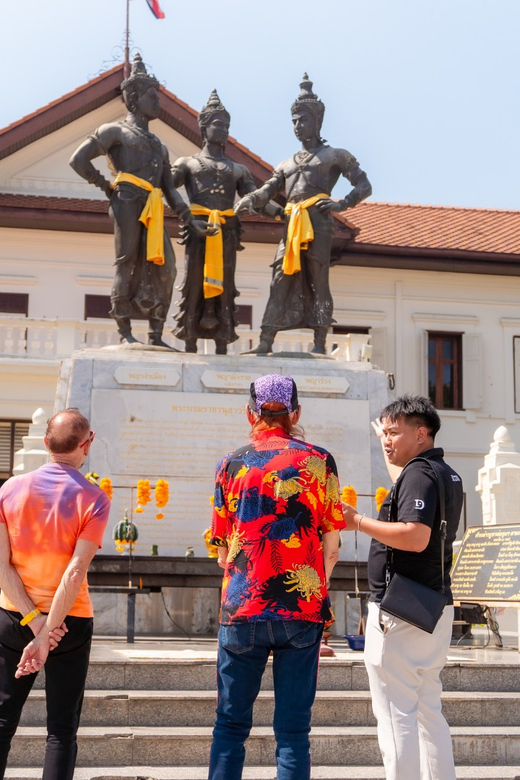
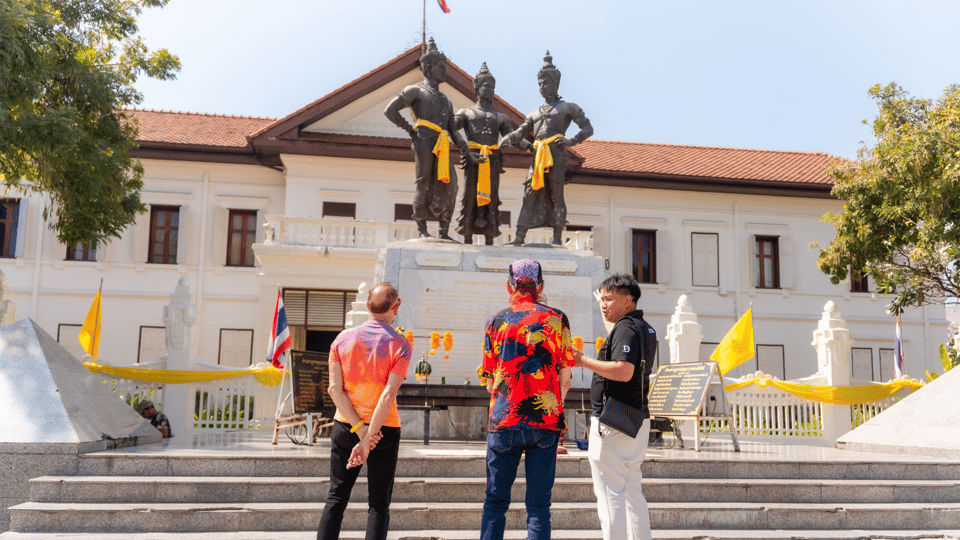
If you’re short on time in Chiang Mai, it’s smart to start where the city’s story is pinned down. The tour begins at the Three Kings Monument, right in the heart of the old town, so you get orientation before you’re surrounded by temple roofs and gates.
Your guide gives a quick safety rundown, then sets the historical stage. You’ll hear about King Mangrai, founder of the Lanna Kingdom and the person tied to the founding of Chiang Mai. The monument isn’t just a photo stop. It’s a way to understand why the old city is arranged the way it is, and why so many everyday traditions in northern Thailand still trace back to those roots.
From here, the walk is paced for actual sightseeing. You’re not sprinting between locations; you’re moving at a comfortable city-stroll tempo so you can look up at architecture, notice shapes and materials, and follow along with the explanations.
Tip: wear shoes you can walk in for a few short segments on uneven surfaces. Chiang Mai’s sidewalks can be fine, but temple grounds and entrances often mean small steps and ramps.
You can also read our reviews of more walking tours in Chiang Mai

Wat Phra Singh: northern Thai style you can spot in minutes
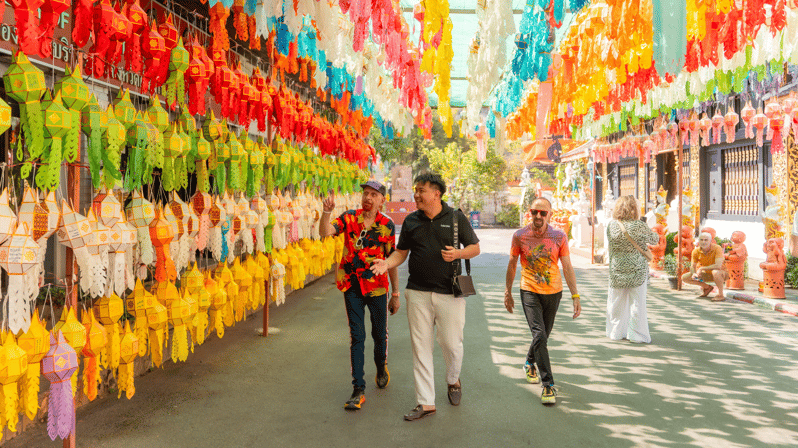
Your first major temple stop is Wat Phra Singh, one of Chiang Mai’s most revered sites. This is where the tour earns its keep: you don’t just get a look at a big temple. You learn what makes it distinct.
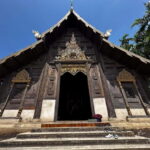
You’ll have time for a guided visit that focuses on recognizable visual features. The temple is known for intricate woodcarvings and northern Thai-style murals. Those are the kinds of details that are easy to miss if you’re wandering alone, because you might not know what parts to focus on. With a guide, you get direction: where to look, what the style refers to, and how the temple’s design connects to local religious life.
The tour also points you toward the Lai Kam Assembly Hall area and the pagoda. In particular, you’ll hear the symbolism tied to the pagoda—there’s a reference to the Year of the Dragon, associated with people born under that zodiac sign. Even if you’re not tracking astrology, it’s useful context for understanding how religion, identity, and community can overlap in northern Thailand.
Time-wise, this stop is built in with both walking and a dedicated visit. Expect about 40 minutes of guided time at Wat Phra Singh, which is long enough to actually see things instead of glancing and moving on.
Small practical heads-up: temple rules matter here. You’ll want clothes that keep you covered at the right places. Shorts and short skirts aren’t allowed, so plan light, comfortable long pants or something similarly temple-appropriate.
Wat Chedi Luang: ruins, a chedi scale-up, and a Buddha inside
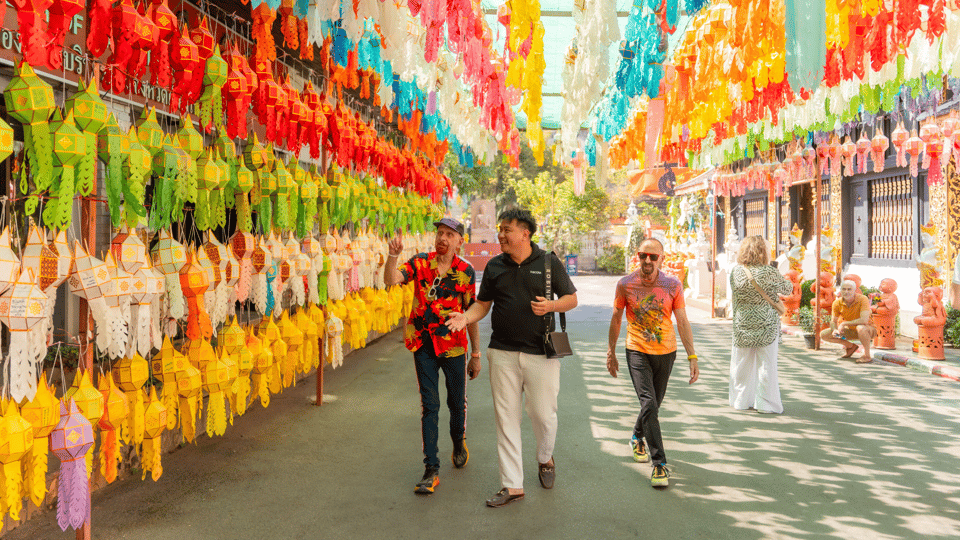
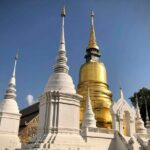
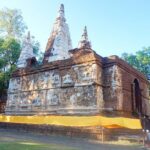
Next comes Wat Chedi Luang, a site with serious age and a layout that’s easy to get impressed by. This is the stop that often sticks with people because it blends history with visible scale.
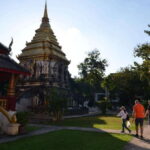
The chedi complex dates back roughly 600 years, and the tour frames it within the story of the Lanna Kingdom and earlier rulers. You’ll have time to walk in and then spend about 45 minutes exploring the temple grounds with your guide.
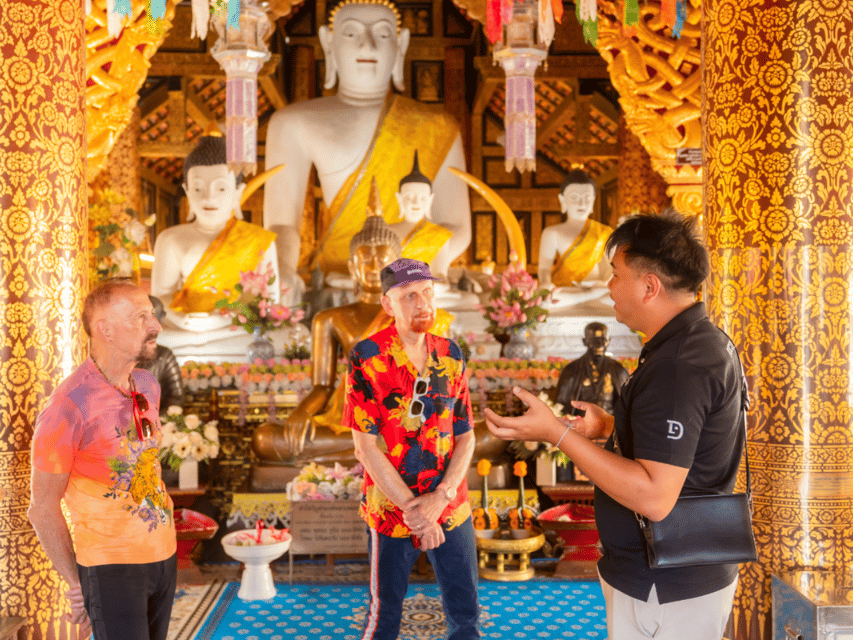
The main draw is the chedi itself—its scale and ruined sections make it feel like a living monument to time passing. You’ll also get a chance to view the Buddha inside, which is where the experience becomes more than architecture. It turns from outer walls into a more devotional space.
If you’re the type who likes understanding why a place feels the way it does, this is the stop. Temples in Chiang Mai often aren’t meant to be “viewed” like museums. They’re working spaces. The guide helps you see the difference, and that can change how you remember the experience.
One of the nicest moments is the possibility of monk talks during the visit. You might not get a long lecture every day, but even short explanations can make the rituals feel less like random performance and more like daily spiritual practice.
Photo advice: don’t treat Wat Chedi Luang like one giant selfie session. Take a couple of wider shots first (to capture the chedi scale), then slow down for the interior view and the details your guide points out.
What the guide actually adds (and why small groups matter)
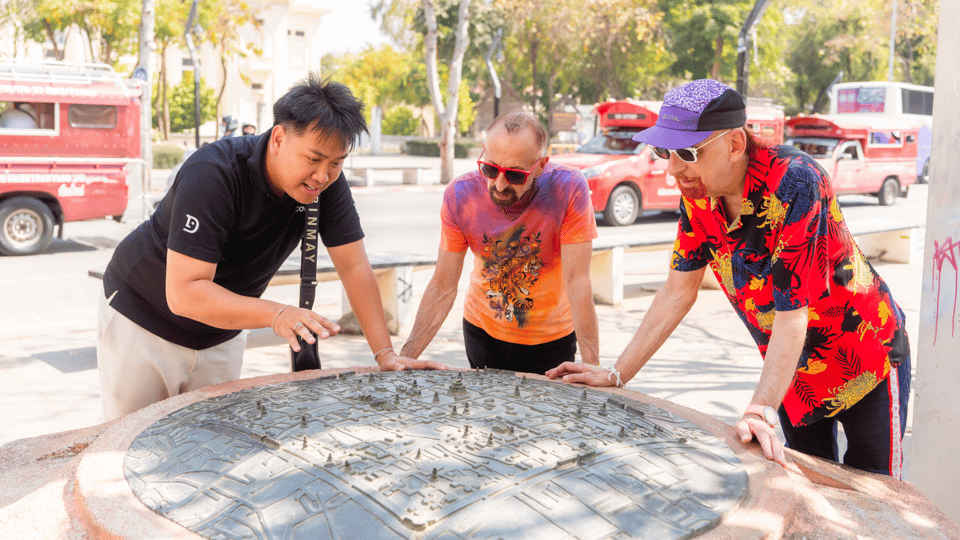
The tour’s biggest strength is the way the guide links temple details to real-life beliefs. You’re not just hearing dates and names. You’re learning how spiritual lifestyle shaped everyday culture in Chiang Mai, and how those ideas show up in what people still do now.
In past tours, guides such as Bim, Bin, Emmy, Farm, and Amy have been praised for explaining history, arts, culture, and Buddhist ritual in a way that feels approachable. The common thread: you get answers when questions pop up, and the tone is friendly rather than lecture-heavy.
Small-group size helps with that. With a group limited to 8 participants, it’s easier to keep your place on the route and easier to ask follow-ups without feeling like you’re slowing everyone down. If you’re the kind of traveler who learns best by asking why something matters, this format fits well.
Language support is also useful. You’ll have an English-speaking guide (with Thai as well), so you can follow the explanations even if you’re not Thai-literate.
Timing, walking pace, and what to wear in the old town
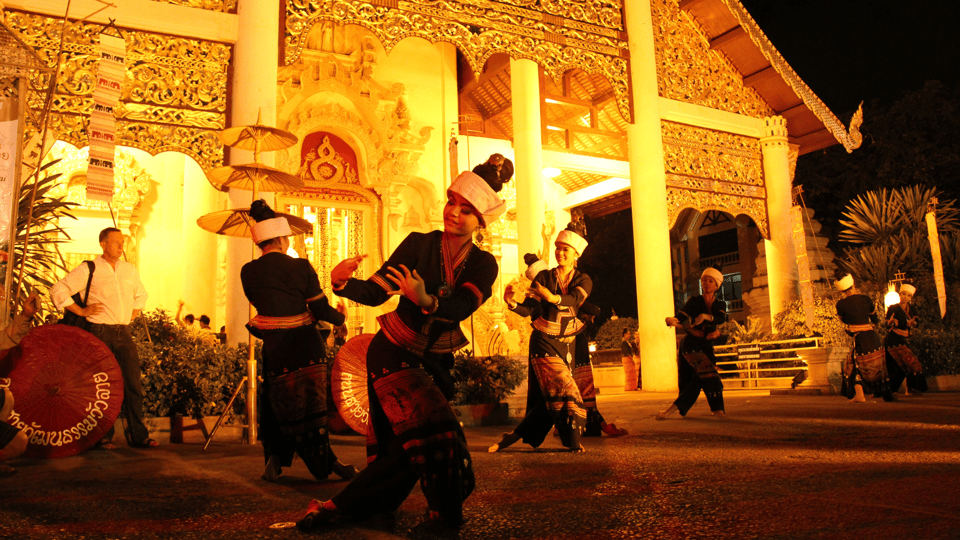
This is a walking tour, and it’s designed for short, manageable segments. You’ll move between stops in small chunks, with the itinerary building in guided time at each location:
- About 30 minutes at the starting point around the monument area
- Short walks between temple sites
- A substantial visit period at Wat Phra Singh and Wat Chedi Luang
In practice, that means you can enjoy the day without feeling like you’re constantly in transit. Still, it adds up. You’ll want comfortable shoes and breathable clothing.
What’s not allowed is important: shorts and short skirts are not permitted. If you’re traveling with a packing-light mindset, this is worth remembering because it can force a last-minute outfit change at the worst time. Bring something that covers you comfortably while still keeping you cool.
Weather note: you may see people suggesting later start times to avoid harsh daytime heat. Your tour time option can matter, so if you have a choice, pick the slot that feels best for your comfort level.
You can also read our reviews of more historical tours in Chiang Mai

Tickets, water, and the real meaning of value at $15
At $15 per person, this tour is priced to feel accessible, especially for what’s included. Here’s what you’re getting for that money:
- An English speaking tour guide
- All tickets / entrance fees
- Water
- Tour insurance
That combination matters. Temple entrance fees and guide time can add up quickly when you cobble together your own plan. Also, having tickets handled avoids the “find the right counter, in the right language, during the right time window” headache.
What’s not included is also straightforward: no hotel pickup or drop-off. You meet at Three Kings Monument and you return at Wat Chedi Luang. If you’re staying in the old city area, this can be painless. If you’re farther out, you’ll need to budget for getting yourself to the starting point.
So the value question is simple: if you want a fast, guided introduction to Chiang Mai’s most meaningful historic sites, $15 can feel like a bargain. If you already know your way around temples and enjoy self-guided wandering, you might not get your money’s worth.
Who this tour suits best (and who should consider another plan)
This tour is ideal if you want a structured way to understand Chiang Mai without doing heavy reading. It’s also a good match if you:
- Like temples but want context, not just sightseeing
- Want to learn about Lanna origins and how they connect to today
- Prefer a small group with time for questions
- Appreciate Buddhist ritual explanations, including the chance to hear a monk talk
It’s less ideal if you:
- Need wheelchair-friendly access (it’s not suitable for wheelchair users)
- Prefer fully independent travel with no rules about clothing
- Hate walking in temple districts, even at a gentle pace
Should you book this Chiang Mai old city walking tour?
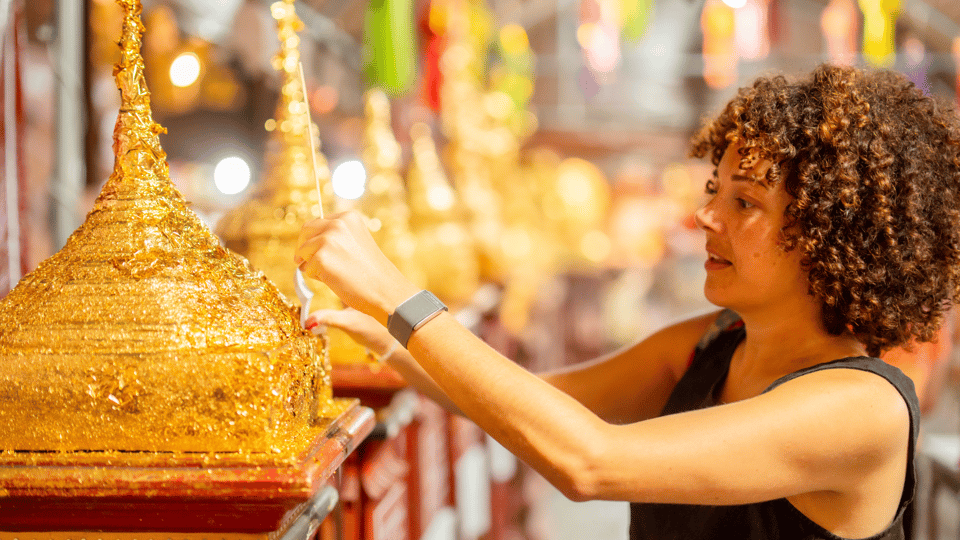
If your goal is to get your bearings fast and understand what you’re seeing, I’d say yes—this is one of the easiest ways to turn Chiang Mai’s old city into something you can explain to friends later. The route is focused: Three Kings Monument, Wat Phra Singh, then Wat Chedi Luang. You’re not spread thin across town, and the included tickets plus guide time make it low hassle.
Book it if you want a compact, guided “roots and rituals” introduction. Skip it if you’d rather spend your time hunting cafés, markets, or doing a longer temple crawl on your own with no set stopping points.
FAQ
Where is the meeting point for the tour?
You meet at Three Kings Monument. The guide will be waiting there, so arrive on time.
How long is the guided tour?
The tour runs for about 2.5 hours.
Which temples and sites are included?
You visit Wat Phra Singh and Wat Chedi Luang, with the tour starting at Three Kings Monument.
What’s included in the $15 price?
The price includes an English speaking tour guide, all tickets/entrance fees, water, and tour insurance.
Do I need hotel pickup or drop-off?
No. Hotel pick up and drop off are not included, and you’ll start at Three Kings Monument and finish at Wat Chedi Luang.
Is the tour suitable for wheelchair users?
No. The tour is not suitable for wheelchair users. You’ll also need to follow temple dress rules, including no shorts or short skirts.