REVIEW · CHIANG MAI
Chiang Mai: Walking Food Tour
Book on GetYourGuide →Operated by Secret Food Tours · Bookable on GetYourGuide
Follow your nose through Chiang Mai’s Old Town. This 3-hour walking food tour starts at the Three Kings Monument and strings together classic Northern Thai meals with a temple stop and a final finish at Wat Lok Moli.
I love the way the route mixes food and place. You’re not just tasting snacks; you’re learning why dishes show up in Chiang Mai, then pairing them with the right drinks like Thai iced tea and lemongrass infusion. I also like the strong mix of savory and sweet, from banana-leaf sticky rice and chicken satay through khao soi and bua loi.
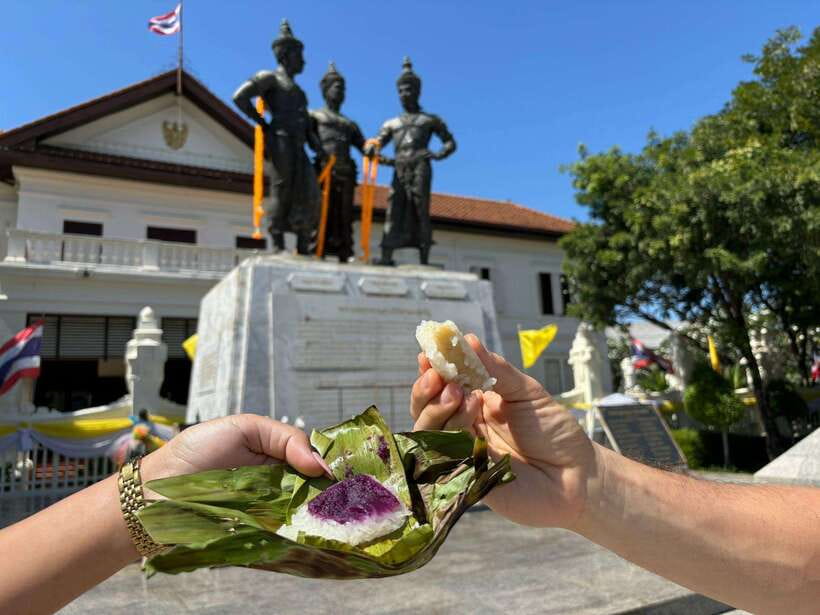
One thing to plan for: there’s no hotel pickup, so you’ll meet your guide in front of the Three Kings Monument (orange umbrella). If you’re staying far out, build in time to get there.
In This Review
- Key moments that make this tour worth your time
- Meeting at Three Kings Monument, then walking into local rhythm
- Banana-leaf sticky rice and the first real Thai breakfast hit
- Chicken satay with creamy peanut sauce, plus a quick satay reality check
- Larb moo and sai ua: the Northern Thai flavor wall
- Khao soi, pak boong, and Thai tea: a classic balance move
- Khanom krok and lemongrass infusion: small bites that keep moving
- Dessert finale: butterfly pea ice cream and bua loi in coconut cream
- The secret dish: why it’s more than a gimmick
- Price, servings, and why $53 can actually be good value
- Who should book this Chiang Mai walking food tour
- Should you book this tour
- FAQ
- Where do I meet the guide?
- How long is the Chiang Mai Walking Food Tour?
- What food is included in the price?
- Is there a vegan option for dessert?
- Can I request dietary accommodations?
- Is pickup included from hotels?
- What’s the cancellation and refund policy?
- Is the tour wheelchair accessible?
Key moments that make this tour worth your time
- Three Kings Monument start point so you get oriented fast and begin in the heart of the old city
- Banana-leaf sticky rice breakfast with real street-food prep, not a sit-down show
- Northern Thai set of tastings including larb, sai ua, and khao soi, all in one compact walk
- Coffee-break level variety: noodles, grilled satay, sausage, stir-fried morning glory, and coconut desserts
- Dessert finale that cools you down with vegan butterfly pea flower ice cream and bua loi
- A guide-revealed secret dish you won’t know about until you’re on the street with them
Meeting at Three Kings Monument, then walking into local rhythm
You meet your guide right in front of the historic Three Kings Monument and look for an orange umbrella. That’s a smart start. It puts you in the old city core, where Chiang Mai’s food scene feels most walkable and where you can actually understand the neighborhood layout as you go.
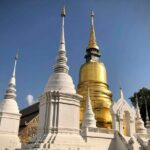
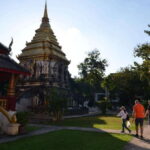
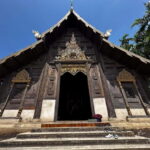
This tour is built around a simple idea: you eat your way through key food types while also seeing a couple of religious landmarks. The beginning includes a classic Thai breakfast moment, and the end is at Wat Lok Moli, a temple many people like for its calm, photogenic feel.
Because it’s a walking tour, pace matters. You’ll want to treat this like a “slow parade” of tastes: short strolls, quick exchanges with your guide, and then a new dish. If you prefer long meals and lots of sitting, this style might not feel like your usual vacation day.
You can also read our reviews of more walking tours in Chiang Mai
Banana-leaf sticky rice and the first real Thai breakfast hit
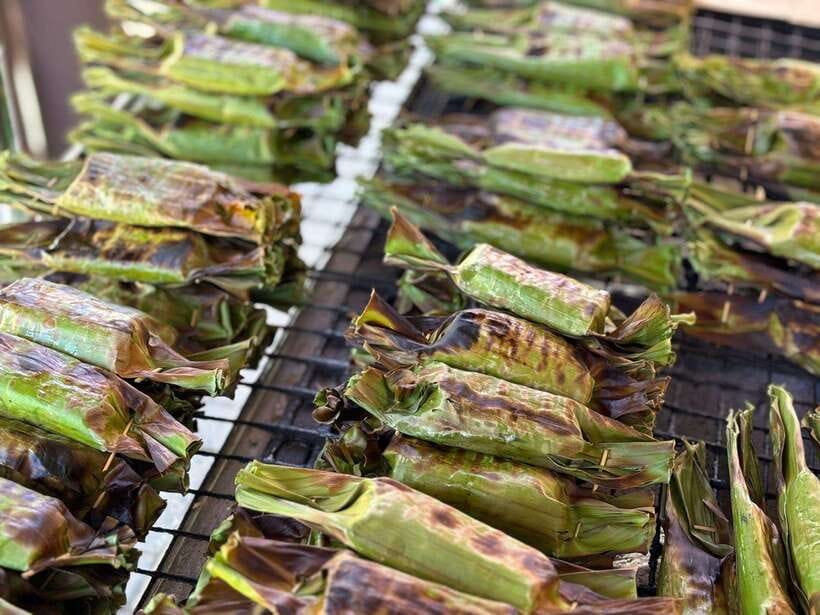
The first tasting is a classic: sticky rice grilled in a fragrant banana leaf. That small detail matters. Banana leaf adds aroma as it cooks, so the first bite isn’t just chewy rice. It smells like something you’d notice even before you sit down.
The banana-leaf style also sets expectations for the rest of the tour: this isn’t Westernized comfort food. It’s about texture and smell as much as taste. If you’re new to Thai street food, this opening is an easy way in because the flavors are approachable, not overwhelmingly spicy.
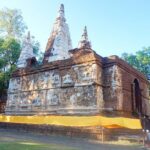
You’ll also get a temple stop early on, described as a hidden-off-the-beaten-path place. Even if you’re not a big temple person, it helps break up the walking and gives context for why food and community life overlap here. You’ll feel like you’re moving with locals instead of being herded past storefronts.
Chicken satay with creamy peanut sauce, plus a quick satay reality check
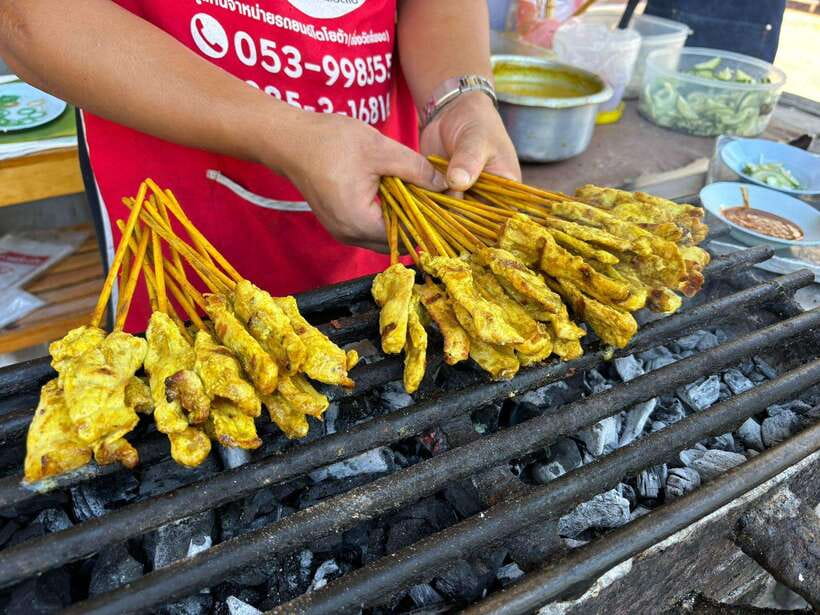
Next up is chicken satay with its iconic creamy peanut sauce. Satay is everywhere in Thailand, so it’s tempting to think you already know what it tastes like. That’s exactly why this stop works. It gives you a baseline before you shift into Northern Thai flavors.
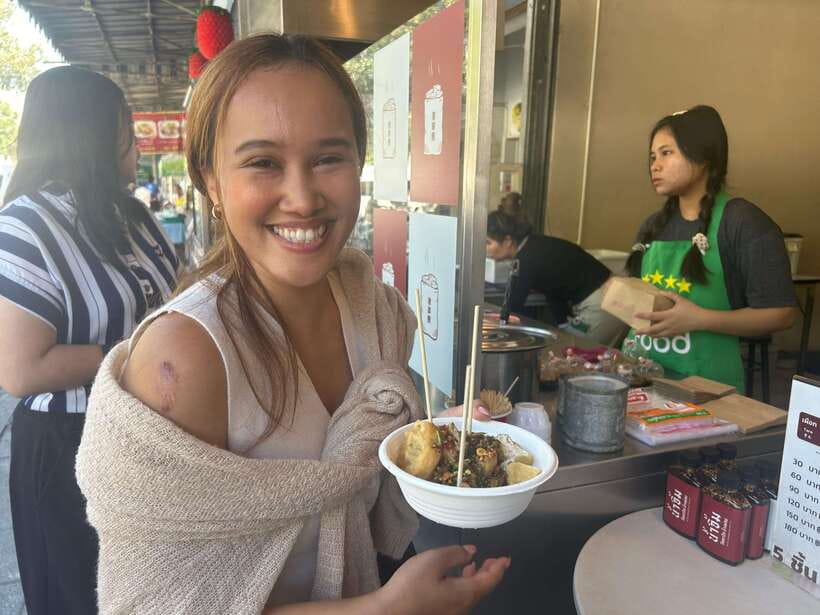
The satay experience here is straightforward: grilled skewers, served with peanut sauce that’s rich and smooth. Then your guide pushes you to compare it with Bangkok’s version. Even if you’ve never eaten Bangkok satay, you’ll start noticing what changes from place to place: fat level, peanut intensity, and the balance between sweet, salty, and grilled smokiness.
I like that this stop isn’t buried between heavier dishes. It’s a clean bridge meal that keeps your energy up before the more assertive Northern Thai plates arrive.
Larb moo and sai ua: the Northern Thai flavor wall
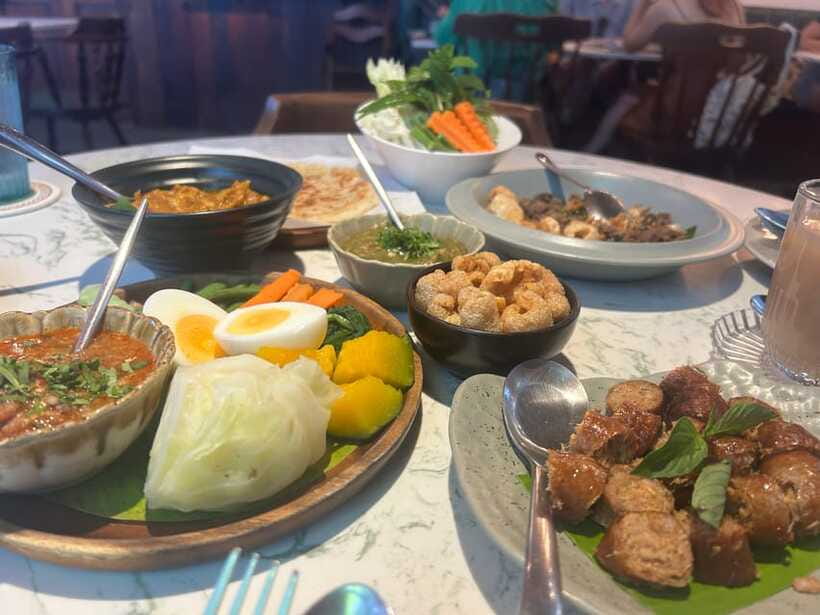
Then the tour turns to Northern Thai cuisine in full force, and you’ll feel it in the flavors. Two of the best-known Northern items on the lineup are larb moo and sai ua.
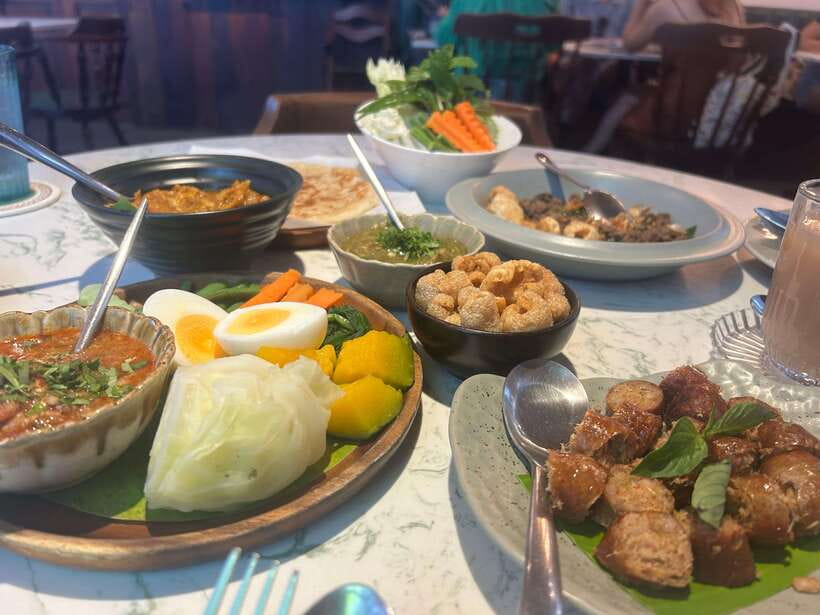
Larb moo is a zesty pork salad with roasted rice powder, and it hits hard in the best way: sour, salty, and herbal notes, with that toasted rice powder adding nuttiness and thickness. It’s the kind of dish where you quickly realize Thai food can be “bright” rather than only spicy.
Sai ua is famous Northern Thai sausage. It’s usually richer and more fragrant than the sausages most people expect, with herbs and spice doing the heavy lifting. If you’ve had regular sausage before, this is your reminder that the word sausage doesn’t always mean the same flavor world.
This part of the tour is where you learn to read the difference between Thai regions. Bangkok often leans sweet-salty and fast-fried. Northern Thai food tends to show more acidity, more herb character, and stronger depth in spice. Even if you can’t name every ingredient, your taste buds will learn the pattern quickly.
Khao soi, pak boong, and Thai tea: a classic balance move
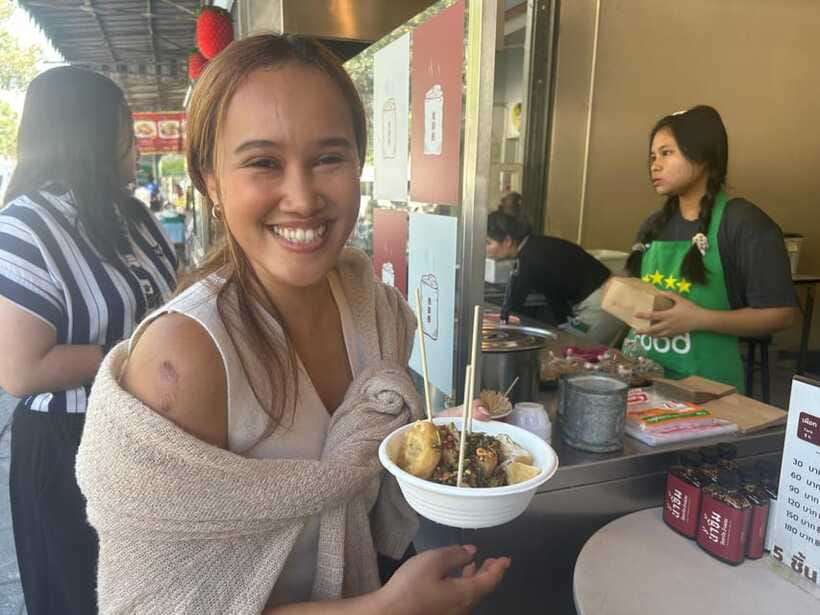
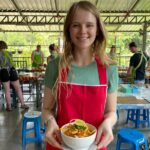
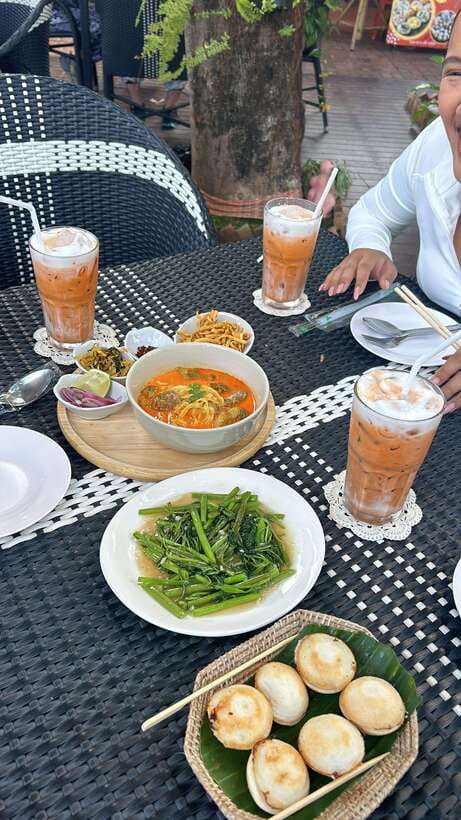
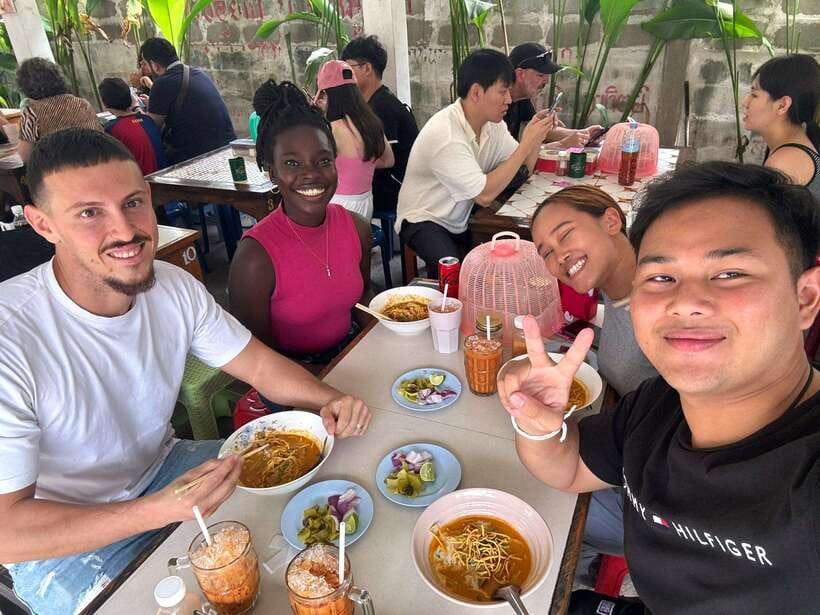
Now you get Chiang Mai’s signature: khao soi. It’s described as silky coconut curry noodles served in a memorable setting. The key idea with khao soi is that it doesn’t behave like a simple curry bowl. You get that creamy coconut base, plus noodles with a texture contrast that makes every spoonful interesting.
This stop also pairs your khao soi with stir-fried pak boong (morning glory). That’s a classic balance trick: you get heat and richness from the curry, then a slightly bitter, garlicky green to reset your palate. Morning glory is one of those vegetables that tastes better than it sounds.
To round it out, there’s chilled Thai tea. I like this combo because it gives you a sweet, milky break from spicy and coconut-heavy flavors. It’s not just a drink; it’s a palate tool.
If you’re sensitive to spice, you’ll still have plenty to enjoy here. You can expect bold flavors across the menu, but the drinks and the vegetable side help keep things comfortable.
You can also read our reviews of more food & drink experiences in Chiang Mai

Khanom krok and lemongrass infusion: small bites that keep moving
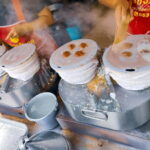
After the heavier main dish moments, you’ll get into snack mode with khanom krok, sweet and savory coconut-rice mini pancakes. These are the kind of foods that make the tour feel lively. You don’t have to commit to a full meal again, but you do get a new flavor profile and texture.
You also get chilled lemongrass infusion. That’s a smart move in Chiang Mai heat. Lemongrass is bright and aromatic, and chilled drinks help you stay on track so you actually enjoy dessert instead of feeling too full too soon.
This is also where having a good guide pays off. In the tour format, your guide’s job isn’t only food delivery. They shape the flow, keeping you from racing ahead or slowing down too much. English-speaking guides include people like Warat or Varisa, and based on past participants, they’re comfortable adjusting when the group is small and chatting about Northern food and everyday Chiang Mai life.
Dessert finale: butterfly pea ice cream and bua loi in coconut cream
The sweet finish here is one of the best parts of the whole itinerary. You cool off with vegan butterfly pea flower ice cream, then end with bua loi—delicate rice balls floating in creamy coconut milk.
Butterfly pea flower gives that vivid purple color and a gentle floral vibe. It’s not a loud flavor. It’s a cooling, calming one, which is exactly what you want after spicy and coconut curry.
Bua loi is comfort-dessert Thailand. The rice balls are soft and chewy, and the coconut cream makes it feel rich without needing chocolate or cake. It’s dessert that fits the Thai flavor style: sweet, creamy, and balanced.
It’s also the right ending emotionally. After a 3-hour walk full of savory Northern dishes, you want one last bite that feels like a reward rather than another heavy meal.
The secret dish: why it’s more than a gimmick
There’s a secret dish included that’s revealed only on the tour. Even when I’m skeptical about “secret food” marketing, this one makes sense because it keeps you present. You’re not waiting the whole time to know every menu item. You’re tasting the lineup as it comes, then you get one final surprise.
This kind of moment works best when your guide is telling you enough context to appreciate the food. Some guides (like Warat, for example, in past departures) are known for sharing information about local history and traditions alongside the tastings. That helps the surprise land. You don’t just get a random extra bite. You get a story for why that dish belongs in this part of Chiang Mai.
Price, servings, and why $53 can actually be good value
At $53 per person for about 3 hours, the biggest value question is simple: are you getting enough food and explanation to justify a guided, paid walk?
In this case, the answer is yes, mostly because the menu is dense. You’re not paying for one big meal. You’re paying for a structured set of tastings across multiple venues and styles, including:
- banana leaf sticky rice
- chicken satay with peanut sauce
- larb moo and sai ua
- khao soi
- stir-fried pak boong
- Thai iced tea and chilled lemongrass infusion
- khanom krok
- butterfly pea ice cream with bua loi in coconut cream
- plus the secret dish
Add it up and you’re effectively covering breakfast-to-dessert and keeping drinks included. For people who want to eat a wide range in a short time without hunting down places and guessing what to order, that’s real value.
For budget travelers: it’s also worth considering that you’ll spend less time searching for menus in Thai and more time actually eating. If you’re the type who likes planning every detail, you might be able to DIY it. But if you’d rather spend that planning energy on enjoying the day, this format is a good trade.
Who should book this Chiang Mai walking food tour
This tour is a strong fit if you:
- want Northern Thai food in one focused morning or early slot
- like tasting many dishes rather than eating one or two heavy meals
- enjoy chatting with an English-speaking guide while you walk
- want a mix of savory street food and Thai desserts
It’s less ideal if you:
- need a very strictly controlled diet and haven’t confirmed your needs (you should contact the operator before booking)
- hate walking or want hotel pickup convenience
Also, if you’re traveling with limited time in Chiang Mai, this is the kind of experience that helps you “learn the flavors” quickly. You leave with a sense of what makes Northern food different, not just a list of things you ate.
Should you book this tour
I’d book it if your goal is to taste Northern Thai food without turning your trip into a restaurant scavenger hunt. The combination of satay, larb moo, sai ua, khao soi, morning glory, and dessert is a smart spread, and the guide-led format helps you understand what you’re eating as you go.
Skip it only if you prefer lots of downtime, need strict dietary control without prior confirmation, or you can’t comfortably make it to the meeting point at Three Kings Monument on your own.
FAQ
Where do I meet the guide?
Meet your guide in front of the Three Kings Monument, and look for an orange umbrella.
How long is the Chiang Mai Walking Food Tour?
The tour lasts about 3 hours.
What food is included in the price?
It includes a banana leaf sticky rice breakfast, chicken satay with peanut sauce, larb moo, sai ua, stir-fried pak boong, khao soi, khanom krok, butterfly pea ice cream with bua loi in coconut cream, and drinks like Thai iced tea and chilled lemongrass infusion. Water is also included, plus a secret dish revealed during the tour.
Is there a vegan option for dessert?
Yes. The dessert includes vegan butterfly pea flower ice cream.
Can I request dietary accommodations?
If you have specific dietary requirements, you need to contact the tour operator before booking.
Is pickup included from hotels?
No. Hotel pickup and drop-off are not included.
What’s the cancellation and refund policy?
You can cancel up to 24 hours in advance for a full refund, and you can also reserve now and pay later to keep plans flexible.
Is the tour wheelchair accessible?
Yes, the tour is listed as wheelchair accessible.