REVIEW · CHIANG MAI
Chiang Mai: Evening Cooking Class and Local Market Visit
Book on GetYourGuide →Operated by Galangal Cooking Studio · Bookable on GetYourGuide
Eat your way through Chiang Mai.
This 5-hour evening class blends a hands-on Thai cooking session with a market and organic garden stop, guided in English by instructors like New and Aoy/Aoi. I really like the included hotel pickup and drop-off in central areas, which makes it feel low-stress from the minute you leave your room.
The second thing I love is how you get to choose what you cook from real Thai categories like stir-fry, soup, an appetizer, and curry/curry paste. One small consideration: you’ll want to arrive hungry, because you’re essentially building and eating a full meal set, not doing a quick demo.
In This Review
- Key things to know before you go
- Evening in Chiang Mai: the flow makes it easy
- Hotel pickup and transfers: the real value add
- Market visit + organic garden: ingredients first, questions second
- Picking your dishes: how the menu works
- The cooking studio: hands-on, not complicated theater
- What you eat: a full Thai meal set
- Recipes you can use later (not just “a PDF somewhere”)
- Dietary needs and substitutions: easier than you think
- Price and value: what $28 really buys
- Who this is best for (and who should skip it)
- Should you book the Chiang Mai Evening Cooking Class?
- FAQ
- How long is the Chiang Mai evening cooking class?
- Is hotel pickup and drop-off included?
- What do you do during the market and garden part?
- How many dishes can I cook?
- Is there an English-speaking instructor?
- Do they offer vegetarian, vegan, Halal, or gluten-free options?
- Do I get a recipe book?
- What should I bring, and what’s not allowed?
- Can someone observe instead of cooking?
Key things to know before you go
- Hotel pickup runs from central Chiang Mai (Old City, Santitham, Huay Keaw Road, and select nearby areas).
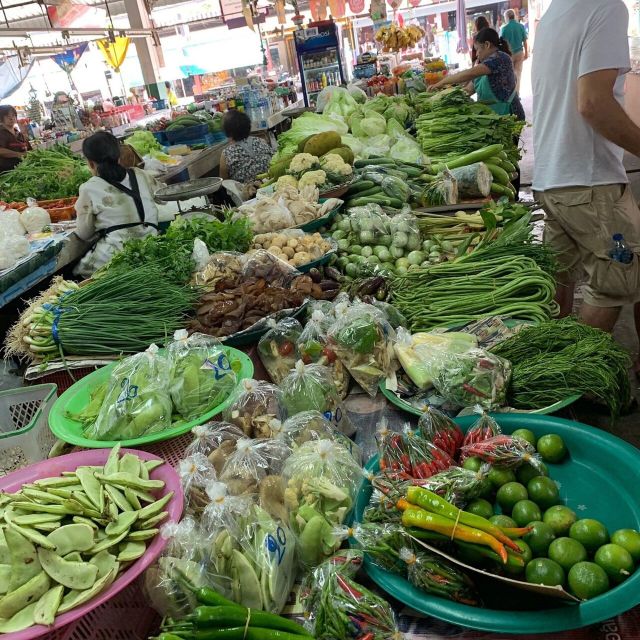
- You shop like a local at a market, then stroll an organic garden where herbs and vegetables are grown.
- You cook from four menu categories (stir-fry, soup, appetizer, curry/curry paste), with English instruction and hands-on guidance.
- Expect a lot of food in an air-conditioned indoor kitchen/dining room, plus packing leftovers for later.
- Dietary support is built in for vegan, vegetarian, Halal, gluten-free needs, and allergies (with substitutions).
- You leave with recipes via a PDF recipe book (plus practical cooking notes).
Evening in Chiang Mai: the flow makes it easy
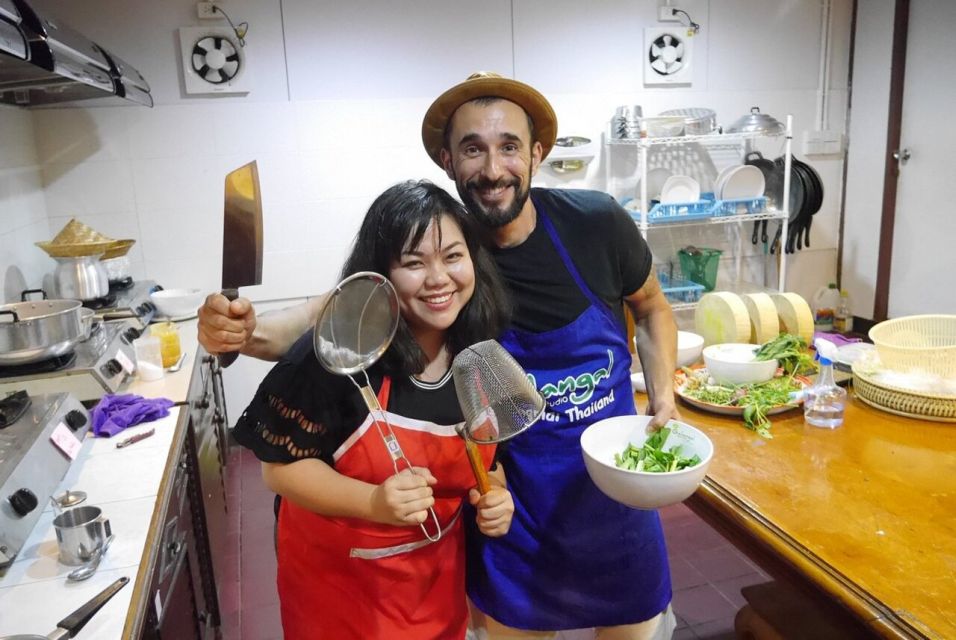
This isn’t just a sit-down dinner. You start with pickup from central Chiang Mai, then you head out for ingredient hunting and a garden walk before returning to cook. By the time you’re back in the studio, the food makes sense because you’ve already seen (and picked) what goes into it.
The timing is also set up for an evening meal. You’re usually picked up around 3:15–3:45 PM, then the session runs about five hours. For larger groups (10–12+), it can stretch to around 8:30 PM. If the group is smaller, you may finish earlier.
You can also read our reviews of more shopping tours in Chiang Mai
Hotel pickup and transfers: the real value add
For many Chiang Mai activities, transport is the hidden hassle. Here, transport is handled for you. The pickup covers hotels in the Old City, Santitham, and along Huay Keaw Road up to places like Maya Shopping Mall, plus some additional nearby streets/areas when they’re not too far.
Two practical points matter:
- The driver may start pickups a bit earlier if traffic is heavy and there are multiple stops.
- The driver will wait no longer than 5 minutes after the scheduled pickup time.
If your hotel is outside the included zones, they’ll let you know ahead of time and you can make your own way to the school or market. The cooking school is also near public transportation, which helps if you ever need a Plan B.
Market visit + organic garden: ingredients first, questions second
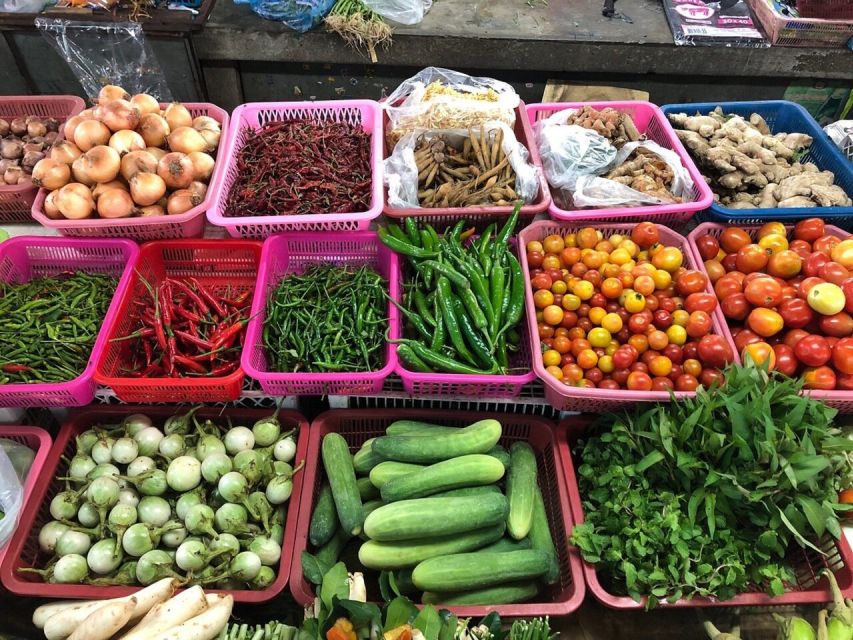
The market stop is where the class starts feeling like real Thai food, not just “cooking.” You’ll look at fresh vegetables, herbs, and other ingredients, and your guide helps connect items to the dishes you’re choosing.
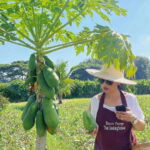
Then comes the organic garden stroll. Even if you’re not a plant nerd, it’s useful because you see how herbs and vegetables are cultivated in Thailand. That context helps when you later learn why certain flavors show up in curry paste, soups, and stir-fries.
If you like food photography, you’ll find plenty of visual cues here too. If you don’t, you’ll still come away with a better sense of what to look for when you cook at home.
Picking your dishes: how the menu works
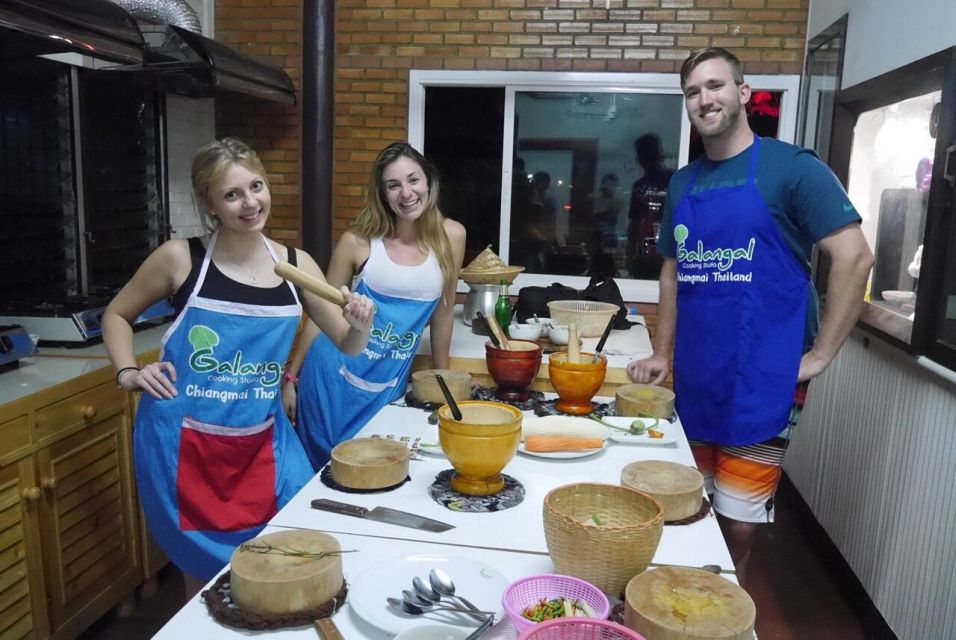
You get English instruction throughout, and you’re not stuck with one fixed menu. You can select from dish options in four categories:
Stir-fry choices
- Pad Thai
- Pad See Ew
- Kai Pad Med Mamuang Him Ma Pan (chicken cashew)
- Pad Kaphao Kai (minced chicken with holy basil)
Soup choices
- Tom Yum Kung (hot and sour prawn)
- Tom Kha Kai (chicken in coconut milk)
- Tom Kha Je (vegetarian/vegan coconut milk soup)
- Tom Zap Kai (hot and sour with chicken)
Appetizers
- Som Tam (papaya salad)
- Por Pia Thod (spring roll)
- Larb Kai (chicken salad)
- Yam Woon Sen (glass noodle salad)
Curry / curry paste making
- Kaeng Massaman (Massaman curry)
- Kaeng Kieaw Wan Kai (green curry)
- Kaeng Panaeng Kai (Panang curry)
- Khao Soi (Chiang Mai noodle with chicken)
- Kaeng Ped (red curry)
- Kaeng Karee (yellow curry)
- Pad Prik Kaeng (dry red curry)
In practice, this usually works out to you cooking a set of dishes from these categories. Some classes also focus heavily on curry paste basics, so even if your final plate is one curry, you learn how the flavor foundation is built. That’s a huge reason this type of class pays off at home.
The cooking studio: hands-on, not complicated theater
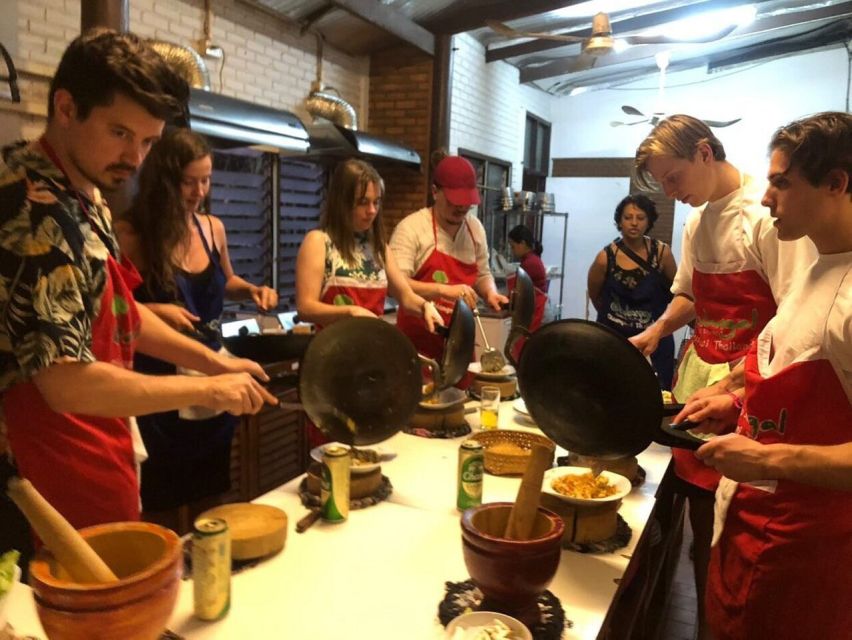
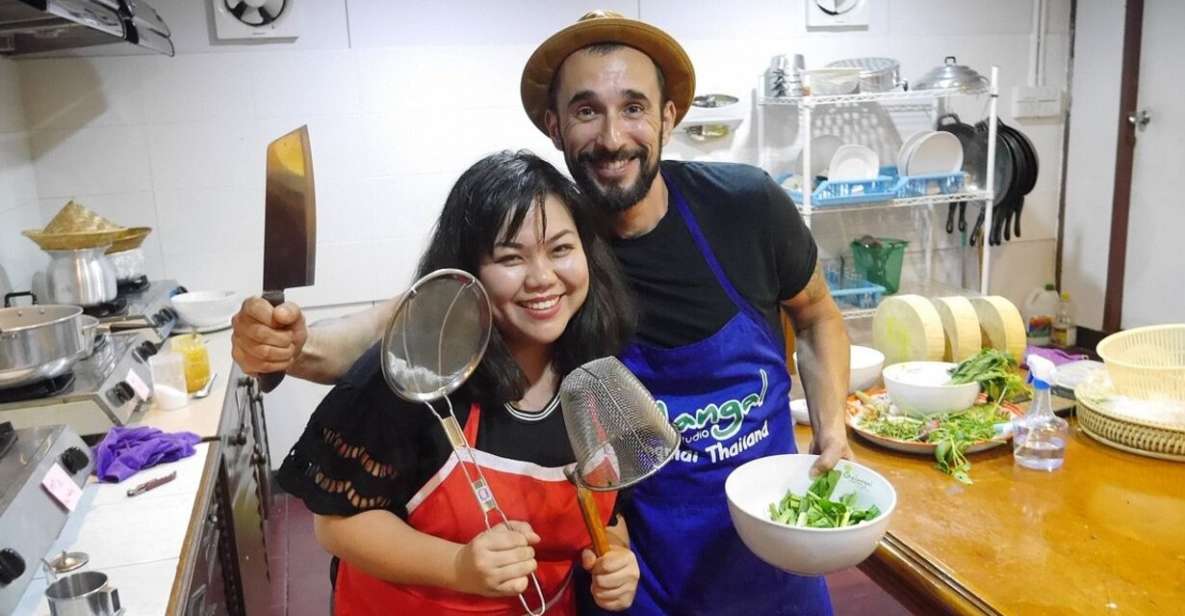
Back in the indoor kitchen/dining room (with air conditioning), you actually cook what you chose. The pace is designed for beginners, but it still teaches technique and ingredient logic.
From the instructors’ style, you can expect:
- Step-by-step guidance that keeps you on track
- Explanations of why ingredients matter, not only what to do
- Friendly, attentive teaching, with plenty of chances to ask questions
You’ll likely work through stir-fry steps, soup-building (including sourness and coconut balance depending on your dish), and appetizer assembly. If you choose curry paste-style dishes, you’ll get hands-on with that flavor base, which is often the part people feel most nervous about before a class.
You can also read our reviews of more tours and experiences in Chiang Mai


What you eat: a full Thai meal set
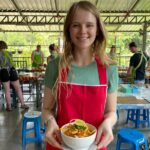
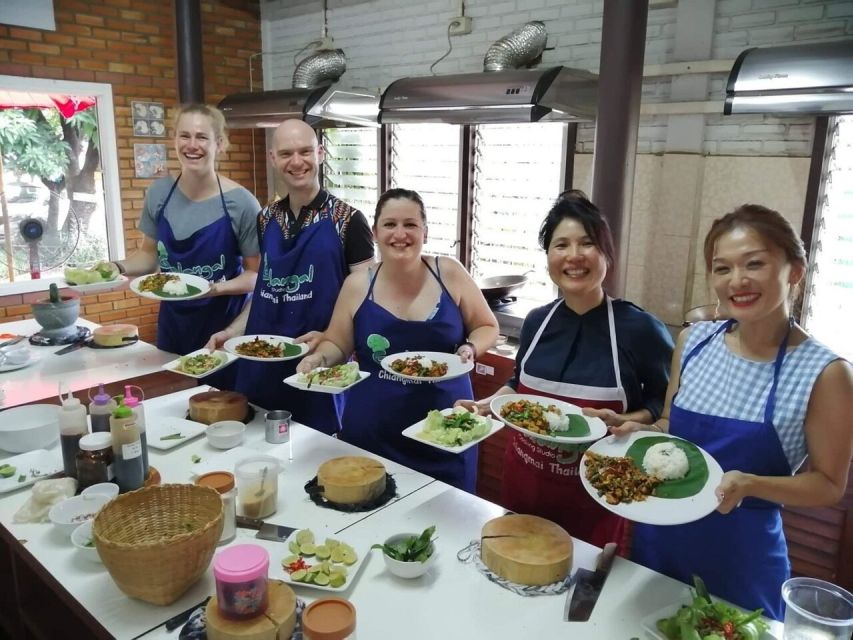
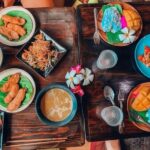
The point of the evening is that you don’t just make food—you eat the results. Dishes are served at the end, and the overall lineup can vary based on what you selected. The room is set up for tasting together, so you get that shared “we made this” feeling.
Because you’re cooking multiple courses, you should come with an empty stomach. The class itself is built around dinner time (Thai culture usually starts dinner at 4 or 5 PM). So yes, plan to be hungry, then be happily overfed.
Recipes you can use later (not just “a PDF somewhere”)
At the end, you receive a PDF version of a recipe book. That’s one of the more practical parts of the experience because it turns the evening into something you can repeat.
Even better, the way you cook in class tends to teach you the underlying method: balancing sour/salty/sweet in soups, getting stir-fry timing right, and understanding how curry paste flavor builds. That’s what helps you cook from the recipe later without it becoming “just follow the steps exactly.”
Also, many people leave stuffed. If you have leftovers, the setup is designed so you can take food away too, which is great for later snacking or a second meal.
Dietary needs and substitutions: easier than you think
This class explicitly lists options for vegan, vegetarian, Halal, gluten-free, and allergies. That doesn’t just mean “you can ask.” It means the menu choices include items that already fit common needs, like vegetarian/vegan tom kha and stir-fry/salad alternatives.
If you have seafood allergies or restrictions, it’s especially worth mentioning when you arrive or when the menu is being confirmed. The class format gives the instructor room to guide substitutions so your dishes still land in the right flavor family.
Price and value: what $28 really buys
At $28 per person for a five-hour evening program, the value is strongest when you factor everything in:
- Hotel pickup and drop-off in central areas
- Ingredient shopping at a market and a guided stroll in an organic garden
- An air-conditioned kitchen session with English instruction
- Ingredients and equipment included
- A recipe book in PDF form
- Food you cook and eat together
In other words, you’re paying for transportation, teaching time, and guided ingredient selection—not just the ingredients themselves. That’s why this tends to work well for first-time cooks. You walk away with technique, not just a plated meal.
Who this is best for (and who should skip it)
This is ideal if you:
- Want a practical foodie experience without renting a scooter
- Enjoy Thai ingredients and want to learn what to look for
- Are cooking-curious and want beginner-friendly instruction
- Like the structure of a clear menu with choice
It’s not ideal if you:
- Have altitude sickness concerns (the activity notes it’s not suitable)
- Want an ultra-fast “snack class” (this is dinner-time food and takes about five hours)
Should you book the Chiang Mai Evening Cooking Class?
If you’re staying in central Chiang Mai and want one evening that covers food shopping, Thai cooking technique, and a satisfying meal in one go, I’d book it. The hotel transfer, English instruction, and recipe support make it feel like more than an activity—you’re buying home-cooking skills.
Just commit to one simple rule: come hungry. With multiple dishes in the set, you’ll want your appetite ready, then use the recipe book when you’re back home and craving Chiang Mai again.
FAQ
How long is the Chiang Mai evening cooking class?
The duration is about 5 hours.
Is hotel pickup and drop-off included?
Yes. Pickup and drop-off are included for hotels in central Chiang Mai areas such as the Old City, Santitham, and along Huay Keaw Road up to Maya Shopping Mall, plus some other nearby streets/areas when they are not too far.
What do you do during the market and garden part?
You go to a local market to see fresh ingredients and vegetables and you visit an organic garden where herbs and vegetables are cultivated. You can choose the market tour depending on interest.
How many dishes can I cook?
You select from menu options in four categories: stir-fry, soup, appetizer, and curry/curry paste making. Your final set of dishes is based on your selections.
Is there an English-speaking instructor?
Yes. The class instruction is in English.
Do they offer vegetarian, vegan, Halal, or gluten-free options?
Yes. The activity states it is available for vegan, vegetarian, Halal, and gluten-free needs, and it can support people with allergies through substitutions.
Do I get a recipe book?
Yes. You receive a PDF version of a recipe book.
What should I bring, and what’s not allowed?
Bring any personal medication you need. Smoking indoors and alcohol and drugs are not allowed.
Can someone observe instead of cooking?
Yes, observers are welcome, but they must pay a fee: 500 THB per adult and 350 THB per child (ages 6–12).