REVIEW · CHIANG MAI
Chiang Mai: Authentic Cooking Class with Market & Farm Visit
Book on GetYourGuide →Operated by Grandma's Home Cooking School · Bookable on GetYourGuide
Market first, then farm chores, then Thai dinner. What I love: a market tour where you learn what goes into Thai staples, and a grandma-style organic farm where you can feed and hug chickens before cooking your meal. The main drawback to plan for is that the van transfers can feel a bit snug.
This is set up like a hands-on cooking workshop, not a show-and-tell. You cook at your own station, choose your menu before you start, and you leave with a digital recipe e-book. Depending on the session, you can also learn coconut milk the traditional way and make the Chiang Mai favorite Khao Soi.
In This Review
- Key things that make this Chiang Mai experience worth it
- Why this market-and-farm cooking class feels more real than a restaurant meal
- Hotel pickup and timing: when the day actually starts
- The market walk: Thai ingredients you’ll recognize later in restaurants
- Grandma’s organic farm: chickens, eggs, mushrooms, and herb smells
- Cooking at your own station: how the class stays hands-on
- The Thai dishes you’ll cook, including Khao Soi and curry paste from scratch
- Coconut milk and mango sticky rice: what changes in the Full Day session
- Morning vs Afternoon vs Evening vs Full Day: picking the right length
- Drinks, e-book recipes, and dietary accommodations that actually matter
- Price and value: what $34 buys you in Chiang Mai
- Practical tips so your cooking day goes smoothly
- Should you book this Chiang Mai cooking class?
- FAQ
- How long is the Chiang Mai market and farm cooking class?
- What will I cook during the class?
- Do I get to cook at a personal station?
- Are vegetarian, Halal, or gluten-free options available?
- Is hotel pickup included, and how far does it cover?
- Can I cancel for a full refund?
Key things that make this Chiang Mai experience worth it
- Market tour that teaches you what to buy, not just what to photograph
- Organic farm time with chicken-feeding and egg collecting
- Your own cooking station with step-by-step guidance
- Scratch curry paste skills using a mortar and pestle
- Khao Soi focus plus Thai classics like Pad Thai and curries
- Session variety, with Full Day adding coconut milk and more kitchen time
Why this market-and-farm cooking class feels more real than a restaurant meal
This class works because it follows the logic of Thai cooking: ingredients first, technique second, then the food you can actually taste and repeat later. You start by learning the roles of aromatics like garlic, chilies, lemongrass, herbs, and sauces, then you see (and sometimes pick) what’s used out in the countryside.
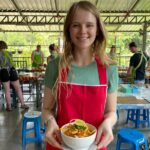
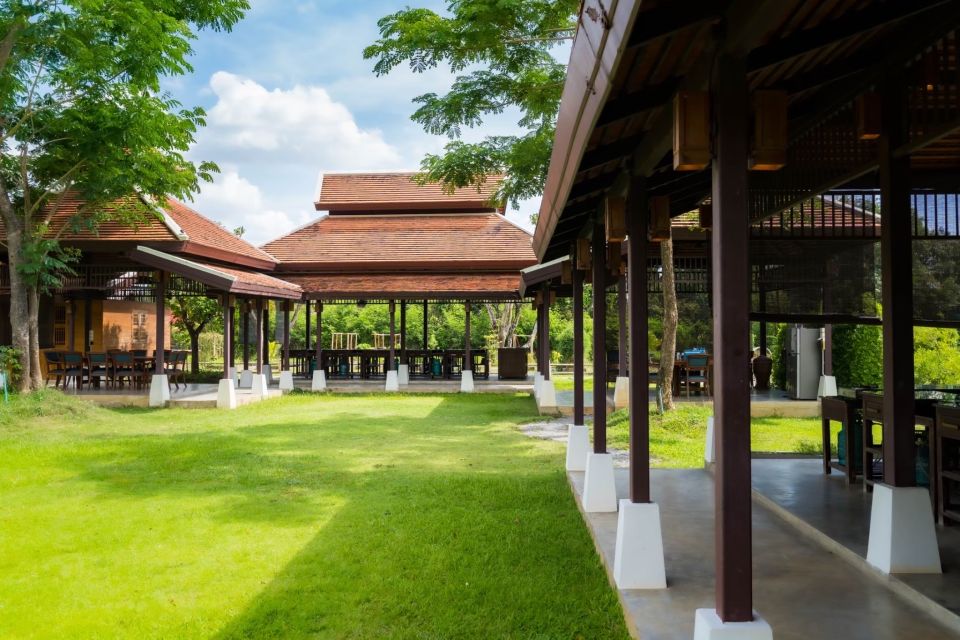
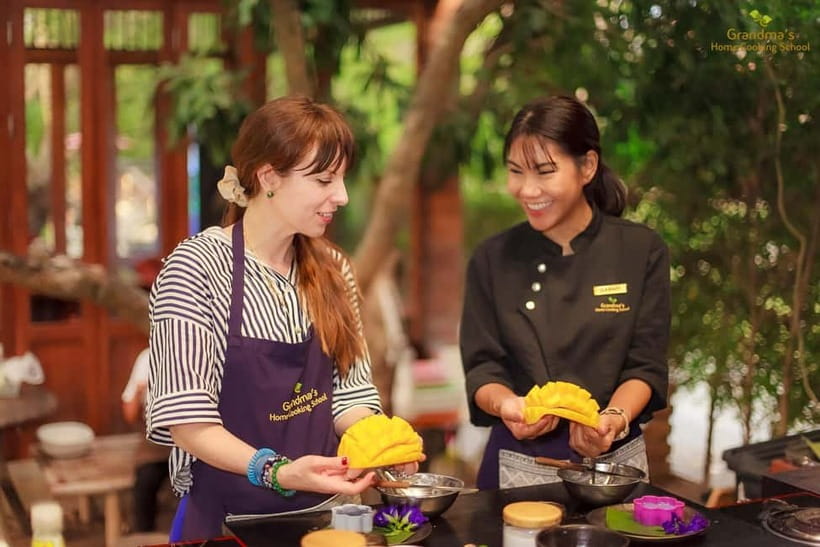
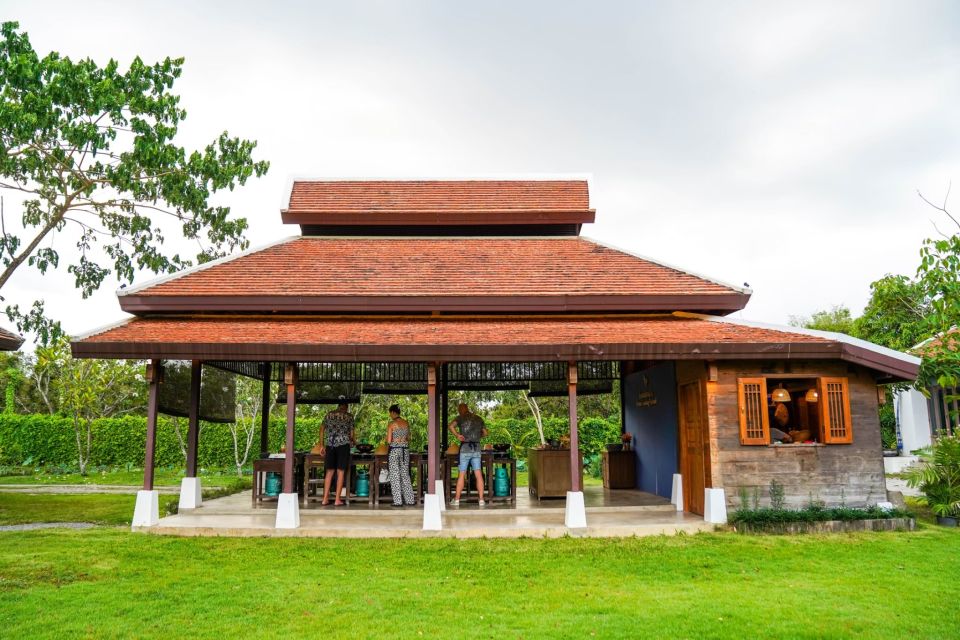
Another strong point is how personal it feels for a group activity. You’re not waiting around for someone else to cook. You get your own station in an open-air kitchen, and you move dish by dish with your instructor and helpers clearing the way as you go.
Finally, the setting helps. The farm portion has rice-field quiet and a calmer pace than city life. That contrast is part of the value: you learn faster when you’re not rushed.
You can also read our reviews of more shopping tours in Chiang Mai
Hotel pickup and timing: when the day actually starts
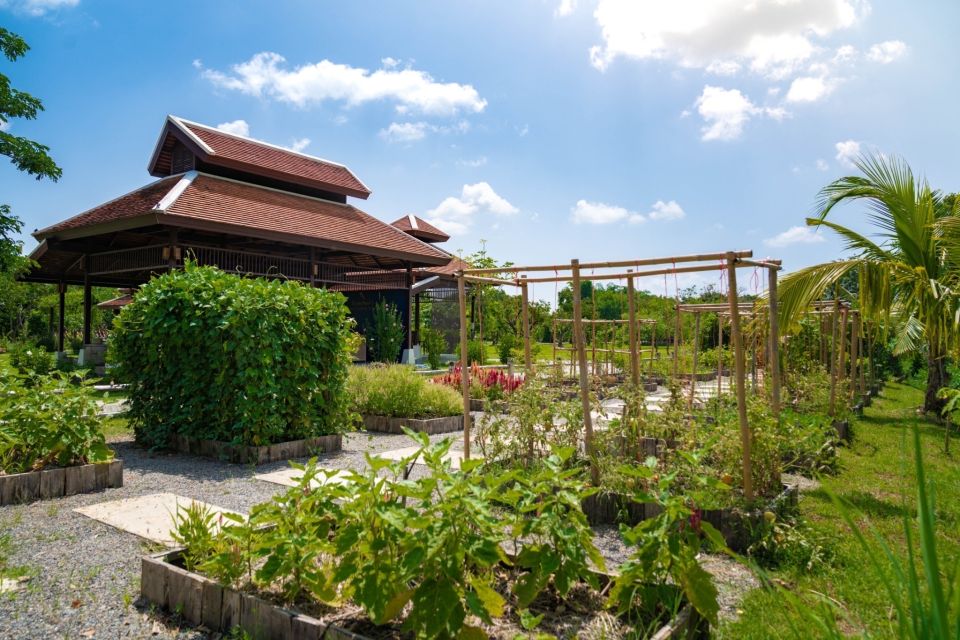
Pickup is included from hotels within 5 km of Chiang Mai’s city center. You’ll wait at your hotel lobby, and pickup times can vary by session. For the later sessions, expect pickup around 3:30 PM to 4:00 PM.
Plan for one small reality check: transportation can be snug. Some past guests noted the van felt tight, so it’s smart to pack light and be ready for a short, crowded ride on busy days.
Once you arrive, the schedule tends to flow in a clear order. Market tour (on eligible sessions), farm activities, then the cooking block, and finally the shared meal. The smoothness is a big reason this ranks so high: you spend your energy learning and eating, not figuring out logistics.
The market walk: Thai ingredients you’ll recognize later in restaurants
The market part is the practical brain of the day. You’ll walk with your instructors and learn how ingredients show up in real Thai dishes. You’re not just sampling; you’re building an ingredient map for later.
Here’s what you typically get out of the market segment:
- You learn which herbs and vegetables matter most for the dishes you’ll cook
- You understand how aromatics and sauces combine, so you can later spot why one curry tastes deeper than another
- You build confidence shopping for Thai staples when you’re back home
This matters because Thailand’s flavors are often less about one secret ingredient and more about balance. When you know what you’re looking for—like the difference between fresh herbs, dried spices, and cooking sauces—you stop guessing at Thai restaurants and start recognizing patterns.
Also, instruction is in English, and past classes have been led by instructors such as Le Vin, Patty, Roger, and Jimmie. Their teaching style tends to be hands-on and focused on explaining what each ingredient is doing in the dish.
Grandma’s organic farm: chickens, eggs, mushrooms, and herb smells
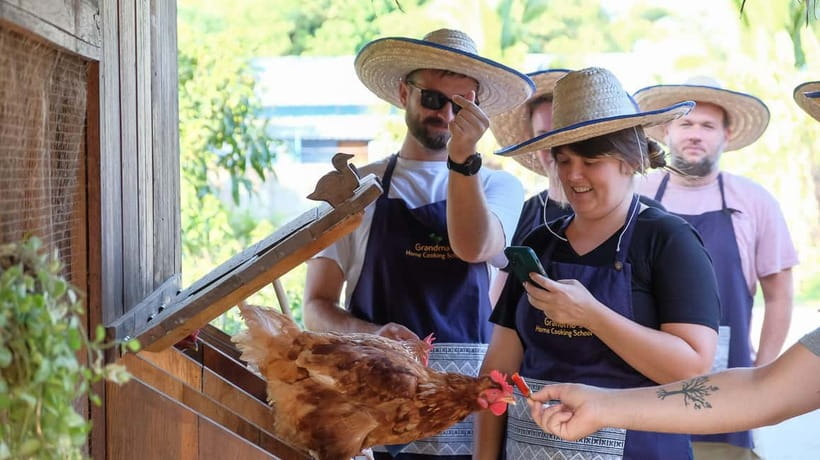
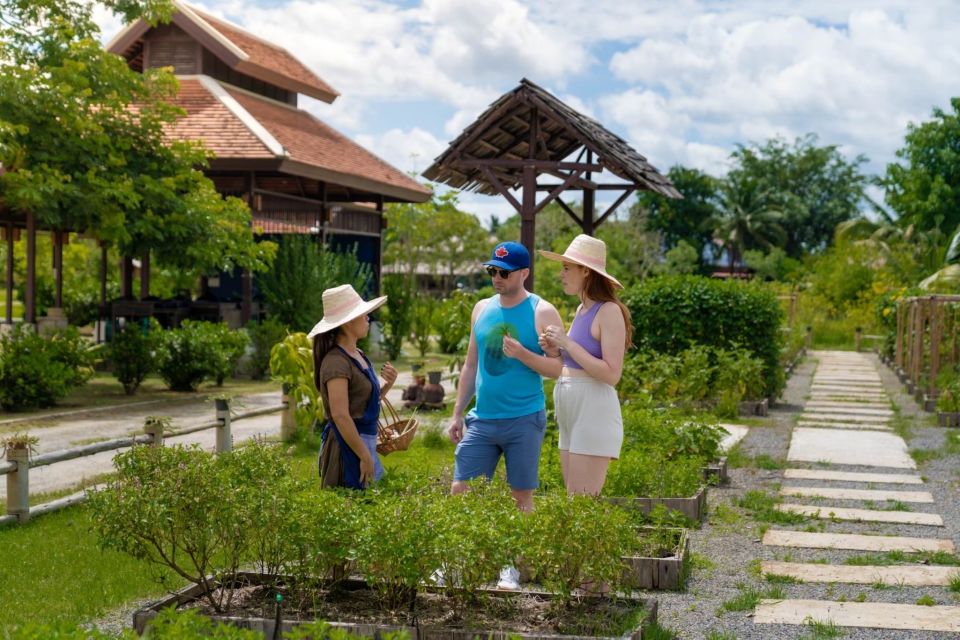
If the market sets you up, the farm makes it stick. Grandma’s Home Cooking School is on a peaceful organic property, and the activities are designed to connect you to Thai vegetables and herbs in a way a lesson at a table never will.
What makes the farm portion especially loved:
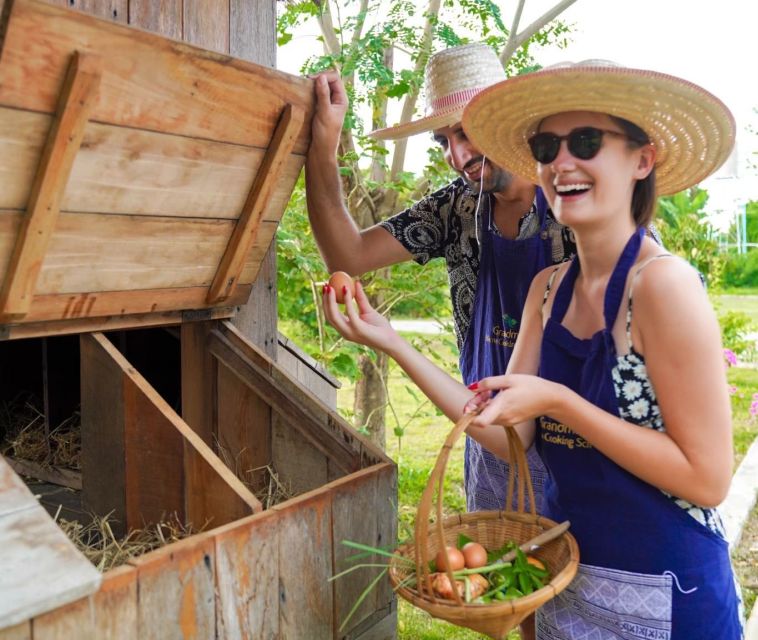
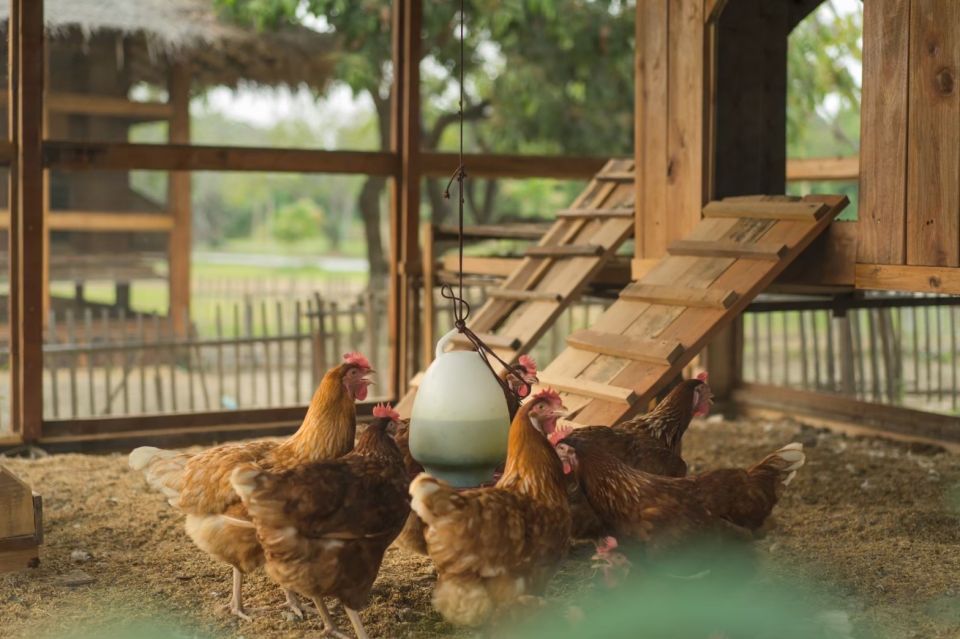
- Feeding and hugging chickens (you can always do this part)
- Collecting fresh eggs
- Picking mushrooms from a dedicated mushroom hut
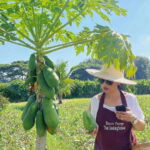
- Smelling herbs and fruits while you learn how they’re used
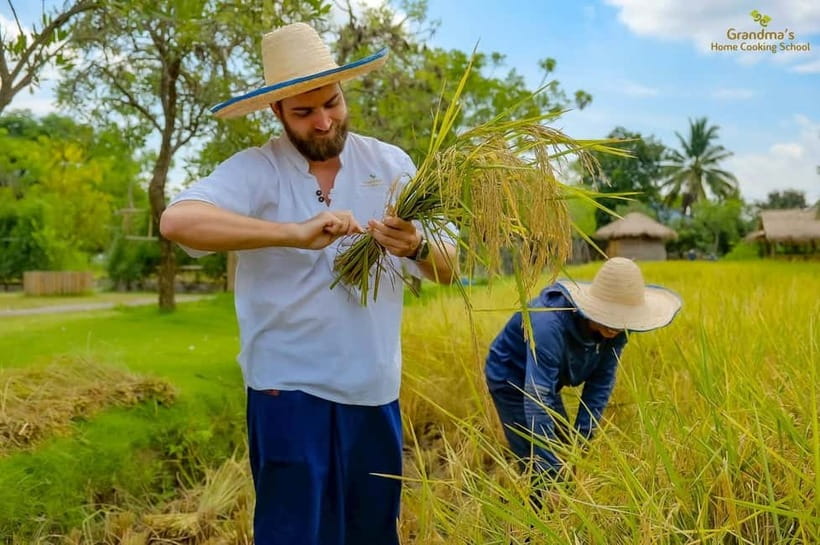
Sometimes you’ll harvest herbs and vegetables depending on what’s ready, so the farm can feel a little different from day to day. The goal is the same: understand ingredient freshness and how herbs smell when they’re not packaged.
A practical note: wear comfortable shoes. You’ll walk around the grounds, and you’ll want traction. Bring a sun hat too, since parts of the farm time are outdoors.
If you’re uncomfortable with animals up close, this is your only real mismatch risk. This isn’t a passive farm tour. It’s hands-on farm time.
Cooking at your own station: how the class stays hands-on
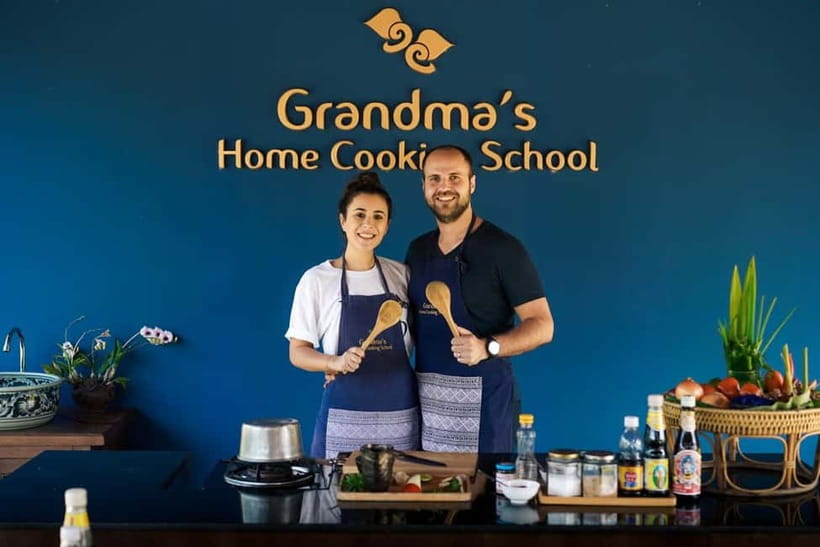
The kitchen setup is built for doing. You cook at your own station, and instruction is step-by-step with the staff moving around to help with technique and keep things flowing.
At the start, each guest chooses their menu before cooking begins. That’s a big deal for value: you’re not forced into a fixed set of dishes that might not match your tastes.
You’ll also learn core methods that show up again and again in Thai cooking:
- how curry paste starts and why toasting or pounding matters
- how to adjust seasoning and balance sour, salty, sweet, and heat
- how stir-fry timing works when sauce goes in at the right moment
In past sessions, guests highlighted that the kitchen areas are organized and that equipment and prep spaces feel clean and well run. That’s not a small detail. When your workspace is set up correctly, you actually enjoy cooking instead of feeling rushed or confused.
You can also read our reviews of more tours and experiences in Chiang Mai


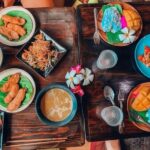
The Thai dishes you’ll cook, including Khao Soi and curry paste from scratch
This is where the class earns its “must do” reputation. Your menu can include Chiang Mai classics and Thai staples, and you’ll cook them rather than just watch them.
Typical dishes include:
- Pad Thai
- Pad Kra Prao
- Green Curry
- Red Curry
- Panang
- Tom Yum
- Tom Kha
- Som Tam
- Spring rolls
- and the headliner, Khao Soi (Chiang Mai signature curry noodle soup)
One skill that stands out is making curry paste from scratch using a mortar and pestle. That’s not just for show. When you make the paste, you learn how texture and aroma change as you grind. It also gives you a practical base you can recreate later.
Khao Soi is the dish that often gets singled out because it feels special and different from the curries you’ll see elsewhere in Thailand. You’re learning a regional Chiang Mai identity, not generic Thai food.
You’ll also make mango sticky rice in many sessions. Some classes include hands-on teaching of mango sticky rice as part of the cooking flow, depending on the time block you choose.
Coconut milk and mango sticky rice: what changes in the Full Day session
Not every session includes coconut milk prep, and that’s worth factoring into your choice.
In the Full Day option, you get an extra highlight: making coconut milk the traditional way using a wooden coconut grater. It’s messy in a satisfying way, and it gives you real context for why coconut milk behaves the way it does in Thai curries and soups.
Mango sticky rice also depends on timing:
- Morning and Afternoon sessions include mango sticky rice dessert
- Full Day and Evening sessions teach it as part of the cooking
If you love food traditions and you want deeper kitchen practice, Full Day is usually the best match. If you just want an excellent evening meal you cook yourself, the shorter sessions can still be a great win.
Morning vs Afternoon vs Evening vs Full Day: picking the right length
This is one of those tours where the day length directly changes the experience.
- Morning class: great if you want the market portion and a lighter pace, plus mango sticky rice dessert.
- Afternoon class: still offers market learning and cooking, with enough time to finish and enjoy the meal without feeling like your whole day vanishes.
- Evening class: ideal if you want the cooking and dinner focus. Many guests love it because it turns an evening into a structured food lesson.
- Full Day class: the most complete package. You add extra farm time, more dishes, and the traditional coconut milk step.
One more scheduling tip: don’t assume you’ll eat normally before class. Some guests specifically recommend not eating beforehand because the portions can be sizable. With the hands-on stations and shared feast, you’re likely to leave very full.
Drinks, e-book recipes, and dietary accommodations that actually matter
The included drink setup is simple but thoughtful. You choose a welcome drink such as Thai milk tea, Thai lemon tea, or butterfly pea flower tea. During the class you’ll also get a herbal drink, plus unlimited drinking water.
Then there’s the part you care about most after the day ends: the food you can repeat. You’ll receive a digital recipe e-book, and you also get the skills to recreate the flavors, especially once you understand curry paste and ingredient roles.
Dietary options are available if you tell the team before class. Vegetarian and Halal options can be arranged, and gluten-free and allergies are handled by adjusting ingredients. In real examples shared by guests, instructors supported gluten intolerance by providing gluten-free condiments such as gluten-free soy sauce and oyster sauce, and some sessions offer gluten-free alternatives like spring rolls.
That adaptability is what makes the price feel fair, because it reduces the risk of showing up and being forced into a watered-down version of the meal.
Price and value: what $34 buys you in Chiang Mai
At around $34 per person, this is strong value because you get more than one experience. You’re paying for:
- market learning (ingredient literacy)
- farm activities (animal and harvest time)
- a real cooking class (your own station, step-by-step guidance)
- a full meal you helped make
- a digital recipe e-book
In a city where eating Thai food is cheap, the value comes from the instruction and the ingredient context. You’re not paying just for lunch. You’re paying to learn why the lunch tastes that way.
Small class size also helps. Instead of a classroom vibe, it feels like a working kitchen where helpers keep ingredients and tools moving. Guests have praised the smooth operation and the way instructors (like Kiki, Joyzaa, Garnet, Best, and Ben) kept things fun while still explaining what to do and why.
Practical tips so your cooking day goes smoothly
A few small choices make a big difference here.
Wear comfortable shoes for the farm walk, and bring a sun hat since you’ll be outside. Keep water in mind too, even though unlimited water is included.
Arrive hungry. With hands-on cooking and a shared feast, you’ll likely want room in your stomach for what you make. If you snack lightly, you’ll probably still end up eating a lot, but if you go in full, the experience can feel less fun.
If you have allergies or dietary needs, communicate them before the class starts. This class has a track record of making ingredient swaps, but you’ll get better results when you tell them early.
Also, plan to use your phone for the recipe e-book access. One guest mentioned an issue with QR code access, so I’d treat it as a good idea to have your phone charged and ready when you get the instructions.
Should you book this Chiang Mai cooking class?
Yes, you should book it if you want a hands-on Thai cooking lesson with market and farm context, not just a dinner with recipes. It’s especially worth it when you:
- want to learn ingredients, not only techniques
- like regional Chiang Mai food like Khao Soi
- enjoy outdoor experiences like herb smells, eggs, and mushroom picking
- want a structured way to cook Thai dishes at home
Skip it or think twice if you dislike close animal interaction, since feeding and hugging chickens are part of the farm experience.
If you’re on the fence, my advice is simple: choose the session that matches how much time you want to cook. Full Day is for people who want the coconut milk tradition and extra kitchen practice. Evening is great if you want a memorable food-focused night. Either way, you’ll leave with real confidence, a stomach full of food, and a clear recipe path back to Chiang Mai flavors.
FAQ
How long is the Chiang Mai market and farm cooking class?
It runs from about 210 minutes to up to 7 hours, depending on the session you choose (Morning, Afternoon, Evening, or Full Day).
What will I cook during the class?
You’ll cook Thai dishes at your own station, with menu options that can include Pad Thai, Pad Kra Prao, Green Curry, Red Curry, Panang, Tom Yum, Tom Kha, Som Tam, spring rolls, and Chiang Mai’s signature Khao Soi.
Do I get to cook at a personal station?
Yes. The class is hands-on, and you cook at your own cooking station with step-by-step guidance from the instructor.
Are vegetarian, Halal, or gluten-free options available?
Vegetarian and Halal options are available if you tell the team before the class starts. Gluten-free and allergies can also be accommodated by adjusting ingredients, so you should share your needs in advance.
Is hotel pickup included, and how far does it cover?
Hotel pickup and drop-off in an air-conditioned van are included within 5 km of Chiang Mai city center. If your hotel is outside that area, a nearby meeting point or a small extra charge may apply.
Can I cancel for a full refund?
Yes. Free cancellation is available up to 24 hours in advance for a full refund.