REVIEW · CHIANG MAI
Chiang Mai: Thai Buffalo and Rice Planting Experience
Book on GetYourGuide →Operated by Hang Tueng farm · Bookable on GetYourGuide
A working farm morning beats a checklist tour. This experience at Hang Tueng farm is all about hands-on buffalo care and rice planting in Chiang Mai Province, wrapped into about 150 minutes with lunch.
I love how practical it feels. You don’t just watch—you handle the steps like a local farmer: harvesting grass for Riam Thai buffalo, then getting your hands in the rice nursery mud, and finally sitting down to a proper meal of green chicken curry.
One consideration: you’ll be around farm work and mud. Even with boots and a place to freshen up, wear clothes you’re fine getting dirty around the field time.
In This Review
- Key highlights you should care about
- A Buffalo and Rice Lesson at Hang Tueng Farm
- How the 150-minute flow keeps you moving (without feeling rushed)
- Feeding Riam Thai buffalo: grass, tools, and real farm energy
- Rice planting the traditional way: nursery mud and kick-off-the-mud technique
- Cost and value: is $57 worth 150 minutes of farm work?
- Lunch on the farm: green chicken curry, herbal drink, and mango sticky rice
- Getting to Hang Tueng: the red taxi pickup and simple meeting point
- What to wear and bring so the mud doesn’t ruin your photos
- Small group size: why 10 participants feels better here
- Languages: English and Thai support when you want clarity
- Who this Chiang Mai farm experience is best for
- Who might want a different option
- Should you book the Chiang Mai buffalo and rice planting experience?
- FAQ
- How long is the Chiang Mai Thai buffalo and rice planting experience?
- What is included in the price?
- What time commitment should I expect on-site?
- Is pickup and drop-off provided?
- Where do I meet for the tour?
- What languages are used during the experience?
- What do you serve for lunch?
- What is the group size limit?
Key highlights you should care about
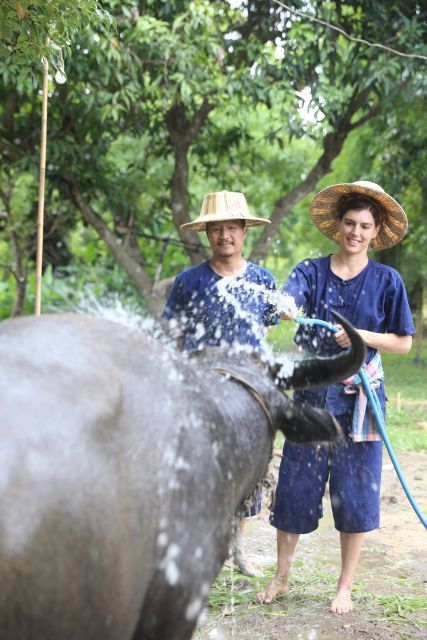
- Riam Thai buffalo feeding with grass you help prepare using traditional farm tools
- Rice nursery work that shows how seedlings start before they go into the fields
- Traditional farmer costume and boots so you can focus on the work, not figuring out what to wear
- Lunch you’ll actually enjoy: green chicken curry, herbal drink, and mango sticky rice
- Small group size (up to 10) so you’re not just standing at the back
- Red taxi pickup and drop-off that keeps the logistics simple
A Buffalo and Rice Lesson at Hang Tueng Farm
This is a classic Chiang Mai Province experience for anyone who’s tired of just taking photos and moving on. At Hang Tueng farm, you’ll spend your morning learning farm routines that still matter here—especially the link between buffalo and rice growing.
You start by heading to the farmstay and workshop area at Hang Tueng. From there, the day becomes a guided, step-by-step routine: meet the farmer, meet the buffalo, learn what to do, then do it yourself. The pace is designed for a short session, not an all-day slog, which is a big deal when you’re traveling with limited time.
And yes, it feels like a real education farm, not a stage set. You’ll see everyday farming tasks turned into a hands-on lesson you can finish within a comfortable 150 minutes.
You can also read our reviews of more tours and experiences in Chiang Mai.


How the 150-minute flow keeps you moving (without feeling rushed)
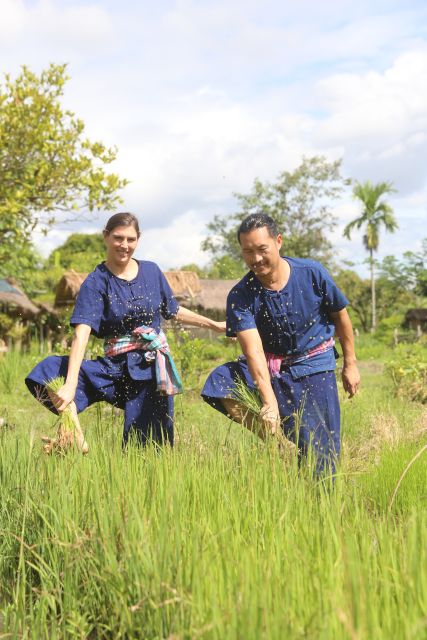
The whole experience is about 150 minutes, and the timing is tight in the good way. You get structured farm time—enough to learn the steps and participate—without getting stuck in one activity so long you start counting minutes.
A typical flow looks like this:
- You’re picked up and transported to Hang Tueng farm (they use a red taxi service).
- You meet your instructor and get into the routine: what animals need, what you’ll do in the field, and how to stay safe.
- You spend time feeding buffalo and working around their area.
- Then you shift to rice planting tasks—learning by doing.
- You finish with lunch.
For you, the benefit is clarity. You always know what’s next, and you’re not left wondering whether you’re allowed to take part.
Feeding Riam Thai buffalo: grass, tools, and real farm energy
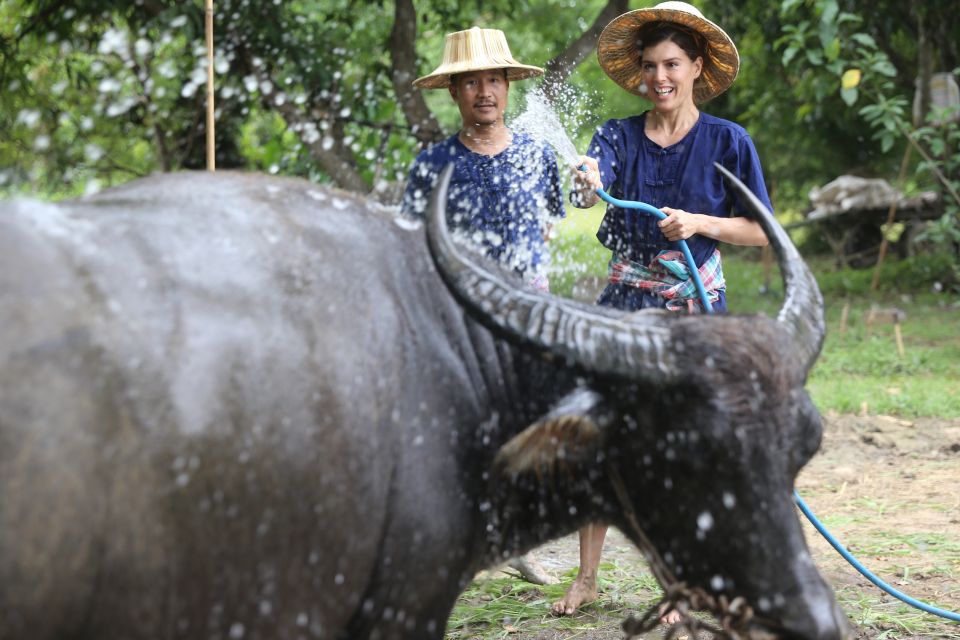
The star of the show is the buffalo part. You’ll learn how to feed and care for Riam Thai buffalo in their natural farm setting. Before you feed, you’re shown how to harvest grass for them. In practice, that often includes using traditional tools like a sickle to cut grass, then gathering it for feeding.
What I like about this segment is that it’s not just, Here, hold the food. The instructor explains the routine so you understand why each step matters. That context changes the whole experience—you’re acting on a process, not doing a random photo moment.
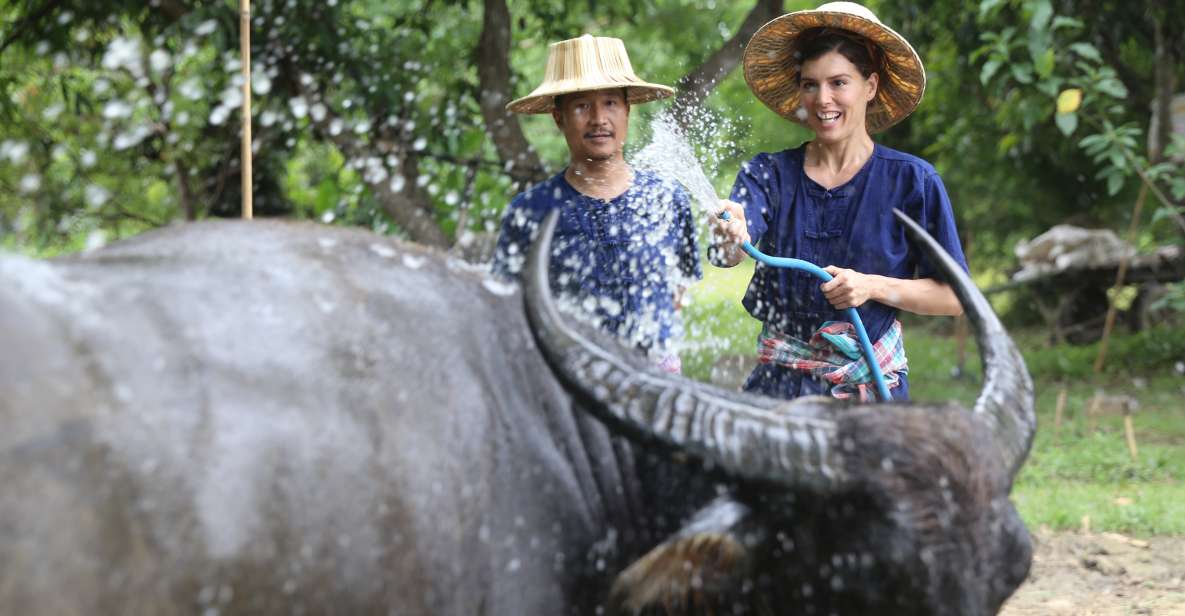
You may also notice the buffalo have their own personalities. They’ll eat grass, and you might even see them eating other kinds of feed like fruit. If water is added as part of the caretaking routine, you can catch them enjoying it—sometimes they’ll settle down in a way that looks almost like a nap. Farm work tends to be calm right up until it’s not, and buffalo definitely have the ability to make things feel alive.
Rice planting the traditional way: nursery mud and kick-off-the-mud technique
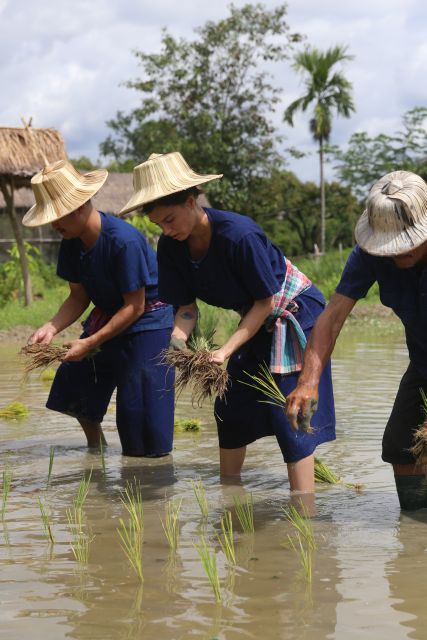
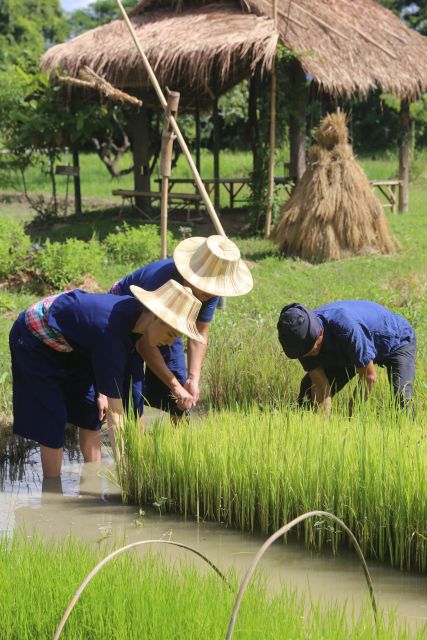
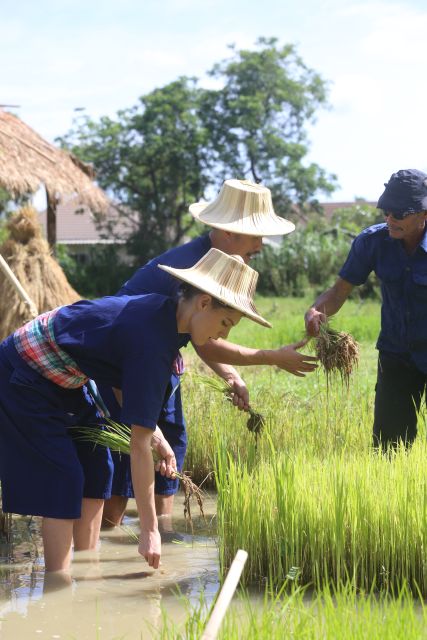
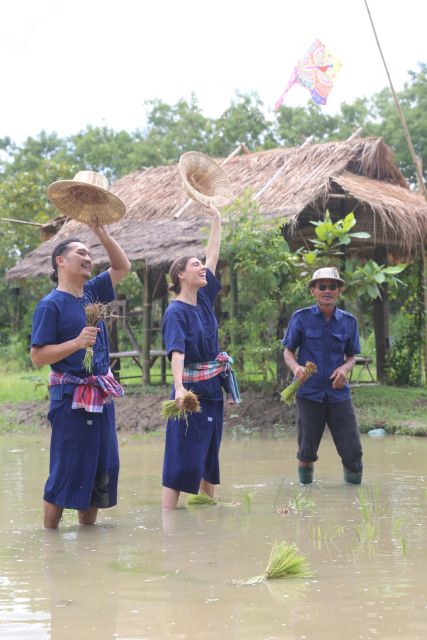
After buffalo feeding, you move into rice planting tasks—focused on the nursery stage. You’ll learn how to uproot rice from a rice nursery, then handle seedlings in a traditional way, including kicking mud off them.
This is the part that many people underestimate, then end up loving. Rice seedlings look delicate, but the lesson is practical: you’re shown how to handle them properly and how to manage the mud that clings to everything. It’s messy, yes. But the mess is part of the authenticity.
You also get a clearer sense of what rice planting really is. A lot of visitors only think of the final field moment. Here, you see the earlier steps—where seedlings begin. That makes the whole rice cycle feel more real, and it’s exactly why this experience works so well for first-timers.
Practical tip: the rice-field part can involve being barefoot. That’s common in this kind of traditional planting setup. If you bring sandals, you’ll be happier for walking around before and after. The good news is you should be able to rinse off afterward using the farm’s shower facilities.
Cost and value: is $57 worth 150 minutes of farm work?
$57 per person can feel like a lot at first glance, but the value comes from how much you actually do in a short window.
You’re paying for:
- A guided hands-on rice planting activity
- Buffalo feeding and animal-care instruction
- Traditional farmer costumes and boots so you can participate comfortably
- Pickup and drop-off via the red taxi service
- Lunch
For many people, the lunch alone is a meaningful part of the value. Farm lunches here are not just a snack; you get a full meal with green chicken curry and sweet ending mango sticky rice.
Transport matters too. Chiang Mai traffic and navigation can cost time and energy. Having the red taxi service built in keeps you from turning your farm day into a logistics day.
The one real value check you should do: decide whether you want a working-farm experience or a slower cultural stroll. If you want active participation, this price makes more sense.


Lunch on the farm: green chicken curry, herbal drink, and mango sticky rice
After mud and buffalo grass, lunch feels like a reward that actually matches the effort.
You’ll eat:
- Rice as the base
- Green chicken curry
- An herbal drink
- Mango sticky rice
I like that the menu fits the theme. It’s not generic tourist food, and it gives you a satisfying ending to the farm work. If you’re with kids, you may also find the farm prepares something kid-friendly like fried rice—handy if picky eating is a concern.
When your morning has you working with animals and plants, lunch becomes more than fuel. It’s the moment you sit still and realize you’ve been doing something local, not just watching.
Getting to Hang Tueng: the red taxi pickup and simple meeting point
The meeting point is Hang Tueng farmstay and workshop Chiang Mai (Hang Tueng farm stay & workshop Chiang Mai). You can search it directly on Google Maps, and it’s easy to find: https://maps.app.goo.gl/N3apjjYeaoC9vLjU9
Then comes the convenience: you’re whisked in and out using the farm’s red taxi service. That matters in Chiang Mai because you don’t want to burn your energy bargaining with directions or trying to time multiple transfers.
Also, the farm is about a 20-minute drive from Chiang Mai’s historical center. So it’s close enough to feel like a quick escape, not a full-day commute.
What to wear and bring so the mud doesn’t ruin your photos
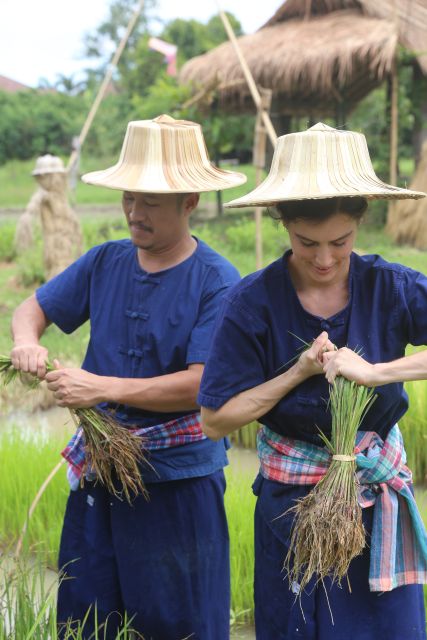
This experience is hands-on. The farm provides traditional farmer costumes and boots, which is a huge help. Still, plan your clothing around the farm part.
What you should do:
- Wear easy clothing that you can change out of.
- Bring sandals if you have them, especially since you might be barefoot during rice-field time.
- Expect mud on lower legs and shoes in the field area.
What you’ll likely be able to do:
- Change into the provided costume and boots.
- Rinse off after the muddy portion using the shower facilities.
If you hate getting dirty, this might be the wrong morning. If you can tolerate a bit of mess for a real farm lesson, you’ll come away with stories that feel specific and earned.
Small group size: why 10 participants feels better here
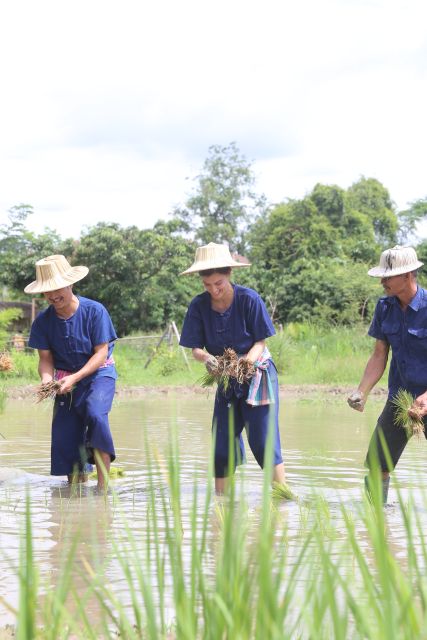
This is limited to a small group, up to 10 people. That size changes the whole experience.
In a small group:
- The instructor can correct technique and explain steps clearly.
- You get more time with questions, especially for the buffalo feeding and rice seedling handling parts.
- You don’t feel like you’re waiting your turn while the group moves on.
It’s a calmer, more personal format, which is especially valuable when you’re working with animals and manual tasks.
Languages: English and Thai support when you want clarity
The instructor is available in both English and Thai. That’s a practical mix—English helps with detailed instructions, and Thai is there for additional support if you’re in a mixed language group.
If you’re not a confident speaker, the good news is the activities are visual too. You’ll see what you’re supposed to do and then repeat it with guidance.
Who this Chiang Mai farm experience is best for
You’ll probably love this if you:
- Want a short, hands-on farm lesson rather than a passive tour
- Like animal experiences that focus on care and routine
- Enjoy working with your hands and don’t mind mud
- Want a practical way to learn how rice starts in a nursery, not just the final field day
It’s also a strong option for families. The structure is active but time-limited, and the farming tasks are explained in a way kids can understand. You’ll still want to manage expectations: it’s a farm, so it won’t be neat and tidy like a classroom.
Who might want a different option
You might skip this if you:
- Expect an indoor cultural museum style experience
- Hate muddy footwear and don’t want to deal with it even with boots
- Want lots of free roaming time without instruction
This isn’t about wandering. It’s about guided doing.
Should you book the Chiang Mai buffalo and rice planting experience?
If you want a real working-farm day in Chiang Mai that fits into 150 minutes, I’d book it. The combination is the winning formula: buffalo feeding plus rice planting plus a farm lunch that ends the morning the way it should.
Do it if you’re the type who enjoys learning by doing, and you don’t mind getting a little dirty for a good story later.
Only hesitate if mud and field work are a deal-breaker for you. If they’re not, Hang Tueng gives you a compact, value-heavy slice of northern Thai farm life you can’t get from a quick photo stop.
FAQ
How long is the Chiang Mai Thai buffalo and rice planting experience?
It lasts about 150 minutes.
What is included in the price?
You get the rice planting experience, pickup and drop-off, traditional farmer costumes and boots, and lunch.
What time commitment should I expect on-site?
The total experience time is 150 minutes, with structured farm activities and lunch included.
Is pickup and drop-off provided?
Yes. The experience includes pickup and drop-off using a red taxi service.
Where do I meet for the tour?
Meet at Hang Tueng farmstay & workshop Chiang Mai. You can find it on Google Maps by searching Hang Tueng farm stay & workshop Chiang Mai.
What languages are used during the experience?
The instructor can speak English and Thai.
What do you serve for lunch?
Lunch includes rice with green chicken curry, a herbal drink, and mango sticky rice.
What is the group size limit?
The group is limited to a small group of up to 10 participants.