REVIEW · CHIANG MAI
Evening Cooking Class
Book on Viator →Operated by Galangal Cooking Studio · Bookable on Viator
One-hour choices can set up the whole night. This evening Thai cooking class in Chiang Mai puts you in a group, starts with a local market ingredient walk, and ends with you dining on what you cook. I really like that the class is built for real-life cooking at home, not just a one-off show, plus you leave with a 40-page recipe PDF at no extra cost. One drawback to keep in mind: it’s a shared, small-group kitchen experience (up to 24), so you’ll have to wait your turn like any hands-on cooking class.
The class runs about 4 hours, starting at 3:30 pm, and it can include pickup from select hotels. You’ll also get a mobile ticket, and the activity wraps back at the meeting point at the Galangal Cooking Studio. If you want an easy, structured way to learn Thai food without guessing ingredients or techniques, this is a very solid pick.
In This Review
- Key things to know before you go
- A 3:30 pm start that turns Chiang Mai’s evening into a kitchen lesson
- Galangal Cooking Studio and the small-group setup
- The local market walk: picking ingredients you can actually find later
- In the studio: how the teacher breaks down Thai flavor
- What you’ll cook, and why sharing makes it work
- Dinner at the end: tasting your creations while it’s fresh
- The take-home 40-page recipe PDF that makes it repeatable
- Price and value: what $33.43 buys you in Chiang Mai
- Who should book this evening class (and who might skip it)
- Should you book it?
- FAQ
- What time does the evening cooking class start, and how long does it last?
- Do they offer hotel pickup?
- What happens during the class?
- Is there a take-home recipe document?
- How large is the group?
- What is the cancellation policy?
Key things to know before you go
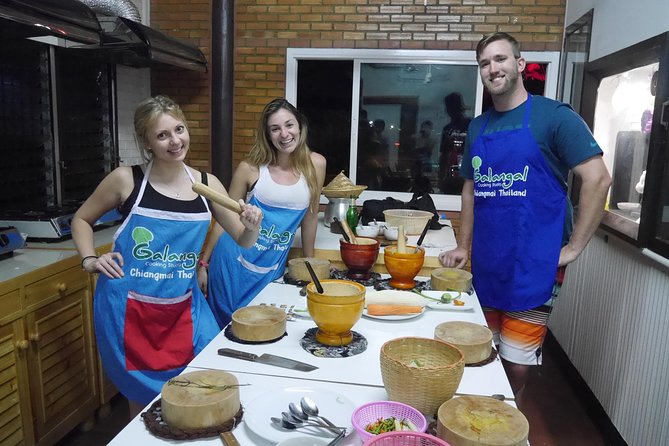
- Market-first learning: you see ingredients before you touch the stove, so recipes make sense later.
- Hands-on guidance from a professional instructor: you cook while someone keeps the process clear.
- Dinner at the end: you taste your work while it’s fresh and hot.
- A take-home recipe PDF (40 pages): good for planning groceries and repeating dishes at home.
- Small-group feel: maximum of 24 travelers, enough people for energy but still manageable.
- Neu is a guest favorite: one instructor named Neu has stood out for fun, clarity, and a great market-to-kitchen flow.
A 3:30 pm start that turns Chiang Mai’s evening into a kitchen lesson
This class is designed for the “I want to do one great activity, then enjoy the rest of the night” crowd. With a 3:30 pm start and about 4 hours total time, you still have plenty of evening left for strolling, night markets, or an easy meal on your own afterward.
Timing matters here. Starting in the late afternoon helps you avoid the long mid-day heat and means the whole experience feels like one smooth arc: market, cooking, dinner, then done. And since the activity ends back at the meeting point, you’re not stuck with a complicated follow-up plan.
If your Chiang Mai trip is short, this format is a strong choice because it packs a lot into one session: ingredients, techniques, and tasting your own food.
You can also read our reviews of more cooking classes in Chiang Mai

Galangal Cooking Studio and the small-group setup
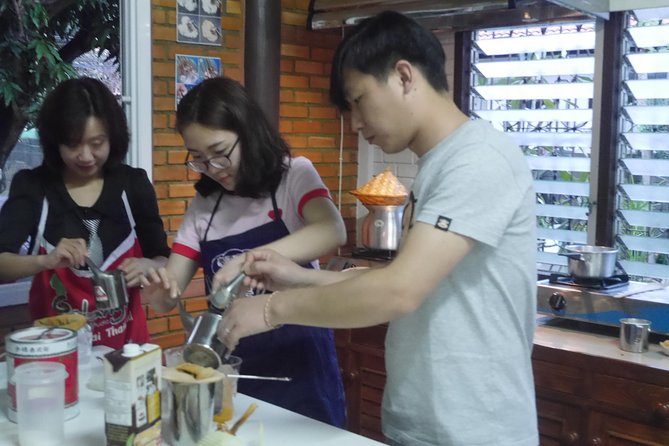
The class meets at Galangal Cooking Studio, 366 Thanon Charoenrajd, Tambon Wat Ket, in the Wat Ket area. It’s not just a classroom with demo tables. This is a working cooking studio where you’ll actually be making dishes.
The group size cap is 24 travelers, which keeps the experience social but not chaotic. In a kitchen, that balance is the difference between learning and feeling rushed. The better classes are the ones where you can get help when your sauce looks off or your chopping needs correction, and a cap like this makes that more realistic.
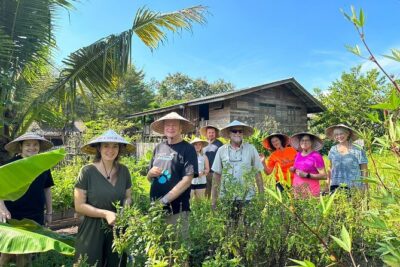
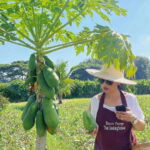
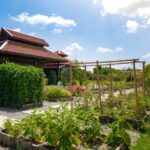
One review also mentioned a short garden look, plus learning about Thai herbs and fruits. That’s not something you should plan your whole evening around, but it’s a nice reminder that these studios often connect the food to where ingredients come from.
The local market walk: picking ingredients you can actually find later
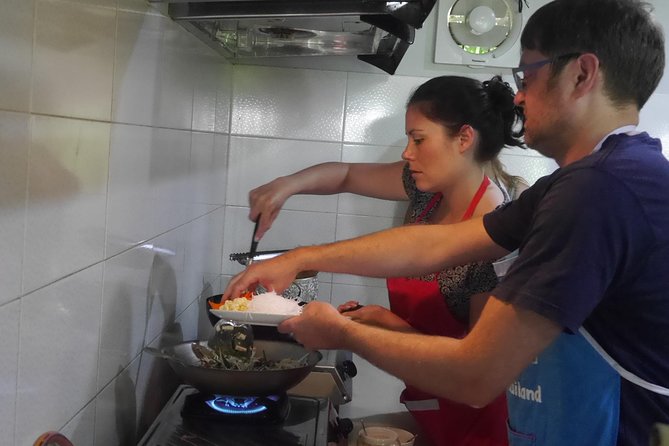
After pickup (when available), you’ll head to a local market. This is where the class earns its keep. Instead of handing you a list and hoping you can translate it into supermarket shopping at home, the instructor introduces the ingredients you’ll use during the session.
You’ll learn what items matter, why they’re used, and how they fit into Thai flavor. Even if you’re not a kitchen person, this part makes the recipes far more intuitive. You start to understand the logic behind Thai cooking: balance, aroma, and fresh ingredients all working together.
This is also your chance to ask basic questions that you can’t always ask during the cooking portion. If there’s a spice or herb you’ve seen in Thai food but never used, the market walk is where it becomes concrete.
In the studio: how the teacher breaks down Thai flavor
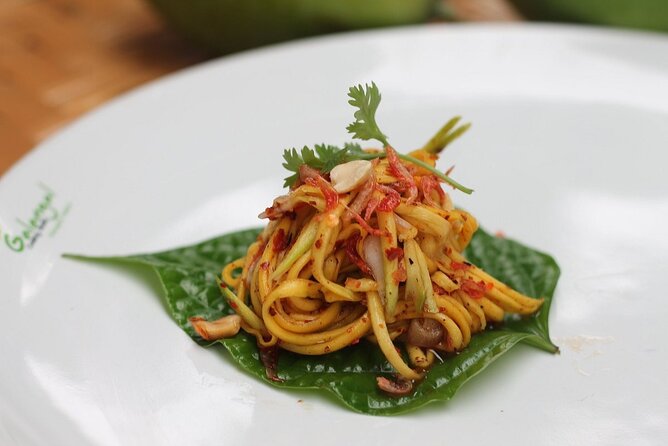
Once you’ve gathered your ingredients, you’ll move to the cooking studio where the instructor guides you step-by-step. This is the heart of the experience. Thai cooking can feel intimidating at home because recipes depend on specific flavors and textures. A good teacher helps you demystify that.
You’ll likely get instruction that covers more than just what to add. Expect coaching on timing, mixing, and how to tell when something is right (for example, when a sauce tastes balanced or when a dish is cooked through). When cooking is guided like this, you learn patterns you can reuse later instead of memorizing random steps.
One standout detail from guest feedback: the instructor can make the market-to-kitchen transition feel fun and natural. A guest specifically called out an instructor named Neu as an awesome chef and teacher, with a great atmosphere from the market through the kitchen.
What you’ll cook, and why sharing makes it work
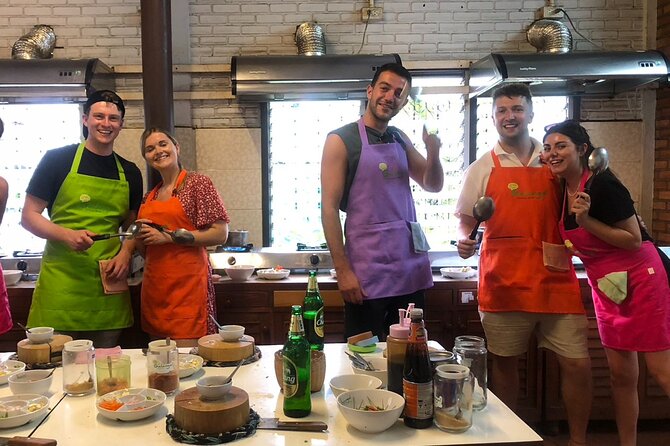
This is a group class, so it’s not just you and a private chef. But that’s part of the value. The camaraderie shows up in the way people trade tastes, let each other try dishes, and share the workflow as they go.
That sharing matters because it helps you calibrate your palate. If your dish tastes slightly off, someone else’s version can clue you in to what the instructor was emphasizing. It’s also motivating: you’re making something you’ll eat, not just practicing skills.
In terms of volume, the structure supports cooking multiple dishes. One guest said they cooked four dishes each, and that gives you an idea of how the class can be paced. You’ll get enough variety that your dinner feels like a real meal, not a single small taste.
You can also read our reviews of more evening experiences in Chiang Mai




Dinner at the end: tasting your creations while it’s fresh
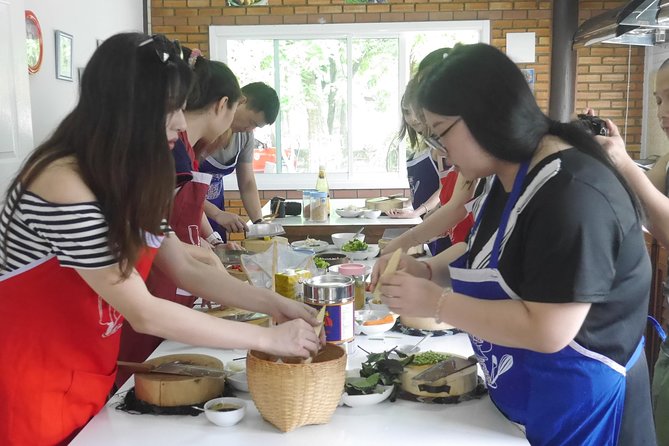
The best moment comes at the end: you dine on your creations. This isn’t “sample a bite and leave.” The class is set up so the final meal is part of the learning loop.
Eating what you cooked closes the feedback circle. You can compare your dish’s flavor and texture to what you remember from Thai restaurants, then connect that to the ingredient choices you saw at the market earlier. It also turns the whole evening from a task into a payoff.
If you’re traveling solo or you’re not sure you’ll click with group activities, dinner helps. Everyone is focused on food, the instructor’s guidance is still relevant, and there’s a natural reason to sit, talk, and enjoy.
The take-home 40-page recipe PDF that makes it repeatable
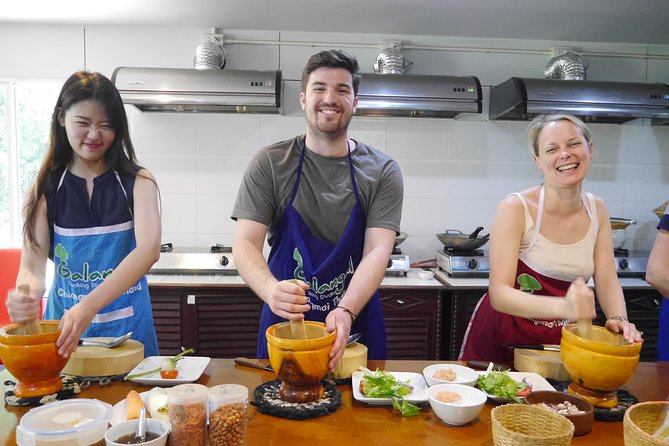
One reason people love cooking classes is that they solve the post-trip problem: what do I cook next week when I’m back home and the details have faded?
This one includes a 40-page recipe PDF with no extra cost. That’s a big deal. A take-home guide turns a one-time activity into an actual tool you can use to plan groceries and cook confidently later.
Also, because the PDF is tied to what you learned, it’s more likely to match what you made rather than being generic Thai recipes that ignore your questions. If you’ve ever tried to cook from scratch and felt lost, this kind of structured reference is exactly what you want.
Price and value: what $33.43 buys you in Chiang Mai
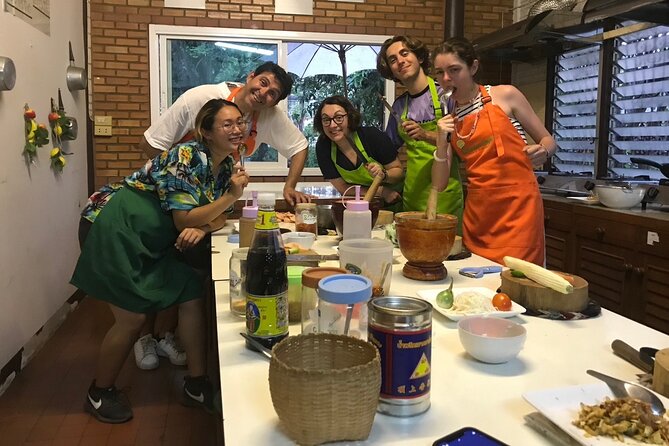
At $33.43 per person, this class sits in the “good value” zone for Chiang Mai, especially because it’s not just a demo and not just a market stroll. You’re paying for three concrete things:
- A market ingredient orientation (so you know what you’re buying later)
- Hands-on instruction (so you don’t guess your way through Thai cooking)
- Dinner plus a take-home recipe PDF (so you get both an experience and a repeatable resource)
When you break it down like that, the price feels practical. Even if you only end up cooking two or three of the recipes at home, the value usually still holds because the PDF gives you a long shelf-life lesson.
You’re also getting a clear time investment: about 4 hours starting at 3:30 pm. No half-day commitment, no complicated schedule.
Who should book this evening class (and who might skip it)
I think this class is a great fit if:
- You want to learn Thai cooking with structure, not random YouTube attempts.
- You like the idea of a market walk paired with hands-on cooking.
- You want an evening activity that ends with a real meal.
I’d tell you to consider skipping if:
- You hate group activities or you prefer private instruction.
- You’re looking for a purely sightseeing-heavy tour. This is food-first, with cultural context mainly through ingredients.
- You only want a quick bite. This runs long enough to be fully hands-on.
For most visitors, it hits the sweet spot: useful skills, a fun group vibe, and a meal you helped make.
Should you book it?
Yes, if you want a practical Thai cooking experience in Chiang Mai that actually helps you cook at home afterward. The strongest reasons to book are the combination of market ingredient orientation, a guided studio session, and the fact that you eat what you make, plus the 40-page recipe PDF to carry the learning beyond the evening.
If you’re on the fence, look at your travel style. If you enjoy learning by doing and you like your activities with a clear payoff, this is a smart use of time. If you just want photos and light tasting, you might get more satisfaction from a different kind of tour.
FAQ
What time does the evening cooking class start, and how long does it last?
The class starts at 3:30 pm and lasts about 4 hours. It ends back at the meeting point.
Do they offer hotel pickup?
Yes. Pickup is offered from select hotels.
What happens during the class?
You’re picked up (if your hotel is in the pickup area), taken to a local market where the teacher introduces the ingredients, and then you proceed to the cooking studio for guided hands-on cooking. You dine on what you make at the end.
Is there a take-home recipe document?
Yes. You receive a PDF with 40 pages of recipes at no extra cost.
How large is the group?
The class has a maximum of 24 travelers.
What is the cancellation policy?
You can cancel for a full refund up to 24 hours in advance of the experience’s start time. If you cancel less than 24 hours before, the amount paid is not refunded. Any changes made less than 24 hours before aren’t accepted. The experience may also be canceled if the minimum number of travelers isn’t met, in which case you’ll be offered a different date/experience or a full refund.