REVIEW · CHIANG MAI
Half Day, Monk Chat Meditation Retreat on Waterfall Temple, Chiang Mai, Thailand
Book on Viator →Operated by Asia Connect Travel · Bookable on Viator
A waterfall morning with a real point. This half-day monk chat meditation retreat pairs nature time at Huay Keaw Waterfall with respectful Buddhist temple practice at Wat Pha Lat. I like the small group feel and the hands-on “do it, don’t just watch” approach to mindfulness, but you should note that the monk interaction can be short, so the meditation may feel more like an intro than a long seated session.
You start early (8:00 am) and move at a calm pace, with a max group size of 9. I also like that you get practical guidance on temple manners—how to pay respect, what to offer, and how to join the ritual steps without guessing.
One possible snag: food & drink for the monk is not included, even though the tour provides an incense-and-flower offering set. If you show up without planning, you’ll be scrambling to sort that part out on the day.
In This Review
- Key Things I’d Pay Attention To
- Morning Start in Chiang Mai: Why 8:00 Matters
- Huay Keaw Waterfall: Merit-Making Before the Photos
- Wat Pha Lat: The Ritual Steps That Give the Trip Real Meaning
- Paying respect to the Buddha image
- Offering to make merit (and then dedicating it)
- Monk chat, sermon, and blessing
- Meditation on the Waterfall Top: Walking, Sitting, and City Views
- Walking meditation: movement that still feels slow
- Sitting meditation: learning the basics without intimidation
- Burmese Pagoda Style and Relic Stories at Candlelight Time
- Offerings, What’s Included, and What You Must Plan
- Guide Impact: The Human Part You’ll Remember
- Price Check: Is $71.34 Good Value?
- Who This Half-Day Monk Chat Retreat Is For
- Should You Book This Monk Chat Meditation Retreat?
- FAQ
- What’s the duration of the Monk Chat Meditation Retreat?
- Where does the tour take place?
- Is pickup included?
- What’s included in the price?
- What’s not included?
- Is there meditation during the tour?
Key Things I’d Pay Attention To
- Small group size (max 9) keeps it personal and less awkward when questions come up
- Huay Keaw Waterfall starts the experience in nature, not a classroom
- Wat Pha Lat rituals teach what to do and why, not just where to stand
- Walking + sitting mindfulness is built into the temple visit on the mountain
- Offerings matter: incense set is provided, but food and drink for the monk are on you
- Monk chat length varies—expect an introduction style, not a long retreat
Morning Start in Chiang Mai: Why 8:00 Matters
This tour is designed for the morning light and cooler air, starting at 8:00 am and running about 4 hours total. That timing matters in Chiang Mai. You get the “fresh start” feeling before the heat ramps up and before the city gets louder.
You’ll also likely appreciate the small-group format. With up to 9 people, it’s easier for the English-speaking guide to explain what’s happening and to correct small mistakes before they turn into big moments of confusion (especially at temple sites where the vibe is calm and focused).
If pickup is offered for your area, you’ll take less mental energy into the day. If not, the tour notes it’s near public transportation, so you’re not forced into a complicated plan. Either way, go in expecting a coordinated, guide-led morning rather than a free-form temple crawl.
You can also read our reviews of more tours and experiences in Chiang Mai.



Huay Keaw Waterfall: Merit-Making Before the Photos
The day begins at Huay Keaw Waterfall, where the tone shifts from sightseeing mode to respectful participation. Before you jump into views and water sounds, the group stops for a merit-making moment: you set up offerings in front of relic-related items and pay respect in a traditional way.
Here’s what you’re taught to do and what you’re given:
- a set of gold leaf incense sticks and candle
- lotus flowers
- a marigold flower garland
- guidance on making merit and offering respect
That moment is brief (about 20 minutes at this stop), but it sets the right mindset. Instead of treating the site like a backdrop, you’re doing something with intention—something very different from the usual waterfall “quick stop and go” routine.
The stop also includes the Kruba Srivichai Monument. You’re shown this piece of northern Thailand context, tied to Kruba Srivichai, known for being a major Lanna developer about two centuries ago. Even if you don’t geek out on names, it helps you understand the region’s spiritual and cultural texture beyond the obvious temples.
A small consideration: because the waterfall stop is short, you won’t have hours to wander freely. Plan to enjoy the atmosphere and the ritual moment more than to “explore everything.” If you want long nature time, you may feel a little rushed here.
Wat Pha Lat: The Ritual Steps That Give the Trip Real Meaning
After the waterfall stop, the main action moves to Wat Pha Lat, where the focus is temple practice: how to behave, how to offer, and how meditation fits into a Buddhist setting.
The guide walks you through several clear steps:
Paying respect to the Buddha image
You’re shown how to behave at the image—where to stand, how to join the moment, and what respect looks like in practice. That’s not just etiquette. It helps you slow down and stop treating the temple like a photo booth.
Offering to make merit (and then dedicating it)
You’ll be invited to make merit by offering food to the monk and dedicating it. After that, you pour water of dedication as a libation. This is the kind of ritual sequence that becomes memorable because you do it, step by step, instead of reading about it later.
Important practical note: the tour does not include the food & drink you’ll offer the monk. The experience provides an incense candle set with flowers and gold leaf for the offering parts they handle, but you’ll need to bring or buy what’s required for the monk offering. The experience info also warns about planning offerings ahead, so treat that as a real checklist item, not a suggestion.

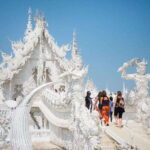

Monk chat, sermon, and blessing
You’ll listen to a short sermon and have a monk chat moment, plus receive a blessing. This is the part that can make or break expectations, depending on what you hoped for.
The key thing to know: some people come in thinking they’ll get a longer monk-led meditation segment. Based on the way the experience is structured here, you should expect an introduction-style interaction—enough to learn the “why” and “how,” not necessarily a long guided retreat with hour-after-hour sitting.
Meditation on the Waterfall Top: Walking, Sitting, and City Views
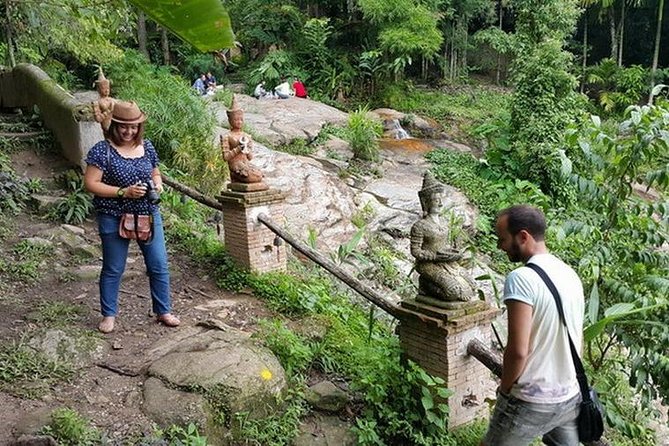
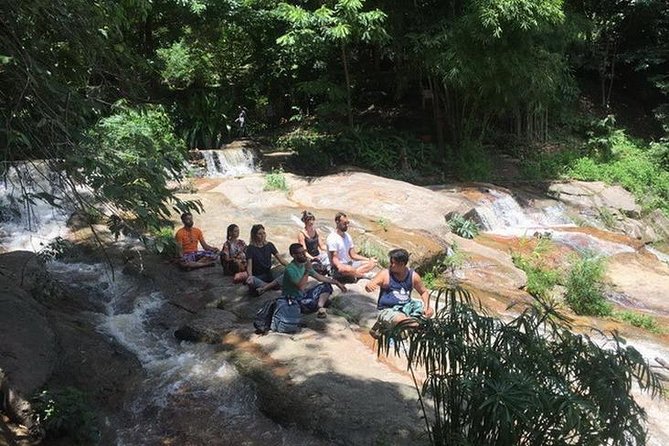
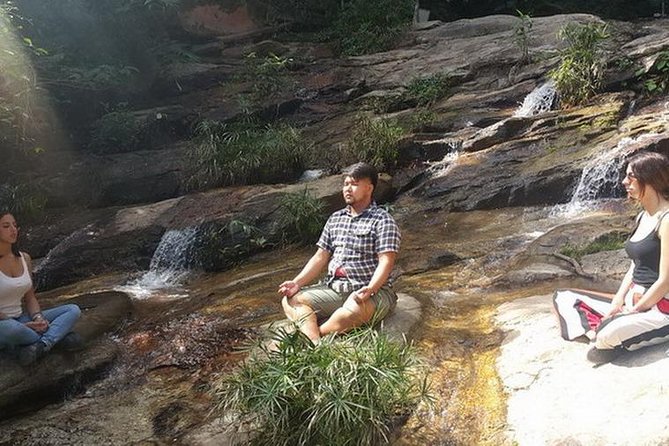
One of the most valuable parts of this trip is that meditation isn’t left as theory. You learn basic walking and sitting mindfulness while you’re in a natural setting near the waterfall top area, with guidance that fits a first-timer.
It’s described as rain-forest surroundings, and it also includes views over Chiang Mai city from higher ground. Even if you don’t think of yourself as a view person, the combination works. The city view gives you perspective. The nature gives you breath.
Walking meditation: movement that still feels slow
Walking meditation can sound like an oxymoron until you try it the guide’s way: you’re paying attention to steps, breathing, and body awareness instead of “walking to get somewhere.” For many first-timers, this is the easiest entry point because you don’t have to sit still right away.
Sitting meditation: learning the basics without intimidation
Sitting meditation is taught as a basic skill, not a test. If you’re new to Buddhism or meditation, this matters. You get a chance to practice with cues instead of guessing what a “correct” posture or focus should be.
One note from an expectations standpoint: because this is a half-day experience, the mindfulness practice is necessarily limited in time. Think of it as a sampler you can build on later, not a full retreat.
Burmese Pagoda Style and Relic Stories at Candlelight Time
Later, the tour includes a candlelight ritual sequence. You’ll light incense sticks and a candle, joining a candlelight procession involving relics associated with a story tied to Myanmar’s Schwedagon Pagoda.
The temple connection is described like this:
- relics linking back to the Schwedagon Pagoda from Myanmar
- the temple’s Burmese pagoda style, explained in relation to those relic ties
Even if you’re not familiar with Buddhist relic traditions, the ritual format is what makes the story stick. Lighting incense and seeing the procession set up the atmosphere in a way that facts alone can’t.
This is also where the experience becomes very “real Thailand,” not just a checklist of famous spots. The pacing, the hand-on actions, and the guided explanations all help you understand what you’re seeing while you’re seeing it.
Offerings, What’s Included, and What You Must Plan
This tour makes a smart move: it includes the key supplies for the incense-and-flowers offering piece.
Included offering items:
- incense candle set with flowers
- gold leaf elements
Not included:
- food & drink to offer the monk
That split is important because it changes your prep. You don’t need to shop for everything, but you do need to handle the monk offering part. The experience info implies you’ll be guided to prepare offerings ahead (and some feedback suggests people appreciated being warned), so don’t treat this as spontaneous.
A good travel habit here: wear clothes you can adjust for temple situations (light layers can help when you shift between waterfall areas and temple spaces). Bring a small bag for personal items, and keep your hands free when you’re joining ritual steps.
Guide Impact: The Human Part You’ll Remember
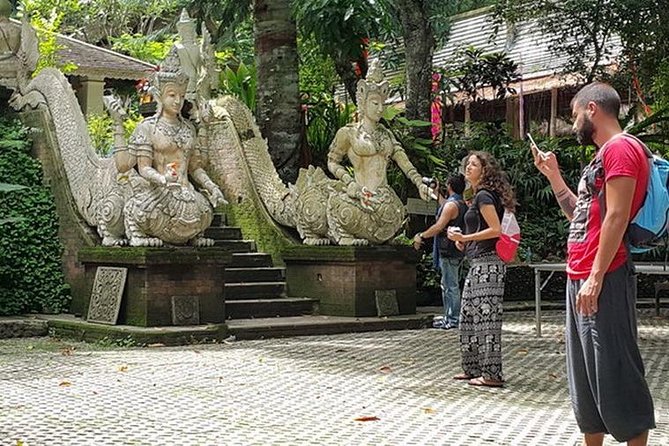
The guides are a major reason this experience gets strong feedback. Names that show up in the guide stories include Kat, Siripan, and Pisi—and the common theme is how they explain things clearly while keeping the tone kind and respectful.
In practical terms, a good guide helps in three ways:
- They translate what you’re supposed to do (so you don’t feel lost at the Buddha image or during offerings)
- They adjust the pace when someone is unsure
- They make the meditation and the history feel connected, not like two separate lectures
You can also see different guide strengths in the feedback: one person praised compassion and friendliness, another highlighted meditation coaching at your own pace, and several focused on how relaxed and serene the morning felt.
If you’re hoping for a calm, supportive introduction to Buddhist meditation, this is the kind of tour where the guide can make a big difference in how comfortable you feel.
Price Check: Is $71.34 Good Value?
At $71.34 per person, this half-day tour sits in a price range that can feel either fair or expensive depending on what you compare it to.
Here’s the value math that matters:
- you get an English-speaking guide
- all fees and taxes are included
- you receive an incense candle set with flowers and gold leaf components
- travel insurance is included
- you get pickup offered (if available for your location)
- the group is limited to 9 travelers, which often means less waiting and more time explained clearly
What you don’t get is the monk offering food and drink, which is small but real. If you’re traveling with limited time to shop, that can add friction.
Overall, the value looks best if you want a structured cultural experience with guided meditation basics and you’ll actually use the included supplies and explanations. If you mainly want scenery and unstructured wandering, you might feel like you’d get more freedom on your own.
Who This Half-Day Monk Chat Retreat Is For
This tour fits best if you want:
- a short, guided introduction to meditation basics
- a respectful temple experience with step-by-step ritual instruction
- nature time at a waterfall without committing to a full-day retreat
- a small group setting where questions are normal
It also works well for first-timers. Several notes emphasize that it’s a gentle entry point into meditation for people new to Buddhist practice.
It may feel less satisfying if you want:
- a long, monk-led meditation session
- lots of direct, extended one-on-one time with the monk
- plenty of free time to roam on your own at the waterfall
That doesn’t mean it’s bad—it just means you should match your expectations to a half-day format.
Should You Book This Monk Chat Meditation Retreat?
Book it if you want a meaningful morning that mixes Huay Keaw Waterfall and Wat Pha Lat, with guided rituals and simple mindfulness practice. The small group size and the inclusion of the incense-and-gold-leaf offering set make it more turnkey than you might expect for temple visits.
Think twice if your top priority is a deep, long monk meditation experience. The monk interaction and meditation elements are best seen as an introduction style: you’ll learn and practice basics, but you’re not booking a multi-hour seated retreat.
If you do book, come ready for offerings. Plan for the food and drink portion yourself, wear temple-appropriate clothes, and let the guide set the pace. You’ll get more out of it when you treat it like participation, not a performance.
FAQ
What’s the duration of the Monk Chat Meditation Retreat?
It lasts about 4 hours.
Where does the tour take place?
In Chiang Mai, Thailand, with stops at Huay Keaw Waterfall and Wat Pha Lat.
Is pickup included?
Pickup is offered.
What’s included in the price?
An English-speaking guide, travel insurance, all fees and taxes, and an incense candle set with flowers and gold leaf items.
What’s not included?
Food and drink for the offering to the monk are not included.
Is there meditation during the tour?
Yes. You’re guided through basic walking and sitting mindfulness meditation as part of the Wat Pha Lat experience, along with monk chat, a short sermon, and a blessing.