REVIEW · CHIANG MAI
Historic Temples and City Guided Walking Tour in Chiang Mai
Book on Viator →Operated by Beyond Experience · Bookable on Viator
Elephant chedi first, then classic Lanna temples. This 3-hour old-town route links Chiang Mai’s major landmarks with easy, low-impact walking, so you get context without racing. I especially like how the tour kicks off at Wat Chiang Man, where the chedi feels wrapped in story from the moment you arrive.
My second favorite part is the mix of temple styles: you’ll see classic northern Lanna architecture at Wat Phra Singh and then shift gears to the teak-heavy craftsmanship at Wat Phan Tao. One consideration: entry fees are not included for Wat Phra Singh and Wat Chedi Luang, so you’ll want to budget a little extra on the day.
In This Review
- Key things to know before you go
- Why this Chiang Mai temple walk feels practical (not just sightseeing)
- Getting oriented in Chiang Mai’s old walled lanes
- Wat Chiang Man: elephant chedi and the feeling of age
- Three Kings Monument: a quick history break in an open square
- Wat Phra Singh: classic Lanna temple architecture you can actually study
- Wat Phan Tao: teak wood, palace origins, and a ruler’s throne
- Wat Chedi Luang Varavihara: the ruined chedi finale plus a standing Buddha
- Price and pacing: is $16 a smart deal?
- What I’d watch for before booking
- Who this tour is best for
- Should you book this Chiang Mai walking temple tour?
- FAQ
- How long is the Historic Temples and City guided walking tour in Chiang Mai?
- Where does the tour start and where does it end?
- Is the entrance fee included for all temples?
- What’s included in the tour price?
- Is this tour limited to a small group size?
- Does the tour require good weather?
- What is the cancellation policy?
Key things to know before you go
- Small group size (max 10): easier questions, less crowd pressure at the temples
- Wat Chiang Man start: you begin in the oldest temple, with an elephant-surrounded chedi
- Teak-focused stop at Wat Phan Tao: a strong contrast with the Lanna-style sites
- Wat Chedi Luang finish: ruined chedi views plus a standing Buddha in the main prayer hall
- Bottled water included: helpful for a 3-hour walk
- Good weather matters: plan for outdoor time in the old city lanes
Why this Chiang Mai temple walk feels practical (not just sightseeing)
This tour is built for orientation. Instead of bouncing around the city, you move west through the old walled area in a steady line—an efficient way to understand where each landmark fits. The guide also keeps things conversational, so the temples become more than photo stops.
At $16 for about 3 hours, the value is in the structure. You’re paying for a guided story thread that connects founding legends, royal-era buildings, and architectural details you might miss on your own. You also get a mobile ticket plus bottled water, which cuts down on small day-of expenses.
The other smart piece is the pace. The stops are long enough to look closely, but short enough that you don’t feel trapped inside any one site. If you like tours that get you oriented fast, this one fits.
You can also read our reviews of more walking tours in Chiang Mai

Getting oriented in Chiang Mai’s old walled lanes
Your walk starts at Wat Chiang Man and then moves through central old city squares and major temples—so you’re mostly staying where the city’s story is concentrated. That matters because Chiang Mai’s temples aren’t isolated landmarks; they connect to power, belief, and how the old town was planned.
The tour also leans into a low-impact approach. Walking is the main mode, and the idea is to explore while keeping your environmental footprint smaller. In practice, that means fewer logistical headaches and less time lost in transit.
You’ll also see how the guide uses “place + meaning.” One stop is about the architecture; another is about a monument’s cultural significance. That mix helps your brain file everything away instead of letting it blur into a list.
Wat Chiang Man: elephant chedi and the feeling of age
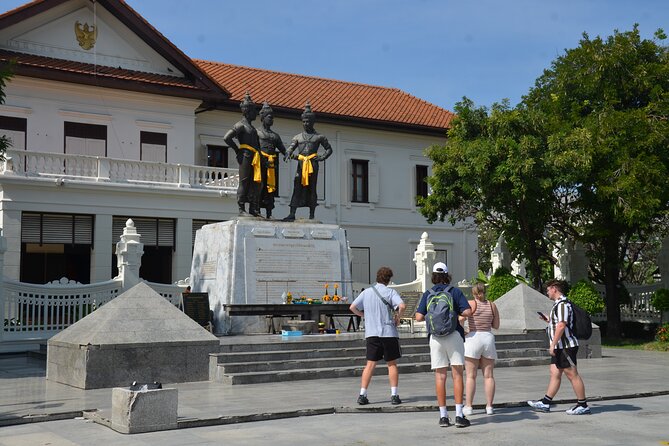
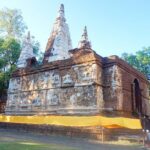
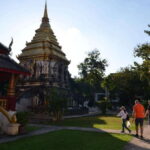
Stop 1: Wat Chiang Man is a great opening because it’s anchored in age and symbolism. The tour begins at Chiang Mai’s oldest temple, and the entrance sets the tone immediately. The chedi area is surrounded by elephants, and you’ll notice 15 stone elephants that appear to carry the structure on their backs.
This is one of those details that’s hard to appreciate from far away or without context. With a guide, it turns into a visual clue for how people once thought about power, protection, and sacred space.
Time here is about 30 minutes, and that’s enough to see the chedi area closely without rushing. Admission is free, which is a nice early win for budgeting and scheduling.
Three Kings Monument: a quick history break in an open square
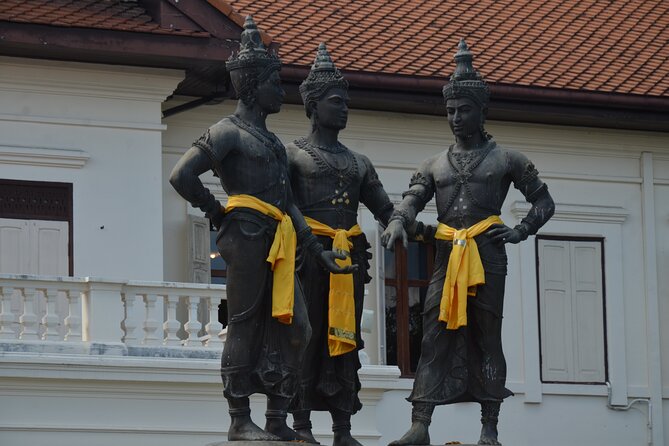
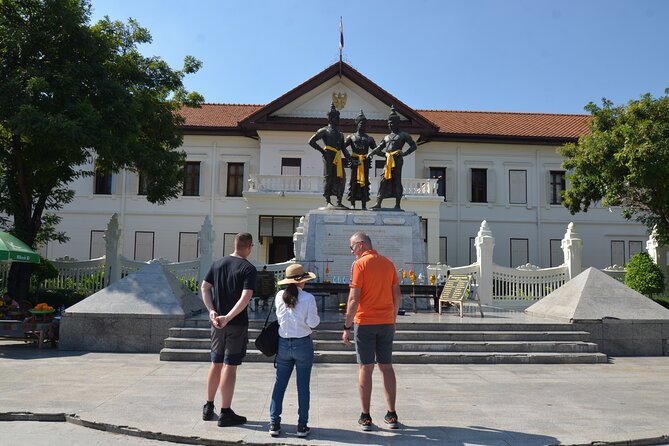
After Wat Chiang Man, the tour heads toward the Three Kings Monument in the heart of the walled old town. This stop is shorter—about 15 minutes—but it works as a mental reset. Instead of another temple interior, you get an open, public landmark where the guide can connect local history to a single, recognizable focal point.
The guide shares the history behind the statue and its cultural significance. There’s also an interactive moment described as digging and constructing this masterpiece, which suggests the guide uses hands-on storytelling or playful engagement to help the details stick.
If you’re the type who gets impatient when tours move straight from building to building, this little break helps.
Wat Phra Singh: classic Lanna temple architecture you can actually study
Stop 3: Wat Phra Singh runs about 50 minutes, which is exactly right for a major site. It’s described as one of the finest examples of classic Lanna-style temple architecture in Northern Thailand. That means you’re not just looking at a structure—you’re looking at a style that shaped how northern Thai temples were designed.
This is one of the stops where the architecture matters most. The guide’s job is to point you toward what’s worth looking at: the design language of Lanna traditions, and how Wat Phra Singh fits into Chiang Mai’s broader temple story.
Here’s the practical part: entrance fee is not included. So plan for that cost in advance. It’s a small hit compared to the overall tour price, but it’s the one extra payment you should expect if you want to see inside.
You can also read our reviews of more guided tours in Chiang Mai




Wat Phan Tao: teak wood, palace origins, and a ruler’s throne

Then the tour shifts to Wat Phan Tao, a standout because it’s strongly tied to material craft. This temple is built in the 14th century, originally used as part of a royal palace before being converted into a monastery.
What makes it especially memorable is how much it leans into woodwork. The temple is noted for being constructed almost entirely of teak wood. The main hall features an enormous teak throne that was once used by Chiang Mai’s rulers. It’s the kind of object that changes your sense of the place: you’re not just observing religion, you’re seeing power and governance made physical.
The tour time is only about 15 minutes here, which might feel short if you want to linger over every wooden detail. But the quick timing can also help you keep momentum for the big finale.
Admission is listed as free for this stop, so it’s another budget-friendly point in the route.
Wat Chedi Luang Varavihara: the ruined chedi finale plus a standing Buddha
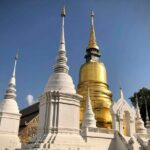
The tour finishes at Wat Chedi Luang Varavihara. This is the kind of ending that makes you pause, even if you’re already temple-sated. The chedi is described as impressive and ruined, and that mix—grand scale plus the marks of time—creates a different kind of atmosphere than a fully intact temple.
You’ll also see a majestic standing Buddha in the main prayer hall. That detail gives the stop a strong emotional center: you get spectacle from the chedi outside, then you get focus inside with the Buddha.
The time here is about 50 minutes, and that length is useful. Ruined places can be visually confusing at first, but with a guide you get the right way to look—what the structure tells you, and how it connects to the temple’s role over time.
One more cost reality: entrance fee is not included here either. Since this is the final stop, I’d treat it as your main “budget flex” of the day. You’ll want enough money set aside so you can go in without hesitation.
Price and pacing: is $16 a smart deal?
For $16, you’re paying for three hours of guided orientation plus access to several major stops without having to plan transport between them. What makes it feel like value is not only the number of sites—it’s the way the guide connects them.
The best part is that the guide’s role covers the gap most self-guided visits leave behind. You’re given meaning behind the landmarks: the elephant chedi detail at Wat Chiang Man, the cultural significance of the Three Kings Monument, the Lanna design at Wat Phra Singh, and the teak throne and palace origins at Wat Phan Tao.
The main “value adjustment” is cost at the paid entrances. Because Wat Phra Singh and Wat Chedi Luang require entrance fees not included, your real total for the day will be a bit higher than $16. If you’re budgeting tightly, keep that in mind.
On pacing, the structure is well-balanced. You get a long sit at the big temple sites (Wat Phra Singh and Wat Chedi Luang), plus shorter storytelling stops that prevent fatigue.
What I’d watch for before booking
This is a walking experience in an old city setting. Three hours is very doable, but the time adds up—especially if it’s hot or humid. The tour also says it requires good weather, so you shouldn’t book it if your trip timing is extremely weather-sensitive.
Also note the group limit: up to 10 people. That’s good for quality and questions. Still, you’ll want to be ready for a guided group pace, not a fully self-directed wander.
Who this tour is best for
This fits best if you want an efficient way to see the key Chiang Mai temple landmarks while understanding what you’re looking at. It’s also a strong choice if you enjoy guides who answer questions and keep the tone friendly.
The guide talent you’ll find in this format is repeatedly praised. Names that come up include Two Two, Jen, Pang, and Tin, and the common theme is clear explanations plus the ability to handle lots of questions. One specific perk from going on a Sunday is that you might catch traditional dance connected to a temple setting.
If you’re short on time but don’t want to skip the meaning behind famous sites, this is a very reasonable way to do it.
Should you book this Chiang Mai walking temple tour?
Book it if you want a guided walk that links multiple temple styles—Lanna architecture, teak palace history, and the iconic ruined chedi of Wat Chedi Luang—without spending your day figuring out routes. The inclusion of bottled water, the mobile ticket, and the small group size all support an easy, low-drama experience.
Skip or reconsider if entrance fees would stress your budget, since Wat Phra Singh and Wat Chedi Luang have costs not included. Also think twice if your dates are likely to be impacted by poor weather, since the tour is designed for outdoor walking.
If your goal is to get oriented fast and leave with a clearer understanding of how Chiang Mai’s old town temples connect, this one is worth your time.
FAQ
How long is the Historic Temples and City guided walking tour in Chiang Mai?
It’s about 3 hours.
Where does the tour start and where does it end?
The tour starts at Wat Chiang Man and finishes at Wat Chedi Luang.
Is the entrance fee included for all temples?
No. Entrance fees are not included for Wat Phra Singh and Wat Chedi Luang.
What’s included in the tour price?
Bottled water is included.
Is this tour limited to a small group size?
Yes. The group is capped at a maximum of 10 travelers.
Does the tour require good weather?
Yes. The experience requires good weather, and if it’s canceled due to poor weather, you’ll be offered a different date or a full refund.
What is the cancellation policy?
You can cancel for a full refund up to 24 hours in advance. If you cancel less than 24 hours before the start time, the amount paid will not be refunded.