REVIEW · CHIANG MAI
Evening Cooking Class in Traditional Pavilion with Beautiful Garden – Chiang Mai
Book on Viator →Operated by Oh-Hoo · Bookable on Viator
Four Thai dishes start in the garden.
This evening class turns Chiang Mai into a hands-on food lesson, starting with an organic farm walk and cooking in a traditional open pavilion. I especially loved the max 8-person class size with your own station, and the chance to make curry paste from scratch with an English-speaking instructor. One thing to consider: the menu can shift with seasonal ingredients, so don’t expect every dish to be identical every day.
You’ll begin around 4:00 pm, with hotel pickup and a quick group meet near Tha Phae Gate. After that, the evening moves fast in the best way—herbs and vegetables first, then cooking, then eating what you made together before heading back. It’s a fun, practical Thai-food night that feels local, not performative.
In This Review
- Key Highlights You’ll Actually Use
- Entering the Traditional Pavilion at the Right Hour
- The Simple 4:00 pm Flow From Tha Phae Gate
- Farm Walk First: Eggs, Herbs, and the Flavor Logic of Thai Cooking
- Small-Group Cooking Stations (Up to 8) That Keep You In the Action
- Making Curry Paste From Scratch: The Skill That Travels Home With You
- Your Menu: From Hot and Sour Soup to Mango Sticky Rice
- Soup Builds the Flavor Foundation
- Noodles Teach Texture and Timing
- Curries Let You Practice Paste to Bowl
- Dessert Turns It Into a Real Meal
- Eating Together: Turning Cooking Into a Better Thai Dinner
- Weather and the Outdoor Pavilion Reality
- Price and Value: Why ~$51 Can Be a Smart Buy Here
- Who Should Book This Evening Class
- Quick Ways to Get More From Your Night
- Should You Book Grandma’s Home Cooking Class in Chiang Mai?
- FAQ
- How long is the cooking class?
- What time does the class start?
- Do they pick me up from my hotel?
- How many dishes will I cook?
- How big is the group?
- Is the menu always the same?
- Is the class affected by weather?
Key Highlights You’ll Actually Use
- Organic farm walk with egg collecting before you cook
- Small-group format (up to 8) with individual cooking stations
- Curry paste work taught step by step, not just cooking
- A full menu arc: soup, stir-fry/noodles, curry, and dessert
- English-speaking instruction that focuses on what to do, not just what to say
Entering the Traditional Pavilion at the Right Hour
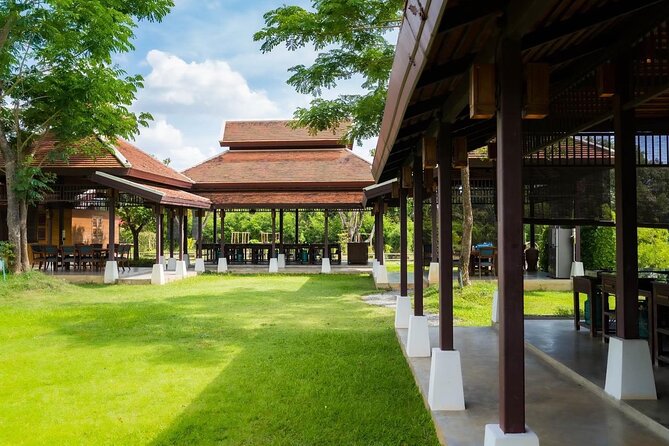
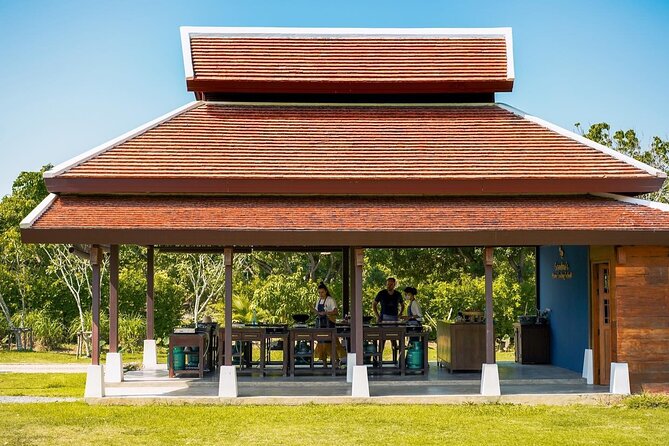
This experience is built around a simple idea: learn Thai food while the ingredients are fresh and the flavors still feel bright. The cooking happens in an open pavilion set in the gardens of an organic farm just outside Chiang Mai. That matters because you’re not just tasting Thai food—you’re seeing where key ingredients come from, and then using them right away.
Starting in late afternoon also helps. By the time you’re cooking, you’re usually past the harshest heat of the day, and the whole evening has that relaxed pace where people actually talk, not just watch. And since it’s outdoors, bring a light layer in case the breeze cools things down later.
You can also read our reviews of more cooking classes in Chiang Mai
The Simple 4:00 pm Flow From Tha Phae Gate
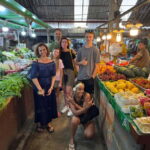
Your day starts with pickup at your hotel in Chiang Mai, then you link up with the rest of the group. The activity’s meeting point is at Tha Phae Gate area (Tha Phae Road, near Tambon Chang Khlan), which is convenient because the area sits in the center of things.
From there, plan for roughly 4 hours total. The rhythm is: arrive, meet your instructor and group, walk the farm, cook multiple dishes, eat together, then return to the meeting point area. If you like structured evenings that still feel flexible, this timing is a good fit.
Farm Walk First: Eggs, Herbs, and the Flavor Logic of Thai Cooking
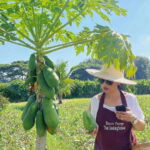
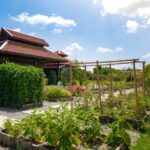
Before you touch a pan, you’ll tour the organic farm filled with fresh fruits and vegetables. You’ll learn about Thai herbs and vegetables from the instructors while you walk around, and you may collect eggs and other fresh ingredients as part of the experience.
This is more than a cute pre-dinner activity. Thai cooking is heavy on balance—sour, salty, spicy, sweet—and a lot of that balance comes from knowing what each plant actually does. Seeing herbs and vegetables in their natural setting helps you understand what’s essential and what’s optional when you recreate the dishes later at home.
Practical note: you’ll be outside during part of the farm walk. Wear comfortable shoes (you’ll likely be walking on uneven ground) and use insect repellent if you’re the kind of person who gets bitten easily.
Small-Group Cooking Stations (Up to 8) That Keep You In the Action
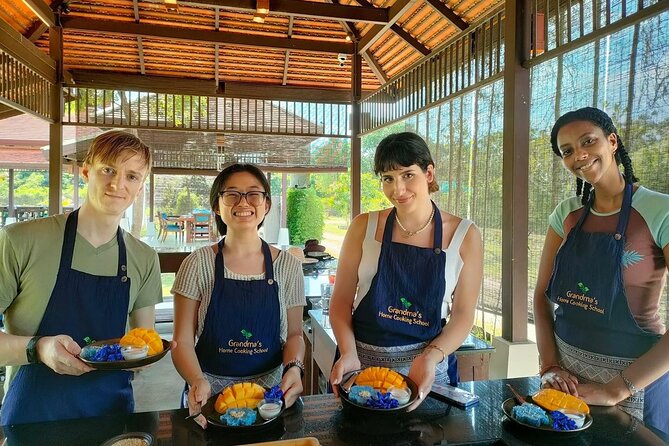
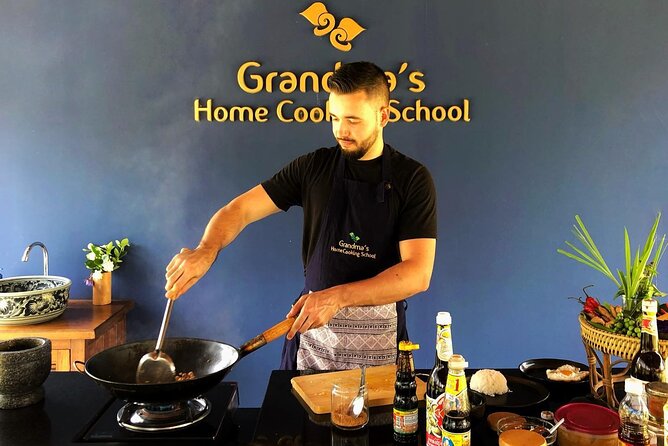
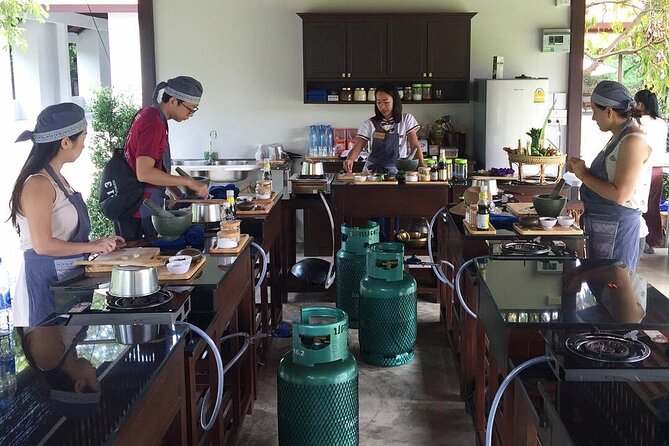
Once you start cooking, the group setup makes a real difference. The class is capped at 8 travelers, and each person has an individual cooking station. That means you’re not waiting your turn while someone else does the important steps.
You’ll cook with help from a professional English-speaking instructor, and the class teaches you the process behind multiple dishes. The big win here is attention. In a bigger class, you can get tossed the basics and hope for the best. In a small group, you can ask quick questions and get corrections while it still matters—like when your curry paste smells right, or when your soup needs adjustment.
Making Curry Paste From Scratch: The Skill That Travels Home With You
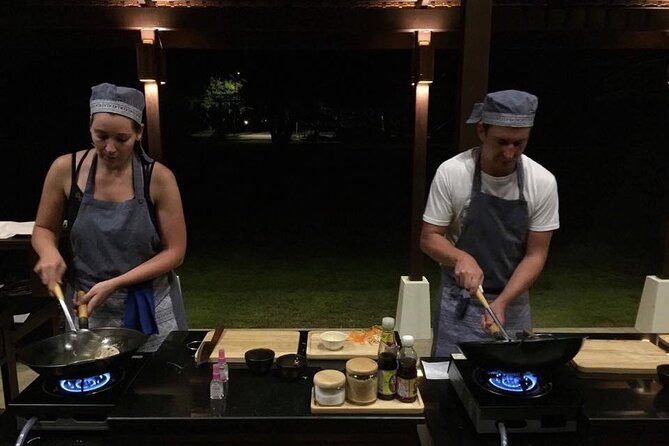
One of the most valuable parts is learning how to create your own curry paste. This is the heart of curry flavor in Thai cooking: the aromatics are ground and blended until they release their fragrance and become the base for everything that follows.
When the instructor guides you through the paste, you’re not just copying a final recipe. You’re learning the workflow—what to mix, what to watch for, and how the paste should behave as you cook it. One participant feedback tied this directly to long-term progress, saying they took notes for the correct ingredients back home and could make a curry they love from scratch (including Panang-style curry).
If you’ve ever tried to replicate Thai food at home and felt like it tasted close but not quite right, this is why. Paste-making is where the missing flavor usually lives.
You can also read our reviews of more evening experiences in Chiang Mai



Your Menu: From Hot and Sour Soup to Mango Sticky Rice
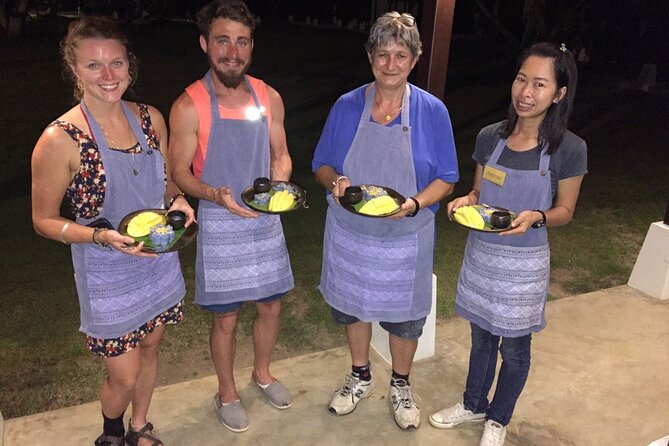
The class teaches four dishes that cover a wide range of Thai flavors, so you end up with both confidence and variety on the same evening. The menu includes options like Tom Yam (hot and sour soup) and Tom Kha (coconut soup), a stir-fried noodle dish (Pad Thai / Thai stir-fried rice noodles), plus green curry and red curry. Dessert is Mango Sticky Rice (Khao Niao Mamuang).
Soup Builds the Flavor Foundation
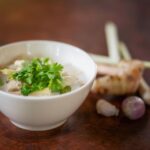
You’ll learn soups like Hot and Sour Soup (Tom Yam) and Coconut Soup (Tom Kha). These two are a great pairing because one leans into bright, spicy, tangy flavor and the other softens things with coconut richness. Cooking them in the same class helps you understand how Thai kitchens juggle acid and fat without making the dish heavy.
Noodles Teach Texture and Timing
The stir-fried noodle component—Pad Thai style with rice noodles—puts your timing skills to work. The goal isn’t just good flavor; it’s correct texture, which in Thai cooking often comes down to how long ingredients hit the heat and when sauce gets added.
Curries Let You Practice Paste to Bowl
Then you move into curry: green curry and red curry. This is where your curry paste work pays off. The base paste drives fragrance and spice structure, and you’ll see how it changes as it cooks with coconut or other ingredients. The instructor’s guidance matters here because curry is easy to overthink, but easier when you follow the order of steps.
Dessert Turns It Into a Real Meal
Finishing with Mango Sticky Rice makes the evening feel complete. Dessert is usually where Thai lessons make you slow down a bit and focus on balance. If you take only one thing away from the dessert part, make it this: sweetness in Thai food often comes from the right ratio of sticky rice and mango, not just sugar.
One extra consideration: the menu is subject to change based on seasonal ingredients. In practice, that can be a good thing—you’re cooking with what’s actually available, not outdated assumptions.
Eating Together: Turning Cooking Into a Better Thai Dinner
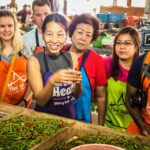
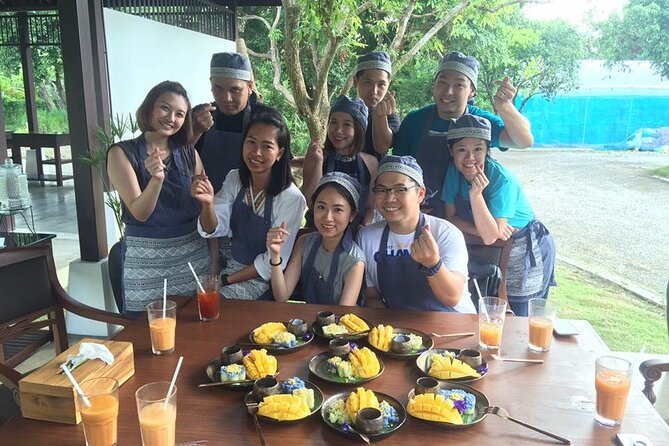
After you finish cooking, you share the meal with your group. There’s also a friendly swapping moment—sharing stories as you sample each others’ cooking. That part is small, but it’s smart. You’ll see how the same recipe can look a little different depending on technique and timing, and it helps you learn faster for future Thai dishes.
It also adds value to the class. You’re not paying just for instruction—you’re getting a full evening meal you helped create. For a lot of people, that’s the difference between a cooking class you forget and one you keep remembering on your next food night out.
Weather and the Outdoor Pavilion Reality
Because the cooking happens in an outdoor pavilion, good weather matters. If the experience gets canceled due to poor weather, you’ll be offered an alternative date or a full refund. That’s worth noting if you’re visiting during a rainy stretch: keep your schedule flexible, or plan a backup dinner you enjoy nearby so the evening still works.
Even when weather is good, Thailand evenings can still feel warm. Drink water before you start, and wear breathable clothing you don’t mind getting a little cooking-smell on.
Price and Value: Why ~$51 Can Be a Smart Buy Here
At $51.46 per person for about 4 hours, this class can feel like a strong value—mainly because several things are included that many food experiences charge extra for elsewhere.
You’re paying for:
- hotel pickup
- a farm walk with guidance on herbs and vegetables
- ingredient work like egg collecting
- hands-on instruction for multiple dishes
- the meal you cook and share
- small-group attention (up to 8) and individual cooking stations
If you’d otherwise spend money on a Thai cooking demo plus a separate dinner, this folds everything into one experience. And if you care about actually learning a few techniques you can repeat, the curry paste component makes the price easier to justify.
Who Should Book This Evening Class
This is a great fit if you:
- want more than a restaurant meal and want real cooking skills
- like structured lessons with room to ask questions
- enjoy Thai food flavors across soup, noodles, curry, and dessert
- want a small-group vibe rather than a crowd scene
It’s especially well suited for couples and solo travelers who don’t want to feel lost in a large class. And it can work well for families, too, as long as everyone is comfortable with an outdoor farm walk and cooking activity.
Quick Ways to Get More From Your Night
Here’s how you’ll make this class pay off long after you leave Chiang Mai:
- Take short notes during the curry paste steps. Your future self will thank you.
- Taste as you go. Thai cooking is about balance, and your palate is the best measuring tool.
- Ask what to swap when ingredients aren’t available. Even small guidance helps you recreate the dish later.
- Wear shoes you can walk in during the farm part, not just kitchen slippers.
Should You Book Grandma’s Home Cooking Class in Chiang Mai?
If you’re looking for a Thai cooking night that feels authentic, teaches real technique, and ends with a meal you made yourself, I think you should book it. The small-group setup, the farm walk with herbs and egg collecting, and especially the curry paste from scratch lesson are the strongest reasons this experience is worth your time.
Book it if you want a practical souvenir: not just photos, but a set of skills you’ll use again. Skip it only if you dislike outdoor activities in evening weather or you know curry-making and paste workflows aren’t your thing.
FAQ
How long is the cooking class?
The experience lasts about 4 hours.
What time does the class start?
The start time is 4:00 pm.
Do they pick me up from my hotel?
Yes, pickup is offered in Chiang Mai.
How many dishes will I cook?
You’ll cook four dishes. The class includes soups (Tom Yam and Tom Kha options), a stir-fried noodle dish (Pad Thai style), green curry and red curry, and mango sticky rice.
How big is the group?
The class has a maximum of 8 travelers, and each person has an individual cooking station.
Is the menu always the same?
The menu can change depending on the season and ingredient availability, but the dishes are drawn from the listed items.
Is the class affected by weather?
Yes. The experience requires good weather. If it’s canceled due to poor weather, you’ll be offered a different date or a full refund.