REVIEW · CHIANG MAI
Colors of Chiang Mai Guided Bicycle Tour
Book on GetYourGuide →Operated by Recreational Bangkok Biking · Bookable on GetYourGuide
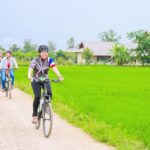
If you like your Chiang Mai off the main road, this bike tour fits. You’ll pedal through green countryside outside town, ride beside the Ping River, and end in an area tied to the Lanna kingdom.
Two things I really like: the route favors quiet, land-road cycling over traffic stress, and the stops are practical and cultural, not just photo stops. One thing to consider is that scenery like rice fields and fruit orchards can look different by season, and the operator may adjust the route when crops aren’t in bloom.
In This Review
- Key Points You’ll Care About
- Quiet Roads, Real Daily Life: What This Tour Feels Like
- 20–25 km in About 270 Minutes: The Pace and Distance Check
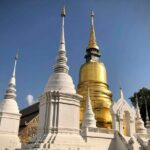
- Temples, Buddhism Talks, and a 700-Year-Old Chedi Stop
- Village Crafts on Quiet Land Roads: The Thai Products Moment
- Rice Fields, Fruit Orchards, and the Market Snack Reality
- Riding Along the Ping River: Why This Stretch Matters
- Wiang Kum Kam: King Mengrai’s 1286 Settlement and Lanna Ruins
- Food and Breaks: Khao Soy Kai and Included Drinks
- Bikes, Helmets, and Road Safety: What to Expect
- Price Value at $38: What You’re Actually Buying
- Who This Tour Is Best For (and Who Should Rethink It)
- Booking Smart: A Few Practical Tips Before You Go
- Should You Book Colors of Chiang Mai?
- FAQ
- How long is the Colors of Chiang Mai guided bicycle tour?
- How far do we cycle?
- What’s included in the price?
- Where is the meeting point?
- What if I’m traveling solo?
- Can the route change?
Key Points You’ll Care About
- Quiet roads and countryside pace that work even if you’re not a power cyclist
- Village craft time where you can see women making Thai traditional products
- Ping River riding for that calm, local-feeling stretch
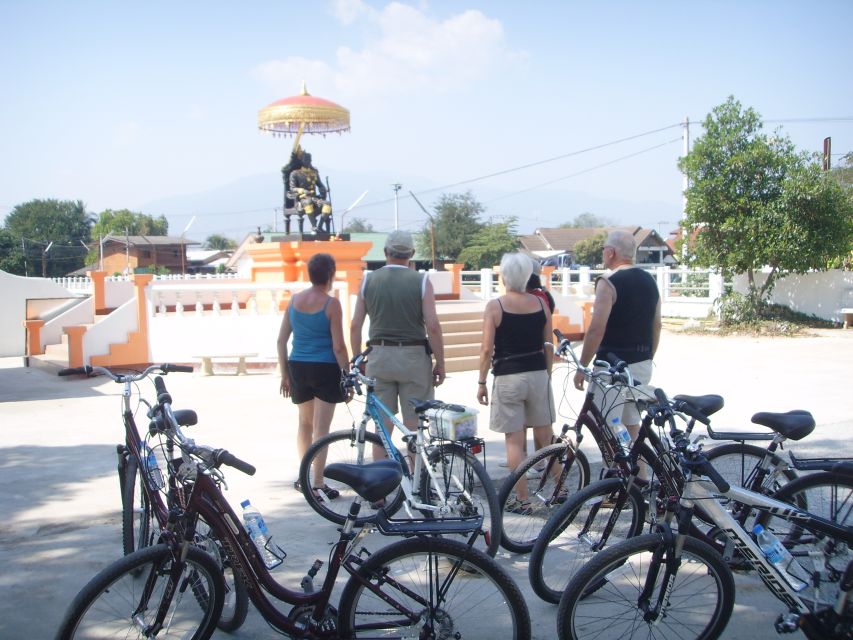
- Wiang Kum Kam ruins tied to King Mengrai and the early Lanna capital
- A 700-year-old Chedi stop that adds real weight to the history side
- Lunch and drinks included, so you’re not rationing energy
Quiet Roads, Real Daily Life: What This Tour Feels Like
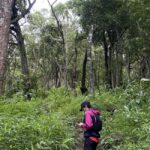
Colors of Chiang Mai is built for people who want Chiang Mai beyond the moat-and-temples loop. The big idea is simple: cover a solid distance (about 20–25 km) while staying on green, calmer roads that let you notice how life actually looks outside the center.
What makes it feel different is the mix. You’re not only rolling past sights. You’re also getting small moments that slow the day down: a temple explanation, a market snack, and a visit connected to local craft life. The result is a morning/early afternoon that feels like a guided stroll with wheels.
And yes, you’ll get the classic Chiang Mai “wow” angles too. One of the best is the Ping River stretch, where the air feels more local and less touristy.
You can also read our reviews of more guided tours in Chiang Mai

20–25 km in About 270 Minutes: The Pace and Distance Check
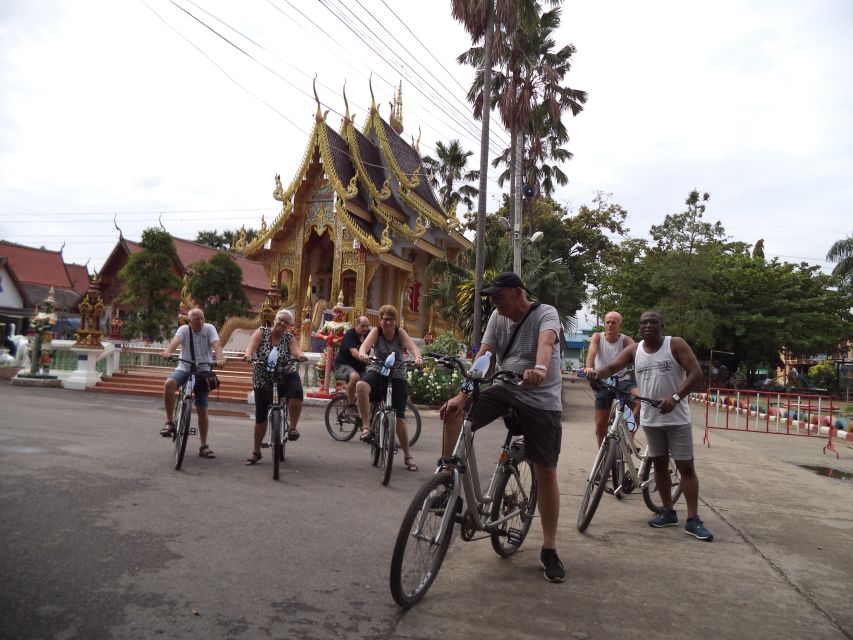
This is a 270-minute (roughly 4.5-hour) tour, not a full-day endurance event. The distance range of 20–25 km usually comes out to a comfortable effort for many people, including those who don’t ride often.
The operator is also planning for breaks. You’re not expected to grind the whole time. You should count on time for crossings, short stops, and the temple/ruin segments where you’re off the bike and listening. That matters because the “real work” on this tour isn’t only pedaling—it’s the context you get while moving between places.
One practical takeaway: bring a calm mindset. If you expect a casual “no effort” ride, you might still feel the distance by the end. But if you’re okay with a steady pace and a few breaks, you should be fine.
Temples, Buddhism Talks, and a 700-Year-Old Chedi Stop
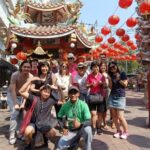
You’ll start to get the spiritual history early. The route includes a stop at a local temple, where your guide can explain Buddhism and what you’re looking at. This isn’t just “here’s a building.” It’s the kind of explanation that helps you understand why things are arranged the way they are and what visitors typically miss.
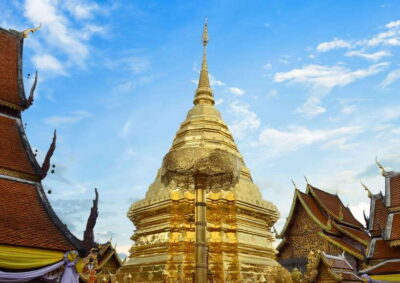
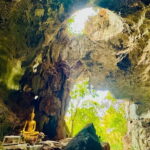
Then there’s the history headline: the tour highlights a 700-year-old Chedi. A Chedi isn’t just an old object to point at; it’s a physical marker of time, devotion, and local tradition. When you pair that with the earlier temple stop, the day starts to feel connected rather than random.
A useful note for temple visits: wear clothes that let you move comfortably, but also cover appropriately. You’ll likely be walking around ruins/temple grounds where you want to feel respectful and comfortable in the heat.
Village Crafts on Quiet Land Roads: The Thai Products Moment
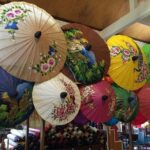
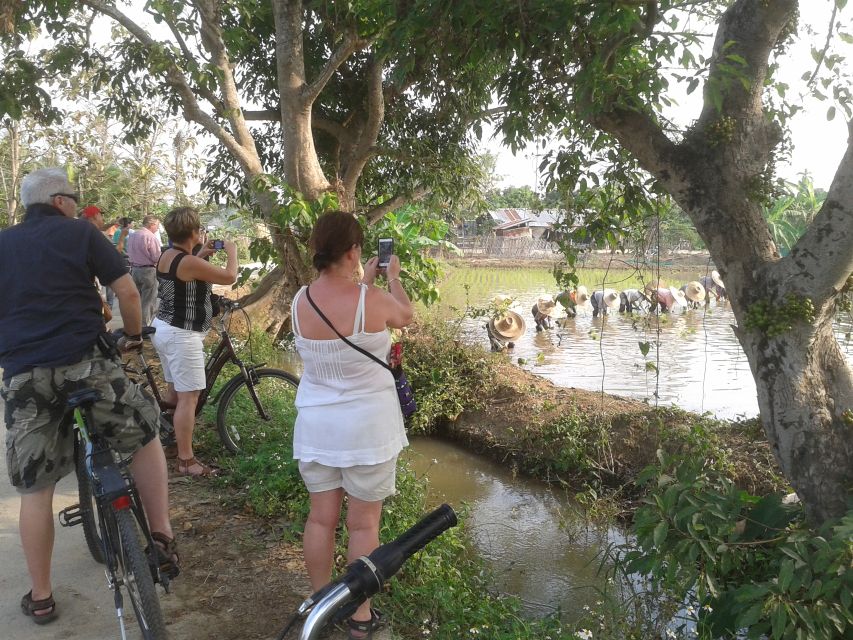
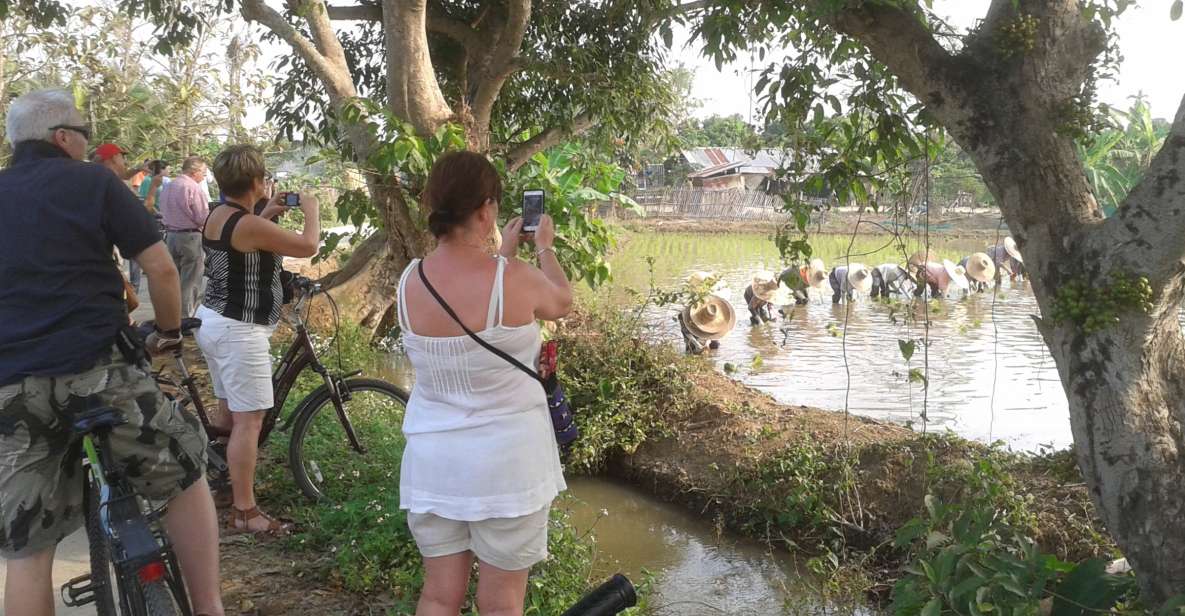
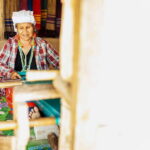
One of the best parts is how the route passes through local communities. The highlights include seeing women from a local village making Thai traditional products. This is one of those stops that changes the tour from scenery to culture.
When you see craft work up close, it puts everything else in Chiang Mai into context. The food you eat, the markets you pass, the way people decorate everyday life—it all connects back to traditions and skills that keep getting used, not just preserved for tourists.
Even the ride approach matters here. Because the cycling is routed across quieter land roads, you’re not getting shoved into the constant stop-start of city traffic. That makes it easier to pay attention when you approach the village stop.
Rice Fields, Fruit Orchards, and the Market Snack Reality
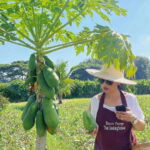
This tour plays with a very Chiang Mai visual: rice fields and fruit orchards. On paper, it’s a green-season dream. In practice, you should know that this is seasonal. The operator specifically notes that biking routes may change because fields and orchards aren’t in blossom year-round.
So treat the countryside as a “could be lush, could be different” situation. You still get countryside feel because the roads are set up for that. Just don’t count on every day looking exactly like a postcard.
Food-wise, you’ll stop for a snack or fresh fruit at a local market. Then you’ll later have a sit-down Thai meal. This is a smart setup for cyclists because you need fuel before the last stretches, and it keeps the experience anchored in everyday eating rather than tourist menus.
Some groups also report extra treats like coffee or ice cream during the day, depending on timing and what’s open. Since opening days vary, treat that as a bonus, not a guarantee.


Riding Along the Ping River: Why This Stretch Matters
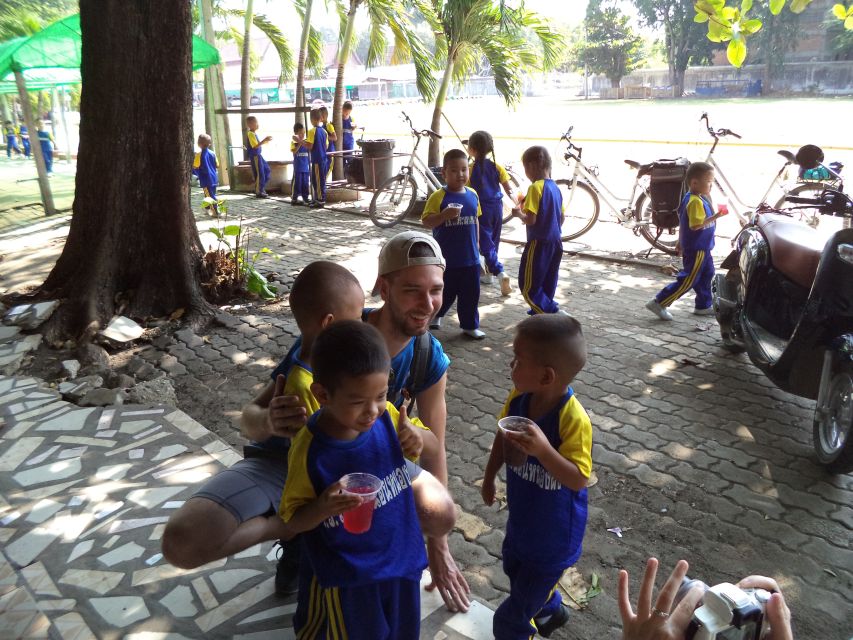
The Ping River portion is a key emotional payoff. It’s not just a scenic photo moment. It helps the whole tour feel less boxed in.
When you bike alongside the river, you’re moving through a rhythm that feels slower than the city core. You can see how people live at a distance—houses, land use, the way roads link to daily routines. It also gives your legs a breather between the more structured cultural stops.
If you’re the type who likes “transfer moments,” this is yours. You’re traveling, but you’re also observing.
Wiang Kum Kam: King Mengrai’s 1286 Settlement and Lanna Ruins
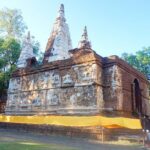
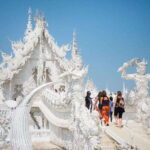
The historic part comes through a visit to Wiang Kum Kam, a settlement founded in 1286 by King Mengrai. It was the capital of the Lanna empire for about 10 years—a short reign in the big picture, but long enough to leave serious traces.
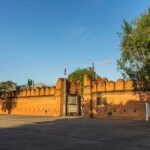
On this tour, you cycle into the area and see temples and ruins dating back hundreds of years. The ruins can be the kind of place where it’s easy to walk around without understanding what you’re looking at—so the value here is that your guide helps you connect details to the story.
What you’ll likely want to do: slow down for photos, but also keep your ears open. These spots reward listening. Even small explanations can change how you see brickwork, layouts, and the way multiple generations left marks.
Then you’ll head back toward your starting point after photographing and taking in the setting.
Food and Breaks: Khao Soy Kai and Included Drinks
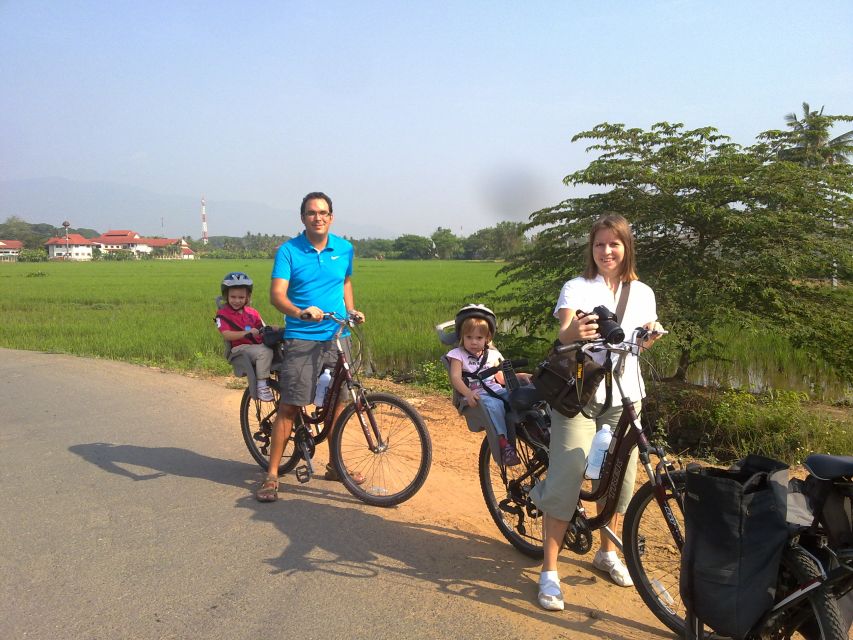
This tour isn’t “bike first, food later.” It’s designed with energy management in mind. You get:
- water or soft drinks during the excursion
- a Thai meal/snack included
The meal highlighted is Khao Soy Kai, a Chiang Mai classic with a comforting, creamy feel. It’s also a practical choice after cycling because it’s filling without being so heavy that you feel sluggish afterward.
Your day also includes rest time. That sounds obvious, but it’s actually one of the reasons this tour works well for mixed skill levels. When there’s planned hydration and snack breaks, you don’t have to negotiate your own timing. You also don’t get stuck silently suffering while your group waits.
Bikes, Helmets, and Road Safety: What to Expect
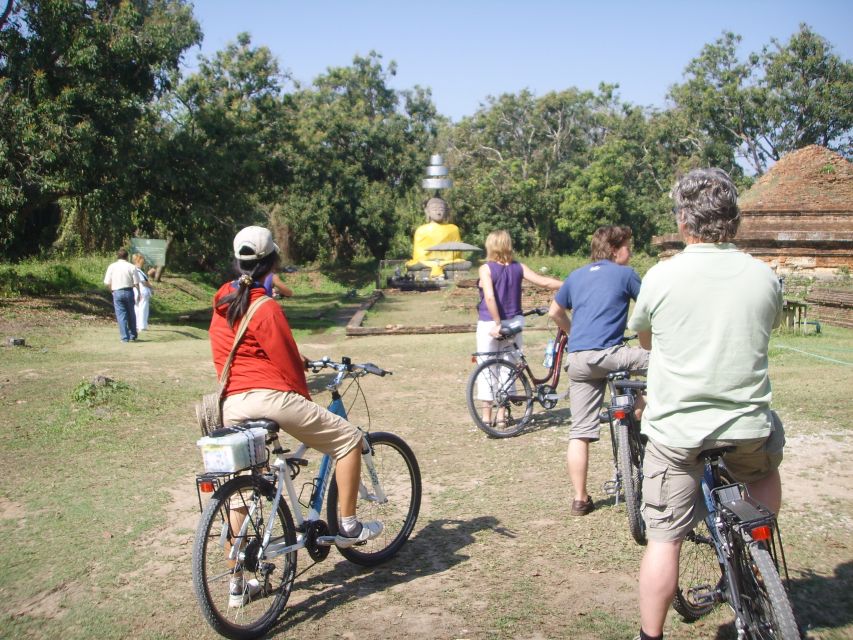
The tour includes the bicycle and helmet, plus an English-speaking guide. That takes one hassle off your travel day.
Road comfort is where this tour earns its strong rating. Guides in this system tend to manage crossings carefully and use clear hand signals. Some groups also mention that when timing gets tricky, the operator can help with getting people back more easily than attempting it alone.
Still, you should approach this tour honestly: you’re cycling around Chiang Mai, so there may be moments where roads get busier. The difference is that the route is planned to be mostly quiet, and your guide helps you navigate the few busier stretches without turning it into a stress test.
What you should bring:
- sunscreen and a hat (you’ll be outside for hours)
- comfortable shoes (you’ll get off the bike to visit temple/ruin areas)
- a light layer if you run cold on cooler mornings
- a water bottle isn’t listed as required, since drinks are included, but having one helps you feel in control
Price Value at $38: What You’re Actually Buying
At $38 per person, this tour is priced like a small-group cultural activity with real logistics baked in. For that cost, you’re getting:
- bike + helmet
- English-speaking guide
- Thai meal/snack
- water or soft drinks
- insurance
- WiFi access at the office
The value isn’t only the bike. It’s the pairing of cycling with guided stops. Without a guide, it’s hard to appreciate why a Chedi matters, what you’re seeing at temple sites, and how Wiang Kum Kam connects to King Mengrai and the Lanna story.
You also get a built-in pacing plan. That reduces the “tour chaos” factor where you end up hungry, tired, or unsure where you’re going next. In a place where traffic can be mentally draining, paying for someone else to manage the flow is part of the value.
Not included is personal spending, so budget for things like extra snacks, souvenirs, or tips.
Who This Tour Is Best For (and Who Should Rethink It)
This is a strong fit if you want:
- a guided cultural route that includes temples and ruins
- an outdoor activity that’s not a full-day ordeal
- local details like markets and craft production
- a ride that prioritizes quieter roads
It’s also a good option if you’re traveling solo, since the tour welcomes solo travelers. The only catch is the operating rule: the tour runs with a minimum of 2 participants. If that minimum isn’t reached, the operator may switch the time slot/day/tour or cancel your booking.
If you’re extremely sensitive to time outdoors, very young kids, or you hate cycling at all, you might prefer a walking-based temple tour. But if you can pedal for 20–25 km and enjoy pauses for food and stories, this is a very practical way to see more than the usual highlights.
Booking Smart: A Few Practical Tips Before You Go
Arrive at the meeting place 5–10 minutes early. That small buffer helps the group start on time.
Also be ready for route variation. The operator can adjust the itinerary because rice fields and fruit orchards aren’t in bloom year-round, and shops/schools might close on weekends, school holidays, and national holidays. That’s not a “fail.” It’s how countryside tours stay flexible.
Finally, pick your timing with your own comfort in mind. You’re riding for hours in Thailand. If heat is your enemy, go with a cooler slot and plan for sunscreen and hydration.
Should You Book Colors of Chiang Mai?
If you want a Chiang Mai experience that mixes cycling, local life, and Lanna-era ruins in one smooth half-day, I’d book it. The combination of quiet roads, Ping River time, and stops like the 700-year-old Chedi and Wiang Kum Kam makes the day feel like more than a standard sightseeing loop.
I’d only hesitate if you hate seasonal changes or you’re expecting an identical postcard countryside every day. With that in mind, this tour is a good value way to see the “Rose of the North” beyond the most obvious streets.
FAQ
How long is the Colors of Chiang Mai guided bicycle tour?
The tour duration is 270 minutes (about 4.5 hours).
How far do we cycle?
You’ll cycle about 20–25 km during the half-day tour.
What’s included in the price?
Included are the bicycle and helmet, an English-speaking guide, a Thai meal/snack, water or soft drinks, insurance, and free WiFi at the office.
Where is the meeting point?
You should arrive at the operator’s place 5–10 minutes before the tour starts.
What if I’m traveling solo?
Solo travelers are welcome, but the tour only operates with a minimum of 2 participants. If the minimum isn’t reached, the operator may offer a different time slot/day/tour or cancel your reservation.
Can the route change?
Yes. The operator reserves the right to change advertised itineraries because rice fields and fruit orchards are not in blossom year-round, and because schools or local shops may be closed during weekends and holidays.