REVIEW · CHIANG MAI
Chiang Mai: Morning Cooking Class with Market Visit
Book on GetYourGuide →Operated by Galangal Cooking Studio · Bookable on GetYourGuide
Thai cooking starts with your senses.
I love the way this morning class ties market shopping to real cooking skills, so you understand the ingredients before you touch a wok. I also like that you’re not stuck with a single menu; you choose from starters, mains, curry styles, and even dessert. One thing to plan for: the day moves fast, and pickup timing matters because the driver waits only a short window.
It’s a hands-on, early-day experience in Chiang Mai that feels both local and practical. Your guide (often called New or Nu) guides you through the market, then into an organic garden where you pick herbs you’ll actually use. The cooking studio is indoors and air-conditioned, so you can work comfortably and still learn the steps you’ll repeat at home.
The only real drawback is logistical: hotel pickup covers specific areas in and around the old city, plus select roads, and some places require you to make your own way to the studio or market. If you’re staying outside the pickup zone, double-check your accommodation address so you don’t miss the market portion.
In This Review
- Key Points to Know Before You Go
- Morning Market to Cooking Studio: Why This Class Works
- Hotel Pickup, Morning Timing, and the Fast-Start Reality
- Market Visit: What You’ll Actually Learn While Shopping
- Organic Garden and Farm Time: Picking Herbs Like a Thai Cook
- Cooking Studio Basics: English Instruction and Air-Conditioned Comfort
- The Main Event: Cooking 6 Dishes (and Choosing Your Favorites)
- Starter Options
- Main Course Options (Choose One)
- Soup Options (Choose One)
- Curry Paste and Curry Style (Choose Curry)
- Dessert Options (Choose One)
- What You’ll Eat at the End
- Dietary Needs: Vegan, Vegetarian, Halal, and Gluten-Free-Friendly
- Price and Value: $41 for Real Skills, Plus a Local Fee
- Best Fit: Who This Class Suits (and Who Should Skip)
- Should You Book This Chiang Mai Cooking Class?
- FAQ
- How long is the Chiang Mai morning cooking class?
- Is hotel pickup and drop-off included?
- What food will I cook during the class?
- Do you provide a recipe book?
- Is the class suitable for dietary restrictions?
- Is the class wheelchair accessible?
- What should I bring, and what’s not allowed?
Key Points to Know Before You Go
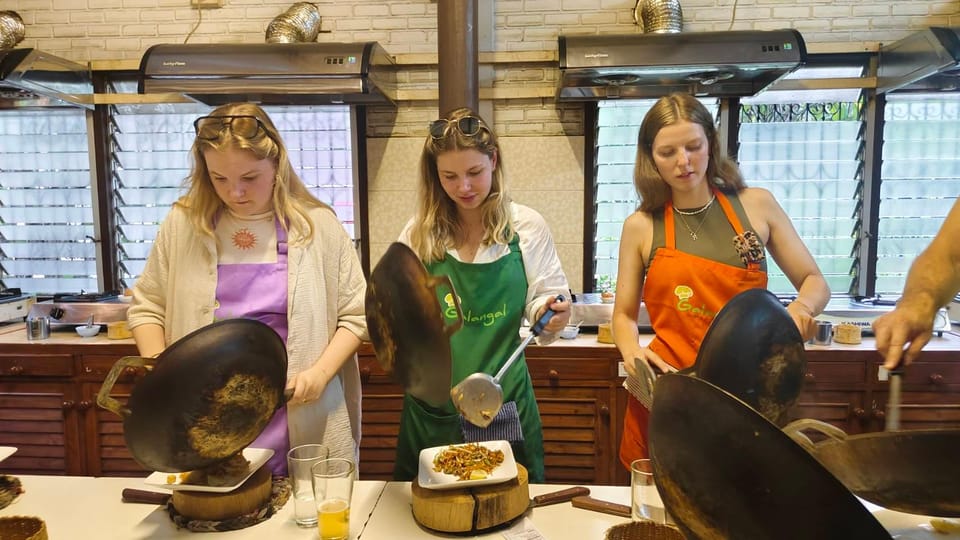
- Market-first shopping: You pick ingredients in a real local market, then cook with the same flavors
- Organic garden picking: Herbs and vegetables are grown using organic practices, and you get to choose what goes into your meal
- Choose your dishes: Starter, main, curry type, and soup options are built for your taste
- Learn core Thai techniques: You practice both Thai cooking skills and how to balance flavors
- English instruction and helpful guidance: Guides like New/Nu make it easy to follow step-by-step
- A PDF cookbook to take home: You get recipes so you can cook again later, not just today’s meal
Morning Market to Cooking Studio: Why This Class Works
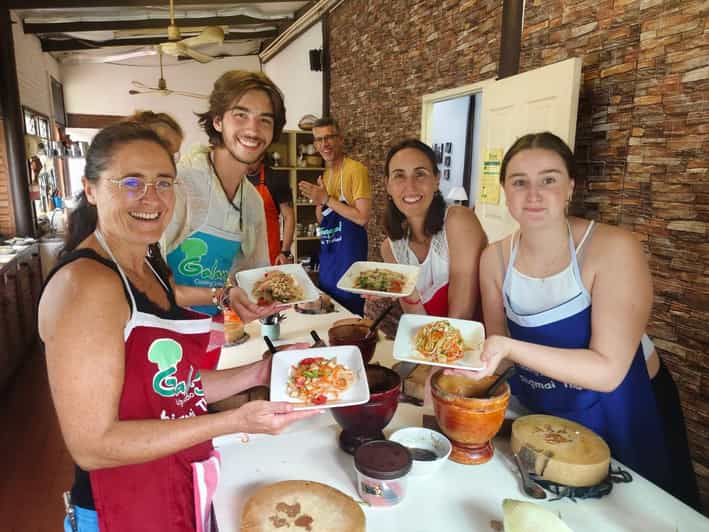
This class is built around a simple idea: Thai food makes sense when you meet its ingredients first. You start in the morning with pickup from your hotel, then head straight to a local market where vendors sell the produce, herbs, and pantry basics that show up in Thai kitchens.
You’re not just “seeing the market.” You’re learning how to shop for Thai cooking. You smell ingredients, spot different herbs, and get a sense for what matters when you’re building flavor. That matters because Thai cuisine uses a lot of fresh aromatics and building blocks like herbs, chilies, and aromatics that you can’t easily guess from dried substitutes.
Then, you move on to an organic garden and farm area where you can pick herbs and vegetables. This gives you a clearer link between agriculture and what hits your plate. If you care about organic practices, it’s also a good reminder that “fresh” in Thailand often means “grown nearby” rather than shipped from far away.
Finally, you end in the cooking studio and air-conditioned dining room to cook a full set of dishes, then eat what you make. It’s a complete loop: buy, pick, cook, taste, and take home recipes.
You can also read our reviews of more shopping tours in Chiang Mai
Hotel Pickup, Morning Timing, and the Fast-Start Reality
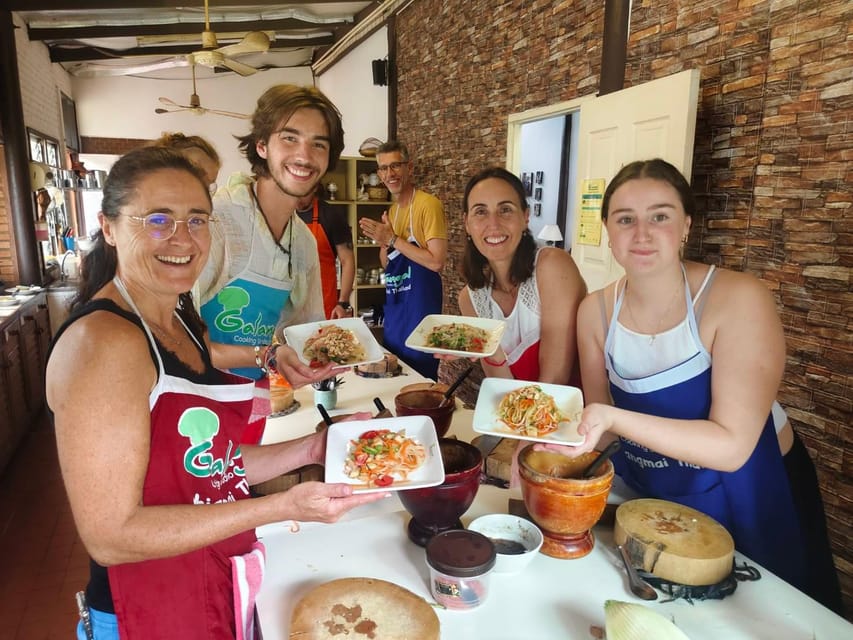
This experience runs about 5 hours and starts with hotel pickup in Chiang Mai. Pickup is offered for hotels in the old city, Santitham, and parts of Huay Keaw Road (from Kad Suan Keaw to Maya Shopping Mall), plus some areas of Nimmandhaemin Road, Sirimongkrajan Road, Wat Ket Road, Chang Pheuk, Changklan, and Changmoi.
Two practical details can make or break your day:
- Be ready early. Pickup is typically between 8:30 and 9:00 AM. The driver will wait no longer than 5 minutes after your scheduled pickup time.
- Traffic and multiple stops happen. The driver arrives before 9:00 AM, but delays can occur due to traffic and the number of pickup points.
If your hotel is outside the pickup zone, the operator will check your address and let you know if you’ll need to get yourself to the market or studio. You can still join directly if you prefer, and you’ll be given the arrival time and address.
My advice: if you’re the type who likes to sleep in, don’t book this unless you’re ready to get moving. You want your head in the market, not racing to the meeting point. Come with an empty stomach too, because you’ll be eating everything you cook.
Market Visit: What You’ll Actually Learn While Shopping
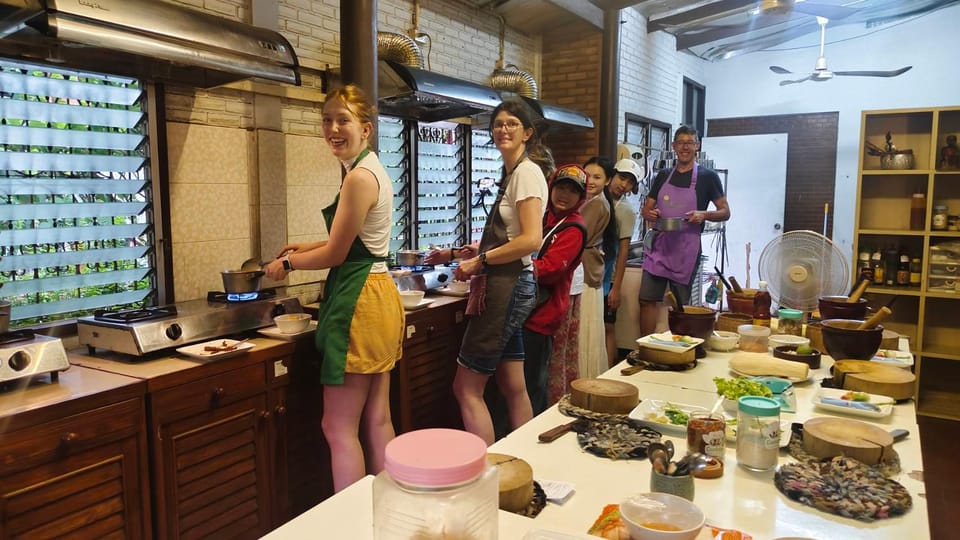
The market stop is the heart of the morning. You’ll see what’s for sale and get help choosing ingredients that match what you’ll cook later. The goal is not just to buy ingredients, but to understand Thai flavor profiles.
Here are the kinds of details this part teaches you:
- How Thai cooks think about fresh herbs
Thai cooking leans heavily on herbs and aromatics. When you can point to them in the market, your later cooking stops feeling like guesswork.
- What to look for when choosing produce
You’ll learn how to pick ingredients that suit the dishes you selected. That can be as simple as recognizing what will taste right in a salad versus what works for a curry paste.
- How to connect ingredients to dishes you already know
Even if you’ve eaten Pad Thai or Tom Yum before, shopping for the ingredients first helps you understand why the flavors work together.
One reason I’d call this market stop a value-add: it’s not only a “photo moment.” It’s structured to feed the cooking lesson. When you’re done shopping, you head to the organic garden and then straight into cooking, so the morning doesn’t feel like separate activities stacked on top of each other.
Organic Garden and Farm Time: Picking Herbs Like a Thai Cook
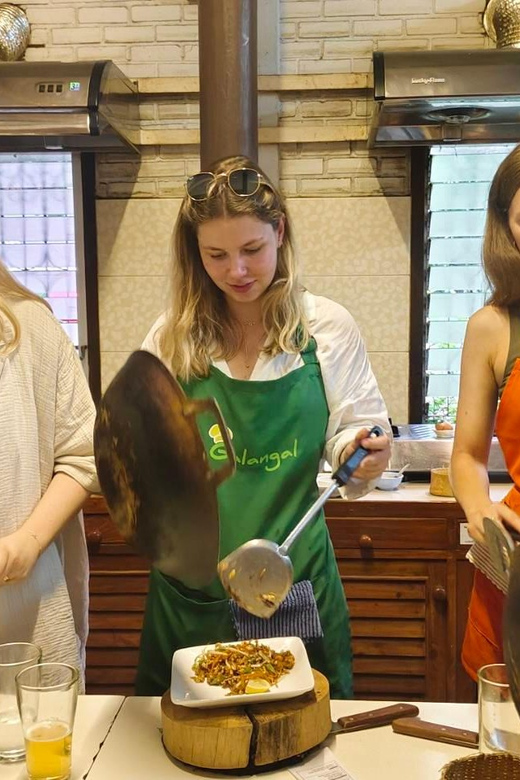
After the market, you’ll visit an organic garden and explore an organic farm. This part is less about sightseeing and more about learning where ingredients come from and which herbs matter for Thai recipes.
You get time to explore the garden, understand how vegetables and herbs are grown, and pick ingredients you’ll use during cooking. Even if you don’t remember every plant name, you’ll come away with practical memory: which herbs are fragrant, which are gentle, and which ones show up in Thai staples.
Why this matters for you at home: when you cook later, you’ll know what kind of herb you’re aiming for instead of relying only on bottled sauces or powders. You’ll also appreciate why fresh herbs change the texture and aroma of dishes.
It’s also a nice contrast in the morning schedule. Market energy is loud, fast, and sensory. The garden slows you down just enough to notice details and choose thoughtfully.
Cooking Studio Basics: English Instruction and Air-Conditioned Comfort
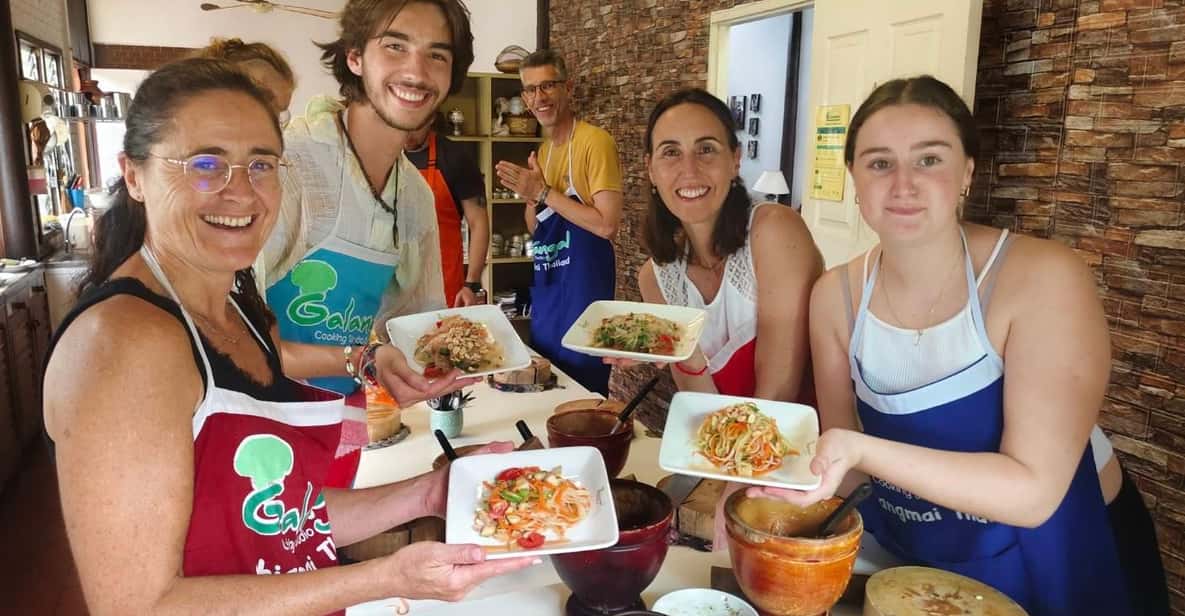
Once you reach the cooking studio at Galangal Cooking Studio, the lesson begins in a comfortable indoor kitchen and air-conditioned dining room. That setup is practical. You can focus on technique without feeling like you’re cooking in a heat wave.
Instruction is in English, and guides like New or Nu (names appear both ways) are known for clear step-by-step teaching. That’s important if you’re not confident in the kitchen. Thai cooking can look complicated, but the process here is taught in a way that helps you follow along without getting lost.
You’ll get water, tea, and coffee during the experience, and all ingredients and equipment are provided. You only need to bring personal medication if you use any.
Also, note the rules: no alcohol and no drugs. It’s a straightforward cooking experience, not a party.
You can also read our reviews of more tours and experiences in Chiang Mai


The Main Event: Cooking 6 Dishes (and Choosing Your Favorites)
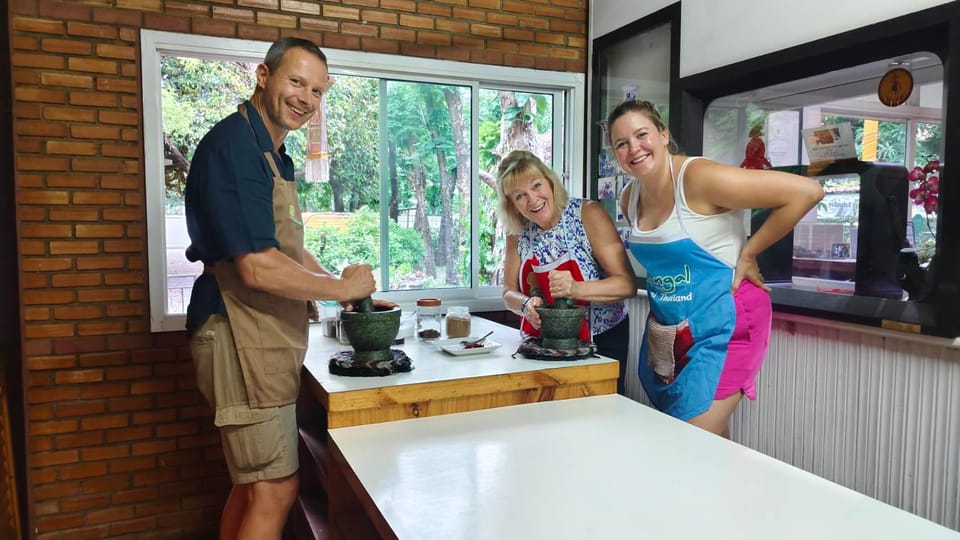
You’ll cook a total of 6 dishes in the class. The menu is flexible, which is one of the reasons this experience feels like good value instead of a generic “tour + one recipe” format.
Starter Options
Choose one starter from:
- Som Tam (papaya salad)
- Por Pia Thod (spring rolls)
- Larb Kai (chicken salad)
- Yam Woon Sen (glass noodle salad)
Pick what sounds best, because your starter choices affect the flavor training you get next. A salad teaches balance and brightness. Spring rolls teach texture and filling control. Larb tends to sharpen your understanding of herb-forward seasoning.
Main Course Options (Choose One)
Choose one of these mains:
- Pad Thai (Thai fried noodles)
- Pad See Ew (stir-fried chicken with fresh noodles)
- Kai Pad Med Mamuang Him Ma Pan (chicken with cashew nuts)
- Pad Kaphao Kai (minced chicken with holy basil)
This selection is clever. It covers different Thai cooking styles: stir-frying, noodle wok technique, and herb-driven flavor (holy basil is a key aromatic). So even if you already know one dish, you learn a new “mechanical” skill in the process.
Soup Options (Choose One)
You’ll also make one hot soup, with options including:
- Tom Yum Kung (hot and sour prawn soup)
- Tom Kha Kai (chicken soup with coconut milk)
- Tom Kha Je (vegan soup with coconut milk)
- Tom Zap Kai (hot and sour with chicken)
Tom Yum and Tom Zap teach the sour-heat balance. Tom Kha teaches creamy aromatics. If you’re vegetarian or vegan, Tom Kha Je gives you that coconut-milk comfort without meat.
Curry Paste and Curry Style (Choose Curry)
You’ll make curry too, with choices that can include green, red, yellow, massaman, or Panang curry. The curry paste step is a major part of the learning. It helps you understand that curry is more than sauce; it’s an engineered flavor system built from aromatics and spices.
My favorite practical takeaway you’ll likely notice: once you understand curry paste logic, ordering Thai food changes. You’ll start tasting what the paste contributed, not just what sauce seemed “spicy.”
Dessert Options (Choose One)
After the main course, you’ll make a sweet dessert, such as:
- Mango sticky rice with ice cream
- Kuay Tod (deep-fried banana)
Dessert might feel like an afterthought on some tours, but this one treats it as part of the full cooking day. You get to finish with something distinctly Thai and not overly complicated.
What You’ll Eat at the End
At the end, you eat what you cooked. That’s more important than it sounds. It gives you immediate feedback on your seasoning decisions. If something tastes too strong or too mild, you learn from the outcome before you leave.
Dietary Needs: Vegan, Vegetarian, Halal, and Gluten-Free-Friendly
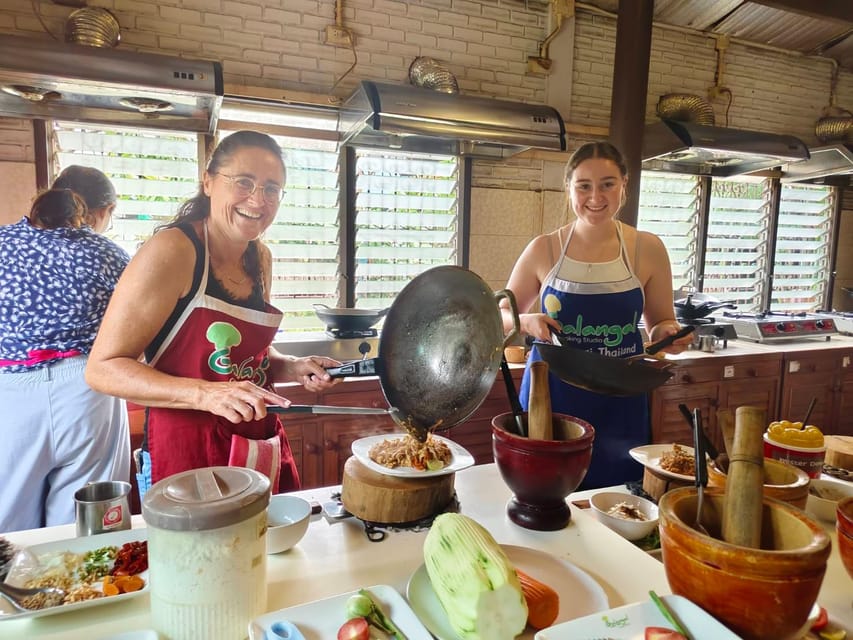
One of the most reassuring parts of this class is that it’s positioned to support different dietary needs. The experience states it’s available for vegan and vegetarian options, Halal, and people who need gluten-free choices, and it can also accommodate allergies.
If you have dietary restrictions, tell the team ahead of time. Ask for confirmation that your chosen dishes are workable for your needs. This is one of those tours where choosing the right menu option makes the day smoother.
Even if you don’t have dietary restrictions, these options make the class feel more inclusive and thoughtfully planned.
Price and Value: $41 for Real Skills, Plus a Local Fee
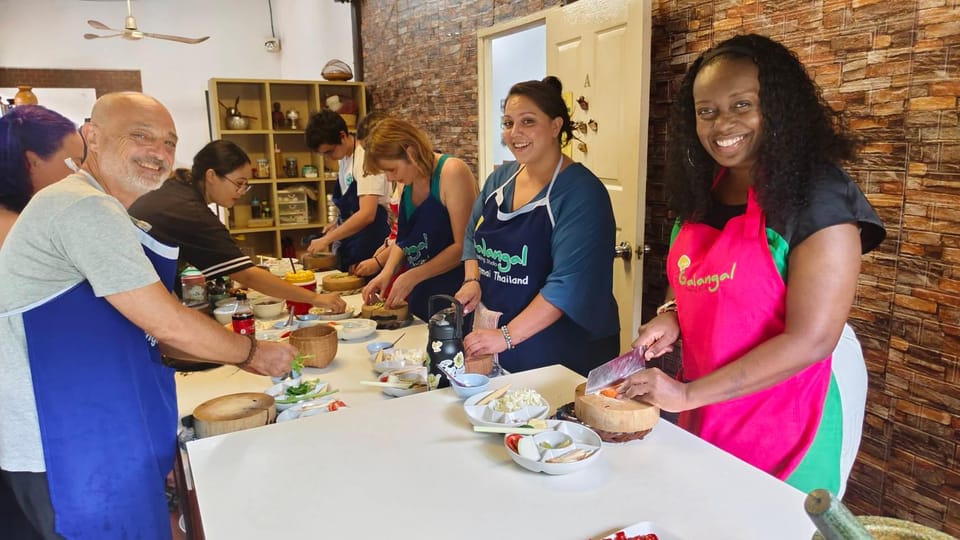
The listed price is $41 per person for a roughly 5-hour experience. For that, you typically get:
- hotel pickup and drop-off
- a market tour component
- English instruction
- water, tea, and coffee
- all ingredients and equipment
- a PDF recipe book to take home
There is also an additional visitor fee not included: 500 baht per adult and 350 baht per child (6–12 years).
So is it worth it? For me, the value comes from three places:
- You cook 6 dishes plus curry paste choices, not just one or two items.
- You’re taught, not just shown. You practice techniques and end up with finished food you can repeat.
- You leave with a PDF cookbook, which helps your cooking stick beyond the tour day.
If you love Thai food and you want to understand what makes it work, this price is fairly fair. If you’re only interested in eating a meal and don’t care about learning, then it may feel like overkill. But if you want skills you can use later, this is the kind of class that actually pays you back.
Best Fit: Who This Class Suits (and Who Should Skip)
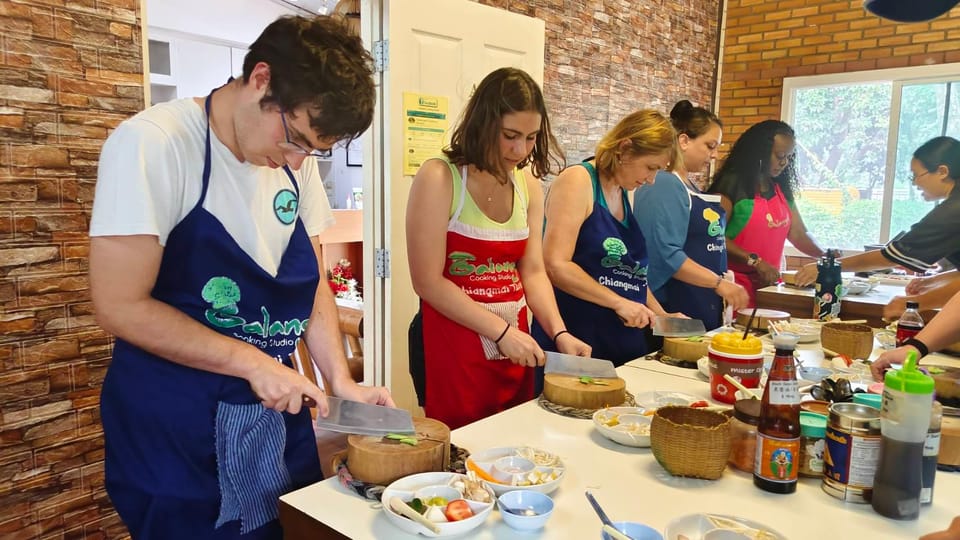
This experience is a great match if you:
- want a hands-on Thai cooking lesson instead of a sit-and-watch class
- like the idea of market shopping plus cooking, so flavors have context
- enjoy Thai staples like Pad Thai, green curry, and Tom Yum
- want a recipe book afterward so you can recreate the dishes
It also seems to work well for families, including kids participating alongside the group. The atmosphere is set up for learning, not just performance. If you’ve got kids who are curious about cooking, this can be a fun, structured day.
You might consider skipping if:
- you’re very sensitive to morning schedules
- you’re staying far outside the pickup areas and don’t want to handle your own transportation to the market or studio
- you don’t want to cook at all and just want an easy meal (because you will be hands-on for the full lesson)
Should You Book This Chiang Mai Cooking Class?
If you’re debating, I’d say book it if your goal is real cooking competence, not just a tour. The market-to-organic-garden-to-studio flow gives you context for what you’re making. The dish choices let you tailor the day to what you actually want to eat. Add the English instruction and the PDF recipe book, and you’re paying for more than a one-day experience.
Skip it only if the logistics sound stressful for you. With early pickup windows, a short driver wait time, and possible transportation needs outside certain areas, you’ll want to plan calmly.
If you’re ready to shop, pick herbs, and cook your way through Thai classics, this is a smart use of your Chiang Mai morning.
FAQ
How long is the Chiang Mai morning cooking class?
It lasts about 5 hours.
Is hotel pickup and drop-off included?
Yes, hotel pickup and drop-off are included for many hotels in specific areas. If your accommodation isn’t covered, you’ll be told and you may need to go to the market or cooking studio yourself.
What food will I cook during the class?
You will cook a total of 6 dishes. You can choose a starter, a main course, a soup, a curry style (such as green/red/yellow/massaman/Panang), and a dessert.
Do you provide a recipe book?
Yes. You get PDF versions of the recipe book to take home.
Is the class suitable for dietary restrictions?
The experience is available for vegan, vegetarian, Halal, and gluten-free needs, and it can also support guests with allergies.
Is the class wheelchair accessible?
Yes, it is wheelchair-accessible and stroller accessible.
What should I bring, and what’s not allowed?
Bring personal medication if needed. Alcohol and drugs are not allowed. You should also come with an empty stomach.