REVIEW · CHIANG MAI
Chiang Mai: Half-Day Old Town Cycling Tour
Book on GetYourGuide →Operated by Trailhead Thailand · Bookable on GetYourGuide
Chiang Mai by bike feels like you’re moving through the city’s scrapbook. In a short 3-hour ride, I love how you get the winding old town lanes plus real glimpses of everyday life, not just famous sights. You’ll also pause at quiet temples and a local blacksmith community, with plenty of chances for photos and chats. The main thing to consider is that you may hit a few busier road crossings, even with traffic help.
This is one of those half-day activities that pays off fast: you see a lot without doing the whole day of sightseeing. Guides like Vivi, Kom, Lek, and TK get praised for pacing, safety, and clear explanations in English, and the small group limit of 8 makes it feel relaxed rather than rushed. If you’re expecting a hardcore workout or mountain-bike climbs, this won’t match that mood—it’s a comfortable city ride.
Key takeaways before you go
- Old town lanes on a city bicycle: an easy-going way to get your bearings.
- Warorot market time: wander alleys, snack, and shop at your pace.
- Temple calm, not checklist temples: quieter stops where you can slow down.
- Blacksmith community stop: see traditional work as part of daily life.
- Small group (up to 8): more time for questions and safer cross-town riding.
- Lunch + refreshments + photos: included value beyond the bike ride.
In This Review
- A Bike-Friendly Way to Read Chiang Mai’s Old Town
- Starting at Trailhead: Coffee, Bikes, and a Real Safety Brief
- Winding Lanes, Temple Stops, and the Pace That Actually Works
- Warorot Market: Snacks, Small Shops, and Real Street Life
- The Blacksmith Community Stop: Seeing Work, Not Just Wonder
- Lunch, Complimentary Photos, and Why the Half-Day Format Works
- Price and Value: What $41 Buys You Here
- Who Should Book This Cycling Tour (and Who Might Not Love It)
- Should You Book This Tour? My Straight Answer
- FAQ
- Where do I meet for the Chiang Mai old town cycling tour?
- Is hotel pickup included?
- How long is the tour?
- What times are the morning and afternoon sessions?
- What’s included in the price?
- Do I need to bring my own bike or helmet?
- Is the tour suitable for different fitness levels?
- How many people are in the group?
- What are the options for cancellation and booking?
A Bike-Friendly Way to Read Chiang Mai’s Old Town
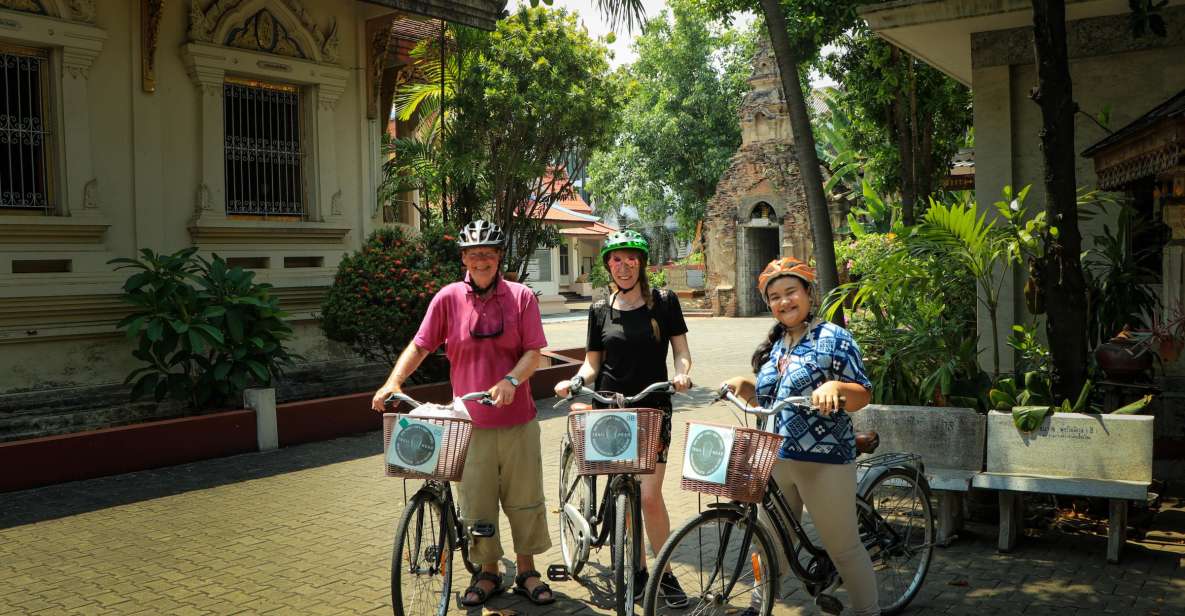
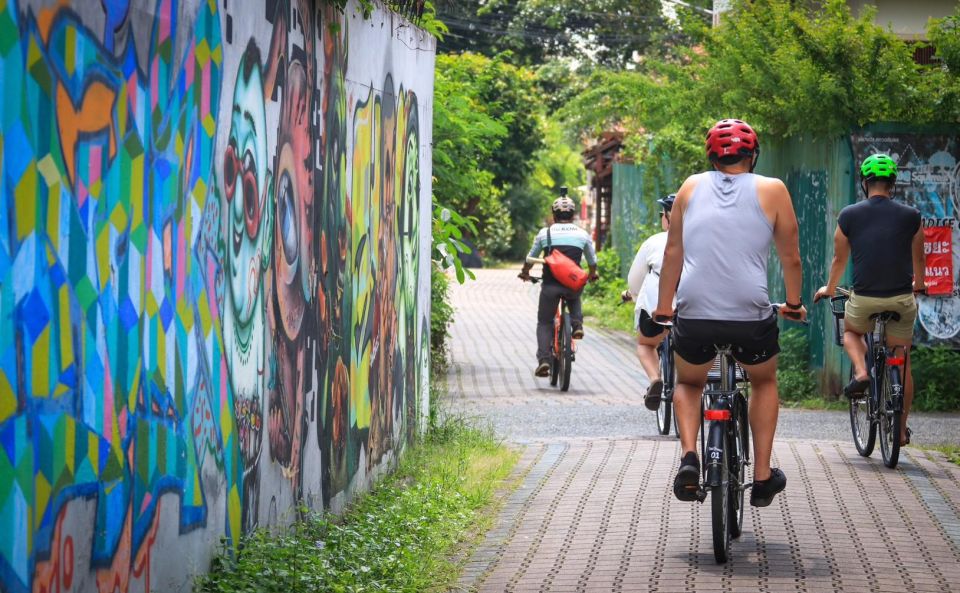
Chiang Mai’s old town can feel like a maze on foot. On a bike, the streets make more sense. You glide through the wiggly lanes and small side roads, and suddenly the city layout clicks: where people live, where markets spill into neighborhoods, and how temples fit into everyday routines.
What I like most is the mix of “pretty” and “practical.” You’re not only taking in ancient-looking architecture and landmarks; you’re also seeing how people live right now—at a blacksmith community and during market wandering. Guides such as Vivi and Kom have a reputation for explaining what you’re looking at in a way that sticks.
The only real caution: old town cycling is usually gentle, but you may cross busier streets. The good news is the guides manage crossings and keep the ride moving at a comfortable pace for different fitness levels.
Starting at Trailhead: Coffee, Bikes, and a Real Safety Brief
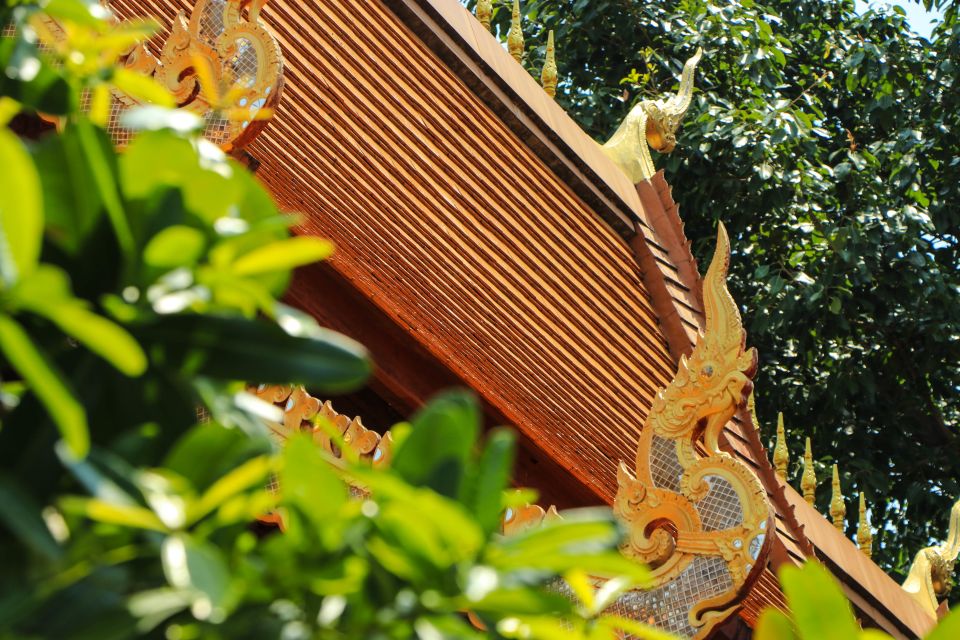
Your tour starts at the Trailhead cafe in the old town area—look for the distinctive green color. The company doesn’t include hotel pickup, so you’ll want to arrive on time and get settled.
Meeting times are:
- Morning session: 8:45am to 9:00am
- Afternoon session: 12:45pm to 1:00pm
Upon arrival, you get a complimentary drink, then the team gets you ready. You’ll make your way to the shop area, where your bicycle and helmet are provided, and the guide briefs the group on what to expect.
Bring comfortable shoes and comfortable clothes. Think breathable layers—Chiang Mai mornings and afternoons can shift fast—and plan to ride in regular walking gear, not anything stiff. Since this is a city ride, you don’t need cycling spandex. But you do want shoes that handle small turns and occasional stops.
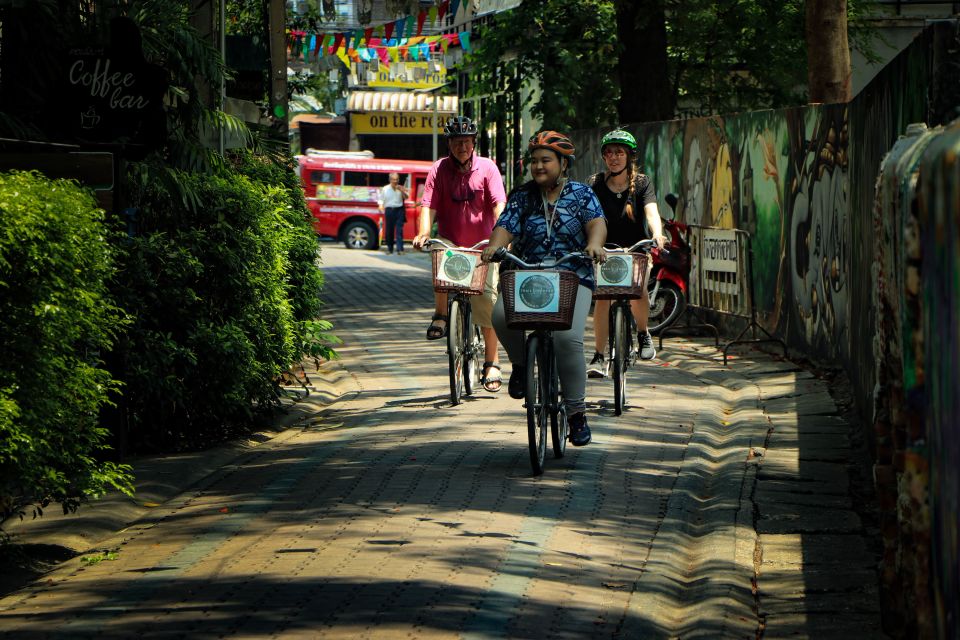
Helmet on, coffee down, and then you’re off—smoothly. Reviews repeatedly highlight that guides help with safety and crossings, and that the bikes are set up for an easy ride.
You can also read our reviews of more cycling tours in Chiang Mai

Winding Lanes, Temple Stops, and the Pace That Actually Works
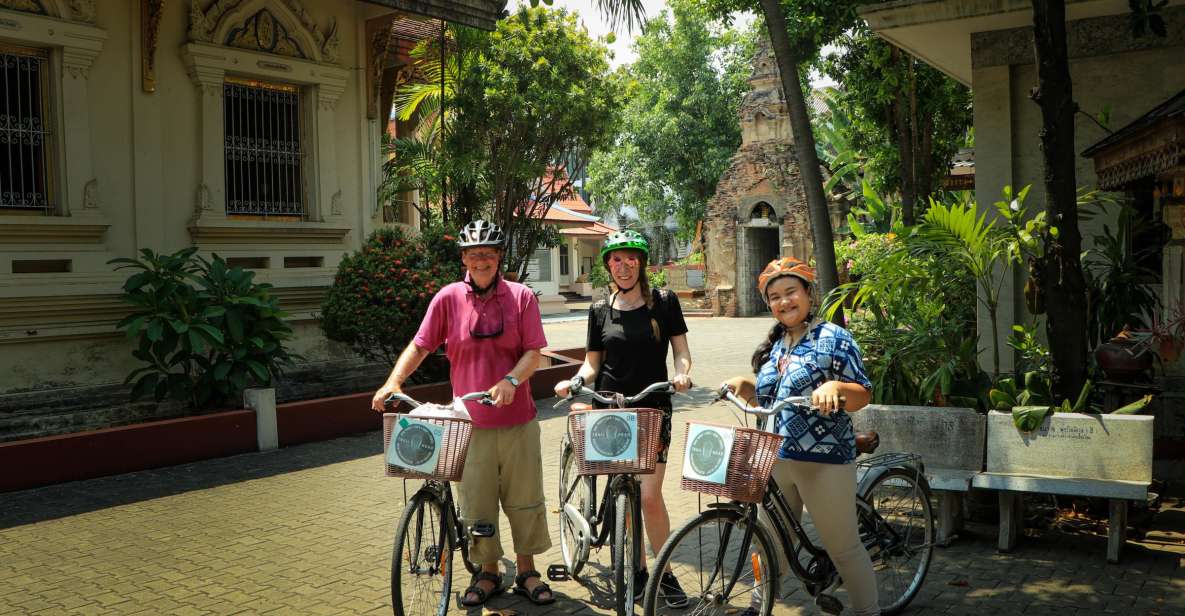
Once the tour starts, you ride around the old town and beyond in a way that feels guided but not controlling. The pacing is comfortable and designed for groups with multiple fitness levels. In practice, that means you’re not sprinting between photo spots.
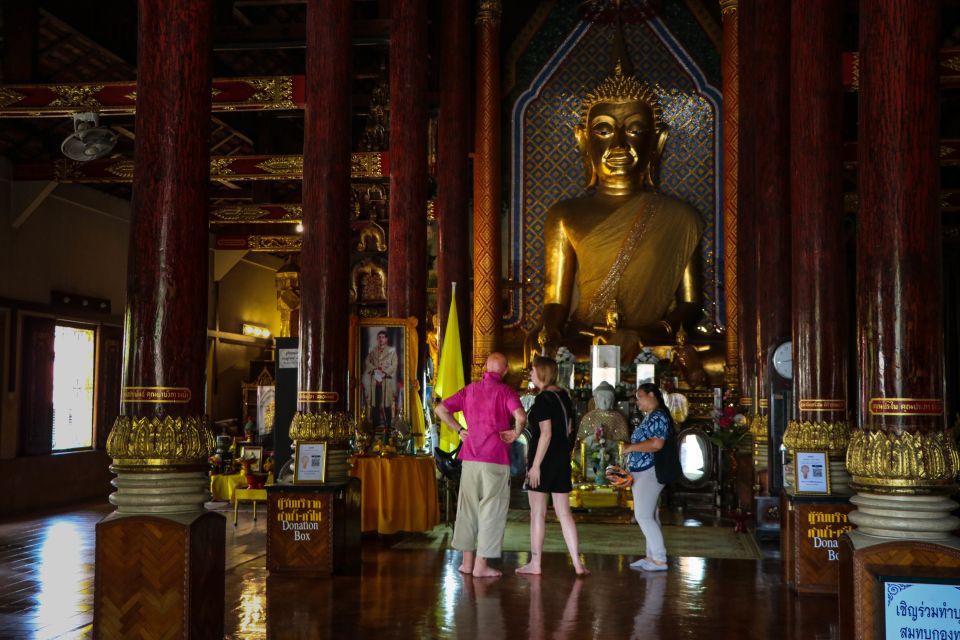
You’ll stop at idyllic, quieter temples and other points of interest where you can slow down, take photos, and hear what makes each place worth noticing. One of the strengths of this tour is that the stops are spread out enough to feel like a journey, not a shuttle.
Here’s what you’ll likely feel as you ride:
- the old town looks different from a bike lane than it does from sidewalks
- the quieter temple areas give you a reset from market noise
- the guide’s explanations make the architecture feel less random
If you prefer your sightseeing to include a little calm, this is a strong match. If you hate waiting, you may want to tune into the timing the guide sets—because the value here is the context and the conversation, not just speed.
And again, there may be occasional stretches that are busier than you’d expect from the old town vibe. The guides manage traffic when needed, including helping the group cross roads.
Warorot Market: Snacks, Small Shops, and Real Street Life
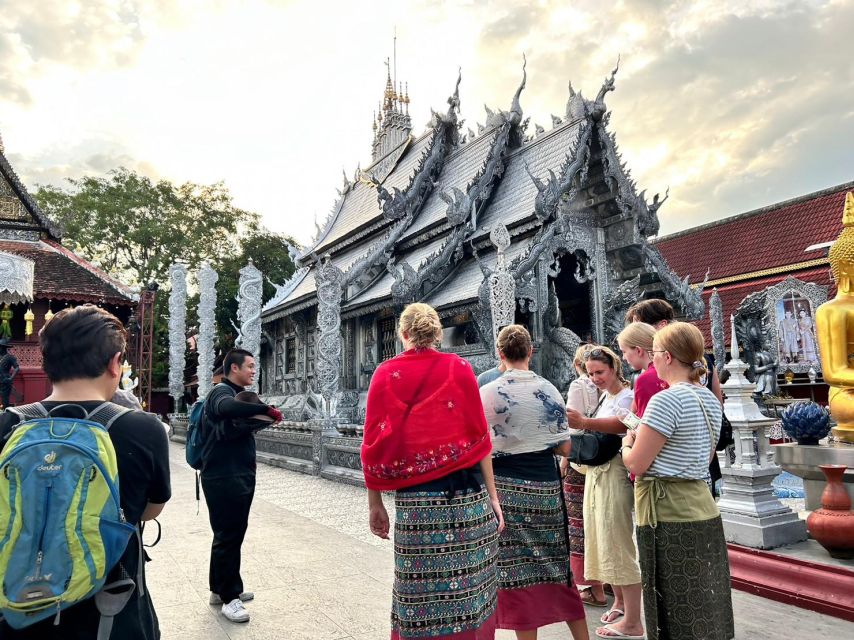
Warorot market is one of the stops that turns the tour from sightseeing into a lived-in experience. You get time to wander the small alleys and side lanes where the market spills into everyday commerce.
This is where the ride becomes flexible. Instead of you and the group being marched through a checklist, you get space to look around, ask questions, and buy souvenirs if you want. People often come to Chiang Mai for markets anyway, and doing it with a guide helps you avoid the dead-end feeling.
The tour includes snacks and beverages at the market area. Based on what guides and lunch stops have been known to include, you may run into favorites like sweet fruit snacks and local treats such as mango sticky rice. You’ll also get chances to try items like fruit and refreshing drinks—perfect for a mid-ride energy reset.
A practical tip: bring cash if you like to shop. The tour includes snacks and lunch, but souvenir purchases aren’t described as included. If you’re snack-focused, pace yourself—there’s enough food built into the experience that you don’t need to overdo it before you arrive.
The Blacksmith Community Stop: Seeing Work, Not Just Wonder
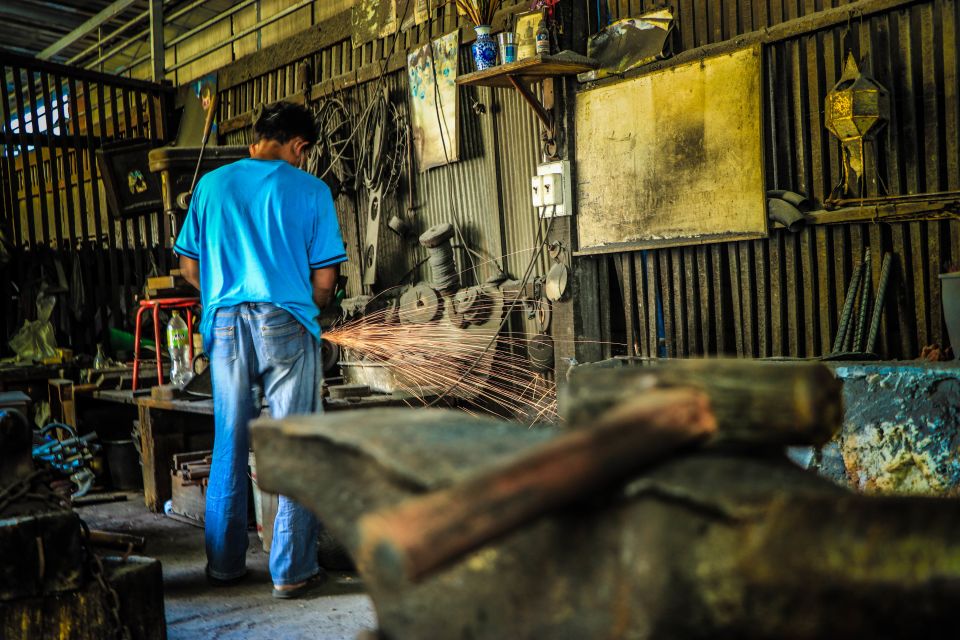
One of the most memorable parts of the tour is the visit to a blacksmith community. This isn’t framed as a dramatic tourist performance. It’s positioned as a look at traditional ways of life.
That matters because it changes what you’re paying attention to. Instead of only photographing temples and old buildings, you start seeing craft and labor as part of the city’s identity. It also gives you something different from the usual market-temple loop.
You’ll have time for photos and interaction, and the experience helps connect the dots between where people work and how the old town functions. If you enjoy watching trades up close—woodworkers, street crafts, or any traditional making—this stop is one of the best “why Chiang Mai is more than postcards” moments in the whole route.
Lunch, Complimentary Photos, and Why the Half-Day Format Works
About halfway-to-late in the ride, you’ll get a light lunch toward the end. Along with lunch, refreshments are included, which helps this feel like a true half-day outing rather than a bike-only transfer.
Lunch details can vary by the restaurant chosen by the operator, but it’s been reported as satisfying and enjoyable—some groups have had standout items like enoki mushroom tempura at the lunch stop.
Then there’s the photo aspect. The tour includes complimentary photos, and several guides are known for taking lots of images during the ride. The result is that you don’t just leave with memory—you may actually leave with a set of ride moments you can use right away.
The half-day timing is also smart. You get enough time to feel like you learned something and saw a lot, but you still have the rest of your day free for a night market, a massage, or simply wandering with fresh confidence.
You can also read our reviews of more tours and experiences in Chiang Mai



Price and Value: What $41 Buys You Here
At $41 per person, this tour is priced for people who want a high-connection experience without a full-day cost. In that price, you get far more than a bike rental:
- a comfortable city bicycle
- a high-quality helmet
- a light lunch
- snacks and refreshments
- an English live guide
- complimentary photos
That bundled value matters because in Chiang Mai, you can easily pay separately for a guided market walk, a temple-focused outing, and then still need food. Here, the meal and snacks are baked in, and the bike makes the route efficient.
You’re also paying for something hard to replicate on your own: the guidance on where to go and how to interpret what you’re seeing. Guides such as Vivi, Guitar, Lek, and Kom are praised for explanations and for keeping the group safe. For me, that’s where the price feels justified—this isn’t just movement; it’s meaning.
The main “cost” isn’t money. It’s time and attention. If you want to sprint around alone, you might feel slowed down by scheduled stops. If you want context and a relaxed pace, this price feels like a good deal.
Who Should Book This Cycling Tour (and Who Might Not Love It)
This works best for you if you:
- want to cover old town sights in only about 3 hours
- like markets, snacks, and local street energy
- enjoy temples, but prefer quieter visits where you can actually look around
- want a guide to connect history, daily life, and architecture
- prefer small groups (limited to 8 participants)
It also fits mixed groups because the ride is described as gentle and flat in the city sense. You’re not dealing with big climbs.
You might want to reconsider if:
- you’re extremely sensitive to traffic exposure. A few crossings can be busier, even with guide support.
- you’re looking for a workout-style cycling day. This is a city sightseeing ride, not training.
For families and first-time riders, it often sounds like a safe bet because the pace is comfortable and the guide manages the route.
Should You Book This Tour? My Straight Answer
Yes, I’d book it if you want the best “old town with context” experience in a half-day. The combination of old town lanes, Warorot market time, quiet temple stops, and the blacksmith community gives you a well-rounded snapshot—temples, commerce, craft, and daily life—without feeling exhausting.
Two reasons to choose it over self-exploring:
- You’ll waste less time finding the right streets and stops.
- The guides add explanations that make the city feel less like random scenery.
If your travel style is strictly independent with zero scheduled pacing, you might find the structure limiting. But if you like learning while you walk-and-ride, this is a strong fit.
FAQ
Where do I meet for the Chiang Mai old town cycling tour?
You meet at the Trailhead cafe, a distinctive green location in the old town area.
Is hotel pickup included?
No. You’ll need to make your way to the Trailhead cafe within the scheduled arrival window.
How long is the tour?
The duration is about 3 hours.
What times are the morning and afternoon sessions?
Morning: 8:45am to 9:00am. Afternoon: 12:45pm to 1:00pm.
What’s included in the price?
Included are lunch, refreshments, a comfortable city bicycle, a high-quality helmet, and complimentary photos.
Do I need to bring my own bike or helmet?
No. The tour provides the bicycle and a helmet.
Is the tour suitable for different fitness levels?
Yes. The ride is at a comfortable pace and is described as suitable for groups with multiple fitness levels.
How many people are in the group?
The group is limited to 8 participants.
What are the options for cancellation and booking?
You can cancel up to 24 hours in advance for a full refund. You can also reserve now and pay later to keep plans flexible.