REVIEW · CHIANG MAI
We Cook Thai Home Garden Cooking School
Book on GetYourGuide →Operated by We Cook Thai Home Garden Cooking School · Bookable on GetYourGuide
This Thai class feels like family dinner. You start with a local market tour with Mam, then cook in a home garden kitchen and leave with a bunch of recipes you’ll actually use. It’s practical, friendly, and built for real beginners and regular home cooks alike.
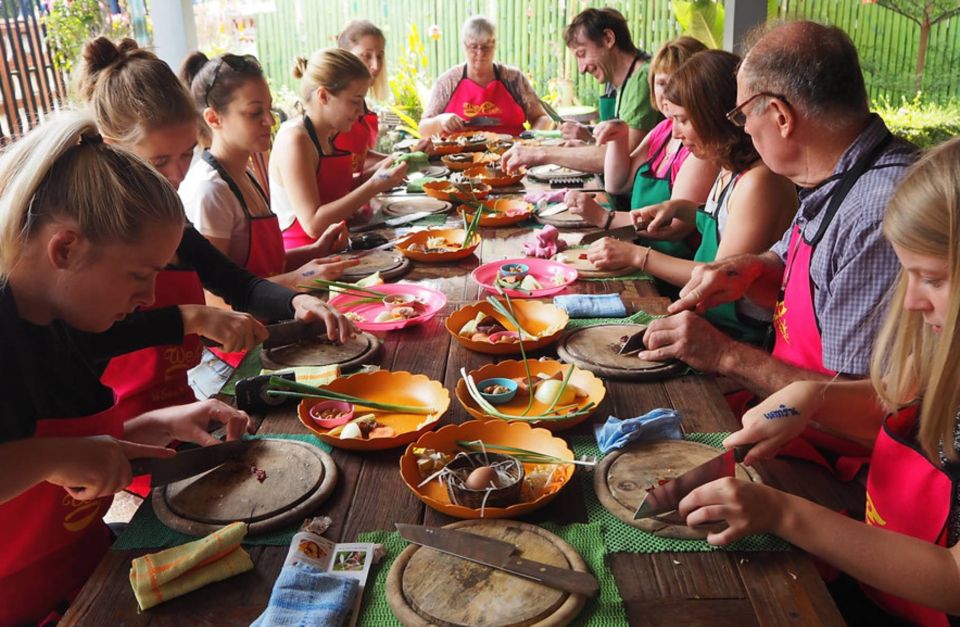
I especially like the fact that you cook side-by-side at your own station, with 1 person/1 wok. And I love that you don’t just make a snack and stand around; you sit down to enjoy what you cooked in a dedicated dining setup.
One thing to plan for: there’s a 120 cm minimum height because the woks are tall. If you’re under that, you can still attend as a visitor (and you’ll have a separate option for dishes).
In This Review
- Key things that make this class worth your time
- A home-garden cooking class, not a factory lesson
- Morning vs evening classes: plan around your appetite
- The market tour: where Thai flavor starts
- Cooking at your own wok: how the 1-person station works
- What you’ll learn to cook (and how to choose your picks)
- The garden dinner: eating what you cooked, properly
- Price and value: what $32 buys you in Chiang Mai
- Who this is best for (and who might not love it)
- Practical tips to make your class smoother
- Should you book We Cook Thai Home Garden Cooking School?
- FAQ
- Is the market tour included?
- How long is the cooking class?
- Can I choose what dishes I cook?
- Are there vegetarian options?
- Do I need to cook with a wok myself?
- What’s the minimum height requirement?
- Is transportation included?
- What language is the instruction in?
- What do I receive at the end?
Key things that make this class worth your time
- Market tour with Mam so you understand what you’re buying, not just what to cook
- 1 person/1 wok keeps the class hands-on and avoids standing around
- Choose your dishes by category to build a meal that fits your taste
- A real sit-down garden meal after you finish cooking
- Small-group feel in many time slots, so you get help when you need it
A home-garden cooking class, not a factory lesson
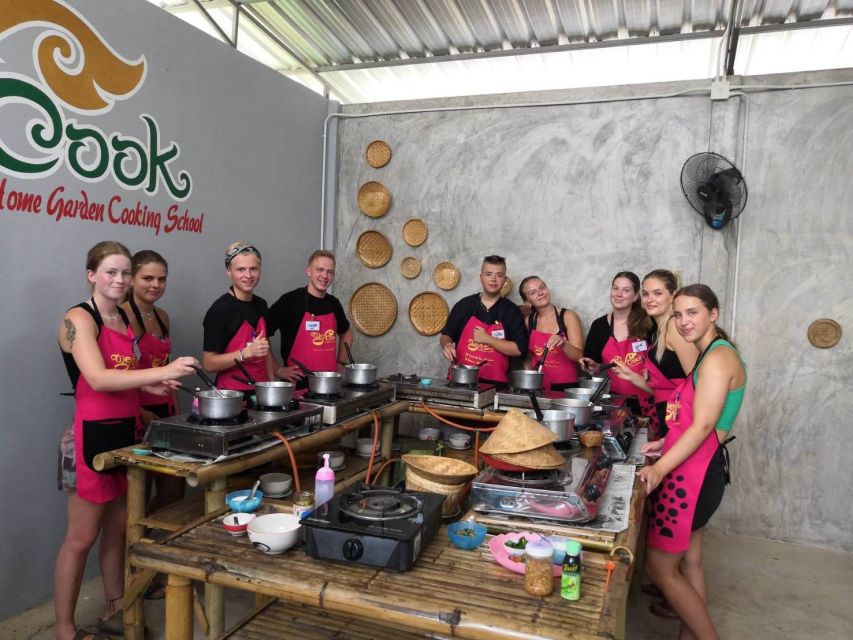
This experience is run from Mam’s home, in a garden-style cooking setup. That matters because the vibe stays relaxed and personal, and the kitchen feels like a place where cooking is part of everyday life, not a scripted performance.
You’ll also notice the structure of the teaching. Most of the class is hands-on with guidance step-by-step, and you’re not expected to arrive knowing Thai techniques. Several people mention Mam’s patience and the way she checks that you’re doing things correctly, especially with timing and the “feel” of sauces and balances.
The kitchen and dining setup also helps. People talk about a dining area that feels separate from the cooking zone, so you don’t just smell smoke while standing. Instead, you finish and then properly eat what you made.
You can also read our reviews of more cooking classes in Chiang Mai


Morning vs evening classes: plan around your appetite
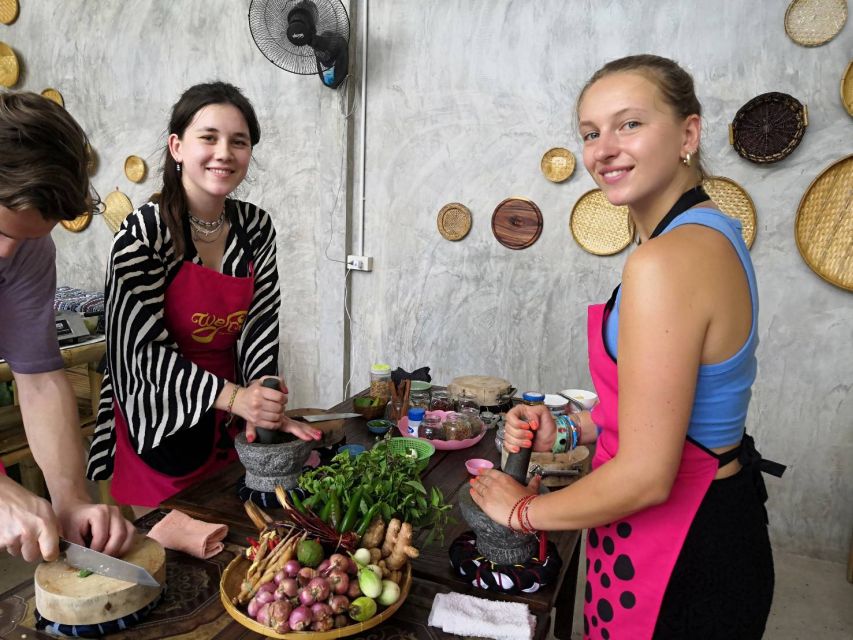
You can usually choose a morning or an evening slot. The class lasts 270 minutes (about 5 hours), which is long enough to learn, cook a lot, and still sit down for the meal.
Evening pickup is clearly timed, too. If you’re doing the evening class, you’re picked up around 4:00 pm to 4:30 pm. That’s useful when you’re trying to map out dinner plans afterward.
One practical reality: you’ll eat. Multiple notes from past participants emphasize how filling the meal is, so treat this like your main meal (or make room for a late snack). If you go hungry, you’ll enjoy the last part a lot more.
The market tour: where Thai flavor starts
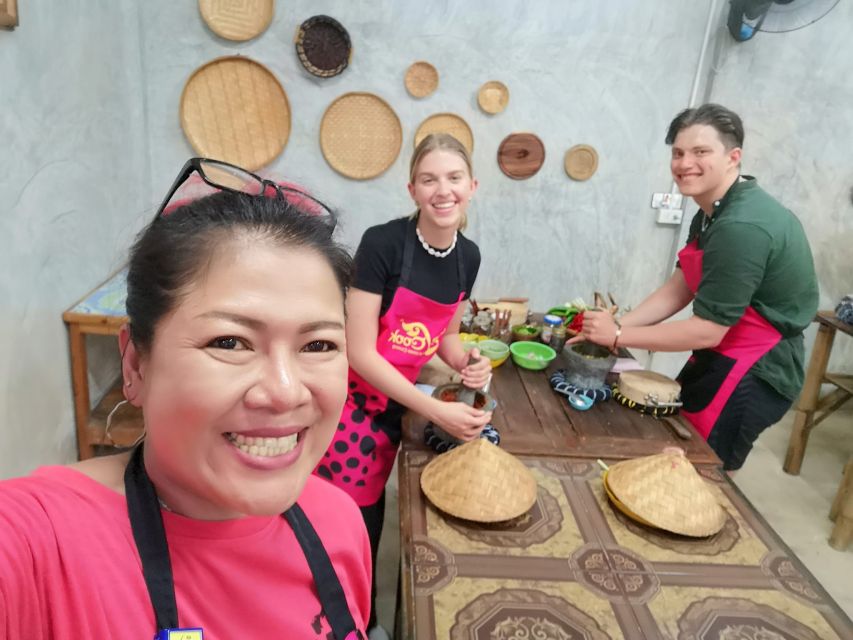
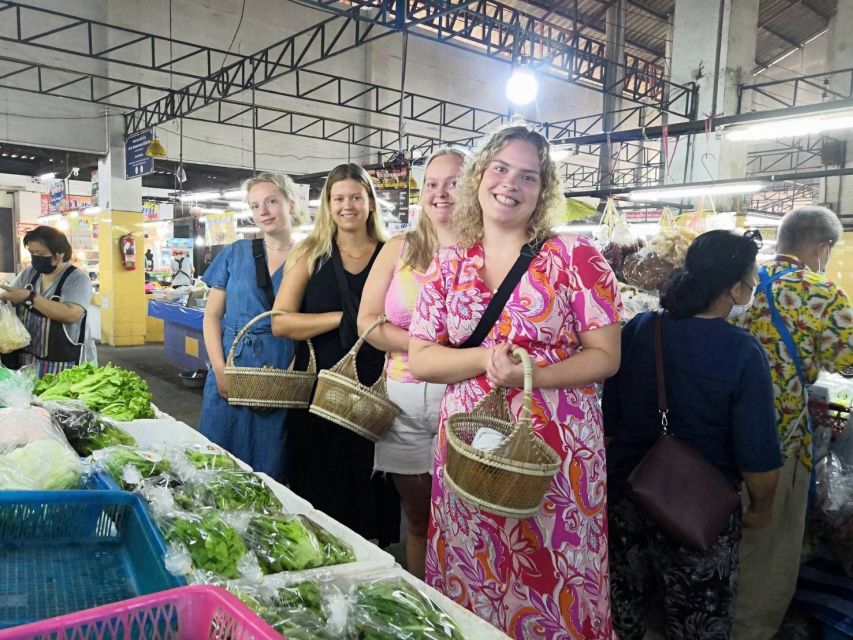
The class begins with a local market visit with Mam. This isn’t just a quick walk past stalls; it’s built to help you recognize ingredients and understand why Thai cooks use them.
You’ll interact with vendors, and Mam points out key products like spices, herbs, vegetables, and fruits. People mention being able to touch and smell ingredients, and that sensory part is where the lesson sticks.
Here’s what you gain from this stage: you stop thinking of Thai food as a list of dishes and start seeing it as ingredient logic. When you learn how a certain herb smells, or how a spice changes a sauce, your cooking becomes less guesswork later when you try to recreate it at home.
Also, the market stop makes you more confident during cooking. When you’ve already bought the ingredients with Mam and heard how they’re used, the next step feels simpler.
Cooking at your own wok: how the 1-person station works
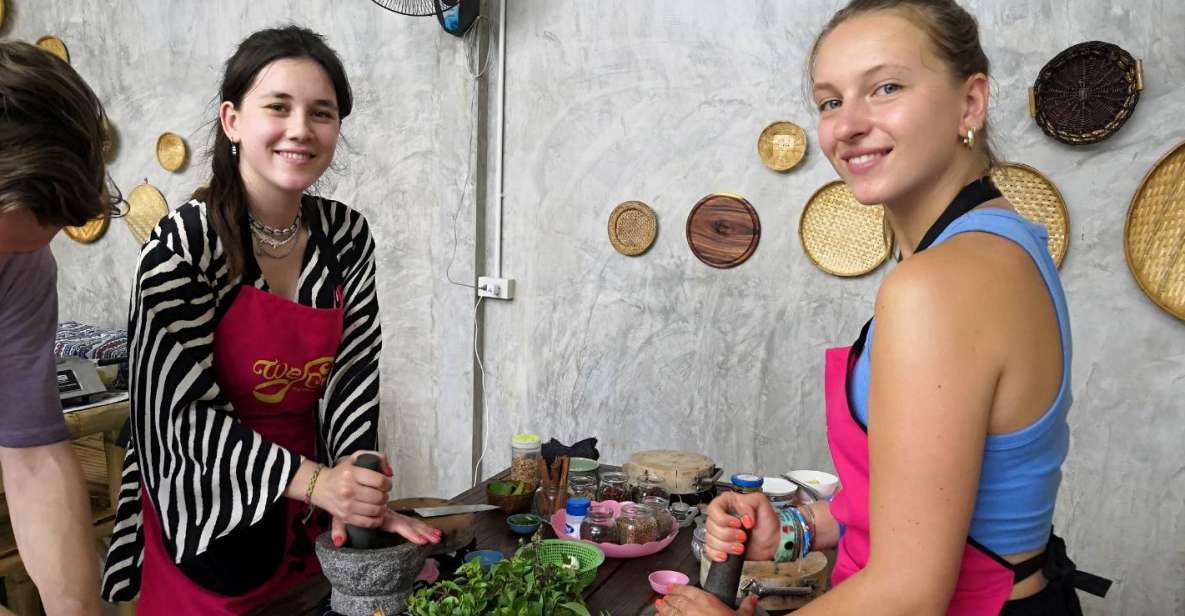
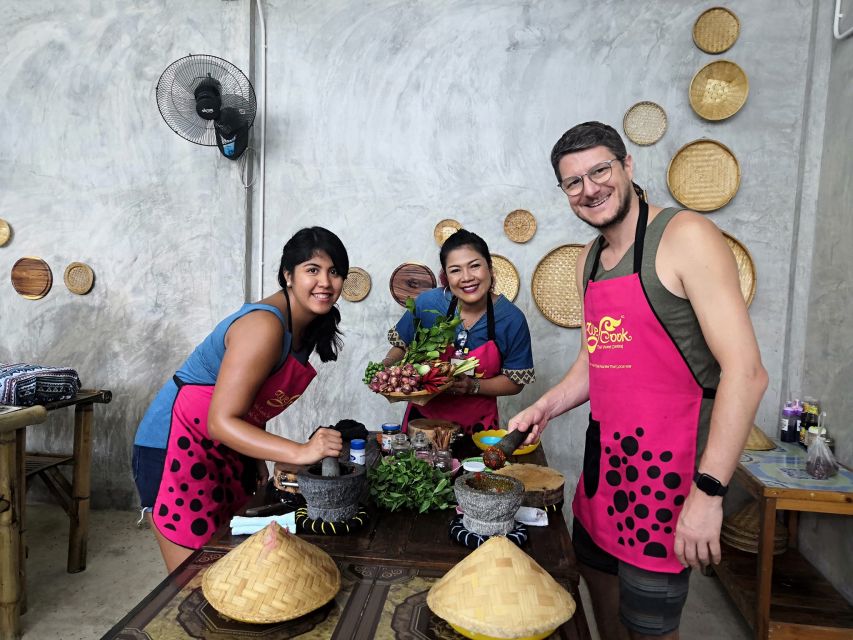
After the market, you move to Mam’s home cooking school. The biggest “value lever” here is the 1 person/1 wok format. In many classes, one station serves multiple people, and you end up watching more than cooking. This setup pushes you to actually do the work.
You choose dishes from categories, then cook a full set for your meal. The description says 6-category meals, and you select 1 dish per category, which adds up to 6 dishes total. Some participants describe the outcome as 5 courses (starter, soup, curry, main, dessert). If you’re expecting a lot of food, trust that expectation—either way, it’s not a light class.
The teaching method seems consistent across skill levels. People mention Mam guiding each step, being patient, and making sure everyone stays involved. That’s a big deal if you’re not a confident cook. You’re learning Thai techniques in a calm setting, not being thrown into a fast kitchen.
And because the cooking area is set up for teaching, you’re not scrambling for utensils or wondering what comes next. You’ll usually have ingredients ready, and the class includes everything you need.
What you’ll learn to cook (and how to choose your picks)
This is where the menu flexibility becomes a major plus. You select dishes by category, so you can steer the meal toward what you actually like to eat.
Based on the dishes people mention, you may end up cooking classics like:
- Thai curry options (including curry/paste styles)
- Thai noodle soup styles
- Fried rice (like Khao Pad Gai)
- Salads and herb-forward dishes
- Spring rolls
- Desserts such as Mango Sticky Rice
For many students, the smartest strategy is to choose at least one dish that’s familiar and one that’s new. Familiar gives you confidence. New helps you learn something you can’t easily guess at home.
If you care about dietary needs, there’s also a vegetarian option. People talk about alternatives being offered, and the general takeaway is that you’re not sent away with a vague “you can’t have that.” You’ll still be part of the cooking and meal.




The garden dinner: eating what you cooked, properly
The best part of this kind of class is the finish—when you get to eat your results. Here, that happens in a pleasant dining setup at the home.
Participants repeatedly describe the portion size as generous. You’re making multiple dishes, then eating them together, and many people say they leave very full. Some even mention taking leftovers home, which tells you the class isn’t stingy.
There’s also a small “memory detail” advantage: people mention the home garden setting, and one note includes fish in a pond near the area. That kind of quiet charm is hard to copy in a commercial cooking studio.
This meal structure also helps your learning. You cook, then taste right away, so you can connect what you did (the balance, the texture, the heat) with how it ends up on the plate.
Price and value: what $32 buys you in Chiang Mai
At around $32 per person for a 5-hour experience, you’re paying for three things that add up fast: instruction, ingredients, and a meal.
You get:
- An English guide (Mam)
- Market tour support
- A welcome snack or fruit in season
- All ingredients for cooking
- Recipe book + certificate
- A 1 person/1 wok setup
- Free transportation to and from your residence within a 3 km radius from Chiang Mai downtown
That last point matters more than it sounds. A cooking class is easy to book, hard to coordinate if you’re moving across town. Here, transportation is included (at least for those in the downtown radius). It lowers friction so you can focus on the food.
You also get time. Five hours is long enough to do hands-on cooking with guidance, rather than rushing through a demo. Based on repeated feedback, that long block is part of why people feel they learn real techniques and go home satisfied.
Who this is best for (and who might not love it)
This class is ideal if you want:
- A hands-on Thai cooking lesson
- A real market ingredient education
- A guided experience that works for beginners
- A meal experience that feels like a home-cooked dinner
It also seems friendly for people who don’t cook often. Several notes mention that even visitors with little kitchen experience had a great time and learned a lot.
If you’re short (under 120 cm), check the height rule early. The class requires that minimum height for wok safety, though you can attend as a visitor with a specific option for extra dishes.
If you’re someone who hates eating lots of food, this might feel like overkill. Most of the class is building a full meal, so plan your day accordingly.
Practical tips to make your class smoother
A few things can make the day feel easier, based on what consistently shows up in participant notes:
- Go in with a good appetite. People repeatedly recommend not eating beforehand because the final meal is very filling.
- Ask questions during the market portion. That’s where you’ll get the quickest win for learning ingredients and flavors.
- Use your dish choices to balance comfort and curiosity. Pick one familiar Thai dish and one you don’t usually order.
- Plan to take your time tasting. This class is teaching flavor balance, and tasting while cooking helps you learn what to adjust.
Also, expect a small-group feel in many time slots. Some participants describe intimate groups (like 3–8), which usually means faster help when you’re learning a technique. When the group is smaller, the class can feel more like guided cooking at home.
Should you book We Cook Thai Home Garden Cooking School?
If you want a Thai cooking class that starts with ingredient education and ends with a full sit-down meal, I think you should book it. The combination of market tour + 1 person/1 wok + recipe book is strong value for Chiang Mai, and the repeated focus on Mam’s patience is exactly what beginners hope for.
Book it especially if you’re the kind of person who wants to understand what’s going into Thai food, not just copy a dish. And come hungry. This class is designed to feed you, teach you, and send you home with the confidence to cook Thai flavors again.
FAQ
Is the market tour included?
Yes. The experience starts with a local market tour guided by Mam, and you’ll learn about spices, herbs, and ingredients before cooking.
How long is the cooking class?
It runs for about 270 minutes, which is roughly 5 hours.
Can I choose what dishes I cook?
Yes. You select 1 dish per category, for a total set of dishes in the class.
Are there vegetarian options?
Yes. A vegetarian option is available.
Do I need to cook with a wok myself?
Yes. The class is designed as 1 person/1 wok, and you cook during the session with ingredients provided.
What’s the minimum height requirement?
Participants must be at least 120 cm due to wok height and safety. If you’re under 120 cm, you can still join as a visitor with a separate visitor option.
Is transportation included?
Yes. Free transportation is included within 3 km of Chiang Mai downtown. Pick up is included for the evening course, with pickup around 4:00 pm to 4:30 pm.
What language is the instruction in?
The instruction and guiding are in English.
What do I receive at the end?
You receive a cook book and a certificate.