REVIEW · CHIANG MAI
Team Aim Thai Cooking School (#1 Cooking Class in Chiang Mai)
Book on Viator →Operated by Local Tours Center · Bookable on Viator
Market mornings feel like speed dating for flavors. This small-group Thai cooking class in Chiang Mai pairs a Somphet Market shopping tour with hands-on cooking at an open-air kitchen, so you learn what goes into Thai food and why. I especially like the structure: you cook a full spread instead of nibbling samples, and you get a detailed step-by-step recipe book to take home.
One possible drawback to plan around: the class runs in a single 5.5-hour block, so you’ll want to treat it as the main event for your day (not a quick side trip).
The menu is flexible in a useful way: you can cook vegetarian or vegan, and adjust spice level as you go. If you’re sensitive to heat, you’ll be happier knowing you have control rather than guessing.
In This Review
- Key Reasons This Cooking Class Works So Well
- From Somphet Market to the Open-Air Kitchen: The Flow You’ll Feel Instantly
- Somphet Market Shopping: Where Thai Ingredients Make Sense Fast
- Cooking at the School: Woks, Hands-On Practice, and Real Techniques
- Your Menu Choice: 4 Dishes Plus Curry Paste and Mango Sticky Rice
- Timing and Pickup: When to Fit It Into Your Chiang Mai Day
- Price and Value: Why $34.01 Can Actually Make Sense Here
- Who Should Book This Class (and Who Might Skip It)
- Should You Book Team Aim Thai Cooking School?
- FAQ
- How long is the Team Aim Thai Cooking School class in Chiang Mai?
- Are there morning and evening course times?
- Is pickup available?
- Do I visit a market as part of the class?
- What dishes do you cook?
- How many dishes can I choose?
- Can the class accommodate vegetarian or vegan diets?
- Do I get to take the food home or eat it all during the class?
Key Reasons This Cooking Class Works So Well
- Somphet Market ingredient shopping that shows you what you’re actually cooking with
- Open-air kitchen setup in Chiang Mai that keeps the experience lively and practical
- One person per one wok, so you’re not stuck watching
- A full menu build with curries, stir-fry, spring rolls, salad, and Thai tea
- Diet-friendly choices: vegetarian or vegan options are supported, plus spice control
- Take-home support via a step-by-step recipe book and free Wi‑Fi on-site
From Somphet Market to the Open-Air Kitchen: The Flow You’ll Feel Instantly
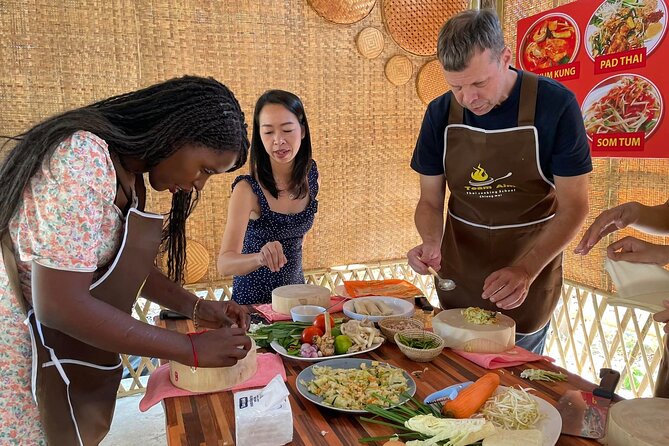
The first thing you notice is how efficiently the day is paced. You start with a guided market stop, where you learn what ingredients matter in Thai cooking, then you move straight into cooking mode. That matters because Thai flavors are ingredient-driven. If you only learn recipes without seeing the shopping side, you miss why things taste the way they do.
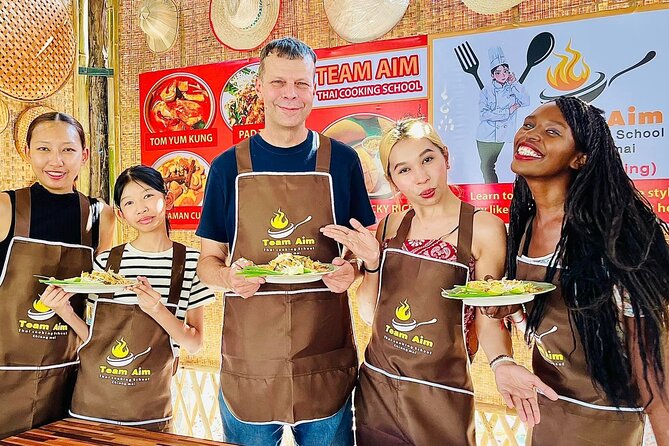
The class is built for active participation. You aren’t doing a line-up of small bites. You’re cooking a mix of dishes—so you practice different techniques rather than repeating one theme. And since the class is small (2–9 people), it feels closer to a workshop than a production.
There’s also a nice touch to the energy: you get a welcome drink before you start cooking (tea/coffee). It helps you settle in, then you jump into the woks without the awkward pause that some classes have.
You can also read our reviews of more cooking classes in Chiang Mai
Somphet Market Shopping: Where Thai Ingredients Make Sense Fast
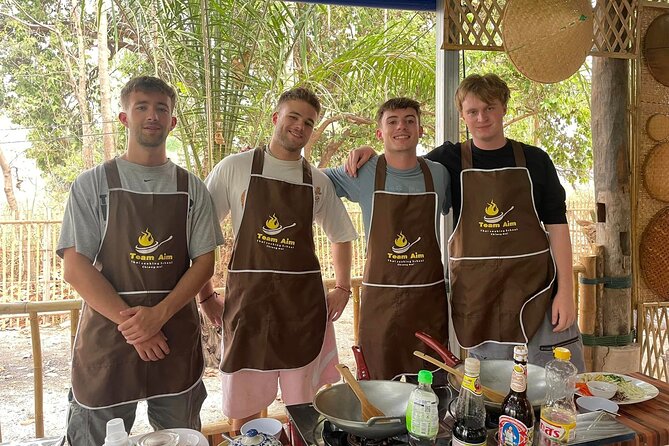
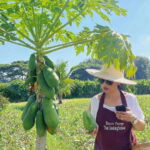
The market stop is the part that gives the rest of the class context. Somphet Market is where you see the practical side of Thai cooking: aromatics, herbs, sauces, and produce that show up across curries and salads. Your guide walks you through what you’re buying and what each ingredient does in the dishes.
In the reviews, I saw the value of this guidance called out clearly, including how a guide like Cindy helps connect purchases to the actual dishes you’ll cook later. That’s what you want: not just a list of items, but an explanation you can use at your cutting board later.
Here’s what I’d pay attention to while you’re shopping:
- If something looks similar (like different types of herbs), ask what makes them different.
- Watch how the guide connects an ingredient to a dish. That’s the fastest route to learning Thai flavors.
- If you have dietary needs, say it early. The class supports vegetarian/vegan cooking, but you’ll get smoother results by aligning at the market.
One more practical tip: the class includes time to shop and cook, so come with a good appetite. If you eat a big breakfast first, you may not feel like you can enjoy the full meal portion as much.
Cooking at the School: Woks, Hands-On Practice, and Real Techniques
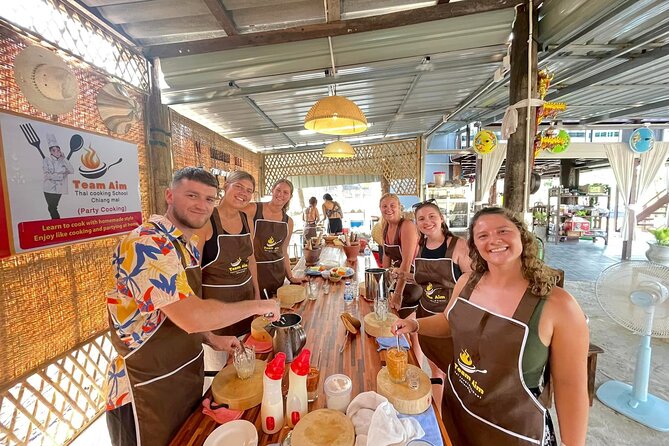
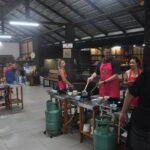
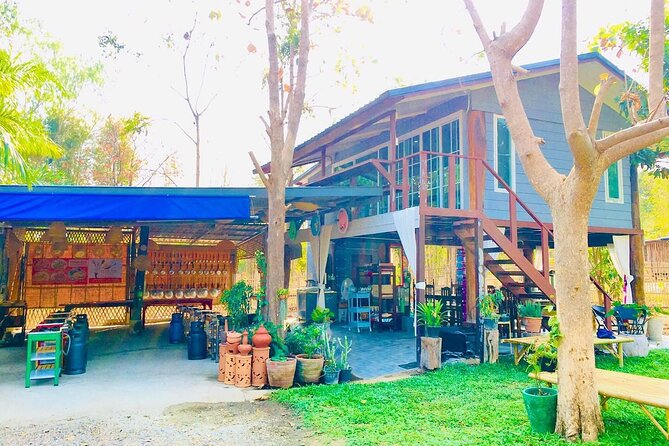
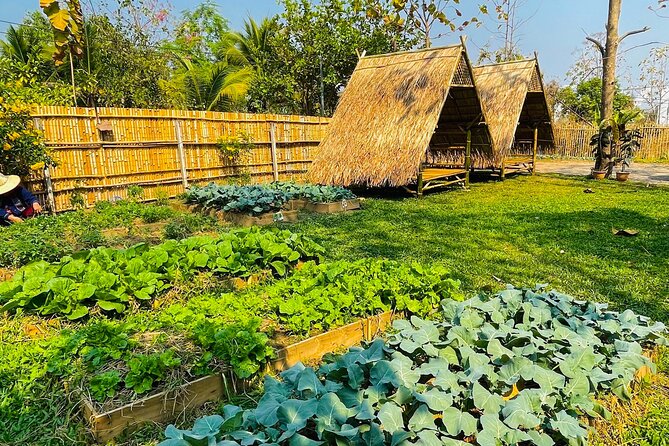
Once you’re done shopping, you drive to the school and get set up in an open-air kitchen. This matters because Thai cooking often uses fast heat and quick technique—stir-fry timing, paste mixing, balancing sweet/sour/salty, and getting noodles and sauces right. An open-air setup also makes it easier to stay comfortable while you’re cooking and eating.
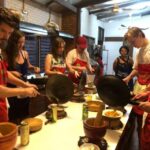
The class uses a hands-on format with one person per one wok, which is exactly what you want if your goal is skill—not just a fun afternoon. You’ll be chopping, mixing, stirring, frying, and assembling rather than hovering near your seat.
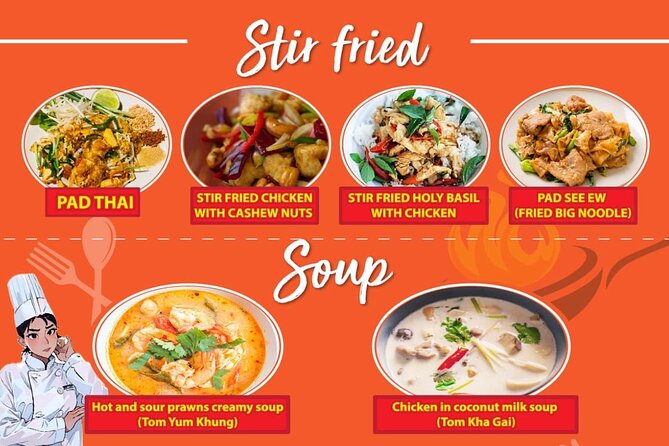
You also don’t just learn one dish style. The menu includes:
- Spring rolls
- Soup
- Stir-fried dish
- Curry paste
- Curry
- Thai traditional salad
- Thai tea
That spread gives you a well-rounded Thai cooking foundation. Curry paste teaches you flavor-building. Salad teaches balance and freshness. Stir-fry and soup teach heat control and timing. Spring rolls teach wrapping and texture.
And yes, you eat what you make. In fact, you can finish it all or take some home. Either way, you won’t leave with the usual cooking-class regret of paying for food you didn’t really get to enjoy.
Your Menu Choice: 4 Dishes Plus Curry Paste and Mango Sticky Rice
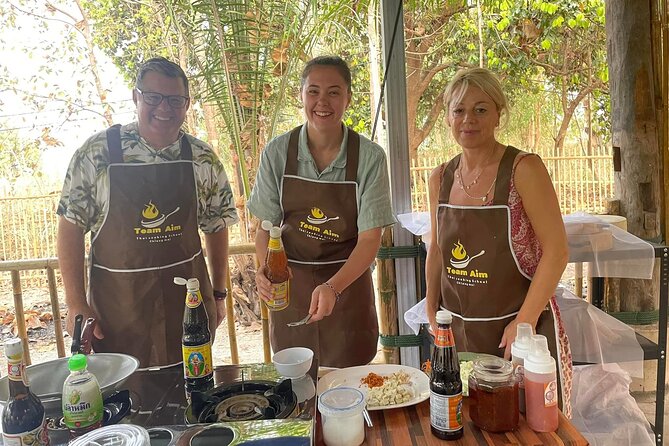
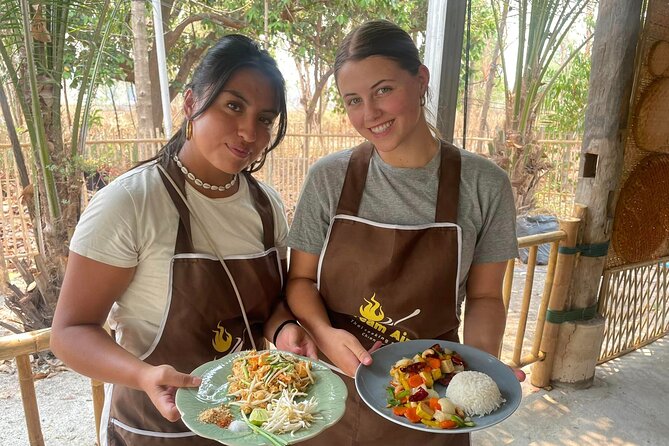
One of the smartest parts of this class is how it handles choice. You can choose 4 dishes + 1 curry paste, and everyone can end up making a slightly different menu. That means you’re not stuck doing the same thing as the person next to you, and it reduces the feeling that you’re repeating steps without learning.
You’ll also include sticky rice with mango. That’s a classic Thai dessert, and it fits well after savory dishes. It’s also a good “final check” for your learning: you’ll see how Thai cooking isn’t only about heat and herbs—it’s also about pairing flavors with the right textures and sweetness level.
Spice control is built into the experience. The class states you can adjust to make dishes spicy or mild by yourself. For me, that’s a big deal. Thai food can be intense even when it’s delicious, and being able to dial the heat makes the class more accessible without turning it into bland tourist food.
Diet support is also clear: dishes can be made vegetarian or vegan. If you’re traveling with a vegetarian or you’re eating plant-forward while abroad, you’ll appreciate that you don’t need to negotiate or bring substitutions.
Timing and Pickup: When to Fit It Into Your Chiang Mai Day
This class runs in two options:
- Morning course: 09:00–14:30 (pickup roughly 08:20–08:55)
- Evening course: 16:30–21:00 (pickup roughly 15:30–15:55)
The overall duration is about 5 hours 30 minutes, including the market stop and the drive between locations. That timing is useful because it helps you plan around Chiang Mai’s heat and the rest of your day.
If you choose morning, you’re more likely to beat the heaviest daytime temperatures. If you choose evening, you can fill your earlier hours with temples, markets, or a relaxed Thai massage—then come back when the air cools off.
Pickup is offered, and the class includes free round-trip transportation within 2.5 km from Chiang Mai Old City. If you’re staying farther out, you’ll want to confirm what’s available for your address, because the included transport is limited to that radius.
Your starting point is listed at a McDonald’s on Kotchasarn Rd (Chang Khlan area). If you’re used to chaos-proof tour logistics, this kind of clear meeting spot helps you get in and out without guessing.
You can also read our reviews of more tours and experiences in Chiang Mai


Price and Value: Why $34.01 Can Actually Make Sense Here
At around $34.01 per person for a 5.5-hour hands-on class, the value comes from what’s included—and how much cooking you actually do. Many cooking classes in Thailand charge similar money but give you a lighter experience: a demo, a couple of small tasks, and then a tasting.
Here, you get:
- a market visit with guided ingredient shopping
- multiple dishes you actively cook
- curry paste work, plus a curry outcome
- sticky rice with mango
- drinks (water, tea, coffee) plus tea and seasonal fruit
- recipe book with step-by-step guidance
- all ingredients
- small class size (2–9)
- one person per one wok
- Wi‑Fi and the option to eat or take away
That combo is what makes the price feel fair. You’re paying for ingredients, labor (teaching), and time—plus the market visit, which often costs less to run but adds a lot of educational value. If your goal is to come home and cook a few Thai staples with confidence, the recipe book and the market context do real work.
Also, the market-to-kitchen pairing improves your odds of repeating the dishes later. You’re not just learning what to cook; you’re learning what to buy and how to think about it.
Who Should Book This Class (and Who Might Skip It)
This is a great fit if:
- you want an authentic Chiang Mai cooking class with active participation
- you like learning by doing (not watching someone else cook)
- you want a vegetarian/vegan-capable experience with spice control
- you’d rather eat what you cook than do a quick tasting
It might be less ideal if:
- you’re looking for a short, low-effort activity (this is a full half-day block)
- you hate cooking mess or heat—woks and hands-on prep come with that
- you prefer classes where you focus on only one dish deeply (this one covers several)
One extra practical note: because it’s an outdoor/open-air setup, it requires good weather. If weather turns, you’ll need to be flexible. The good news is that the experience is designed to be adjusted by offering a different date or refund if conditions aren’t workable.
Should You Book Team Aim Thai Cooking School?
I’d book it if you want the classic Chiang Mai combo: learn from a market guide, cook multiple dishes yourself, and take home a recipe book you can actually follow. The small class size, one-person-per-wok format, and the ingredient shopping component make it feel like skill-building, not just entertainment.
If you’re trying to decide between a cooking class that’s mostly tasting and one that builds real technique, this is the type that leans toward learning. Bring a big appetite, show up ready to chop and stir, and you’ll get a Thai cooking foundation you can use well after Chiang Mai fades into memory.
FAQ
How long is the Team Aim Thai Cooking School class in Chiang Mai?
The experience runs for about 5 hours 30 minutes, including the market visit and the cooking and eating time.
Are there morning and evening course times?
Yes. There’s a morning course from 09:00–14:30 and an evening course from 16:30–21:00.
Is pickup available?
Pickup is offered. The tour also includes free round-trip transportation within 2.5 km from Chiang Mai Old City.
Do I visit a market as part of the class?
Yes. You’ll visit Somphet Market, learn about ingredients with a guide, and shop for items used in your dishes.
What dishes do you cook?
You’ll cook spring rolls, soup, a stir-fried dish, curry paste, curry, Thai traditional salad, and Thai tea. You also include sticky rice with mango as part of the experience.
How many dishes can I choose?
You can choose 4 dishes plus 1 curry paste. The sticky rice with mango is included.
Can the class accommodate vegetarian or vegan diets?
Yes. The dishes can be made vegetarian or vegan.
Do I get to take the food home or eat it all during the class?
You can eat everything you make, or take some away.