REVIEW · CHIANG MAI
Meditation Retreat and Self-Care in Nature
Book on Viator →Operated by Meditation & Yoga in Chiang Mai · Bookable on Viator
Doi Saket at 3:30 pm is a calm entry to Thai-style self-care. This 3-hour Chiang Mai experience blends mindful walking and guided sitting meditation outdoors, then follows with gentle yoga-style stretching and a cozy tea or coffee break in a garden setting. It’s designed to help you find steadier focus in the here and now, without needing prior meditation experience.
What I like most is the simple, hands-on structure: mindful walking and sitting meditation are taught clearly, not just thrown at you. I also like that the movement part is adaptable—yoga or gentle stretching is adjusted to practitioners—so you can participate even if you’re not super flexible.
One thing to consider: there’s no private transportation included, so plan your taxi or shared ride from your hotel to the Doi Saket District meeting point.
In This Review
- Key highlights to watch for
- Why this 3-hour meditation retreat starts at 3:30 pm
- Mindful walking and guided sitting meditation in Doi Saket nature
- Gentle yoga and stretching that meet your body where it is
- The garden tea or coffee pause: why it matters
- Price and value: what $47.20 buys you in Chiang Mai
- Small group energy (max 5) and the role of Amori
- Practical logistics that can make or break your experience
- Who this retreat suits best
- Quick FAQ
- FAQ
- How long is the meditation and self-care retreat?
- What time does the session start in Chiang Mai?
- Where is the meeting point?
- Is transportation included?
- What’s included in the retreat fee?
- What activities are included?
- Is this physically demanding?
- Should you book it?
Key highlights to watch for
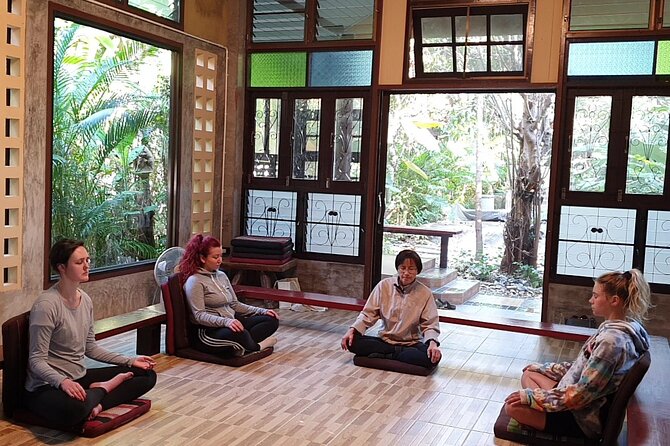
- Mindful walking in nature: a practical way to focus when your mind wants to sprint.
- Guided sitting meditation with explanations from Amori.
- Gentle yoga or stretching adapted to the group’s comfort level.
- Tea or coffee in the garden after you settle your body and mind.
- Max 5 travelers: smaller groups tend to feel more personal.
- 3-hour late-afternoon timing that fits well between sightseeing plans.
Why this 3-hour meditation retreat starts at 3:30 pm
Late afternoon is a sweet spot for calming down. You’re not starting your day already stressed, and you’re not dragging a meditation practice into the morning rush. With a 3:30 pm start and an about-3-hours duration, you get a full mental “reset” window that can still leave you energy for dinner and an easy night.
The value here is that it’s long enough to actually practice—walking meditation, sitting meditation, and gentle movement—yet short enough that it feels doable, even on a busy Chiang Mai itinerary. For many people, that balance matters more than finding the “perfect” retreat.
And because this is specifically framed as self-care in nature, you’re not only learning techniques in a classroom vibe. You’re using the environment as part of the practice, which helps the lessons stick faster.
You can also read our reviews of more tours and experiences in Chiang Mai.



Mindful walking and guided sitting meditation in Doi Saket nature
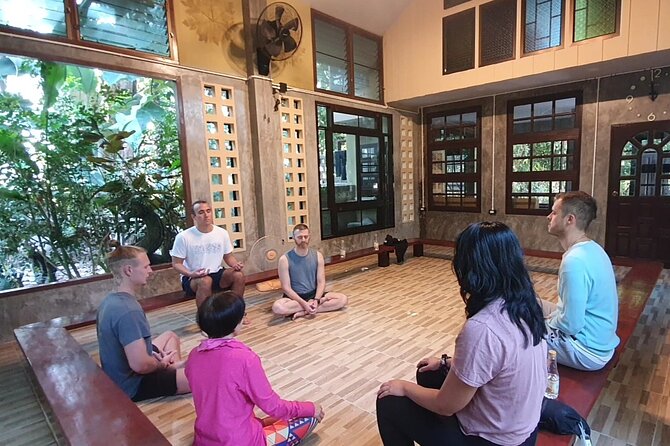
The core of the experience is learning to practice mindfulness with your body moving and your mind resting. You’ll start with mindful walking, which is often easier than sitting still. It gives your attention a job: notice your steps, your pace, and how the mind behaves when you’re focused on something physical.
Then you move into guided sitting meditation. The key point is that you’re not left guessing. The retreat is taught with extensive explanations of the practice itself, and Amori is named as the guide in guest feedback. That matters because meditation can feel vague if you only get instructions like sit quietly and breathe. Here, you’re learning what to do with your attention and how to relate to distractions as they show up.
One smart expectation to set for yourself: you’re learning the method, not trying to force a perfect calm. The retreat’s goal is to help you rebalance body and mind so you can improve wellbeing by focusing on the here and now. Even if your mind wanders, that’s still “data” you can work with.
After the meditation portion, the experience is designed so that you already feel clearer minded and more energetic—like your thoughts got a better filing system.
Gentle yoga and stretching that meet your body where it is
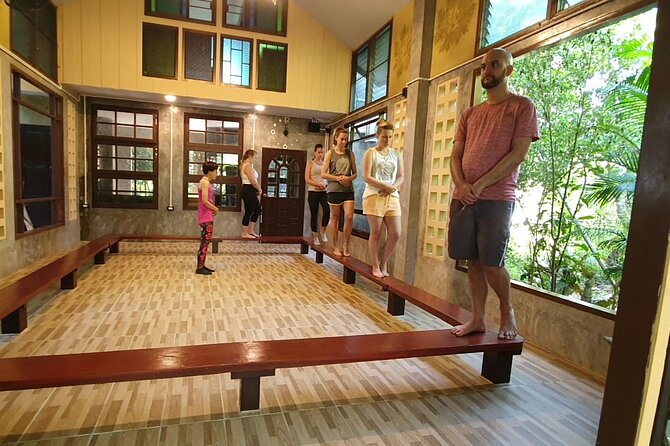
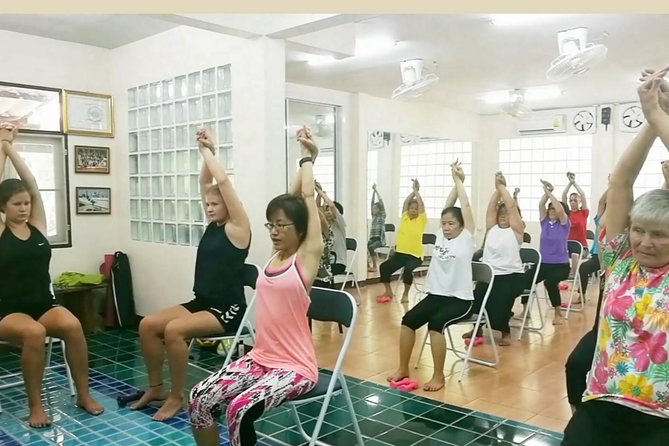
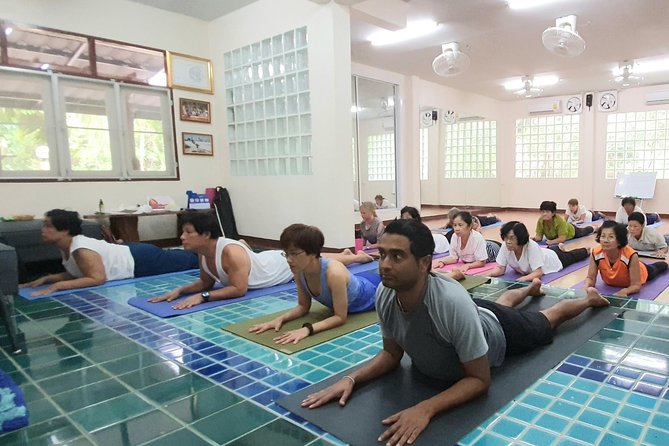
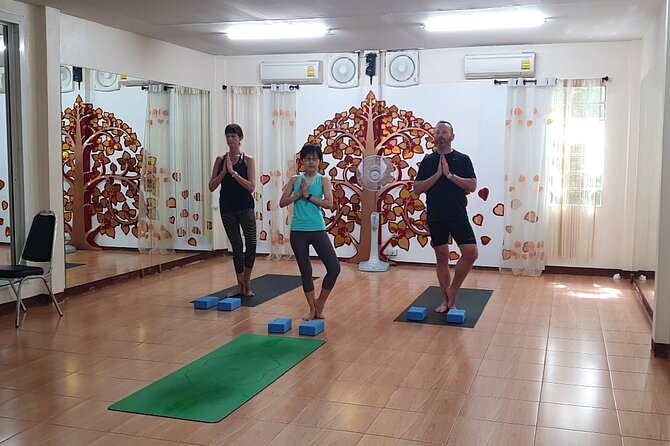
After meditation, the session shifts into movement: yoga or gentle stretches. The important detail is adaptation. The practice is adjusted to practitioners, which means you don’t have to arrive with a yogi-level body to participate.
For you, this part is a bridge. Meditation helps you train attention, but your body still needs a way to come along for the ride. Gentle stretching can help release the “I’ve been tense all day” feeling that many people carry without noticing—especially if you’ve been walking temples, climbing steps, or riding in traffic.
Keep your expectations practical: this isn’t about athletic performance. It’s about loosening stiffness, checking in with how you feel, and moving in a way that supports calm rather than cranky effort. In guest feedback, the mood shift shows up as feeling alive, less stiff, and more in tune—exactly what a thoughtful, gentle movement block can do.
The garden tea or coffee pause: why it matters
You’ll finish with tea or coffee and snacks in a beautiful garden setting. This sounds simple, but it plays a real role in the experience.
First, it helps you transition out of practice. If you rush straight back into the “normal day” after meditation, the calm can evaporate fast. The drink-and-snack pause gives your nervous system time to settle. It also lets you gently re-enter conversation and reality without snapping back into a mental sprint.
Second, it reinforces the idea of self-care as something you build into the day, not something you do only when you’re desperate. That’s a big part of why this retreat feels meaningful to people: it’s not just a lesson; it’s a small ritual of care.
Price and value: what $47.20 buys you in Chiang Mai
At $47.20 per person (about a typical price point for a short, guided wellness session in the area), you’re paying for guided instruction, small-group attention, and supplies.
Here’s what you actually get:
- Cushions and a yoga mat (so you don’t need to pack gear)
- Coffee and/or tea plus snacks
- A guided flow that includes mindfulness walking, guided sitting, and yoga or gentle stretching
- A maximum group size of 5, which is a quiet advantage
And here’s what you don’t get:
- Private transportation (you’re responsible for getting to the meeting point in Doi Saket District)
Is it good value? For many people, yes—because it’s structured and guided. A cheap meditation session with no explanation can turn into a frustrating sit. This one aims to teach you how to practice, not just where to sit.
One other value signal: it’s commonly booked about 20 days in advance on average. That usually means people find it reliable and schedule-friendly. Still, you should book early if you’re in Chiang Mai during busier weeks.



Small group energy (max 5) and the role of Amori
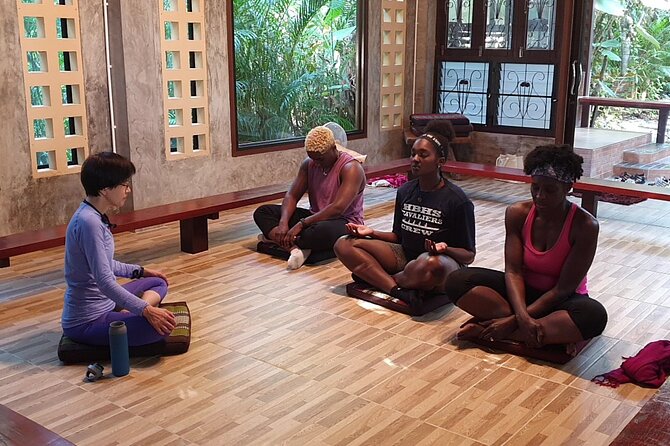
A maximum of 5 travelers changes the vibe. You get more attention, and it feels less intimidating to ask questions or adjust your practice. In practice, small groups also make it easier for the guide to notice if you’re stuck, stiff, confused, or just having one of those days.
Amori is the name that shows up in feedback as the person guiding guests through multiple meditations and providing explanations. That’s a big reason people leave feeling like they understand the practice better. When the guide can explain what’s happening in your mind as you sit and walk, the whole session becomes more usable after you go home.
This is not a “copy this exact pose” class. It’s more like: here’s how to train your attention, here’s how to move gently, and here’s how to notice your state without judgment.
Practical logistics that can make or break your experience
You’ll meet in Doi Saket District, Chiang Mai 50220, and the session ends back at the same meeting point. It starts at 3:30 pm. It’s a mobile ticket.
That means you should plan your timing like this:
- Build in travel time to arrive a bit early so you’re not rushed before starting.
- After the retreat ends, you’ll need transport back to your hotel (since private transport isn’t included).
Also consider what to wear. You’ll be walking and doing gentle yoga or stretching outdoors. Wear comfortable clothes you can move in. For walking meditation, shoes can matter less than you might think, but you want something safe and easy on your feet.
Finally, consider your fitness level. The experience calls for moderate physical fitness. If you have limitations, the yoga/stretches are adapted to practitioners, but mindful walking still requires you to be comfortable moving at a steady pace.
Who this retreat suits best
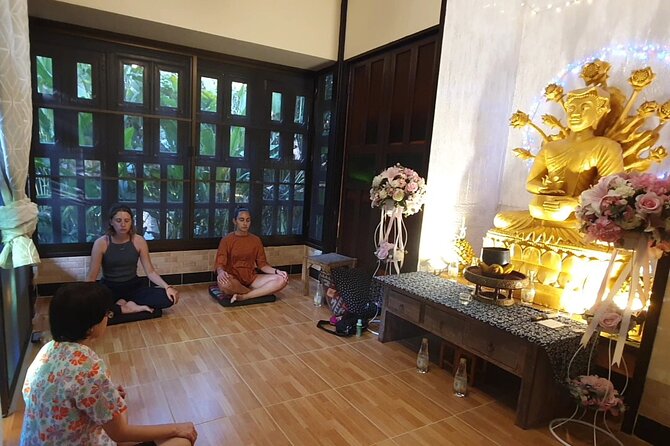
This is a great fit if you:
- Want a short, guided meditation experience rather than a full-day retreat
- Like learning through practice with explanations (especially if meditation feels confusing)
- Want something that includes both mind and body work—meditation plus movement
- Prefer a small group setting
- Are staying in Chiang Mai and want a calmer activity that won’t steal an entire day
It might be less ideal if you’re hoping for:
- A private, one-on-one retreat
- A session with on-site transportation from your hotel
- A very intense workout or advanced yoga sequence
Quick FAQ
FAQ
How long is the meditation and self-care retreat?
It runs for about 3 hours.
What time does the session start in Chiang Mai?
The start time is 3:30 pm.
Where is the meeting point?
The meeting point is in Doi Saket District, Chiang Mai 50220, Thailand, and the activity ends back at that same meeting point.
Is transportation included?
No. Private transportation isn’t included, so you’ll need to arrange your own ride to the meeting point and back.
What’s included in the retreat fee?
You get cushions, a yoga mat, and coffee and/or tea with snacks.
What activities are included?
You’ll practice mindful walking, guided sitting meditation, and then yoga or gentle stretches adapted to the group.
Is this physically demanding?
It calls for moderate physical fitness. The yoga/stretches are adapted to practitioners, but you should still be comfortable enough for mindful walking and gentle movement.
Should you book it?
If you want a calm, guided reset that mixes mindfulness walking, guided sitting, gentle movement, and a soothing tea stop, this is a strong pick—especially because the group stays small and the instruction seems clear.
Book it if you’re short on time in Chiang Mai but still want something that feels meaningful and practical. Skip it only if getting to Doi Saket is a hassle for you, since transport isn’t included, or if you want a very intense fitness class instead of self-care focused on attention and body comfort.