REVIEW · CHIANG MAI
Private Tour: Chiang Mai City and Temples Tour in full Day Thailand
Book on Viator →Operated by Bravo Asia Tours · Bookable on Viator
A temple day with real spiritual texture. This private Chiang Mai tour strings together classic wats and a few more reflective stops, with alms-giving and monk-guided focus early on. It’s also built for comfort: an air-conditioned private vehicle, free entry at each temple, and a schedule you can tweak for your physical condition.
I also like the physical-and-scenic payoff of the Wat Pha Lat Monk’s Trail, where you hike through forest and past a waterfall to reach the temple. The big consideration: it’s a full 8 to 9 hours, and the mountain trail is not a stroll, so plan for moderate fitness and conservative dress (shoulders and knees covered).
In This Review
- Key highlights worth circling
- Temple day, one good loop: why this schedule works
- Price and logistics: what you’re paying for, and what to watch
- Morning pickup and the temple-day rules that matter
- Alms-giving with monks: culture you feel, not just see
- Wat Chedi Luang: Lanna-era scale and a stop that sets context
- Wat Suan Dok: white stupas and Lanna royal style touches
- Wat Pha Lat Monk’s Trail: the hike that turns a temple day into a story
- Wat Umong: meditation vibes, tunnels, and a quiet lake
- Wat Phrathat Doi Kham: the golden stupa finish
- Lunch and food reality: what’s scheduled vs what’s included
- What the guide adds (and why the day feels “organized”)
- Who this tour suits best (and who should be cautious)
- Should you book? My decision guide
- FAQ
- What is the duration of the Chiang Mai City and Temples tour?
- What time does the tour start?
- Where does the tour start and end?
- Is pickup included, and can pickup and drop-off locations differ?
- What is included in the price?
- Are temple entrance fees included?
- Is breakfast or lunch included?
- Is the tour suitable for people with only light mobility?
- What is the cancellation policy?
Key highlights worth circling
- Alms-giving with monks: a hands-on start that gives cultural context beyond photos.
- Free temple admission at all major stops listed for the day.
- Wat Pha Lat Monk’s Trail hike: forest paths and a waterfall approach before you reach the temple.
- Wat Umong’s quiet focus: meditation time in a temple with monks, forests, a small lake, and ancient tunnels.
- Doi Kham golden stupa stop: a sacred viewpoint finish that connects you to the Chiang Mai temple circuit.
Temple day, one good loop: why this schedule works
Chiang Mai is famous for temples, but random temple-hopping can turn into a day of zig-zag routes and missed context. This kind of structured full-day circuit helps you see how different wats express Buddhism in different ways—through city monuments, Lanna-style architecture, forest paths, meditation spaces, and a high, sacred stupa viewpoint.
What makes this day particularly satisfying is the mix. You start with an activity tied to daily Buddhist life (alms-giving), then move into big landmark temples in the city, then into the hills for hiking and quiet. By the time you reach Wat Phrathat Doi Kham, you’re not just checking off buildings—you’ve already learned how the day’s atmosphere changes from public ceremony to calm reflection.
It also helps that it’s private. That usually means less standing around waiting for other people’s pace, and more room for small timing adjustments if you need to slow down.
You can also read our reviews of more city tours in Chiang Mai

Price and logistics: what you’re paying for, and what to watch
At $205 for a private tour lasting about 8 to 9 hours, you’re mostly paying for three things: a dedicated driver/guide, a private air-conditioned vehicle, and the cost-saving of free temple admission at the stops listed.
If you compare this to piecing together taxis plus separate guide hours, the value usually comes from time. Chiang Mai traffic and temple routing can eat your day. Having one vehicle for the full circuit means you spend your energy on the temples and the hike, not on logistics.
Two practical notes you’ll want to plan around:
- Food and drinks are not included unless specified. The itinerary schedules breakfast and lunch, but you should expect to pay for meals.
- Dress code is conservative: shoulders and knees covered. It’s a temple day, so bring something you can move in during the hike.
Morning pickup and the temple-day rules that matter
Your tour start time is 8:30 am, and the meeting point is listed as Chiang Mai Intl Airport, with pickup offered. Pickup and drop-off can differ, but they’re kept to one station for both sides. Translation: you won’t be bouncing between multiple neighborhoods to find the group.
Once you’re settled, the day is designed to start early enough that key temples feel calm and manageable. That’s not just comfort—it affects how you experience the places. Temples can feel very different depending on crowd levels, light, and how long you’ve been walking.
One more thing I’d treat as non-negotiable: conservative clothing. It prevents the common frustration of having to cover up last-minute when you reach a temple gate.
Alms-giving with monks: culture you feel, not just see
The first major activity is alms-giving. In plain terms, you help offer food to monks, with the idea of prayerful blessings for families and people. This is not a performance; it’s a daily practice, and the tour frames it as part of learning concentration under monk guidance.
Why this start is valuable: it anchors the day in something lived, not staged. After alms-giving, you’re less likely to treat the temples as just architecture. You understand the mindset behind the day.
It’s also a good reality check for first-timers. Buddhist temple etiquette often feels clearer once you’ve participated in an activity that shows what respect looks like in practice.
Practical tip: if you’re uneasy about participating in religious customs, this is still the kind of activity where having a guide helps you understand what to do and why. Keep your tone calm and your movements careful.
Wat Chedi Luang: Lanna-era scale and a stop that sets context
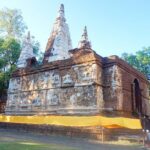
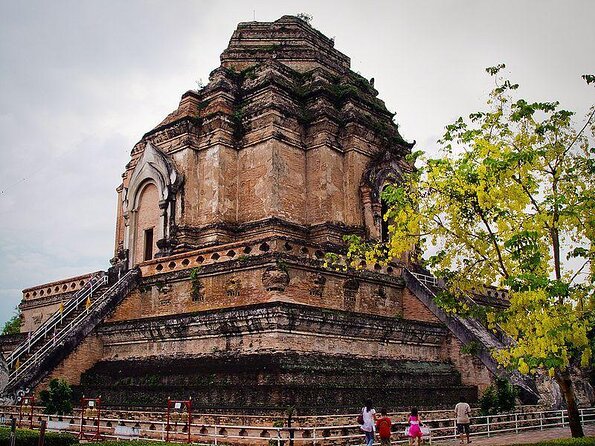
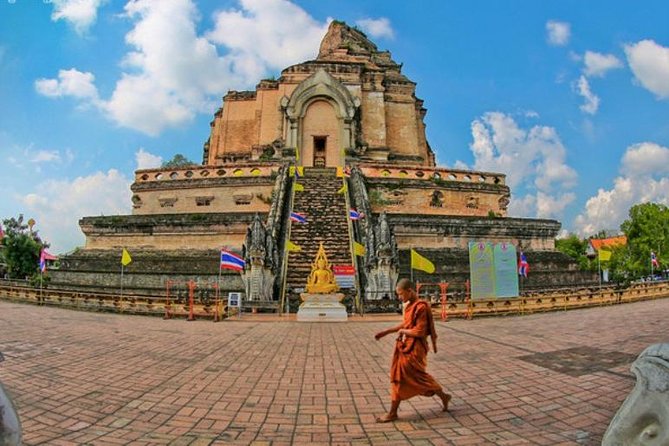
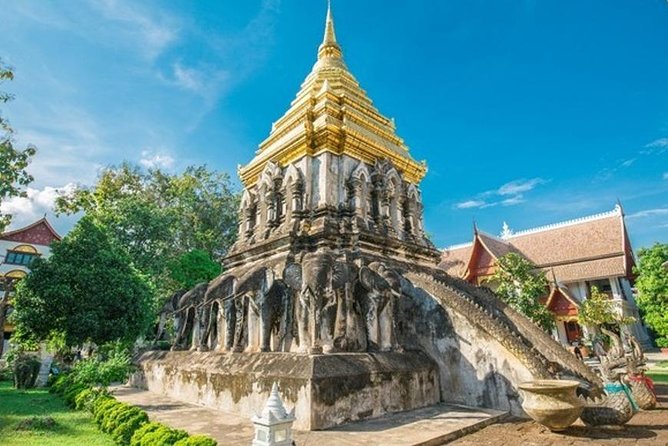
After breakfast at Huen Phen, you head to Wat Chedi Luang Varavihara. This is one of Chiang Mai’s best-known temples, and the tour positions it as a “long history” landmark that draws most tourists to visit.
Even if you’ve seen a lot of temples before, Wat Chedi Luang has a way of putting the rest of the day in perspective. It’s a reminder that Chiang Mai’s temple culture includes monumental city centers, not only quiet hill sanctuaries.
The typical way to enjoy this stop is to slow down and look at details: the temple’s sculptural language, the way structures are laid out, and the atmosphere around the main complex. With an organized schedule, you’re not stuck rushing, but you still don’t lose your whole morning to indecision.
You can also read our reviews of more private tours in Chiang Mai


Wat Suan Dok: white stupas and Lanna royal style touches
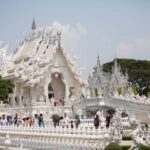
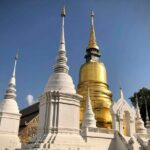
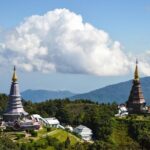
Next is Wat Suan Dok, described as having Royal Lanna architectural style and meticulous design. The highlight here is the white stupas and, in the center, a yellow chedi tower on a green ground.
This is one of those places where color matters. The contrast makes it easier to notice structure and symmetry, and you get a better sense of Lanna design choices—how temples guide your eye and create order out of stone.
In a full-day tour, Wat Suan Dok also works as a visual reset after the heavier monument presence at Wat Chedi Luang. It’s still a major temple, but the vibe shifts slightly toward the geometric elegance of the stupas.
Wat Pha Lat Monk’s Trail: the hike that turns a temple day into a story
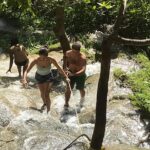
Wat Pha Lat Monk’s Trail is the day’s most active portion. The itinerary describes a hike starting from the foot of the mountain through forest and a romantic waterfall route to reach the temple. The time block listed is about 2 hours.
This is the stop that most people remember because it changes your relationship to the temple. You’re not just walking around flat ground—you’re approaching a sacred site with effort and changing scenery.
Two tips help you get the most out of it:
- Wear shoes that handle uneven ground. The tour doesn’t mention footwear, but hiking through forest paths is the kind of thing where good grip prevents a bad mood.
- Bring water. Food and drinks aren’t included, and the hike is long enough that you’ll feel it.
Drawback to consider: if you struggle with moderate hiking, this is the most likely point where you’ll feel the time and incline. The tour says it can make small changes based on physical condition, but this is still the core hiking block of the day.
Wat Umong: meditation vibes, tunnels, and a quiet lake
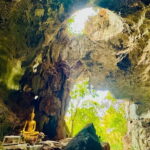
After lunch, you visit Wat Umong. Here the tone turns slower and more internal. The tour description emphasizes monks, forests, a small lake, and many ancient tunnels. You can practice meditation at Wat Umong and learn from the monks.
Even if you don’t do formal meditation, this stop is valuable because it gives you a different kind of temple experience. City temples are often loud with foot traffic and photographing. Wat Umong is set up for calm. The tunnels and forest setting also make it feel like you stepped into another layer of Chiang Mai’s spiritual life.
If you like having a moment with minimal pressure—just breathing, walking slowly, and letting the place do the talking—this is the best part of the day to slow down.
Wat Phrathat Doi Kham: the golden stupa finish
The final temple stop is Wat Phrathat Doi Kham, also known as the golden temple. The itinerary includes the popular Chiang Mai saying about Doi Suthep as a reference point, and it notes you’ll enjoy Buddha and the sacred atmosphere.
This is a good ending because it’s where the day’s theme of reverence and sacred space comes together. The tour keeps it to about an hour here, which is enough time to see the main area without turning the last hour into a rushed scramble.
If you’re someone who likes panoramic viewpoints, this is the part of the day where you may feel the elevation and the change from street-level city temples. Even without exact viewpoint details provided, finishing at a sacred hill temple tends to feel like closing a loop.
Lunch and food reality: what’s scheduled vs what’s included
Breakfast is scheduled at Huen Phen, and the itinerary includes a lunch break before Wat Umong. But the overall “food and drinks” line says they are not included unless specified.
So here’s the practical way to plan:
- Budget for at least breakfast and lunch (and likely a drink during the hike).
- Carry some cash or have payment ready if you’d rather not hunt for the nearest place mid-route.
- Use the fact that stops are timed to know when you can eat, so you don’t end up missing the right moments.
This matters for value. If you only look at the $205 price and assume food is part of it, you might get surprised. If you plan for meals, the day becomes a smoother, less stressful experience.
What the guide adds (and why the day feels “organized”)
The strongest praise in the feedback I’m using to guide this review is about the guide: they bring the sites to life with stories, attention, and a steady pace that keeps the day feeling coherent.
That’s not just “nice guiding.” On a day with several very different experiences—alms-giving, big city wats, a forest hike, and meditation—context is what ties it together. A good guide helps you understand what you’re looking at and what to do at each moment so you’re not guessing temple etiquette or how to approach the hike.
Another part that gets mentioned indirectly is that the tour blends history, culture, and gastronomy. Even with limited meal details, the schedule itself pushes you to treat the day as more than temples-only. You get a proper breakfast stop and a lunch point, which helps keep the energy up.
Who this tour suits best (and who should be cautious)
This tour is a strong match if you:
- Want a private Chiang Mai day that moves efficiently between major temple areas.
- Like variety: a cultural activity (alms-giving), architecture stops, hiking, and quiet time for meditation.
- Can handle moderate physical activity for a trail hike of around 2 hours.
You might want to think twice if:
- You hate hikes or have limited mobility, because Wat Pha Lat Monk’s Trail is the most physically demanding segment.
- Your clothing options are limited for temple rules. Shoulders and knees must be covered.
Also, since it’s conservative in dress and includes religious activity, it’s ideal for people who are comfortable participating respectfully and following guidance.
Should you book? My decision guide
Book this tour if you want one well-planned full day that covers the main Chiang Mai temple circuit plus a more nature-based and reflective element. The free temple admission listing, private vehicle comfort, and the inclusion of alms-giving and Monk’s Trail hiking make it more than a standard checklist.
Don’t book it if you’re only looking for short, easy temple visits and you’d rather spend your day in one neighborhood. The schedule is full, and the hike is a real commitment.
If you’re traveling with a mindset of learning—how temples work, why monks matter, and how the day shifts from city ceremony to forest quiet—this is the kind of itinerary that tends to feel worth the money rather than just busy.
FAQ
What is the duration of the Chiang Mai City and Temples tour?
The tour runs about 8 to 9 hours.
What time does the tour start?
The start time is 8:30 am.
Where does the tour start and end?
It starts at Chiang Mai Intl Airport and ends back at the meeting point. Pickup is also offered.
Is pickup included, and can pickup and drop-off locations differ?
Pickup is offered. Pickup and drop-off spots can be different, but they are limited to one station for both pickup and drop-off.
What is included in the price?
The tour includes a driver/guide, transport by air-conditioned private vehicle, and it is a private tour.
Are temple entrance fees included?
The itinerary lists admission tickets as free for the temple stops.
Is breakfast or lunch included?
Food and drinks are not included unless specified, even though breakfast at Huen Phen and a lunch period are part of the day’s flow.
Is the tour suitable for people with only light mobility?
It calls for moderate physical fitness. The day includes a hike on Wat Pha Lat Monk’s Trail, and the tour notes you can expect small itinerary changes based on your physical condition.
What is the cancellation policy?
You can cancel for free up to 24 hours in advance for a full refund. If you cancel less than 24 hours before the start time, the amount paid is not refunded.