REVIEW · CHIANG MAI
Half-Day Cooking Class with Market Tour
Book on GetYourGuide →Operated by Tom Yum Thai Cooking School · Bookable on GetYourGuide
Cooking in a real Chiang Mai home beats a showroom class. This half-day market-and-cooking experience takes you from a local food market into a Thai home kitchen, with a true look at ingredients Thai cooks use every day. I love the market tour for understanding what to buy and why. The only drawback: you’ll likely end up eating a lot, and several dishes lean spicy—so come with an appetite and a plan.
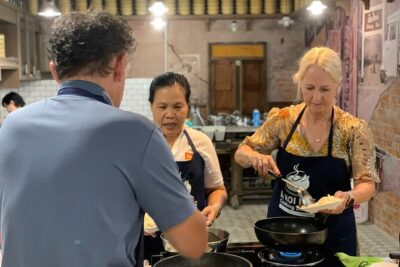
What makes it especially fun is that you don’t just watch. You pick from a menu of stir-fries, soups, salads, and curry options, then cook your own dishes at a pace that actually lets you learn (not just rush and plate). With a small group of 10 or fewer and live English guidance, it’s easy to ask questions as you go.
Timing is also flexible. The morning class runs 9:00 am–1:30 pm (pickup about 8:45–9:15), while the evening class runs 3:30 pm–8:30 pm (pickup about 3:00–3:30). I think it’s a great fit if you’re in Chiang Mai for a few days, but skip it if your schedule can’t handle a full 5-hour block.
In This Review
- Key highlights to look forward to
- From hotel pickup to a home kitchen in Chiang Mai
- Market tour: spotting Thai vegetables and seasoning the smart way
- The menu system: how you choose your 5 dishes (and what stays fixed)
- Your stir-fry choices
- Your soup choices
- Appetizer and salad choices
- Curry paste and curry choices
- Sticky rice with mango: the one you all make
- What the cooking lesson actually feels like
- Eating what you cook: portions, timing, and why it matters
- Allergy and dietary needs: ask early, expect adjustments
- Price and value: what $36 gets you in Chiang Mai
- Morning vs evening class: which timing fits your trip
- Morning class (9:00 am–1:30 pm)
- Evening class (3:30 pm–8:30 pm)
- Who should book this cooking class (and who might skip)
- Practical tips before you go
- Should you book Tom Yum Thai Cooking School in Chiang Mai?
- FAQ
- What’s included in the Half-Day Cooking Class with Market Tour?
- How long is the class, and when does it run?
- Can I choose what dishes I cook?
- Is this class suitable for small groups?
- Is there an English-speaking guide?
- What if I have allergies or special dietary requests?
Key highlights to look forward to
- Market tour with ingredient shopping so you learn what to buy and how Thai cooks use it
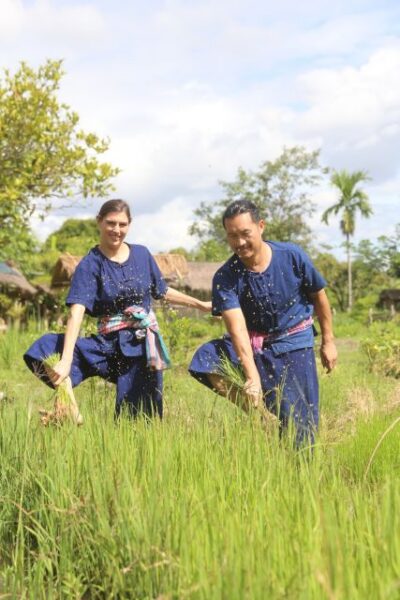
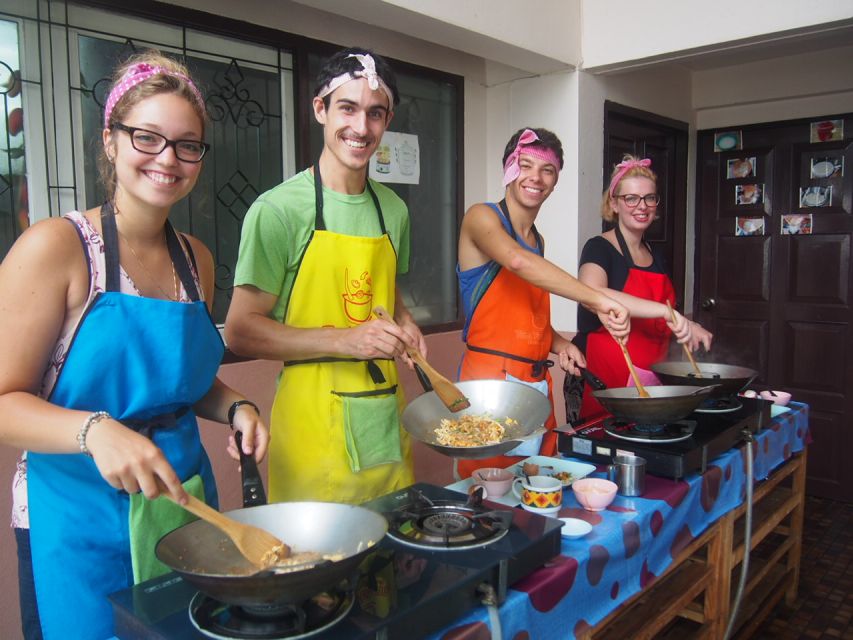
- Hands-on cooking in a home setting run by a husband-and-wife team
- Choose your own menu across stir-fry, soup, salads, and curry paste
- Fixed team meal structure: 5 dishes plus everyone making sticky rice with mango
- English guide and small group for better attention at each cooking station
- Recipe book to take home so you can recreate the dishes later
From hotel pickup to a home kitchen in Chiang Mai
This experience starts with a simple perk that matters in real life: you get picked up from your hotel as long as it’s within about 3 km of Chiang Mai old town. Pickup is scheduled shortly before class begins, and the plan is to minimize waiting and walking in the heat.
Once you’re picked up, the day turns into a street-level food education. First comes the market visit, where you see ingredients up close instead of guessing what’s in a Thai dish. Then you head to the cooking school, which is set up inside a home-like space that feels less like a classroom and more like being invited in.
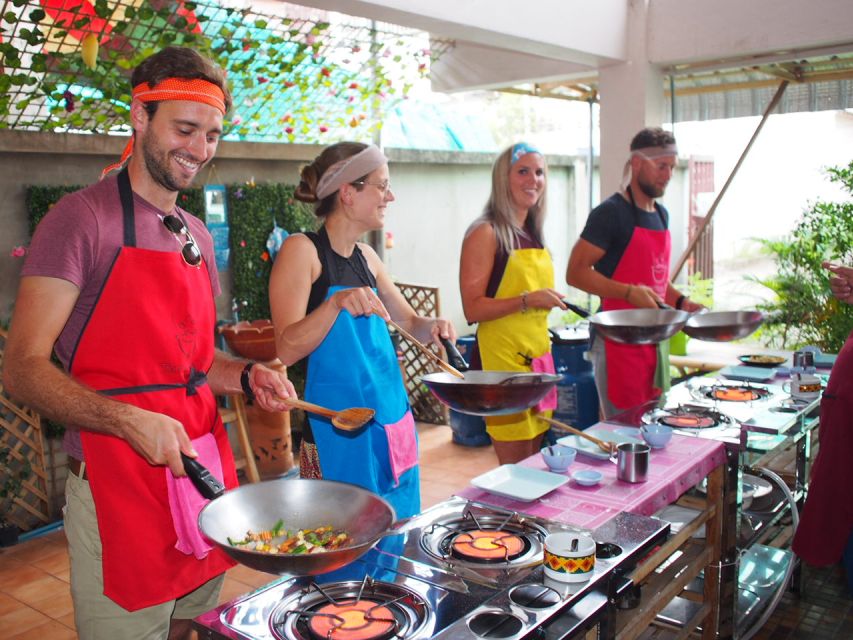
The cooking setup is practical. In the kitchen, you’re not stuck standing around. You work at your own station, and there’s a flow between prepping, cooking, and eating. One key detail I like: the eating area has air conditioning, so you get a real break between courses instead of suffering in the kitchen heat.
You can also read our reviews of more shopping tours in Chiang Mai



Market tour: spotting Thai vegetables and seasoning the smart way
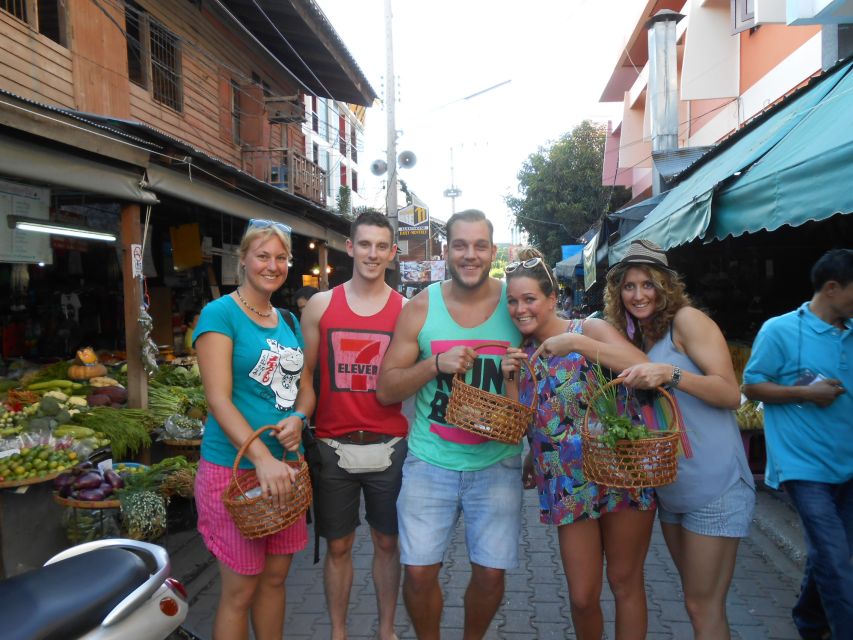
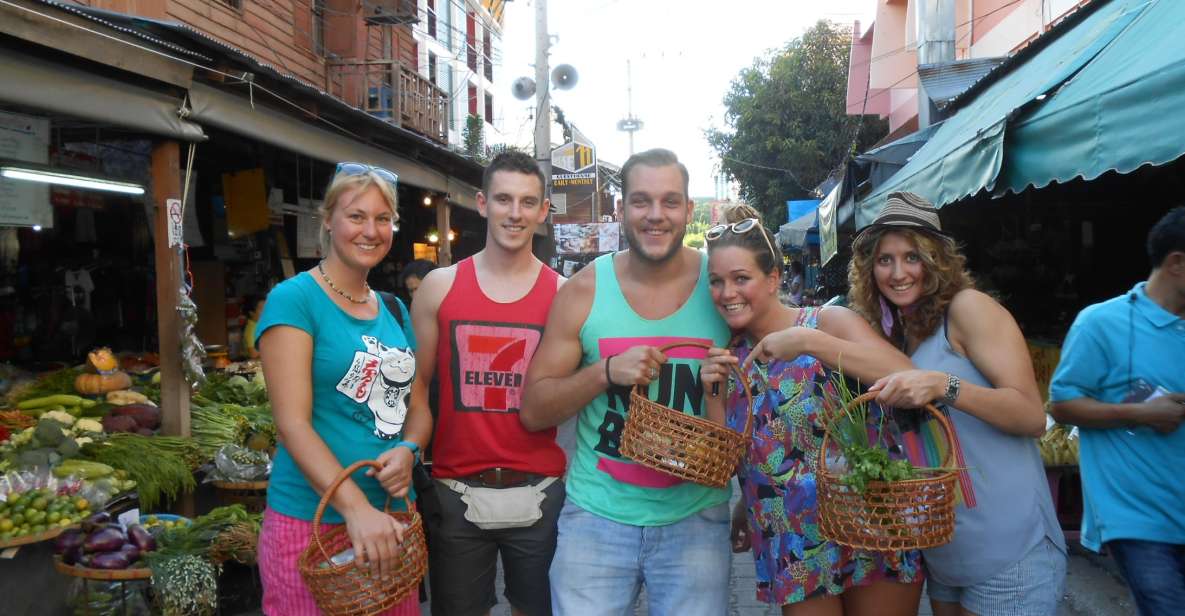
The market stop is where most people’s eyes start opening. You’re not just buying ingredients randomly. You’re seeing the shapes, colors, textures, and common pairings that Thai cooks build meals from.
You’ll also get a feel for Thai seasoning culture: how different herbs and aromatics show up in multiple dishes. That matters because the class menu isn’t just one style of cooking. You jump from stir-fried noodles to soups, then to salads, then to curry pastes—each one depends on specific flavors.
A good sign here is that the market visit is tied directly to what you cook. Since ingredients are part of class, you leave knowing what to look for next time. And because you’re walking through the market with an English-speaking guide, you can ask about substitutions if you’re cooking at home later.
It’s also a fun “Chiang Mai reality check.” You see local shoppers doing normal errands. You’ll get small tastings too—snacks and seasonal fruit—so you can connect what you see at the market to what tastes right in Thailand.
The menu system: how you choose your 5 dishes (and what stays fixed)
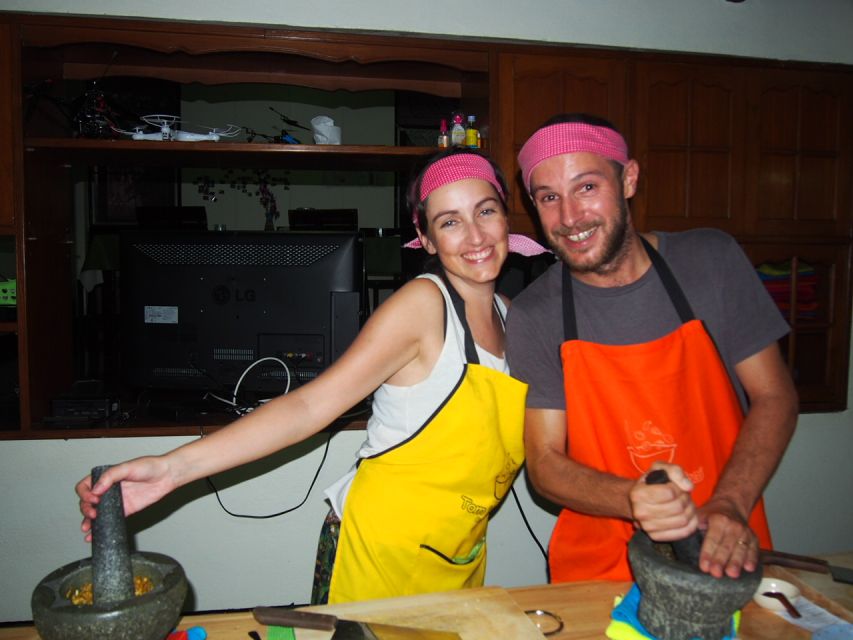
The class structure is clear: you cook 5 dishes of your choice, plus a special shared dish where everyone makes mango sticky rice.
Here’s the menu logic, the way you’ll experience it:
- One dish from stir-fried noodles
- One dish from soup
- One dish from appetizers/salads
- Curry paste and curry dish choices that pair together
- Then everyone does the same dessert step: sticky rice with mango
Your stir-fry choices
You can choose one:
- Pad Thai
- Cashew Nut with Chicken
- Pad See Ew
If you’re new to Thai noodles, Pad Thai is the classic entry point. If you want a richer, slightly bolder stir-fry, Cashew Nut with Chicken is satisfying. Pad See Ew brings another noodle style and a darker, savory sauce profile.
Your soup choices
You can choose one:
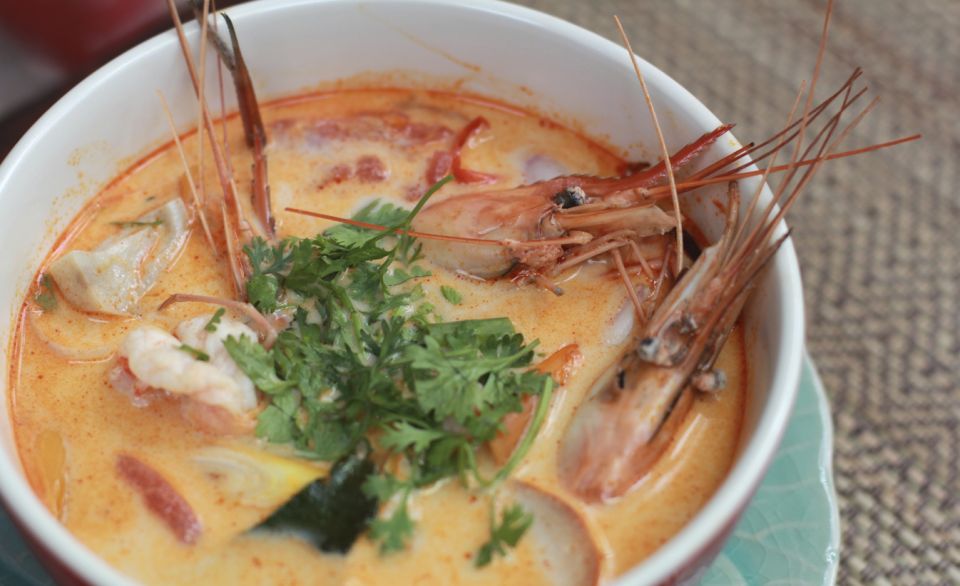
- Hot and Sour Prawn Soup (Tom Yum)
- Chicken in Coconut Milk Soup
- Thai Noodle Soup
Tom Yum is the one you should pick if you want the “Thai flavors in one bowl” experience: bright sour notes plus heat, plus fragrant herbs. Coconut milk soup is the one that feels rounder and gentler if spice isn’t your top priority.
You can also read our reviews of more tours and experiences in Chiang Mai



Appetizer and salad choices
Pick one:
- Spring Roll
- Papaya Salad
- Cucumber Salad
Papaya salad is the tangy, punchy choice. Cucumber salad is lighter and often easier if you want fresh crunch rather than spice-forward intensity. Spring roll tends to be the comfort pick.
Curry paste and curry choices
Curry cooking is where you’ll learn that Thai curry isn’t just a sauce. It’s a flavor system. You choose from curry pastes and then cook the corresponding curry:
- Green curry / Green curry paste
- Panang curry / Panang curry paste
- Khao Soi options using Khao Soi curry paste
If you’ve only had Thai curry outside Thailand, this is one of the best ways to understand why Thai curries taste different from each other. Paste choice changes everything.
Sticky rice with mango: the one you all make
No matter what you choose for your other dishes, everyone makes sticky rice with mango. This is the fixed sweet finish, and it’s also a great way to end on something familiar yet still worth learning step-by-step.
What the cooking lesson actually feels like
This class isn’t “watch the chef, then hope you remember.” You cook. You taste. You adjust.
You’ll get to try snacks and fruit before the cooking starts, and then you begin prepping. From what I’ve seen, ingredients are set up so you can cut, mix, and assemble without wasting time hunting for tools. Knives and prep space are there, and you work through a simple cooking rhythm: ingredients in, sauce and seasoning next, then plate and eat.
One small but important detail: the pace gives you time to learn. You don’t only make one dish and move on. You make multiple dishes, and each one teaches a different technique: noodle stir-fry timing, soup building, salad flavor balancing, and curry cooking.
The instructors are also part of the value. People often mention instructors such as Oun and Mind/Mindy, plus a warm husband-and-wife hospitality style. If you’re worried about language, take comfort: English guidance is part of the format, and the teaching is done in a way that keeps you moving.
Eating what you cook: portions, timing, and why it matters
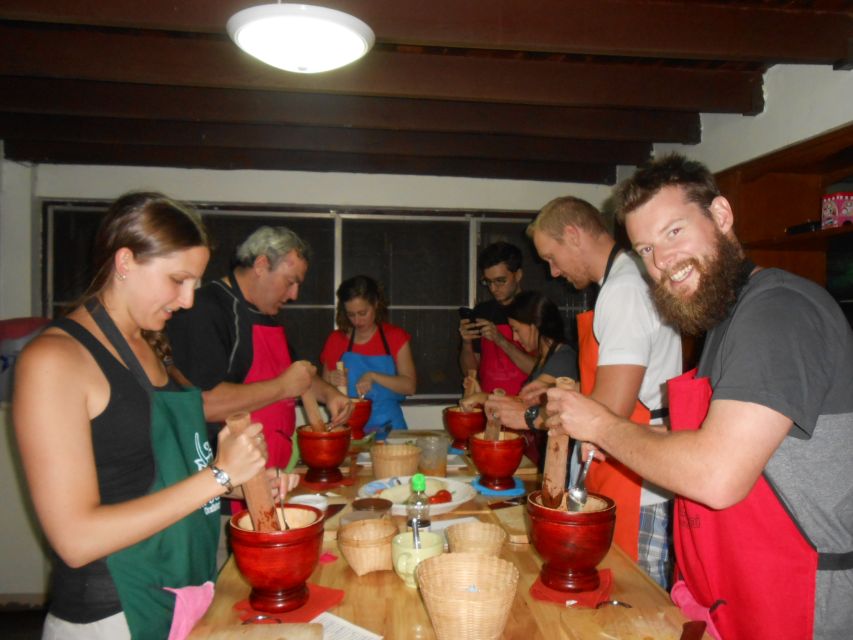
The best part of cooking classes is also the most practical: you eat immediately. That means your “learning” sticks because you taste the dish while the steps are fresh in your mind.
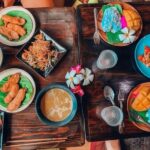
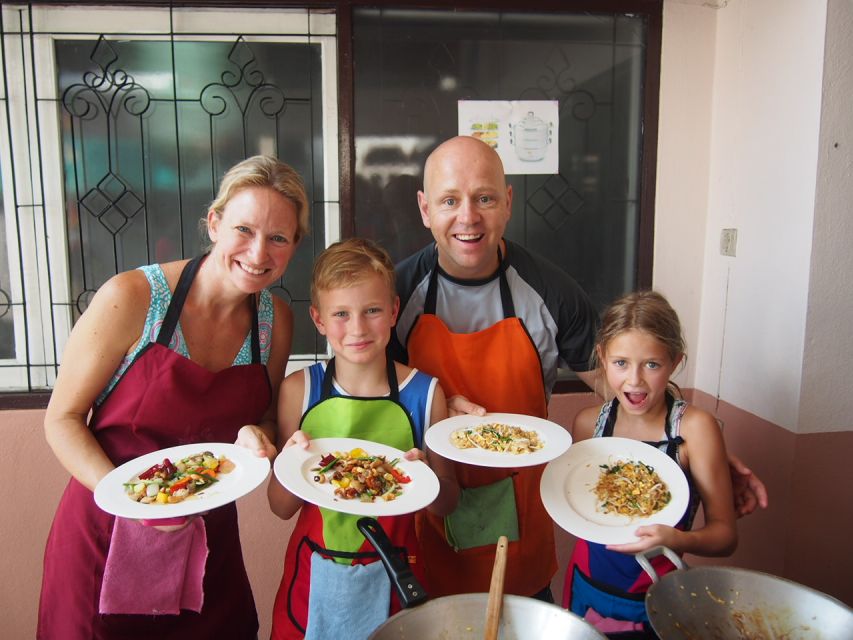
You’ll eat the dishes you cook across the session—stir-fry, soup, appetizer/salad, curry—plus the shared dessert. The menu is built so you don’t leave hungry. One common note is that people get full fast. That’s not a complaint; it’s a sign you’re getting real meal portions, not tiny tasting plates.
It’s also why I recommend you plan your day around the class. If you’ve already eaten a big meal, you’ll struggle to enjoy the full range. Go hungry enough to taste everything properly, then you’ll feel the satisfaction of a complete Thai meal.
Allergy and dietary needs: ask early, expect adjustments
If you have allergies or dietary requirements, you should tell the organizer ahead of time. The class specifically invites special requests for allergies.
In practice, it seems they can handle common needs like vegetarian cooking and other dietary styles when notified. That’s a big deal because Thai cooking relies heavily on ingredient combinations that can be tricky to swap safely. If your needs are specific, message them clearly. The more precise you are, the easier it is for them to guide you.
Price and value: what $36 gets you in Chiang Mai
At $36 per person for about 5 hours, this is a strong value if you’re serious about food. You’re paying for several things at once:
- market tour ingredient learning
- live English instruction
- hands-on cooking at your own station
- tasting of multiple courses you make
- drinks (tea and coffee) and drinking water
- a recipe book to take home
- hotel pickup/drop-off within a short radius of old town
In other words, you’re not just paying for a meal. You’re paying for a mini education you can repeat at home.
The small-group limit (10 participants) also matters. With fewer people in the kitchen, you get more help, more chances to ask, and less waiting around.
Morning vs evening class: which timing fits your trip
Both options follow the same “market + home cooking + meal” idea, but your day shape changes.
Morning class (9:00 am–1:30 pm)
Morning is great if:
- you like starting earlier
- you want the rest of the afternoon free
- you want to avoid late evening schedules
Pickup is around 8:45–9:15, so plan to be ready.
Evening class (3:30 pm–8:30 pm)
Evening is better if:
- you prefer slower mornings
- you want a full day of exploring first
- you enjoy cooking while the city cools down
Pickup is around 3:00–3:30. The nice thing about the schedule is that the class includes everything you need, so you can organize your day around this single activity.
Who should book this cooking class (and who might skip)
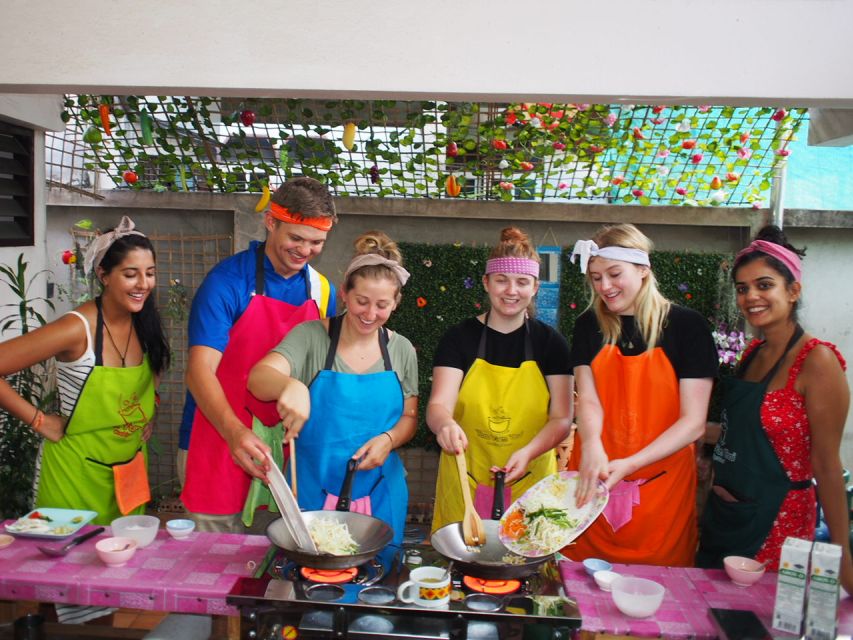
This is a great match if you:
- want a hands-on Thai cooking session, not a quick demo
- care about learning ingredient choices and seasoning logic
- enjoy eating what you cook across multiple courses
- want a small-group vibe in Chiang Mai
You might skip it if you:
- hate spicy food and don’t want to adjust your choices
- are on a strict schedule that can’t handle 5 hours
- only want a light snack experience rather than a full meal
If you’re pairing this with other Chiang Mai sights, pick a day early in your trip. It helps you understand what you’ll be tasting later around town, so you notice flavors and ingredients faster.
Practical tips before you go
A few simple moves will make your day smoother.
1) Come hungry. The meal is built to be filling. If you eat first, you’ll likely feel stuffed before dessert.
2) Decide your dish priorities ahead of time. You choose from stir-fry, soup, salad/appetizer, and curry options. Picking early helps you enjoy the experience instead of hesitating mid-class.
3) Tell them about allergies and dietary needs clearly. The class supports special requests, but you’ll save time by communicating specifics before you arrive.
4) Bring curiosity. The market walk is more than sightseeing. Ask what ingredient does in the dish, and you’ll remember it when you cook later.
5) Plan your photos and appetite. People often take lots of photos during the process, but don’t let it slow you down. The best learning happens when you taste as you go.
Should you book Tom Yum Thai Cooking School in Chiang Mai?
Yes—if you want real value, hands-on learning, and a Thai home setting instead of a factory-style cooking show.
For about $36 and around 5 hours, you get market ingredient discovery, an English-guided class in a home kitchen, multiple cooked dishes of your choice, and a recipe book to help you recreate the flavors. The small group size and the instructor support are the difference between feeling lost and actually learning.
Book it if you’re excited by Thai noodle dishes, soups like Tom Yum, curry paste flavor systems, and the fun of learning mango sticky rice step-by-step. If you’re sensitive to spice or you dislike eating a lot, message ahead, choose accordingly, and treat it like a proper meal day, not a quick snack.
FAQ
What’s included in the Half-Day Cooking Class with Market Tour?
You get a local market visit, tea and coffee, drinking water, and a recipe book. Hotel pickup and drop-off are included for hotels within 3 km of Chiang Mai old town.
How long is the class, and when does it run?
The experience runs for about 5 hours. There’s a morning class from 9:00 am to 1:30 pm and an evening class from 3:30 pm to 8:30 pm.
Can I choose what dishes I cook?
Yes. You can choose dishes from the menu options for your stir-fry, soup, appetizer/salad, and curry selections. Everyone also makes sticky rice with mango.
Is this class suitable for small groups?
Yes. The group is limited to 10 participants, which helps with hands-on cooking and guidance during the session.
Is there an English-speaking guide?
Yes. The class includes a live tour guide who speaks English.
What if I have allergies or special dietary requests?
The class asks you to let them know in advance about food allergies and special requests. It’s a good idea to share details before you go so they can adjust what you cook.