REVIEW · CHIANG MAI
Guided Chiang Mai City Night Tour by EV Tram
Book on Viator →Operated by Touring Center · Bookable on Viator
A night tram ride can be a very smart first step. This EV tram tour gives you an easy, low-stress way to understand Chiang Mai’s neighborhoods, temples, and everyday rhythms without sprinting between landmarks. I love the quiet, calmer pace (it really does change the feel of the city at night), and I also love how the guide ties each stop to meaning, not just photo ops. The small group size keeps it relaxed, so you can ask questions as you go.
One thing to consider: you are walking and entering temple areas at a night hour, so it’s not the best fit if you want a fully seated, no-steps outing. Plan on about 2 hours to 2.5 hours, depending on the flow, and wear shoes you’ll be comfortable in.
In This Review
- Key highlights you should know
- Why an EV Tram Night Tour Works in Chiang Mai
- Meeting at Three Kings Monument and Settling Into the Route
- Temples and City Pillars: From Wat Inthakin to Wat Chedi Luang
- Stop near Three Kings Monument: Wat Inthakin Sadeu Muang
- Wat Chiang Man: oldest Lanna-style chedi with elephant-shaped buttresses
- Wat Lok Molee: a wooden complex with terracotta sculptures
- Wat Pa Pao and Wat Nong Kham: different northern identities within Chiang Mai
- Wat Chedi Luang Varavihara: the biggest stupa and the Tripiṭaka
- Wat Phra Singh: northern-style chapel beauty
- Chang Puek Gate and Chiang Mai Gate Night Markets: Dinner with a Plan
- Chang Puek Gate: northern gate + street food scene
- Chiang Mai Gate Night Market: a guided food-focused stop
- Warorot Market and Tha Phae Gate: Where Local Life Keeps Moving
- Warorot Market: a biggest local fresh market feel
- Tha Phae Gate: public activities and festivals
- Price and Logistics: What $27.43 Really Buys You
- Who Should Book This EV Tram Night Tour
- Should you book this EV Tram City Night Tour?
- FAQ
- FAQ
- What time does the guided Chiang Mai City Night Tour start?
- How long is the tour?
- Where do I meet for the tour?
- What’s included in the tour price?
- Is hotel pick-up or drop-off available?
- What should I wear?
Key highlights you should know
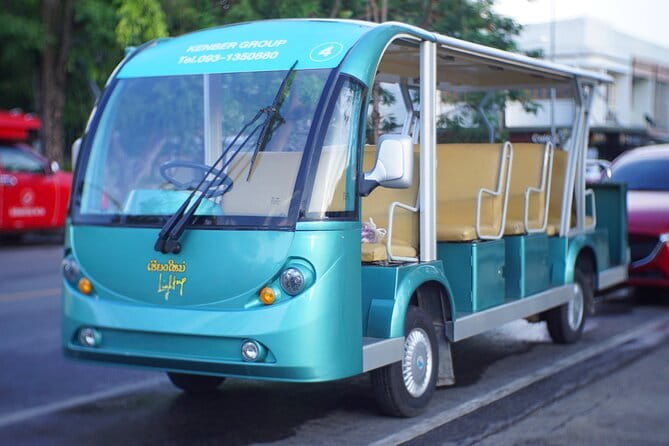
- EV tram rides: quieter transport and easier movement between scattered points
- City orientation first: you learn how Chiang Mai’s beliefs and history shape daily life now
- Temple stops with specific details: from Wat Chiang Man’s Lanna chedi to the Tripiṭaka at Wat Chedi Luang
- Two night-market areas: Chang Puek Gate for street-food dinner options plus Chiang Mai Gate Night Market for a food-focused stop
- Small group (max 12): more guide attention and less crowding
- Included basics for night touring: admissions as listed, bottled water, and some snacks/drinks on the food parts
Why an EV Tram Night Tour Works in Chiang Mai
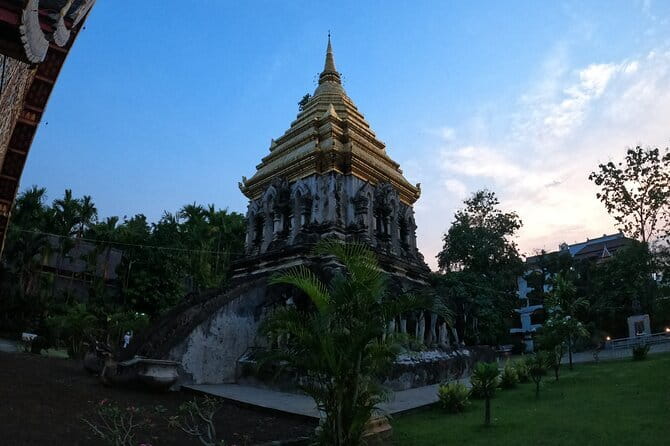
Chiang Mai at night has a different temperature and mood. The streets feel less pressured, and you get a better sense of where people actually spend their evenings. Doing that by electric tram is practical. You cut down on engine noise, and the route feels gentler than a long, stop-and-go taxi crawl.
This tour also has a clear goal: orientation. You’re not just checking boxes for major sights. You’re learning how the city works—how temples connect to community beliefs, why certain places matter, and how the night market areas fit into daily life. That matters if you’re only in town for a few days. After this, you’ll have names, landmarks, and context to use when you plan your next meal, temple visit, or evening walk.
The timing helps too. Starting around 6:00 pm lines you up for that sweet spot where day heat has eased but many street activities are still winding up. In the past, I’ve found that first-evening tours work best when they’re unhurried, and this one is built that way.
You can also read our reviews of more guided tours in Chiang Mai

Meeting at Three Kings Monument and Settling Into the Route
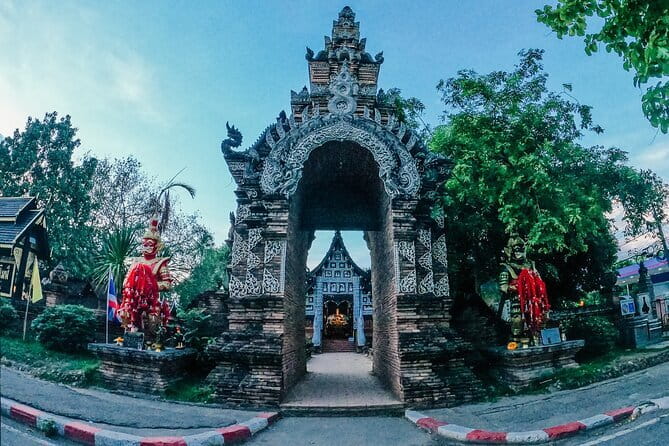
You begin at Three Kings Monument on Prapokklao Road. It’s a good anchor point: you’re starting in the central area, and from there the evening route connects you to major temple zones and market districts.
Dress is listed as smart casual, which is easy to follow. You’ll also want to be ready for brief walking. Early on, there’s a short walk toward Wat Inthakin Sadeu Muang, then you hop on the tram to keep momentum without tiring yourself out before the night markets.
The tour structure feels like this: a quick cultural stop, a short transfer by tram, and then another stop. It’s designed so you don’t feel like you’re stuck in one long bus ride. And since the group is capped at 12, you’re not stuck behind a crowd when you want to look around or ask the guide to clarify something.
Temples and City Pillars: From Wat Inthakin to Wat Chedi Luang
The temple portion isn’t a random list. It’s a thread you can follow, especially if you pay attention to what makes each place distinctive in northern Thai style.
Stop near Three Kings Monument: Wat Inthakin Sadeu Muang
Right away, you get a short history lesson in the Three Kings area and then a bit of walking to Wat Inthakin Sadeu Muang. This is the spot where the city pillar called Inthakin is said to have been erected in 1296 by King Mangrai. Even if you’re not into legends, this detail helps you understand why pillars and temple spaces are more than scenery. They’re part of how the city symbolizes order, protection, and identity.
Admission at the first temple stop is free as listed, and that’s a relief when you’re budgeting.
Wat Chiang Man: oldest Lanna-style chedi with elephant-shaped buttresses
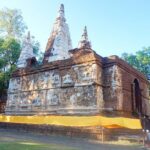
Next comes Wat Chiang Man, described as the oldest temple in Lanna-style chedi architecture. The chedi is supported by rows of elephant-shaped buttresses—a visual detail that sticks in your head once you see it. This stop is short, about 5 minutes, so don’t expect a long linger. Use the time to look closely at the structure and let your guide point out what you’re seeing.
Again, admission is free for this stop.
You can also read our reviews of more city tours in Chiang Mai
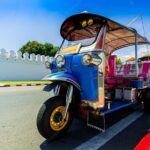
Wat Lok Molee: a wooden complex with terracotta sculptures
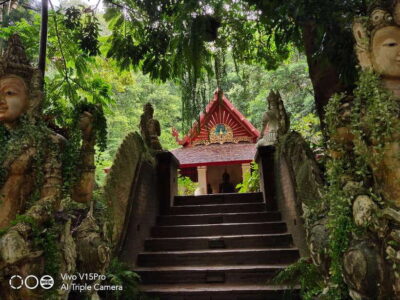
Then you move to Wat Lok Molee, known for a wooden complex dotted with terracotta sculptures. The tour frames it as one of the most attractive wát outside the city walls. It’s also tied to a historical community: it’s thought to have been founded in the 14th century for monks from Burma. That’s a useful kind of info. It reminds you Chiang Mai hasn’t been culturally isolated—people have moved, prayed, and built connections for centuries.
This stop runs about 20 minutes, so you get a little more time here than at Wat Chiang Man.
Wat Pa Pao and Wat Nong Kham: different northern identities within Chiang Mai
Later, you visit Wat Pa Pao, noted as the first temple of the Ngiaw or Tai Yai in Chiang Mai. This is the kind of detail that helps you see Chiang Mai as a mosaic of communities, not one single “monolithic” culture.
After that, the tour includes Wat Nong Kham, a Buddhist temple with Burmese-Shan temple style. The point isn’t just architecture. It’s that Chiang Mai’s religious buildings reflect the mix of influences that shaped the region over time.
These temple stops are listed with free admission tickets for Wat Pa Pao and with style description for Wat Nong Kham, so you won’t be surprised by extra fees at these specific points.
Wat Chedi Luang Varavihara: the biggest stupa and the Tripiṭaka
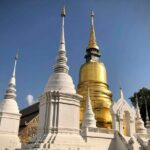
The evening builds toward one of Chiang Mai’s headline temples: Wat Chedi Luang Varavihara. This temple is described as housing the biggest stupa, and it also mentions the city pillar being housed here along with the Tripiṭaka (Buddhist scriptures). You’ll also see architectural elements from the past.
This is where the tour’s orientation payoff becomes clear. If you’ve been paying attention to pillars and temple roles, you’re walking into a site that ties everything together.
Admission is listed as included for this stop.
Wat Phra Singh: northern-style chapel beauty
You’ll finish the temple sequence with Wat Phra Singh, described as having the most beautiful northern-style architecture reflected from the chapel. This stop feels like the “close-up” moment—less about big explanations and more about letting the details land.
Admission here is free as listed.
Chang Puek Gate and Chiang Mai Gate Night Markets: Dinner with a Plan
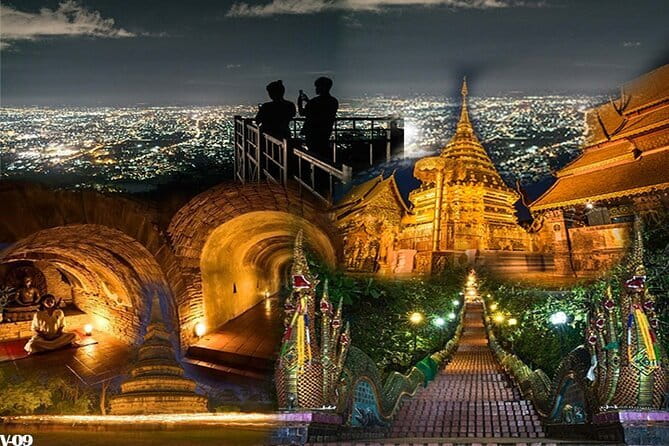
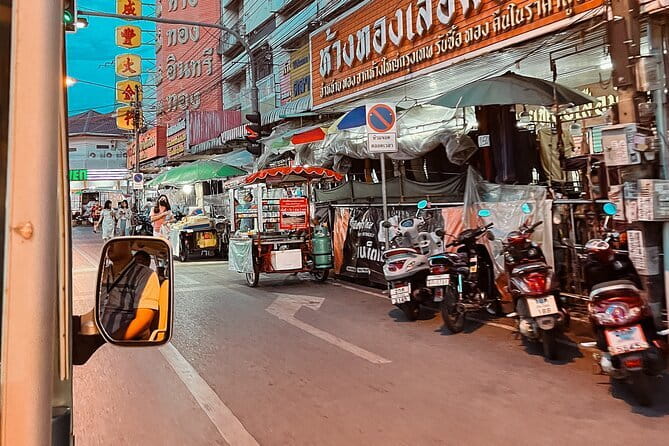
After the temples, the tour pivots to food and street life. This is where the evening becomes fun in a practical way: you get to see how people eat and gather after dark.
Chang Puek Gate: northern gate + street food scene
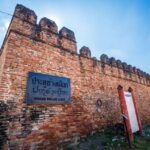
You’ll reach Chang Puek Gate, the northern gate of the old city, with ruins of the city wall. Here, the plan is simple: you’ll find the night market and a concentration of street-food and dinner places. Since extra food and drinks are not included beyond the provided snacks/drinks portions, this is where you choose what you want to buy and eat.
The main value of this stop is that it ties directly into the city layout. You’re standing at a former boundary of the old city and seeing how the night market fills that energy.
Chiang Mai Gate Night Market: a guided food-focused stop
Later, you’ll visit Chiang Mai Gate Night Market for about 25 minutes. This stop is explicitly set up for street-food viewing with a local foodie vibe, and the tour includes admission here. You’ll also get some snack and drinks during the foodie part, so you’re not going into this section completely empty-handed.
If you’re the kind of person who likes to sample small bites rather than commit to one big meal, this is a good fit. It’s also a nice way to test your appetite for Chiang Mai street food before you go off on your own for the rest of the trip.
Warorot Market and Tha Phae Gate: Where Local Life Keeps Moving
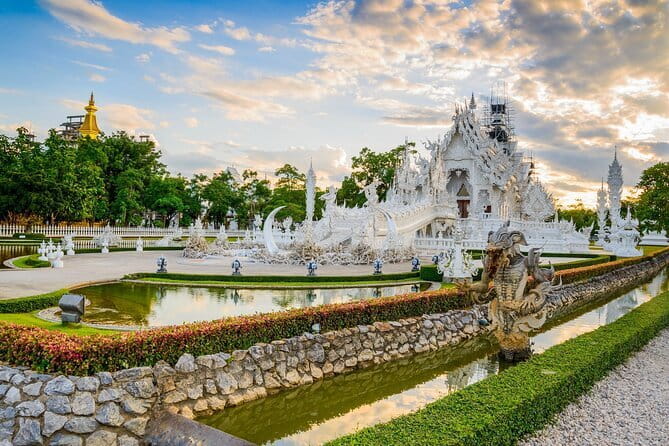
Not every night tour includes a fresh market and a festival core in the same evening. This one does.
Warorot Market: a biggest local fresh market feel
You’ll stop at Warorot Market, described as the biggest local fresh market in Chiang Mai. The tour sets expectations around exploring fresh products and other items sold to local people. That means you’re not just shopping for souvenirs—you’re seeing the market logic that locals live with.
This is also a great chance for photos, but keep in mind: markets are active and crowded by nature, so be patient and don’t rush your guide.
Tha Phae Gate: public activities and festivals
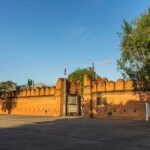
Then you go to Tha Phae Gate, called the main center of Chiang Mai’s public city activities and festivals. This is more than a pretty gate. It’s where the city’s social pulse shows up in public space. If you like understanding how cities organize their community energy, this stop helps you make sense of why certain areas feel like they belong to the city rather than just the tourists.
Price and Logistics: What $27.43 Really Buys You
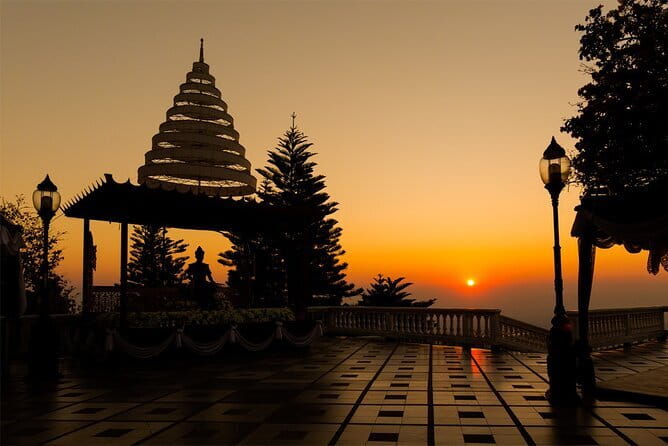
At about $27.43 per person, the value is mostly about what’s covered—not just the tram ride. Included items cover:
- EV tram during the trip
- a professional English-speaking guide
- all admissions as mentioned (most temple stops are listed free; some are included tickets)
- some snack and drinks during the food parts
- bottled water
- travel accident insurance
So you’re paying for an organized evening with transport, interpretation, and key entry costs handled for you. That usually beats piecing together your own evening if you want context and a plan without lots of back-and-forth.
What’s not included is also clear. Pick-up and drop-off is optional at THB 500 for a location within 5 km from the city center, and the price is per way per group. If you don’t want to deal with that, you can just meet at Three Kings Monument, which is how the tour is set up.
The tour also doesn’t include alcoholic beverages, and extra food and drinks beyond the included snacks are your call—especially important during both market segments.
One more practical detail: the tour uses a mobile ticket, and confirmation happens at booking. This is helpful if you prefer fewer printed vouchers.
Who Should Book This EV Tram Night Tour
This tour makes the most sense if:
- you’re in Chiang Mai for the first time and want orientation fast
- you like temples but also want the “why” behind what you see
- you want a night plan that feels calmer than a fast-paced sightseeing hop
- you prefer a small group with an English guide and enough time to ask questions
It may not be ideal if:
- you need a totally step-free experience (there’s some walking)
- you want a long, deep temple study session (most temple stops are short by design)
- you’re aiming for a purely shopping-focused evening with lots of free time
It’s also a good pick if you enjoy night photography, because the mood is different after dark, and the lighting can make temple details look more dramatic without the daytime crowds.
Should you book this EV Tram City Night Tour?
Yes, if you want a first-evening plan that connects temples, city layout, and night markets into one easy story. The best reason to book is the balance: transport is handled by EV tram, admissions are sorted as listed, and the guide frames what you’re seeing so you don’t leave with a pile of unrelated photos.
If you’re picky about pacing, you’ll still like this. It’s designed to feel unhurried, and even when the evening runs a bit closer to 2.5 hours, it doesn’t feel like a slog because the stops keep the rhythm moving.
FAQ
FAQ
What time does the guided Chiang Mai City Night Tour start?
It starts at 6:00 pm.
How long is the tour?
The duration is about 2 hours, and it may run a bit longer depending on the flow.
Where do I meet for the tour?
You meet at Three Kings Monument, Prapokklao Road (QXRP+3WX), Tambon Si Phum, Amphoe Mueang Chiang Mai, Chiang Wat Chiang Mai 50200, Thailand.
What’s included in the tour price?
Included are the EV tram during the trip, a professional English-speaking guide, the admission fees listed for the tour, some snack and drinks during the food parts, bottled water, and travel accident insurance.
Is hotel pick-up or drop-off available?
Pick-up and drop-off are optional. The listed fee is THB 500 for a location within 5 km from the city center, per way per group.
What should I wear?
The dress code is smart casual.