REVIEW · CHIANG MAI
Aroidee’s Farm-Fresh Thai Cooking Experience
Book on Viator →Operated by A ROI DEE Cooking school Chiangmai · Bookable on Viator
Thai cooking tastes better when you helped grow the ingredients. At A Roi Dee Organic Farm in Chiang Mai, you step straight into an organic day: harvest herbs, collect eggs, and meet farm animals before you cook. It is a fun mix of countryside time and hands-on Thai food lessons.
I love two things most. First, the farm part feels real, not staged. You’re shown what’s growing, including herbs and vegetables, and you actually pick what goes into your cooking. Second, the food instruction is structured and practical, from learning curry paste to making Thai favorites like Pad Thai and Tom Yum Kung, finishing with mango sticky rice.
One thing to consider: this experience is outdoors, and it requires good weather. If the skies don’t cooperate, you’ll need to roll with the reschedule option.
In This Review
- Best of A Roi Dee in a nutshell
- Price and timing: what $41.95 really buys you
- Meeting at Wat Suan Dok: a practical Chiang Mai start
- Organic garden time: where the class starts to feel special
- Eggs and farm animals: the part kids usually remember
- Outdoor kitchen classroom: learning Thai cooking the useful way
- The dishes you’ll make: from savory to sweet
- For families, couples, and solo travelers: who this fits best
- Price value: why it feels fair for what you get
- What could trip you up: weather, pace, and expectations
- Tips to get the most from your farm cooking day
- Should you book A Roi Dee in Chiang Mai?
- FAQ
- How long is the A Roi Dee Thai cooking experience?
- Where does the experience start?
- What time does the class start?
- Is pickup available?
- Do they offer vegan or vegetarian options?
- What happens if the weather is bad?
Best of A Roi Dee in a nutshell
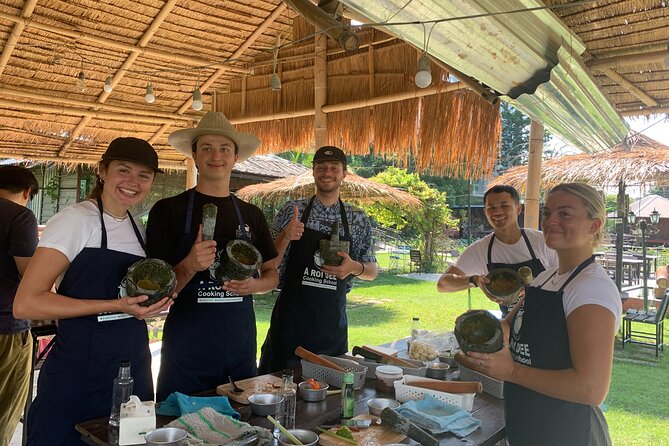
- Farm harvest before you cook: pick herbs and vegetables from the organic garden.
- Eggs and animal time: you can collect eggs and meet animals like buffaloes, chickens, geese, and goats.
- Thai classics taught step-by-step: including Pad Thai and Tom Yum Kung.
- Curry paste with purpose: you learn curry paste and use it for a flavorful Thai spicy soup.
- Finish with mango sticky rice: a sweet, traditional cap to the class.
- Small-group feel: maximum of 15 travelers, so you’re not lost in a crowd.
Price and timing: what $41.95 really buys you
The class costs $41.95 per person for about 4 hours. On paper, that might look like a lot compared to a casual cooking class in town. But here you are paying for the whole package: an organic farm visit plus real cooking instruction plus the meal you make (not just watching).
You start at 8:00 am from Wat Suan Dok on Suthep Road. Getting going early matters. You beat the worst heat and you have time for the garden and farm activities before you hit the outdoor kitchen. Also, the tour is popular enough that it is commonly booked around 19 days in advance, so if you have firm dates, it’s smart to lock it in early.
You’ll typically find a comfortable class pace because the group is capped at 15. That small size is a big part of the value. You get questions answered instead of just getting swept along like a human conveyor belt.
You can also read our reviews of more cooking classes in Chiang Mai
Meeting at Wat Suan Dok: a practical Chiang Mai start
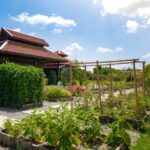
Your day begins at Wat Suan Dok (139 Suthep Rd, Tambon Su Thep, Amphoe Mueang Chiang Mai). It’s a clear, easy reference point, and that helps when you’re juggling a morning schedule.
Pickup is also offered. If you’re staying outside the easiest pickup zones, you’ll want to confirm how it works during booking. Either way, the big win is that you’re not trying to coordinate multiple taxi rides. You show up, check in, and move as a group.
If you’re thinking of making this your main morning plan, you can. It’s long enough to feel like an experience, but short enough that you still have the afternoon for temples or a massage.
Organic garden time: where the class starts to feel special
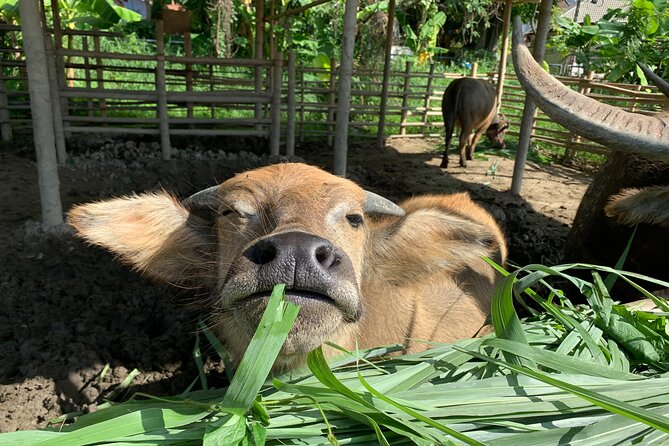
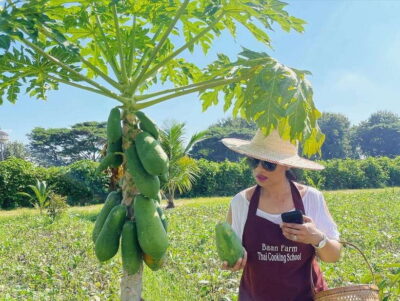
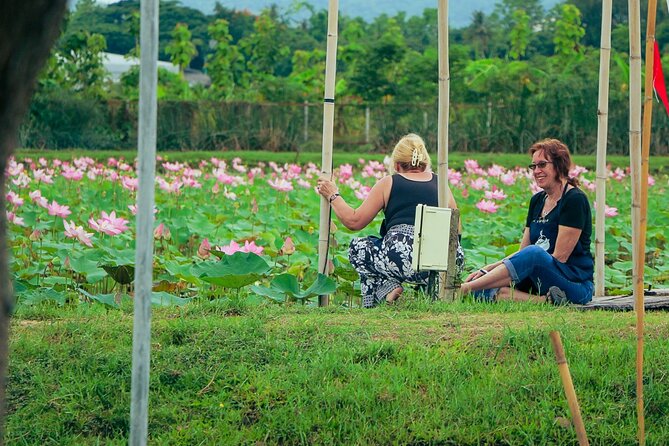
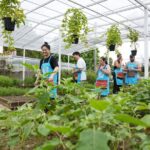
Most cooking classes start with a cutting board. This one starts earlier, in the garden.
You’ll learn about organic farming while you walk through the plots. Then you harvest what you need for the dishes. That part matters more than it sounds. When you pick herbs and vegetables yourself, you understand what Thai kitchens use and why. It turns into knowledge you can actually reuse later when you cook at home.
One review also highlighted that the guide takes time to explain herbs and vegetables in the garden plots, especially during picking. That’s a nice sign. It tells me this isn’t a rushed harvest-and-go situation. You’re meant to learn the basics, not just collect ingredients.
Practical tip: wear shoes you don’t mind getting dusty. You’re on a working farm. Also bring water. You’ll be active before you’re even in the cooking stage.
Eggs and farm animals: the part kids usually remember
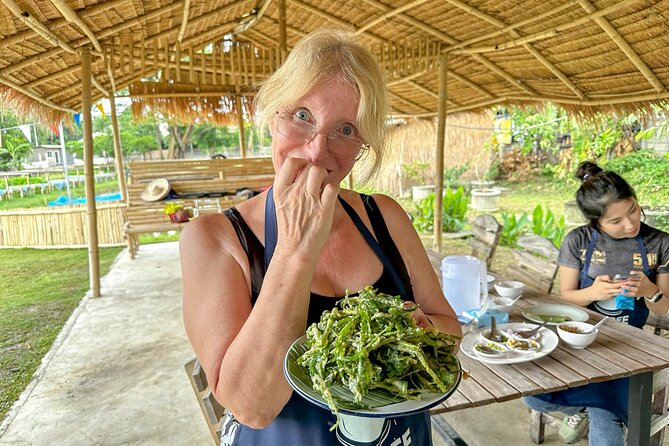
After the garden, you head into the animal area. You may collect eggs and you’ll interact with farm animals including buffaloes, chickens, geese, and goats. It’s simple, direct, and surprisingly educational.
This is where the day becomes family-friendly in a real way. Kids don’t just sit and watch. They get to feed animals and see how farm life works. In one family experience, the group included three children aged 8 to 14, and they found the half-day length reasonably priced and worth every penny.
If you’re an animal person, you’ll love this portion. If you’re not, it still adds a grounded sense of place. You’re not just learning recipes. You’re learning context.
Do note: this is a living farm environment. If you’re traveling with allergies or strong preferences, you should mention them at booking so staff can guide you appropriately during the animal time.
Outdoor kitchen classroom: learning Thai cooking the useful way
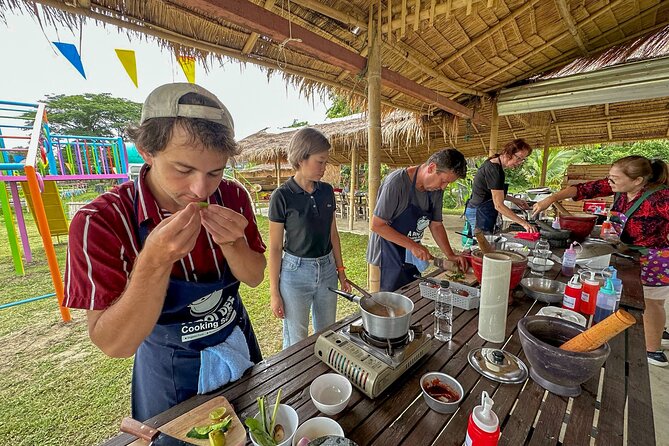
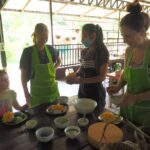
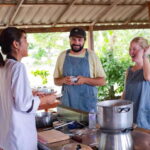
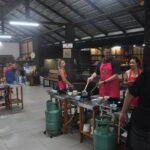
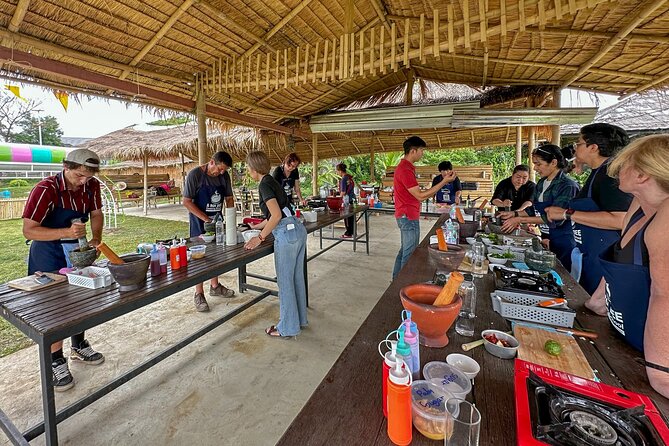
Once the harvesting is done, you shift to the outdoor kitchen. Expect an instruction-led cooking session with staff guiding you through the steps.
You’ll learn to cook classic Thai dishes such as Pad Thai and Tom Yum Kung. You also make curry paste, then use it to create a spicy Thai soup. That curry paste lesson is a key part of why this class is more than a “copy the dish” workshop. Curry paste is the engine behind a lot of Thai flavors, so understanding it helps you later if you want to make Thai cooking at home without guessing.
What you’ll probably notice in the cooking stage is how the staff keep the process moving. You’re not standing in line waiting for equipment. You’re working through the recipes with the group. That hands-on style usually makes the difference between a fun activity and a skill you can take home.
Because the group size is small, you’re less likely to feel like a spectator. You should still check whether you’ll be standing most of the time, especially if you prefer a seated format.
You can also read our reviews of more tours and experiences in Chiang Mai
The dishes you’ll make: from savory to sweet
Even when classes list multiple dishes, what matters is whether you end up with a satisfying meal and clear takeaways. Here’s what you can count on making:
- Pad Thai: a familiar favorite with a balance of sweet, salty, tangy, and savory.
- Tom Yum Kung: the bright, sour-spicy Thai soup classic featuring shrimp.
- Curry paste for a spicy soup: you learn the paste, then see how it becomes flavor in liquid form.
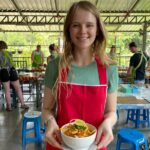
- Mango sticky rice: the dessert finish that makes the whole day feel complete.
If you’re a vegetarian or vegan eater, you’re not out of luck. There is a vegan and vegetarian menu available, and ingredients can be adjusted for allergies. That flexibility is a big deal on a farm-based experience where ingredients are central. It means you can participate without feeling like you must accept a compromise.
For families, couples, and solo travelers: who this fits best

This experience has a track record of working well for mixed groups. It’s family-friendly, and it also makes sense for couples who want something more active than a typical cooking tour.
As a solo traveler, I like it because the small group size helps you connect without forcing conversation. You’re busy cooking, harvesting, and learning, so the day doesn’t rely on you finding social energy.
If you’re the type who likes hands-on travel—farm work, food skills, and a real sense of how ingredients are sourced—this hits the mark. It is also a good choice if you’ve done other Thai food tours and you want something with a stronger link to sustainability.
Price value: why it feels fair for what you get

At $41.95, you get around four hours of structured teaching, plus farm activities that you don’t usually get with city-based cooking classes. You also get meals you actually prepare.
Let’s break down the value logic:
- You are paying for farm access and farm instruction, not just cooking.
- You’re learning multiple dishes plus a curry paste process.
- You’re in a small group, which usually improves the quality of help you get.
If you compare it to a plain cooking class without the farm component, the price difference can feel reasonable. You’re basically funding an entire morning on an organic farm, ending with a full Thai meal.
And that family review calling it worth every penny is the kind of signal I pay attention to. Families can be picky about value. When they feel the half-day cost made sense, it usually means the experience delivers enough substance.
What could trip you up: weather, pace, and expectations
The main drawback is simple: good weather is required. If it’s canceled due to poor weather, you’ll be offered a different date or a full refund. That’s reassuring, but it does mean you should keep some flexibility in your schedule.
Also, think about the pace. You’ll be walking between the garden, animals, and outdoor kitchen. If you’re expecting an easy, seated-only class, adjust your expectations. This is active travel.
Finally, because the class is capped at 15, your schedule might be less flexible than larger city tours. Booking ahead helps.
Tips to get the most from your farm cooking day
A few small choices make a big difference:
- Wear closed-toe shoes and plan for dirt.
- Bring a light layer. Outdoor cooking can be breezy, especially early.
- Come hungry, but not exhausted. You want energy for hands-on cooking.
- If you have allergies, mention them clearly during booking so ingredients can be adjusted.
- If you’re vegan or vegetarian, choose the menu option early in the process so you’re fully set for the cooking stage.
And if you meet the guide Aom, take advantage of it. In one family experience, Aom was described as incredibly friendly, and that kind of tone usually means you’ll feel comfortable asking questions.
Should you book A Roi Dee in Chiang Mai?
You should book this cooking experience if you want Thai food with context. You’ll love it if you care about where ingredients come from, like hands-on lessons, and enjoy a morning that includes both farm life and cooking.
Skip it if your schedule can’t handle an outdoor plan with weather risk, or if you want a purely indoor, low-movement activity.
If you do book, go in expecting four hours of real work and real learning: harvest, meet the farm animals, cook Thai classics, then sit down to the mango sticky rice you helped make. That combination is why this one earns such high marks.
FAQ
How long is the A Roi Dee Thai cooking experience?
It runs for about 4 hours.
Where does the experience start?
It starts at Wat Suan Dok, 139 Suthep Rd, Tambon Su Thep, Amphoe Mueang Chiang Mai, Chiang Mai 50200. It ends back at the meeting point.
What time does the class start?
The start time is 8:00 am.
Is pickup available?
Pickup is offered.
Do they offer vegan or vegetarian options?
Yes. A vegan and vegetarian menu is available.
What happens if the weather is bad?
The experience requires good weather. If it’s canceled due to poor weather, you’ll be offered a different date or a full refund.