REVIEW · CHIANG MAI
Chiang Mai: Nighttime City Highlights by EV Tram
Book on GetYourGuide →Operated by Touring Center · Bookable on GetYourGuide
Gliding past temples beats walking any night. I love the EV tram for an easy, open-air way to see Chiang Mai after dark, and I love the guided stop at Chiang Mai Gate Market where you can snack without guessing. The only real drawback is that a few temples are quick photo/pass-by moments, so you won’t get the full, slow wandering time at every site.
This 2-hour night tour is built like a smart orientation: you start at the Three Kings Monument, get a short history primer in the city-center area, and then roll through the moat zone toward older temples and major gates. Your English-speaking guide keeps the stories clear (and sometimes funny), so the sights feel connected instead of random dots on a map.
In This Review
- Key Things to Know Before You Ride
- Why Chiang Mai by Night Works Better from a Tram
- Meeting at the Three Kings Monument and Getting Your Bearings
- The Moat-Zone Route: Temples, Gates, and a City in Layers
- Wat Chiang Man: Quick Photo Stop, Good Orientation
- Temple Time That Actually Connects: Wat Lok Molee, Pa Pao, and Nong Kham
- Wat Lok Molee: Longer Guided Time for an Older Feel
- Wat Pa Pao: Visit Time That Slows Things Down
- Wat Nong Kham: Burmese–Shan Style Temple Interest
- Wat Chedi Luang and Wat Phra Singh: Big Names, Short Stops
- Wat Chedi Luang: A Sense of Scale
- Wat Phra Singh Woramahawihan: A Useful Photo Anchor
- Warorot Market, Tha Phae Gate, and War-or-where: Watching Night Life Glide By
- Chiang Mai Gate Market: Street Food Timing You Can Actually Enjoy
- What to Expect at the Food Stop
- A Practical Food Note
- EV Tram Comfort, Timing, and What the 2 Hours Feels Like
- Price and Value: What $27 Really Buys in Chiang Mai
- Who Should Book This Tour (and Who Might Want Another Plan)
- Should You Book Chiang Mai Nighttime City Highlights by EV Tram?
- FAQ
- How long is the EV tram night tour in Chiang Mai?
- Where do I meet the guide, and how do I recognize them?
- Is the tour conducted in English?
- What are the main stops on the route?
- Is hotel pickup included?
- What’s included in the ticket price?
Key Things to Know Before You Ride
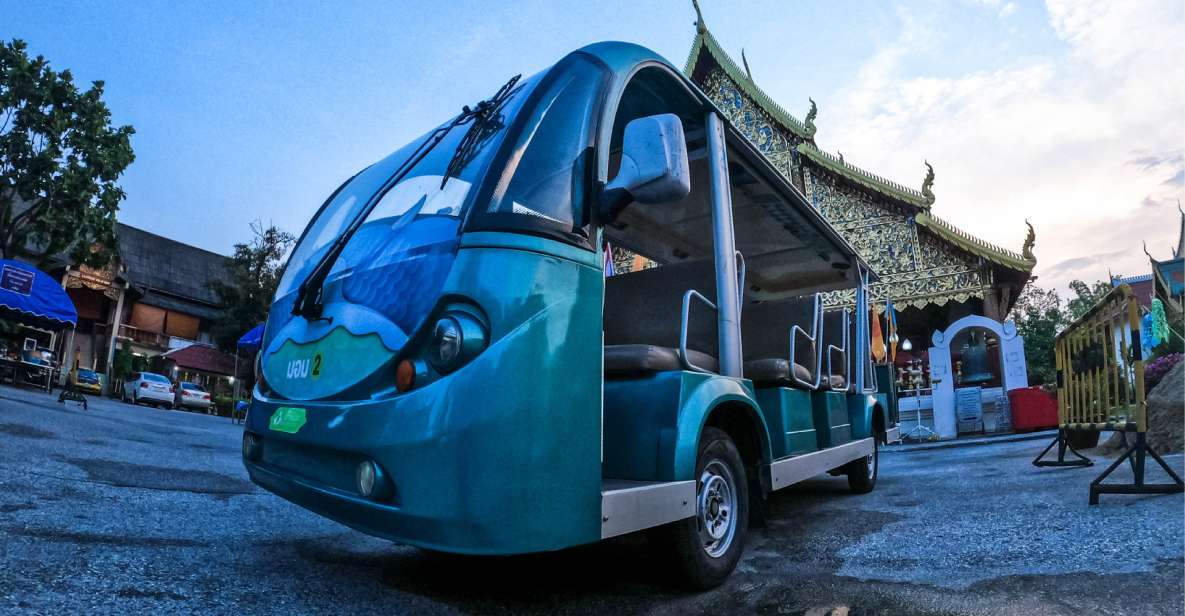
- Quiet electric tram, open-air feel: you get night-breeze comfort with far less walking stress than a standard on-foot route
- Start at Three Kings Monument (6:00 pm): you’ll begin with a brief orientation right where most visitors need one
- Temple mix includes both photo stops and guided time: Wat Lok Molee and the Pa Pao area get longer attention, while others are shorter
- Special Burmese–Shan style stop: Wat Nong Kham is singled out for a distinct temple character
- Chiang Mai Gate Market is the food anchor: guided street food + local snacks for about 25 minutes
- Frequently led by guides like John: clear English, lots of questions answered, and good pacing for first-timers
Why Chiang Mai by Night Works Better from a Tram
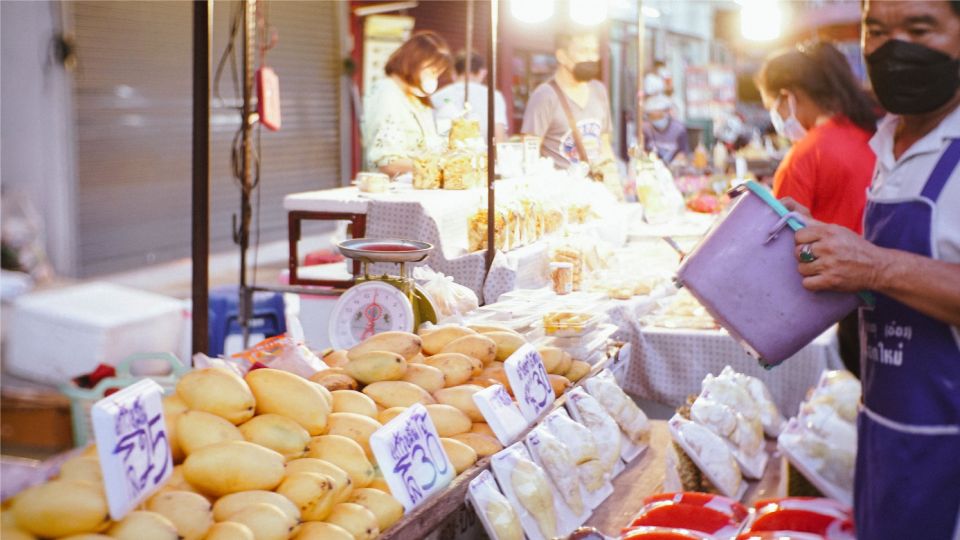
Night in Chiang Mai cools down the pace, but the streets still move. That’s exactly where the tram format shines. You get to watch the city flow while staying comfortable, instead of arriving at temples with your legs already tired.
The ride is also part of the fun. People describe the tram as running quietly, and the open-air setup helps you feel like you’re out with the city, not stuck inside a stuffy van. It’s a practical way to see more in two hours, without turning the evening into a full workout.
You can also read our reviews of more city tours in Chiang Mai

Meeting at the Three Kings Monument and Getting Your Bearings
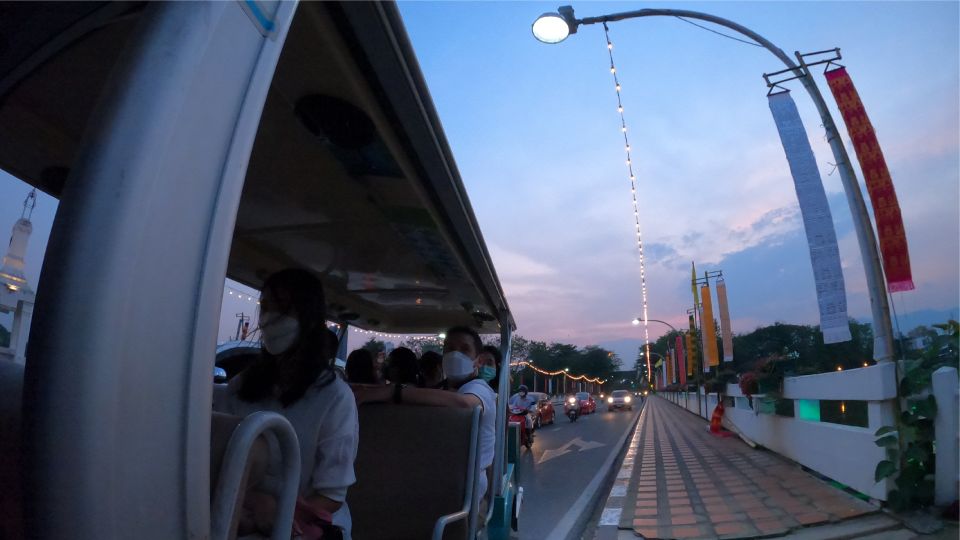
You meet at the Three Kings Monument at 6:00 pm. The guide typically wears a white shirt with the Touring Center’s logo, so it’s easy to spot once you’re there.
You’ll start with a brief history lesson in this central area, which matters more than you might think. Chiang Mai’s temples and gates feel more meaningful once you understand why they’re where they are and how the moat/city-gate layout fits together. By the time the tram starts moving, you’ll be less “tourist mode” and more “I get what I’m seeing.”
The Moat-Zone Route: Temples, Gates, and a City in Layers
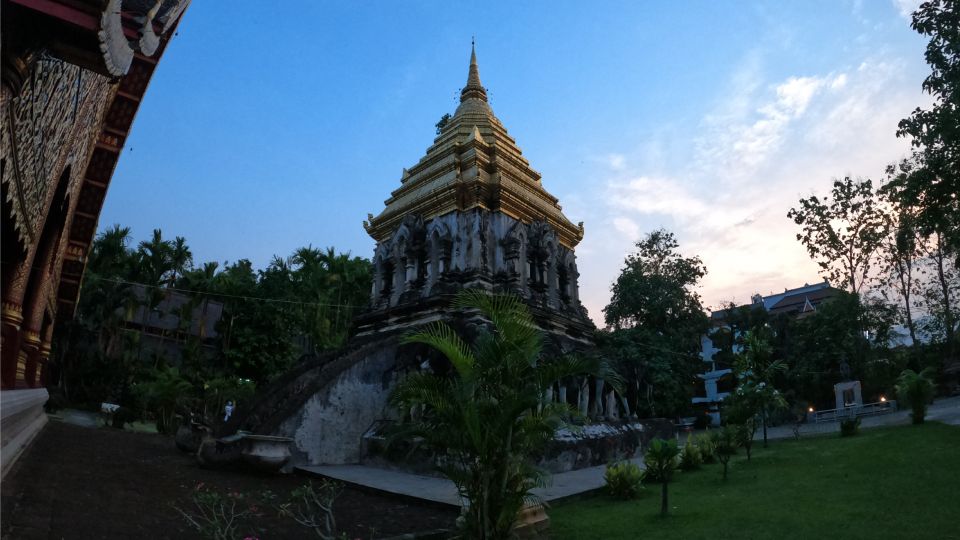
As you ride around the moat and through city-gate areas, you’ll pass a string of landmarks that represent different phases of Chiang Mai’s religious and everyday life. This is one of the smartest parts of the tour: you see the patterns first, then the stories.
Your guide points out key places along the way, and the pacing keeps it friendly. You’re not stuck staring at a guide’s phone screen while the group lags behind; you’re moving through the city while learning what to look for next.
Wat Chiang Man: Quick Photo Stop, Good Orientation
You’ll have a photo stop at Wat Chiang Man. Even when the stop is brief, it helps anchor the tour because it’s a recognizable temple name for visitors and an easy place to orient visually before you move into the more detailed stops.
If you’re the type who likes to take a couple of clear night photos and move on, you’ll appreciate the timing. If you want long temple time here, you’ll need an extra visit later.
Temple Time That Actually Connects: Wat Lok Molee, Pa Pao, and Nong Kham
The tour’s temple segment isn’t random. It’s built around a mix of older, notable temples and a couple of standout styles that give you something to compare.




Wat Lok Molee: Longer Guided Time for an Older Feel
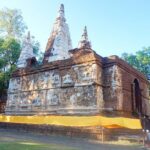
Wat Lok Molee gets one of the longer guided blocks (about 25 minutes), and it’s treated as one of the older temple stops. That longer time is valuable because your guide can explain what you’re looking at instead of rushing you through.
In practice, this is where you’ll start feeling the tour’s purpose. Instead of just admiring buildings, you learn how temple features connect to belief and local history—without turning into a lecture.
Wat Pa Pao: Visit Time That Slows Things Down
Next is Wat Pa Pao with a visit and guided tour time (about 15 minutes). This part gives you a bit of a reset from the ride-and-pass rhythm. You’ll get closer to the temple space rather than only seeing it from the street.
If you like small moments—like observing how people move in and around the temple grounds—this stop is a good one to enjoy rather than rushing.
Wat Nong Kham: Burmese–Shan Style Temple Interest
Then comes Wat Nong Kham as a standout. It’s described as a temple of special interest with a Burmese–Shan temple style. Even when it’s a shorter pass/photo moment, it’s worth paying attention because it’s one of the stops that signals Chiang Mai’s regional connections and architectural variety.
When guides flag something like that, it’s usually because there are details worth spotting. Keep an eye out for differences in structure and ornament compared to the temples you’ve already seen.
Wat Chedi Luang and Wat Phra Singh: Big Names, Short Stops
You’ll also see major temples later on—Wat Chedi Luang and Wat Phra Singh Woramahawihan—mostly as photo stops/passes. That can feel a bit “quick,” but it still serves a purpose: you leave with a clear set of must-know names for your next self-guided explorations.
Wat Chedi Luang: A Sense of Scale
Wat Chedi Luang is described as enormous and tied to important city and religious ceremonies. Even if you only pause for photos, the scale helps you understand why this name shows up so often in Chiang Mai conversations.
Wat Phra Singh Woramahawihan: A Useful Photo Anchor
Wat Phra Singh Woramahawihan is also a key name. The brief stop is still useful because it gives you a visual reference point. Later, when you read more or visit again in daylight, you’ll know exactly where you are.
Warorot Market, Tha Phae Gate, and War-or-where: Watching Night Life Glide By
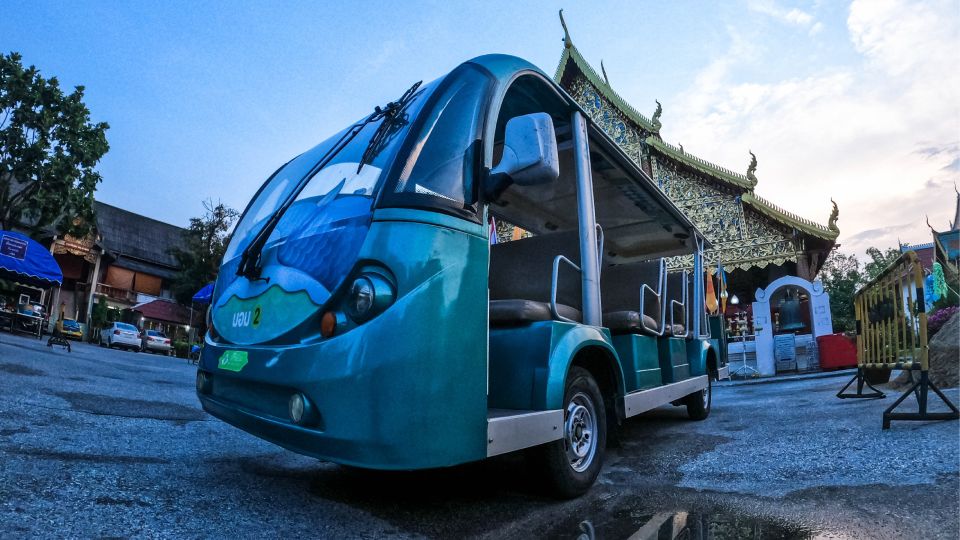
You’ll pass through areas like Warorot Market and Tha Phae Gate. These are more than “just roads” on the route. Market streets and major gates are where the city’s rhythm shows up fast: movement of people, the glow of shops, and that sense of Chiang Mai at work after dark.
Because you’re not doing a long walk here, it’s still a comfortable way to see the atmosphere. If you want deeper market time, you can always come back during another evening. For this tour, the goal is to show you the main pulse without draining you.
Chiang Mai Gate Market: Street Food Timing You Can Actually Enjoy
This is the tour’s food centerpiece. Chiang Mai Gate Market is where you spend about 25 minutes for street food, snacks, and guidance.
This stop matters because the guide helps you navigate what to try. Night markets can be loud, confusing, and full of tempting stuff you don’t recognize. Here, you get direction so you’re not just staring at menus you can’t read.
What to Expect at the Food Stop
You’ll have:
- time to sample local foods
- guided suggestions and snacks
- a chance to try Thai sweets
One specific favorite to note from the experience: mango sticky rice gets called out as a must. If it’s available at the stall your guide stops at, treat it as your dessert plan for the night.
A Practical Food Note
The tour includes drinking water and some snack, which helps a lot right before the market time. Still, keep your expectations realistic: this is a tasting-style window, not a full market crawl. If you want to eat like you’re training for a food marathon, you’ll likely want a second market stop afterward.
EV Tram Comfort, Timing, and What the 2 Hours Feels Like
The whole tour runs about 2 hours, starting at 6:00 pm and finishing around 8:00 pm with a drop back at the Three Kings Monument. That timing is ideal for a first-night activity because it doesn’t eat your entire evening.
The route also balances short movements with meaningful stops:
- Guided time at Wat Lok Molee (about 25 minutes)
- Guided/visit time at Wat Pa Pao (about 15 minutes)
- A guided food block at Chiang Mai Gate Market (about 25 minutes)
- Photo/pass-by moments for other big temples
This mix is why it’s a good option if you’re tired, traveling with kids, or simply don’t want to spend your whole first evening climbing temple stairs and crossing crowded sidewalks.
And yes, the tram aspect helps here. It’s open-air and described as quietly running, so you can relax while still feeling the night atmosphere.
Price and Value: What $27 Really Buys in Chiang Mai
At $27 per person for a 2-hour guided night tour, the value comes from what’s bundled together.
Your price includes:
- the tram for the tour
- an English-speaking professional guide
- admission fees and activities as mentioned
- drinking water and some snack
- travel accident insurance
That combination is the key. In Chiang Mai, you can easily spend money fast on separate entries, tuk-tuk or rides, and guided help. Here, you get transport plus guided temple context plus food-market guidance in one tidy package.
One note to keep expectations clean: hotel pickup and drop-off aren’t included. So you’ll want to get yourself to the meeting point at Three Kings Monument.
Who Should Book This Tour (and Who Might Want Another Plan)
This is a great fit if:
- you’re visiting Chiang Mai for the first time and want a quick orientation
- you prefer a lighter walking load at night
- you care about temple context, not just photos
- you want a guided street food stop without wandering aimlessly
It may be less ideal if:
- you want hours at one or two temples (this tour moves, and some stops are short)
- you dislike street food tasting, since the market is a major part of the experience
- you already know you only want to visit temples in the daytime
If you’re planning multiple temple days, this night tram tour works as your “set the map in your head” evening. Then you can choose which temples deserve a second, slower visit later.
Should You Book Chiang Mai Nighttime City Highlights by EV Tram?
Yes, if you want a low-stress way to see the city-center highlights after dark. The tram format makes the timing work, and the guided storytelling helps the temples feel connected instead of random.
Book it especially if it’s your first night in Chiang Mai. It gives you the names, the locations, and the context fast, and the market stop gives you a practical payoff beyond temple sightseeing.
Skip it only if your style is long, quiet, in-depth temple time with no photo stops. This tour is built for smart coverage in two hours, with just enough depth to point you toward what to explore next.
FAQ
How long is the EV tram night tour in Chiang Mai?
The tour lasts about 2 hours.
Where do I meet the guide, and how do I recognize them?
You meet at the Three Kings Monument area. The guide typically wears a white shirt with the Touring Center’s logo.
Is the tour conducted in English?
Yes, the tour includes a live professional English-speaking guide.
What are the main stops on the route?
You’ll pass or stop at several key places, including Wat Chiang Man, Wat Lok Molee, Wat Pa Pao, Wat Nong Kham, Chiang Mai Gate Market for street food, and photo stops for Wat Chedi Luang and Wat Phra Singh Woramahawihan.
Is hotel pickup included?
No, hotel pickup and drop-off are not included.
What’s included in the ticket price?
The price includes the tram, the English guide, admission fees/activities mentioned, drinking water and some snack, and travel accident insurance.