REVIEW · CHIANG MAI
Morning Thai cooking class
Book on Viator →Operated by Aromdii Cooking School · Bookable on Viator
Turning spices into dinner is the whole point. This Chiang Mai Thai cooking class pairs a short market walk with hands-on cooking at Aromdii Cooking School, where you learn how Thai dishes actually come together. I love the small group size (max 8), which makes it easier to get real help instead of rushed instructions. I also like that you cook five dishes from scratch, including curry paste made fresh. One thing to plan for: there’s no aircon in the kitchen or eating room—just fans—so warmer or rainy months can feel steamy.
You start by choosing your menu before class, then head out to buy ingredients at Kad Kom Market. After that, the morning follows a clear cooking rhythm: stir-fry first, then soup and appetizer, and finally curry paste plus dessert. It’s a smart way to learn, because each step builds on the last. If you’re heat-sensitive, bring water shoes-level comfort (closed-toe shoes help too), and plan on sweating a bit.
In This Review
- Key things to know before you go
- Morning Thai cooking starts with picking your menu
- Kad Kom Market: the 15–20 minute spice-and-produce reality check
- The kitchen has fans, not aircon: comfort and timing
- A clear 4.5-hour cooking flow you can actually follow
- 1) Stir-fry starts the class
- 2) Soup and appetizer follow
- 3) Curry and dessert finish the morning
- Chiang Mai vs. “general Thai”: you get two regional vibes
- Small group, reserved space, and transport within 3 km
- Price and value: what $27.70 really buys you
- Who should book this Chiang Mai cooking class
- Should you book Aromdii Cooking School?
- FAQ
- How long is the Morning Thai cooking class?
- What time does it start in Chiang Mai?
- Where is the meeting point?
- Is pickup offered?
- How many people are in the class?
- Do you visit a market before cooking?
- What dishes do you cook?
- What’s included, and what happens if the weather is bad?
Key things to know before you go
- Max 8 people: easier guidance while you cook five dishes from scratch
- Fan-only kitchen: no aircon, so dress for heat in March–June and July–October
- Choose your exact dishes ahead of time for stir-fry, appetizer, soup, curry, and dessert
- Curry paste is made from scratch, not scooped from a jar
- Market time is short (15–20 minutes), focused on produce, herbs, and spices
- Transportation is included within 3 km, helpful if you’re not starting at the market
Morning Thai cooking starts with picking your menu
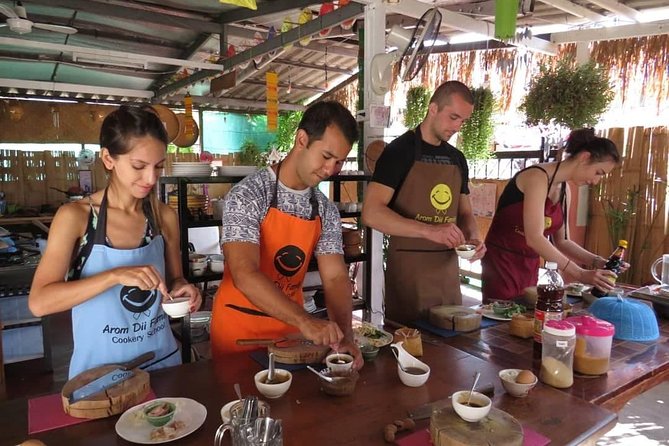
This class is designed around choice. Before you cook, you’ll select your dishes from a menu that covers several Chiang Mai favorites and classic Thai categories. Your picks decide what you’ll buy at the market and what you’ll assemble in the kitchen—so you’re not stuck cooking whatever happens to be available.
You’ll choose:
- Stir-fry options: Pad Thai, Fried Drunken Noodles, Pad See Ew, or Fried Cashew Nut
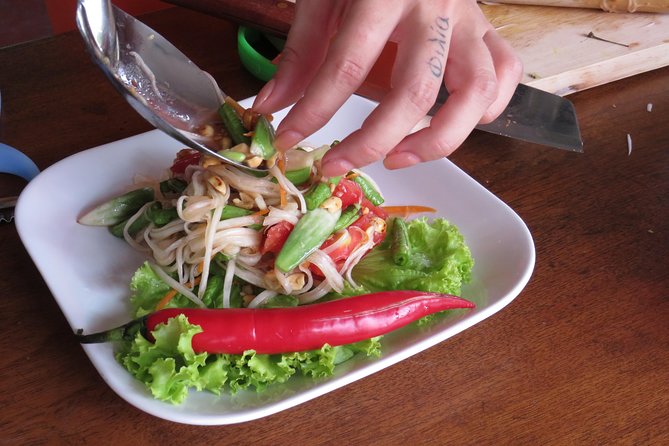
- Appetizers: Papaya Salad, Fresh Spring Rolls, Fried Spring Rolls, or Mixed Fruits Salad
- Soups: Hot & Sour Prawns Thick Soup, Coconut Chicken, Tom Yum Chicken, or Hot & Sour Prawns Clear Soup
- Curry + curry paste: Khao Soi (Chiangmai noodles), Green Curry, Massaman Curry, or Red Curry
- Desserts: Mango Sticky Rice, or Pumpkin in Coconut Milk
That lineup matters because it’s not just “Thai food.” It’s Thai food by category, with a plan. You learn how stir-fry works, then how soups build flavor, then how curry paste changes everything.
If you want plant-based cooking, the class is set up to accommodate vegan and vegetarian options through the menu choices. The best move is to choose dishes that naturally fit your diet before you arrive.
You can also read our reviews of more cooking classes in Chiang Mai
Kad Kom Market: the 15–20 minute spice-and-produce reality check
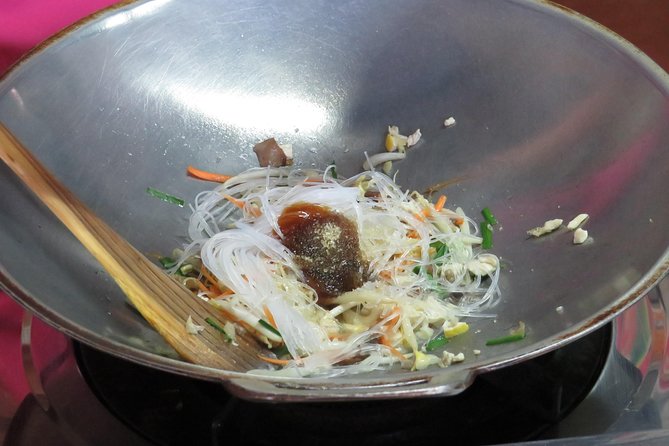
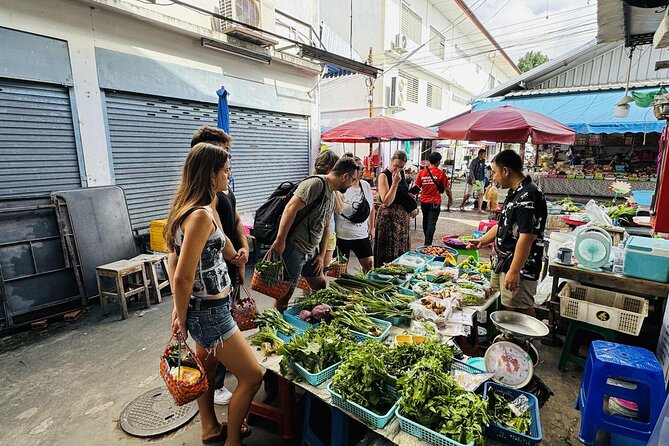
You meet at Kad Kom Market (Ban LeKhan area: บ้านเลขที่19 3มบ เวียงทอง 1, Tambon Chang Khlan, อ.เมือง, Chiang Mai 50100). Then you head into the market for about 15–20 minutes.
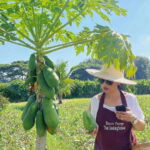
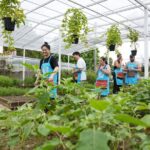
That sounds short, but it’s the right length for this kind of class. The market stop isn’t a long sightseeing detour. It’s a focused ingredients run. You’ll learn what Thai veggies, spices, and herbs look like in real life—not just in a recipe photo. You also get time to walk around, take photos, and buy some spice to take home if you want.
One small practical tip: if you know what dishes you picked, you’ll understand the ingredients faster. You’ll spot the kinds of herbs and aromatics you’ll use later in the kitchen, and the cooking steps will feel less random.
The kitchen has fans, not aircon: comfort and timing
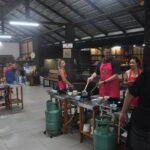
Here’s the honest part. The cooking room has no air conditioning. You’ll have fans, and that’s it. The experience runs through different seasons, and the need for extra comfort is real:
- March–June (summer): warmer and likely more humid
- July–October (rainy): can feel damp and heavy indoors
- November–February (winter): generally more comfortable
So dress like you’re going to sweat. Breathable clothes, simple shoes you can stand in, and a small towel can make the whole morning easier. Also, start the day with water—this is a hands-on class, and you’re cooking while being in a warm space.
If you hate heat, this is the one “consideration” that can change your enjoyment level. The cooking itself is the point, but comfort affects how much you absorb.
A clear 4.5-hour cooking flow you can actually follow
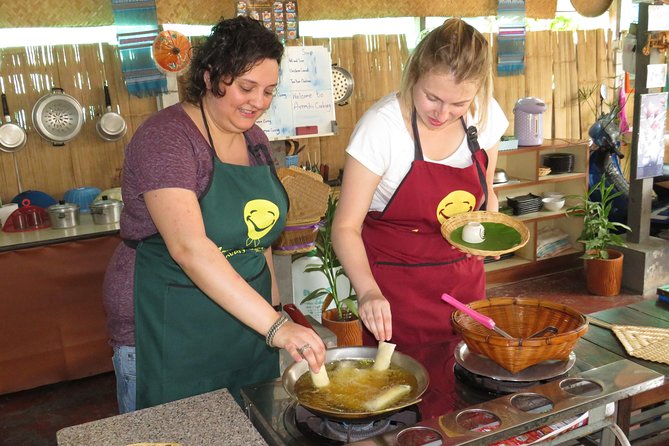
The total experience is about 4 hours 30 minutes, starting around 9:00 am and ending back at the meeting point.
The class runs in a logical order. That helps you learn, because you’re not jumping between totally different techniques every 10 minutes.
Here’s how the cooking typically flows:
1) Stir-fry starts the class
Stir-fry is where you learn speed and heat control. It also gives you a quick win early in the morning. Your chosen stir-fry might be Pad Thai, Pad See Ew, Drunken Noodles, or Fried Cashew Nut—each one teaches a slightly different flavor balance and texture.
This is a good place to pay attention. If you get stir-fry basics right, the rest of the meal feels easier.
You can also read our reviews of more tours and experiences in Chiang Mai


2) Soup and appetizer follow
Next comes soup and appetizer. This is where Thai cooking often surprises people—in a good way. Soups like Tom Yum Chicken or hot & sour versions are built on layers of aromatics and tang/spice balance. Appetizers can range from fresh spring rolls to papaya salad, and even fried versions or fruit salads.
This step is also where your earlier market shopping pays off. You’ll recognize ingredients and understand why certain herbs show up again and again in Thai cuisine.
3) Curry and dessert finish the morning
The final stretch is where things get especially satisfying. You’ll make curry paste from scratch, then cook your selected curry type. Options include Green, Massaman, Red Curry, or Khao Soi (Chiangmai noodles).
Then dessert closes things out with one of two choices: Mango Sticky Rice or Pumpkin in Coconut Milk.
The order is smart: stir-fry teaches timing, soups teach flavor balancing, and curry paste teaches technique. Dessert then locks in the sweet, creamy side of Thai food.
Chiang Mai vs. “general Thai”: you get two regional vibes
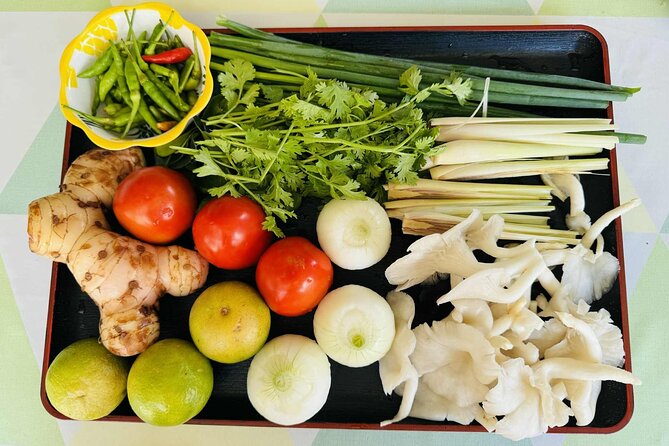
One reason I like this format is that it’s designed to cover more than one Thai influence. You’re learning dishes across two different regions while still cooking within the Chiang Mai context you’re visiting.
Khao Soi (Chiangmai noodles) is the clearest regional anchor. Curry types then broaden the flavor map—so you’re not just repeating one style of cooking all morning.
Also, because curry paste is made fresh, you get the real reason Thai curries taste different. It’s not just the sauce. It’s what happens before the paste ever hits the pan.
Small group, reserved space, and transport within 3 km
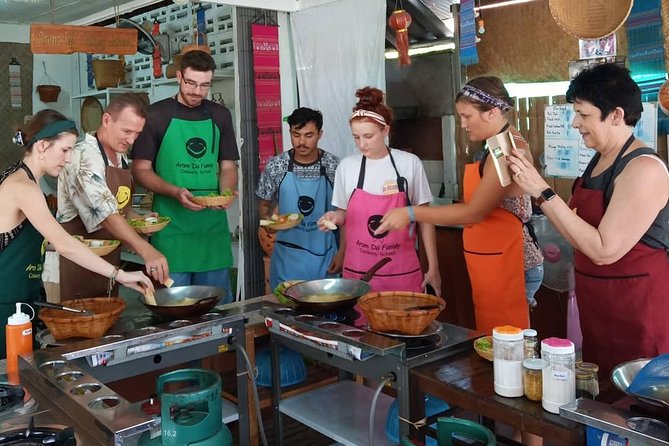
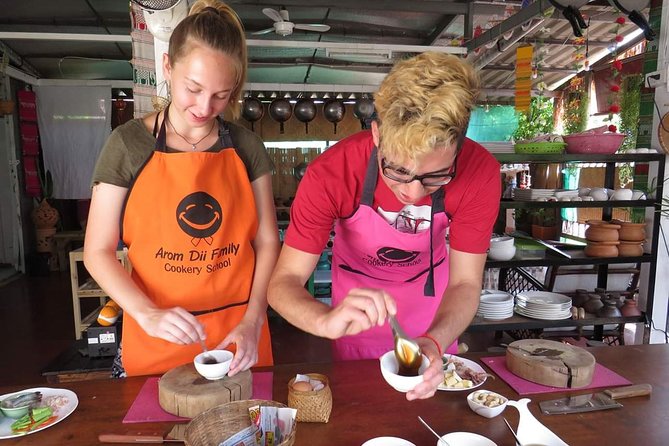
The class is limited to eight travelers max. That small size is a big deal for a cooking class. You’re more likely to get real attention if you’re chopping, mixing, or adjusting seasoning. It also makes the kitchen feel more relaxed and social instead of chaotic.
You don’t have to worry about outsiders wandering in either. Space is reserved for participants only, with no visitors.
Transportation is included for nearby locations within 3 kilometers, and you’ll likely be picked up from a close-by spot if you’re not already near the kitchen/market area. The start point is near public transportation too, which is helpful if you prefer to keep things simple.
If you’re staying just a bit outside the core area, ask yourself one question: can you realistically get to Kad Kom Market on time? If yes, you’ll be fine even without pickup. If no, pickup within 3 km becomes a real value add.
Price and value: what $27.70 really buys you
At $27.70 per person, you’re paying for more than a cooking demo. You get:
- a market visit (15–20 minutes)
- ingredient sourcing tied to your menu
- cooking five traditional dishes from scratch
- curry paste made from scratch
- bottles of water and seasonal fruit
- a handmade recipe download from the school website
- transportation included within 3 km
The best way to think about value here is effort and outcome. You’re not just tasting. You’re learning multiple techniques in one morning, then leaving with recipe guidance you can actually repeat at home.
Also, small-group cooking usually costs more. Here, the cap at eight people helps keep the experience “instruction-heavy,” not “crowd-heavy.” That’s a strong match for people who want to learn, not just sample food.
Who should book this Chiang Mai cooking class
This is a great fit if you:
- want an organized, step-by-step Thai cooking morning
- enjoy markets and want to connect ingredients to the dishes you’ll eat
- like learning curry paste technique and not just finishing a plated meal
- prefer smaller group instruction (max 8)
- want vegan/vegetarian accommodation through menu choice
It’s not ideal if you:
- can’t handle warm, fan-only indoor conditions
- hate getting your hands busy for several hours
- want a very slow, long market stroll (this one is intentionally short)
Should you book Aromdii Cooking School?
If you’re in Chiang Mai and you want a cooking class that feels practical—menu choice, market ingredients, then a clear kitchen flow—this one makes a lot of sense. The combination of short market time + five dishes from scratch + curry paste from scratch is the main draw, and the small group limit keeps it from feeling rushed.
I’d book it if you’re aiming to cook Thai food at home again, not just have a fun morning. Choose your dishes with your diet in mind, wear heat-friendly clothes, and you’ll get a very satisfying result for the price.
FAQ
How long is the Morning Thai cooking class?
It lasts about 4 hours 30 minutes (approx.).
What time does it start in Chiang Mai?
The start time is 9:00 am.
Where is the meeting point?
The meeting point is Kad Kom Market, บ้านเลขที่19 3มบ เวียงทอง 1 Tambon Chang Khlan, อ.เมือง Chang Wat Chiang Mai 50100, Thailand.
Is pickup offered?
Pickup and transportation are included if you’re within 3 kilometers of the meeting place.
How many people are in the class?
The class has a maximum of 8 travelers.
Do you visit a market before cooking?
Yes. You’ll visit a local market first for about 15 to 20 minutes, then come back to the cooking school.
What dishes do you cook?
You cook five dishes from scratch, chosen from options for stir-fry, appetizer, soup, curry (including curry paste from scratch), and dessert. The menu includes items like Pad Thai, Tom Yum Chicken, Khao Soi, and mango sticky rice.
What’s included, and what happens if the weather is bad?
The price includes bottle water, seasonal fruit, a handmade recipe download, and transportation within 3 km. The experience requires good weather, and if it’s canceled due to poor weather, you’ll be offered a different date or a full refund. Free cancellation is available up to 24 hours in advance for a full refund.