REVIEW · CHIANG MAI
Chiang Rai Tour: Hot Spring,White Temple, Golden Triangle, Yao
Book on Viator →Operated by Asia Advisor by Asni · Bookable on Viator
A long day in Chiang Rai pays off fast. You get pickup from Chiang Mai and a small-group feel (up to 10 people) while you bounce between the White Temple and the Golden Triangle. I like the practical pacing: short, focused stops with a real break for lunch, not a “run-and-hope” schedule. One thing to consider is that the day is long and includes optional add-ons with extra fees, so you’ll want a little cash and patience for timing.
This tour also has a fun, hands-on side. At Mae Khachan Hot Spring, you can watch the high-heat vibe up close, and some routes include egg-cooking in the hot area, which is a neat northern-Thai experience. If you’re lucky enough to get a guide like Susi, the day can feel more like a friendly day trip than a checklist. The main trade-off: most stops are about 1 hour, so if you want lingering photo time or deep museum browsing, you’ll need to manage your expectations.
In This Review
- Key highlights
- Chiang Rai in One Day: long ride, tight stops, good logistics
- Mae Khachan Hot Spring: a hands-on start before the temples
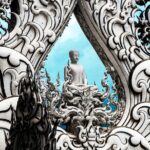
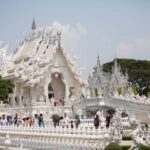
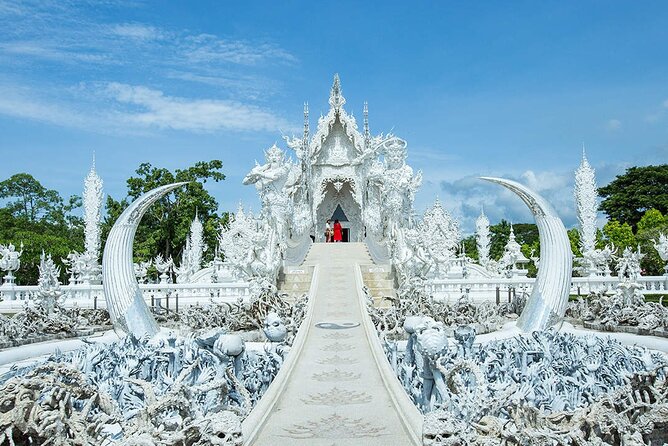
- Wat Rong Khun (White Temple): glass-like details and murals up close
- Golden Triangle and Chiang Saen: the river border view that hits different
- Sop Ruak viewpoint + Wat Prathat Phu Khao + hill tribe village time
- Optional Laos border add-on: passport matters and time is tight
- Price and value: what $101.07 really buys you
- Practical tips to keep this day smooth
- Should you book this Chiang Rai hot spring, White Temple, and Golden Triangle tour?
- FAQ
- What time does the tour start and end?
- How long is the Chiang Rai tour?
- What’s included in the price?
- What extra costs should I expect?
- Do I need a passport?
- Is the boat trip required?
- Can I cancel for free?
Key highlights
- Mae Khachan Hot Spring: admission is listed as free, with toilet and restaurant services and views of Thailand’s highest geyser
- Wat Rong Khun (White Temple): famous for its white exterior and detailed glass-like decor and murals
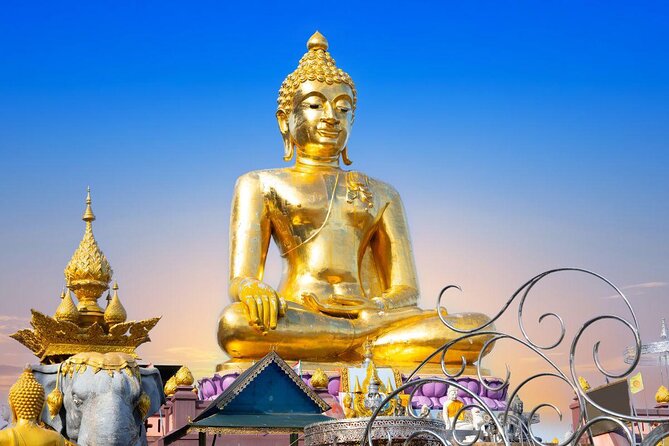
- Golden Triangle viewpoints: see where Thailand, Myanmar, and Laos meet across the Mekong (Mae Khong) and Ruak rivers
- Sop Ruak + Mae Sai region: classic confluence angles, plus optional boat views for an extra fee
- Hill tribe village visit: built into the Golden Triangle stretch, giving context beyond the photo spots
- Optional Laos border time: about 35–40 minutes when you add it (and yes, it costs extra)
Chiang Rai in One Day: long ride, tight stops, good logistics
This is a true full-day outing. You start around 7:00am and get back to Chiang Mai around 8:00–9:00pm, using an air-conditioned minivan with hotel pickup and drop-off in the city area. The big win for me is how much the day packs in without feeling like you’re on your own navigating buses and checkpoints.
Because the max group size is 10 travelers, the guide can keep things moving while still answering questions. The tour also includes an English-speaking driver/guide, lunch, and entrance fees as part of the package, which reduces the “surprise costs” stress. On top of that, your guide doesn’t just point at things—they help you understand what you’re looking at when you reach the river confluences and temple design details.
The main consideration is time. Each major stop is roughly 1 hour, and you’ll spend time traveling between locations. So if your travel style is slow and museum-first, you might feel slightly rushed. If you’re the type who likes to hit the key northern icons in one day, this layout is a strong fit.
You can also read our reviews of more tours and experiences in Chiang Mai
Mae Khachan Hot Spring: a hands-on start before the temples
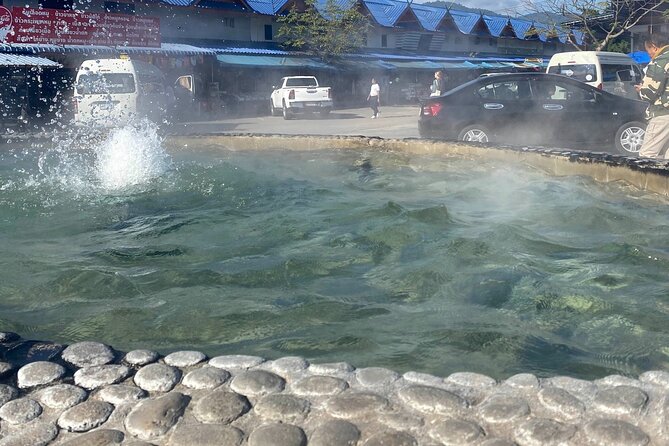
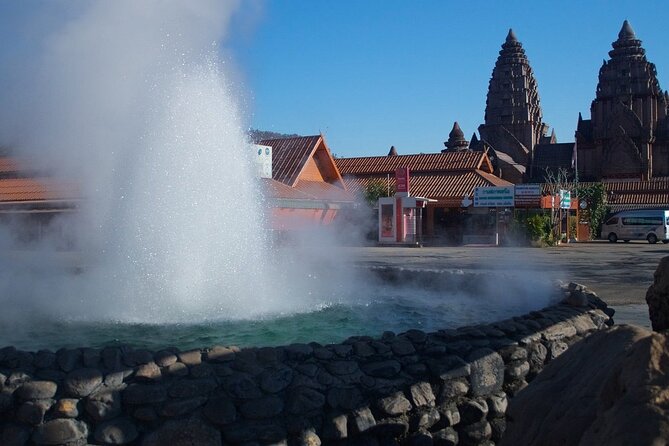
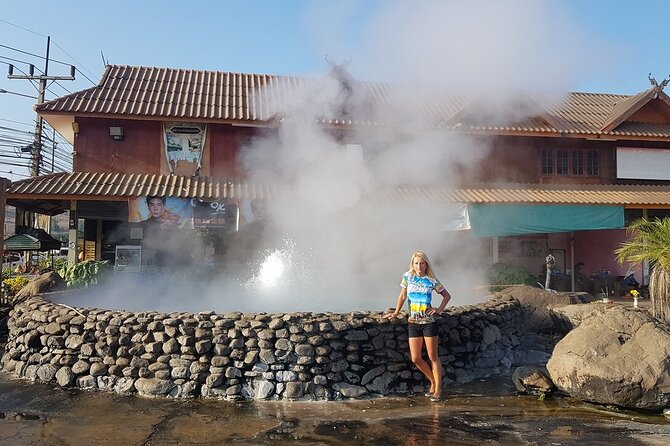
You’ll drive about an hour from Chiang Mai before arriving at Mae Khachan Hot Spring. This is your first real taste of northern Thailand’s geothermal side, with the highlight being a look at Thailand’s highest geyser. The stop is designed as a break-point, and it’s practical: there are toilet and restaurant services on site.
I like starting with something physical and visual like this, because it wakes you up before the more symbolic places later—white walls, river borders, and temple art. It’s also a calmer first stop. The admission is listed as free here, so you’re not mentally tracking ticket math before lunch.
A small note: some versions of this day include egg-cooking at the hot spring area, which makes the experience feel more interactive than a quick photo stop. Even if you don’t do anything involving eggs, just watching the heat and steam in person is different from seeing it in photos.
What to do to make this stop work for you:
- wear shoes you don’t mind getting a little warm or damp
- bring your sense of humor for the egg-cooking moment if your guide offers it
- use the restroom early—later in the day, options get less convenient
Wat Rong Khun (White Temple): glass-like details and murals up close
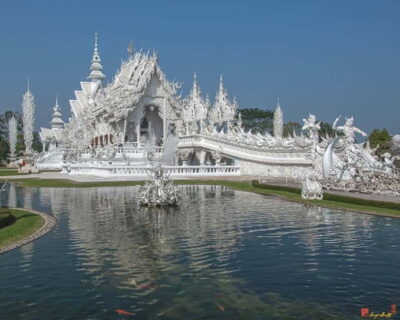
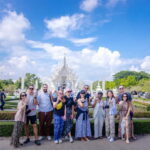
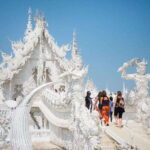
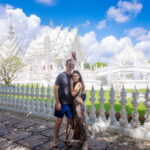
After the hot spring, the tour heads to Wat Rong Khun, the White Temple. This is the place people recognize immediately for the white exterior and the striking decoration style. What matters isn’t just the color—it’s the way the temple surfaces are treated: there’s glass-like sculptural work and murals that combine an eye-catching modern feel with temple storytelling.
You get about 1 hour at the White Temple. That’s enough time to walk the key areas, take photos, and still read some of the mural details if your pace is steady. But you won’t have hours to wander every corner. If you’re the kind of person who likes to stop repeatedly for photos, plan your route at the start so you don’t get stuck behind other people when the best angles are busiest.
Admission is listed as free for this stop, and it’s worth remembering that the tour’s structure keeps you moving while still giving you a real look. If you’re visiting Chiang Rai specifically for architectural style, this is the moment where the trip earns its “don’t miss” status.
One more practical tip: the temple is a walking-and-standing experience. Comfortable shoes aren’t a suggestion here—they make the difference between enjoying the art and rushing through it.
Golden Triangle and Chiang Saen: the river border view that hits different
Then it’s off to the Golden Triangle area, in the direction of Chiang Saen. This part is where the northern Thailand “map lessons” become real-life views. You’ll cross the idea of borders from a textbook into the physical geography: the frontier area where Thailand, Myanmar, and Laos meet across the Mekong river system (described here as Mae Khong).
Lunch is built in during this stretch, which is a smart move. You’re not trying to find food after long driving, and you get a predictable time buffer before the next viewpoints.
What you’ll likely notice here:
- wide river angles that make the confluence make sense
- the feeling that “the map” is actually a living, moving boundary
- a calmer pace compared with temple-heavy parts of the day
The tour gives about 1 hour for the Golden Triangle region and about 1 hour for Chiang Saen. That’s enough time to understand why this area is so famous, without turning it into a lecture. If you enjoy photo moments, this is one of the best parts of the day—especially when you get to the Sop Ruak viewpoint later.
Sop Ruak viewpoint + Wat Prathat Phu Khao + hill tribe village time
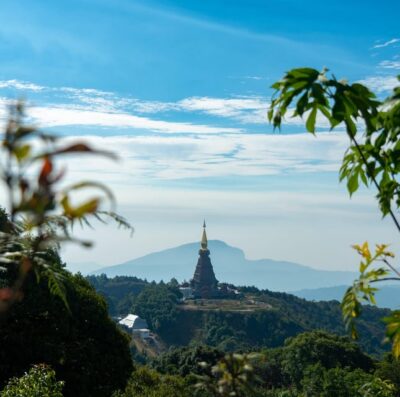
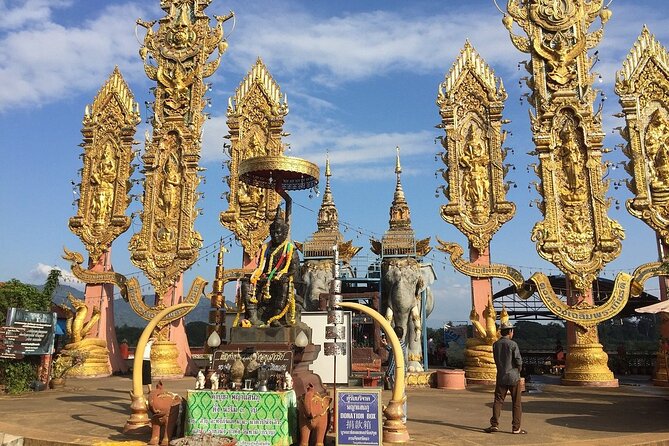
Sop Ruak is a key highlight. This is where you get magnificent views over the Mae Khong River and the physical “triangle” where Burma (Myanmar), Laos, and Thailand come together. It’s also where the tour adds a bit more variety, so you don’t feel like you’re repeating the same river view.
You’ll also have time for Wat Prathat Phu Khao sightseeing. The day doesn’t treat this as just a quick stop; it’s part of the viewpoint rhythm so you can switch from river angles to temple/cultural angles.
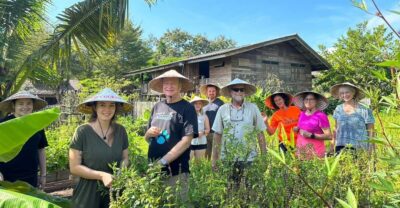
Then there’s the hill tribes village portion. In a day like this, I like having at least some human context, not only borders and monuments. Even with limited time, it helps you remember that the region isn’t just a photo backdrop.
Boat views are optional here. The tour lists an extra fee of 300 THB for a boat ride (about 20 minutes) to see the river splendor around the confluence. If you want the perspective from the waterline, this is the add-on that makes the “triangle” feel more three-dimensional. If you’d rather keep the day moving and avoid extra logistics, you can skip it and still enjoy the main viewpoint.
Simple advice: if you’re going to pay for anything extra, pay for the one that changes your angle—not the one that just gives you another photo from the same platform.



Optional Laos border add-on: passport matters and time is tight
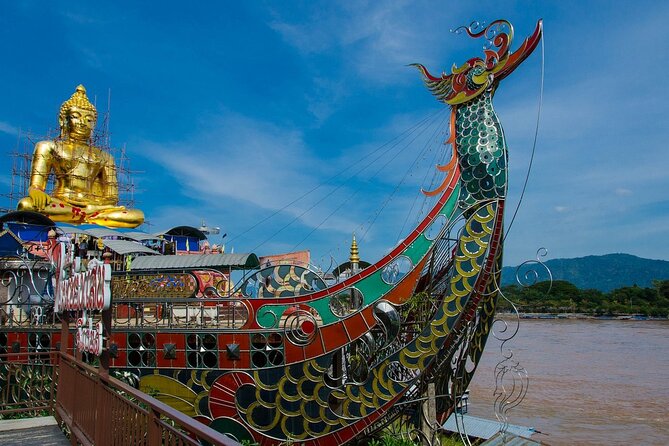
There’s an optional Loas border visit described as about 35–40 minutes. This add-on has an extra fee (listed as 300 THB) and it’s linked to border/tour crossing logistics. The key point: you’ll need a current valid passport on the day of travel, especially for anything involving a border or Laos-related fees.
The tour data also mentions extra costs related to a boat ride and taxes to Laos. In practice, that means you should expect the optional portion to include both a fee and some time overhead. Your guide can help you understand what’s required, but you’ll feel it in the schedule.
If you’re short on time already, think twice about stacking optional moments back-to-back. This tour already runs until 20:00–21:00, and the return drive is long. The Laos add-on is best for you if:
- you’re comfortable with border procedures
- you don’t mind paying extra for a limited window
- you want at least a taste of Laos without planning a separate overnight trip
If you’d rather keep things simple, skip the optional border time and put your energy into the core sights.
Price and value: what $101.07 really buys you
At $101.07 per person, this tour is priced like a solid “big day” package rather than a low-cost scramble. The value comes from what’s included: English-speaking driver guide, hotel pickup and drop-off within the city center area, air-conditioned minivan, lunch, and entrance fees. Several listed admissions are free at major stops, which keeps the day from turning into a constant add-fee surprise.
Where you may spend extra is mainly in the optional pieces:
- boat trip fees and tax to Laos (listed around 300 THB)
- Laos border add-on (also listed around 300 THB)
- optional choices depend on how your day is set up
When I’m judging value, I look at the ratio of “time spent looking” versus “time spent figuring.” Here, the tour handles the between-site driving, drops you in the right places, and returns you to Chiang Mai safely. For a region where you could spend a lot of energy arranging connections, that convenience is a real part of the price.
Also, small-group size helps. Up to 10 travelers usually means you get more guide attention and fewer delays caused by everyone doing their own thing. And that’s echoed by the feel of the day: a friendly guide, a nice group vibe, and enough variety to make the ride feel worth it.
Practical tips to keep this day smooth
This is one of those tours where your prep makes the experience better more than you might expect.
- Wear comfortable walking shoes. Temples and viewpoints involve standing and moving more than you think.
- Bring a passport even if you’re unsure about the optional Laos part. The tour explicitly notes you need it on travel day.
- Bring some cash for optional fees like the boat ride and the Laos border add-on.
- Use the morning for photos sparingly. The later river viewpoints can be crowd-friendly, and if you spend too long early, you may lose flexibility.
- Expect a full-day schedule. You’ll start at 7:00am and return around 20:00–21:00.
One more small point that I appreciate: there’s a stated door-to-door pickup radius (city center area within about 3 km, with specific areas listed like Night Bazaar, Tapae Gate, and old city), plus an option to join at a convenient meeting point near Chiang Mai Night Bazaar. That matters because it reduces the “where do I meet?” stress.
Should you book this Chiang Rai hot spring, White Temple, and Golden Triangle tour?
Book it if you want a single-day best-of that strings together the major Chiang Rai icons in a way that’s easy to manage from Chiang Mai. It’s especially a good fit if you like:
- temples and design details (Wat Rong Khun is the anchor here)
- river geography and border “map made real” moments (Golden Triangle + Sop Ruak)
- a guided day where you don’t have to plan the route yourself
Skip or rethink it if you want a slow, deep, linger-all-day style. With roughly 1 hour per major stop and a long return drive, this tour is made for people who like getting a lot done and moving on to the next view.
If you do book, I’d suggest going into it with one simple plan: prioritize the core sights (hot spring, White Temple, Golden Triangle, Sop Ruak). Add the Laos boat/border only if you’re truly excited about that extra perspective and you’re comfortable with passport + fees.
FAQ
What time does the tour start and end?
The tour starts around 7:00am with pickup and ends back in Chiang Mai around 20:00–21:00.
How long is the Chiang Rai tour?
It runs a full day, listed as about 14 hours approximately (and described as a 12-hour day from Chiang Mai in the overview).
What’s included in the price?
Included are an English-speaking driver guide, hotel pickup and drop-off, air-conditioned transport, and lunch. Entrance fees are also included, and several listed admissions are free.
What extra costs should I expect?
Optional extras include the boat trip and fees/tax related to Laos (listed as 300 THB), and an optional Laos border visit (also listed as 300 THB).
Do I need a passport?
Yes, a current valid passport is required on the day of travel.
Is the boat trip required?
No. The boat ride around Sop Ruak is described as optional and costs extra (300 THB).
Can I cancel for free?
Yes. You can cancel up to 24 hours in advance for a full refund. If you cancel less than 24 hours before the start time, you won’t get a refund.