REVIEW · CHIANG MAI
Chiang Mai : Super Fun Thai Cooking Class
Book on GetYourGuide →Operated by Joy Your Trip · Bookable on GetYourGuide
Seven dishes, one outdoor kitchen, big Thailand skills. This Chiang Mai class is fun because it starts with real ingredient picking at a local market and then turns into a hands-on cookout in an old-town setting with market-fresh produce and small-group attention. One possible drawback: if you like to linger over every step, the pace can feel fast, since the session moves efficiently from market to stove.
I also like that the instruction is friendly and practical, not just lecture-and-watch. In past classes, teachers like Richie, Bryan, and Cindy have guided students with clear explanations and a good sense of humor, and they’ll tailor meals for vegetarian/vegan needs or ingredient allergies. You’ll leave with e-book recipes and take-away support so you can repeat the flavors at home, not just remember them.
In This Review
- Key Points You’ll Care About
- Chiang Mai Thai Cooking, Done in a Real-Time Rhythm
- Meeting the Day Starts: Pickup and the Old City Advantage
- First Step: The Local Market Visit (Where Flavor Decisions Begin)
- Cooking Outdoors in an Open-Air Kitchen
- The Heart of the Class: Learning to Cook 7 Traditional Dishes
- Vegetarian and Vegan Adjustments That Don’t Feel Like a Compromise
- Small Class Size and Teachers Who Keep It Light
- E-Book Recipes and Take-Away Service: Turning Class Skills Into Home Cooking
- What You’ll Actually Do During the 4–5 Hours
- Price and Value: Why $36 Can Make Sense
- Who This Class Is Best For (and Who Should Skip It)
- Final Thoughts: Should You Book This Thai Cooking Class?
- FAQ
- How many dishes will I cook in the class?
- Are vegetarian or vegan options available?
- Do we visit a local market during the experience?
- How long is the cooking class?
- Is hotel pickup included?
- What do I get to take home after the class?
- Is free cancellation available, and can I reserve without paying now?
- Is the class suitable for young children or wheelchair users?
Key Points You’ll Care About
- Market visit before cooking: choose fresh ingredients and learn what matters before the stove heats up
- Open-air old town kitchen: cook outdoors, in a scenic, traditional setting
- 7 dishes in a 4–5 hour format: hands-on work with an individual station
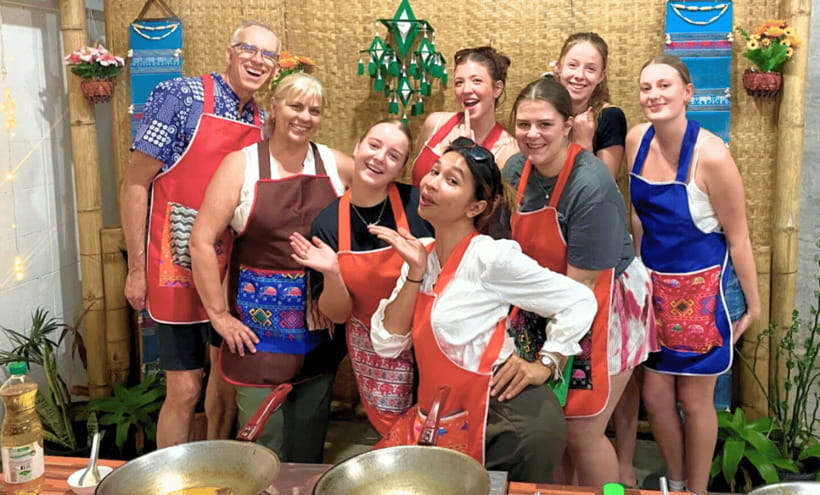
- Small class, personal coaching: you get help while you cook, not after
- Vegan and vegetarian options available: you can cook something that fits your needs
- Take-home e-book recipes: you can recreate the dishes later without guessing
Chiang Mai Thai Cooking, Done in a Real-Time Rhythm
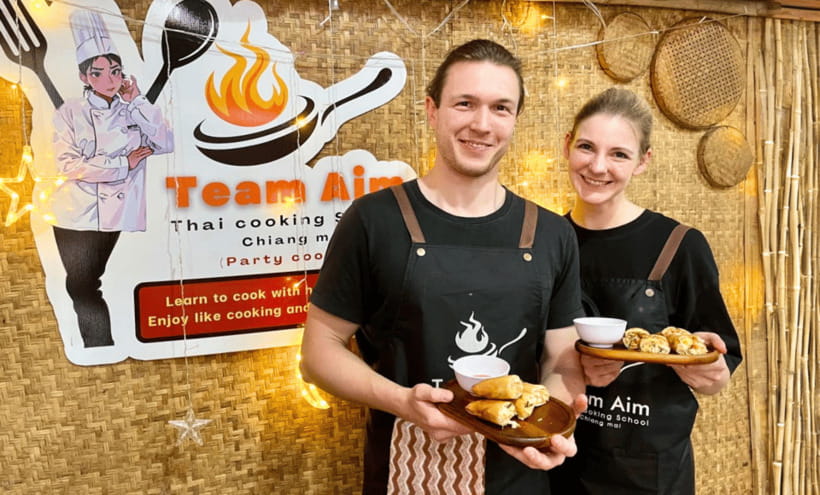
If you want Thai food skills that actually stick, this class is built around a simple idea: learn ingredients first, then cook with guidance while the flavors are fresh in your head. The whole experience runs about 4 to 5 hours, so it’s not an all-day food festival. It’s a focused session that gets you from market picking to eating what you made.
The price is $36 per person, which matters when you compare it to the cost of doing Thai cooking at home. Here you get the ingredients, an instructor, and the recipe materials in one package. You’re not paying extra for the basics. You’re paying for time with a teacher, plus the structure that makes 7 dishes possible in one go.
You can also read our reviews of more cooking classes in Chiang Mai



Meeting the Day Starts: Pickup and the Old City Advantage
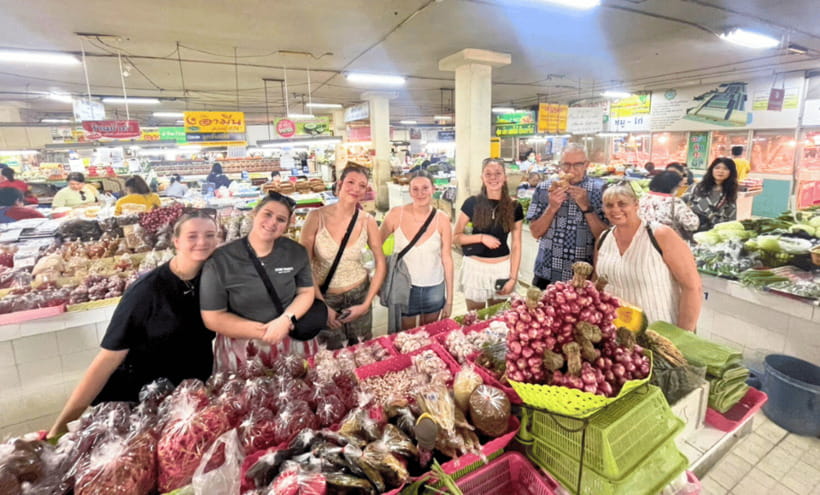
If your hotel is within 5 km of Chiang Mai Old City, round-trip transfer is included. That’s a big quality-of-life detail, especially because a cooking class is the kind of activity where running late can throw off everything. If you’re farther out, there’s a surcharge, so check your location early.
What I like about the old-town area is the atmosphere. You’re in the part of Chiang Mai that’s easiest to walk through and easy to orient around. Then the class location is an open-air kitchen, so you get cooking without feeling sealed indoors.
First Step: The Local Market Visit (Where Flavor Decisions Begin)
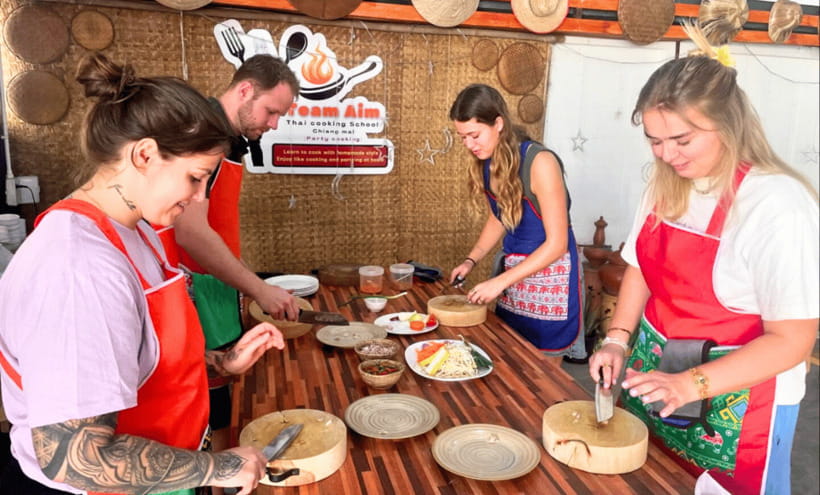
Before you touch a knife, you’ll visit a local market with your English-Thai instructor. This isn’t just a quick photo stop. The point is to help you see ingredients the way Thai cooks do, by understanding what’s fresh and how it’s used.
You’ll pick ingredients you’ll later cook with, and that makes the whole class easier to follow. When you’re choosing produce, sauces, and aromatics, you start recognizing what each ingredient contributes. That’s the difference between copying recipes blindly and cooking with confidence.
Also, markets are where you learn which ingredients have strong flavors and which ones soften a dish. You’ll get context for why certain things show up across different Thai dishes, even when the flavors feel different.
Cooking Outdoors in an Open-Air Kitchen
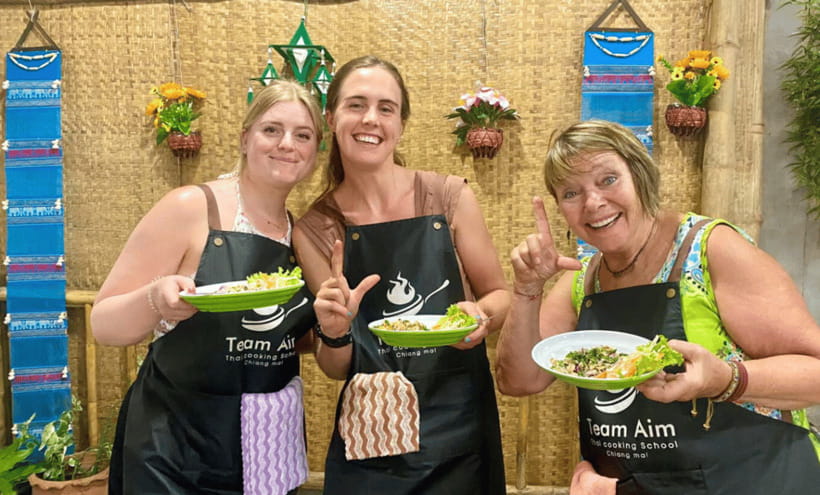
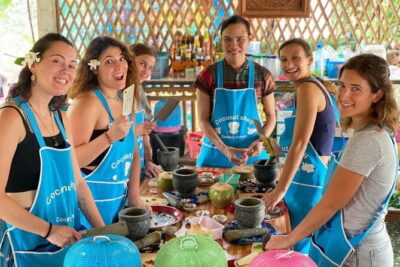
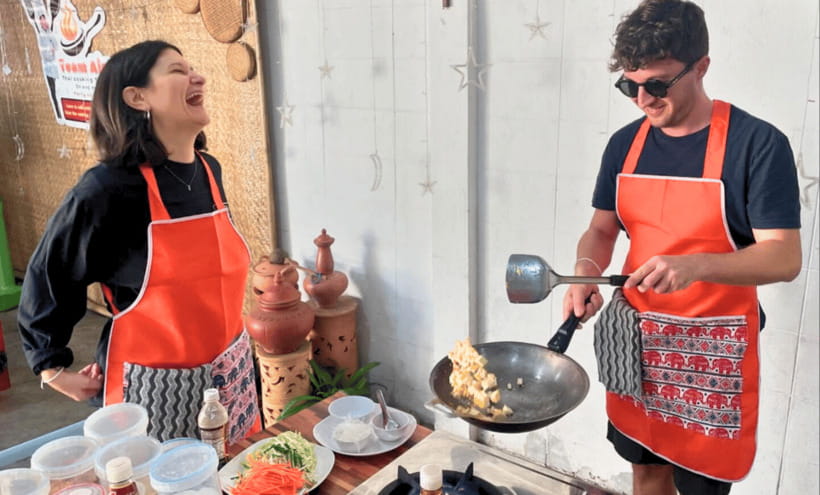
Once you finish the market visit, you head to the cooking space, described as an old-town setting with an open-air kitchen. Cooking outdoors changes the feel instantly. You’re not stuck in a windowless room, and the whole class feels closer to how food culture actually works in Thailand.
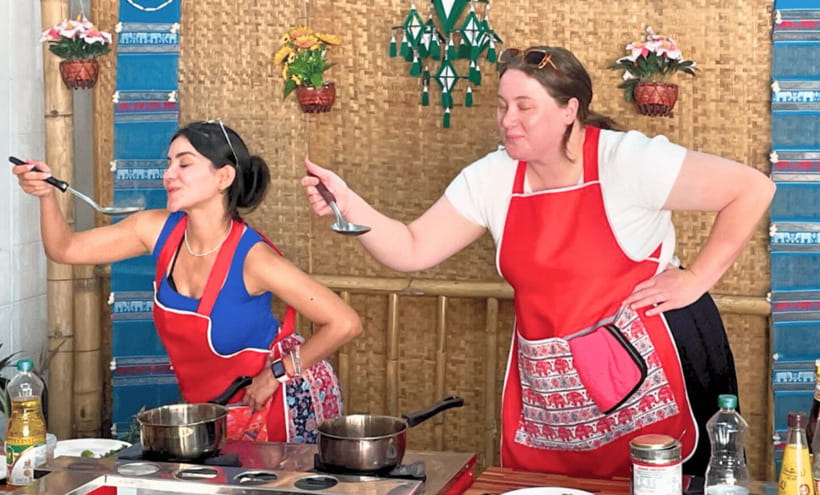
You’ll cook in a private kitchen setup with an individual cooking station. That detail matters. In a lot of cooking classes, one or two people do the work while everyone else watches. Here, you’re positioned to actively cook, so you build muscle memory as you learn.
And you’ll always have water on hand, so you can focus on the work instead of constantly managing basics.
The Heart of the Class: Learning to Cook 7 Traditional Dishes
The headline promise is 7 traditional dishes, prepared using fresh ingredients you selected at the market. In a 4–5 hour window, that’s a lot. The benefit is you get variety and you learn a wider range of Thai flavor techniques than you would in a slower, single-dish class.
Here’s how I’d think about it as you cook:
- You’ll likely move through multiple flavor profiles, so you learn how Thai cooking balances salty, sour, sweet, and heat.
- You’ll practice key prep habits such as chopping and ingredient handling, then apply them to different dishes.
- Since you’re cooking more than one item, you learn how timing works when multiple dishes need attention.
If you’re the kind of person who hates being rushed, this is the area to be aware of. One feedback point from past participants was that the activity felt fast. That doesn’t mean it’s chaotic, but it does mean you should go in ready to work at a steady pace and ask questions if you need clarification.
You can also read our reviews of more tours and experiences in Chiang Mai



Vegetarian and Vegan Adjustments That Don’t Feel Like a Compromise
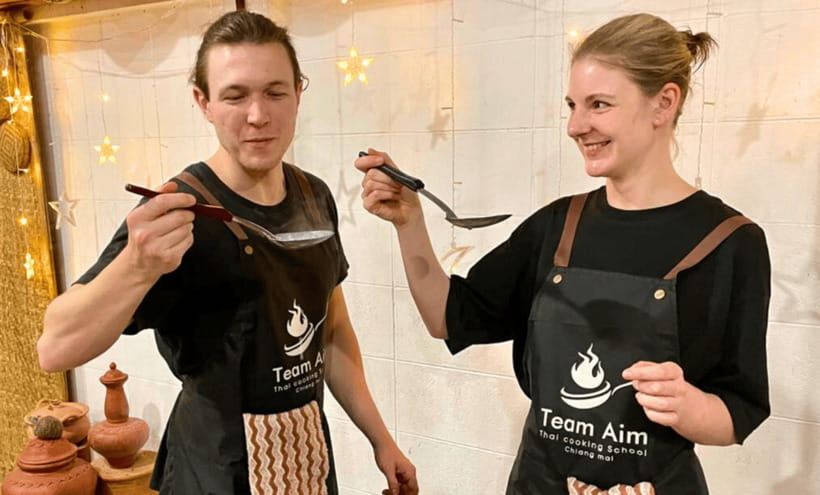
One of the most useful parts of this class is the built-in flexibility. If you’re vegetarian/vegan or have allergies, the experience can be tailored to match your food preference.
In practical terms, that means you’re not forced into a sad “side dish” version of Thai food. Instead, you’ll adjust what you cook so it still feels like you’re making Thai dishes, not just eating around the main meal.
From a value standpoint, this matters because it saves you the hassle of searching menus or booking special meals separately. If you’re traveling with dietary needs, having one organized plan is a big win.
Small Class Size and Teachers Who Keep It Light
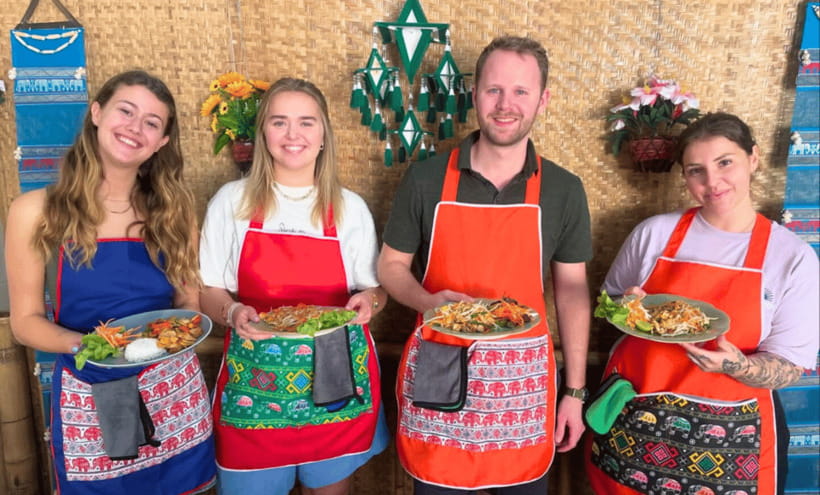
This class emphasizes small class size, and that shows up in how you get help. When the group is limited, your questions don’t disappear into the crowd. You can get coaching while you’re cooking, not only at the end.
Past classes were led by teachers including Richie, Bryan, and Cindy. The consistent theme is clear, upbeat instruction. You’ll be guided in English with Thai support, and teachers use humor to keep things comfortable. That matters more than you’d expect. Cooking gets easier when you’re relaxed, and you’re more likely to remember steps when the lesson doesn’t feel stiff.
E-Book Recipes and Take-Away Service: Turning Class Skills Into Home Cooking
The class doesn’t end when you wipe your cutting board. You’ll get e-book recipes so you can recreate what you learned later. You’ll also have a take-away service, which helps with the practical side of dining after class.
Here’s why I value the e-book format: it’s easy to save, search, and follow at home. Traditional Thai cooking includes ingredients that can be hard to find in every grocery store. Having a clear recipe reference makes it much easier to rebuild the dishes when you’re shopping again.
And take-away support is good for your travel day. If you’re heading back to explore Chiang Mai afterward, you’re not stuck hunting for an immediate meal.
What You’ll Actually Do During the 4–5 Hours
You can picture the structure as a tight sequence:
- Arrive with pickup if you’re within range of Chiang Mai Old City
- Head out for a local market visit to choose ingredients
- Return to cook in an open-air old-town setting
- Work at your individual station to make 7 dishes
- Follow guidance from an English-Thai instructor
- Leave with e-recipes and take-away support
A class like this works best when you arrive ready to cook. Bring a mindset of active participation. You’ll get more from it if you ask questions while you’re working, especially if you want to understand why an ingredient is used or how spice levels can be adjusted.
Price and Value: Why $36 Can Make Sense
Let’s talk value, because cooking classes can vary wildly in quality and cost.
At $36 per person, you’re paying for:
- Ingredients for cooking
- Local market visit experience
- Instruction from an English-Thai instructor
- Individual cooking station setup
- Drinking water
- E-book recipes
- Take-away service
- Round-trip transfer within 5 km of Chiang Mai Old City
In other words, you’re not paying only for the teacher’s time. You’re also paying for all the stuff that makes cooking possible. If you tried to recreate this on your own immediately after the class, you’d still need the right ingredients and a plan, and you’d likely spend time figuring out what to buy and how much.
So I see this as good value if you:
- want multiple dishes, not just one
- care about learning the flow of Thai flavor
- want recipes you can repeat at home
If you only want a light snack or you hate structured activities, then a cooking class might feel like more commitment than you want.
Who This Class Is Best For (and Who Should Skip It)
I think this is ideal for food lovers who want hands-on skills, not just sightseeing with tasting samples. It’s also a strong option if you’re traveling with dietary needs, because vegetarian/vegan options and allergy tailoring are explicitly part of the experience.
You’ll also probably enjoy it if:
- you want to shop for ingredients in a market setting
- you like learning from someone who explains steps clearly
- you prefer small groups over crowds
Skip it if:
- you’re traveling with children under 5 (not suitable)
- you use a wheelchair (not suitable)
- you dislike fast pacing and prefer lessons that move slowly
And one more practical note: non-cooking guests or children aged 4–6 can sometimes join as an add-on option to enjoy the meal prepared during the class, but it’s not part of the standard setup.
Final Thoughts: Should You Book This Thai Cooking Class?
I recommend booking if you want a serious, practical taste of Thai cooking in a short time. The big strengths are the market-to-kitchen flow, the open-air old-town cooking vibe, and the fact that you cook at an individual station with coaching. Add in the e-book recipes and take-away support, and you get more than one meal out of the day.
I’d hesitate only if you know you get frustrated by speed. One past participant felt the class was rushed. If that’s you, go anyway but plan to ask questions early, and be ready to follow the group pace.
FAQ
How many dishes will I cook in the class?
You will prepare 7 traditional Thai dishes during the session.
Are vegetarian or vegan options available?
Yes. The class offers vegan and vegetarian options, and it can be tailored for allergies or dietary preferences.
Do we visit a local market during the experience?
Yes. A local market visit is included before you start cooking.
How long is the cooking class?
The duration is about 4 to 5 hours.
Is hotel pickup included?
Pickup and round-trip transfer are included for accommodations within 5 km of Chiang Mai Old City. If you are farther away, a surcharge applies.
What do I get to take home after the class?
You receive e-book recipes and there is a take-away service as well.
Is free cancellation available, and can I reserve without paying now?
The experience includes free cancellation up to 24 hours in advance for a full refund, and it offers reserve now & pay later.
Is the class suitable for young children or wheelchair users?
It is not suitable for children under 5 and not suitable for wheelchair users.