REVIEW · CHIANG MAI
Chiang Mai Street Food Tour by Tuk Tuk with Pick Up
Book on Viator →Operated by Thailand Journeys · Bookable on Viator
Street food plus temples, timed like a pro.
This Chiang Mai tour mixes Old City landmarks (Chiang Mai Gate, Wat Chedi Luang, Wat Phra Singh, Elephant Gate) with real local street-food stops, then finishes with a rooftop view over the city. What I like most is the private tuk tuk setup with pickup and drop-off, so you are not fighting traffic just to see highlights. I also love that the tastings are guided, which helps you avoid the usual tourist trap order and aim for dishes that actually make sense in Chiang Mai. One thing to consider: the food portion is focused and time-limited, so you will sample a few items rather than eat your way through an endless buffet.
This is a 4-hour evening plan that keeps moving but doesn’t feel chaotic. You’ll start around 4:30 pm, hop between key sights inside the UNESCO-area zone, and then wind down with a drink break at a rooftop spot. If you get a great guide, the whole experience gets better fast. In the guide comments I saw, names like Minoi, Aimy, Kung, and Billy came up with the same themes: clear explanations, fun energy, and smart choices about what to taste. The tour also depends on good weather, since it’s designed to be done outdoors.
In This Review
- Key Highlights You’ll Feel Immediately
- Chiang Mai Old City in a Private Tuk Tuk: The 4-Hour Timing
- Stop by Stop: How the Temples and Gates Set Up the Street Food
- Chiang Mai Gate (Pratu Tai Wiang): Where the Evening Market Story Starts
- Wat Chedi Luang Varavihara: The Temple That Still Looks Big
- Wat Phra Singh: A Major Old City Temple in UNESCO Orbit
- Chang Phuak Gate (Elephant Gate): Where the Street Food Energy Turns On
- Dinner Tastes and Dessert: Exactly How Much You’ll Eat
- Xanadu Rooftop Night View: The Part That Makes It Feel Like Chiang Mai
- Price and Value: Is $60 Fair for This Mix?
- Guides Can Make or Break It: The Names People Keep Mentioning
- Who Should Book This Tour, and Who Might Not
- Should You Book This Chiang Mai Street Food Tour?
Key Highlights You’ll Feel Immediately
- Private, open-air tuk tuk transport that keeps the evening easy, even when cars and motorbikes get intense.
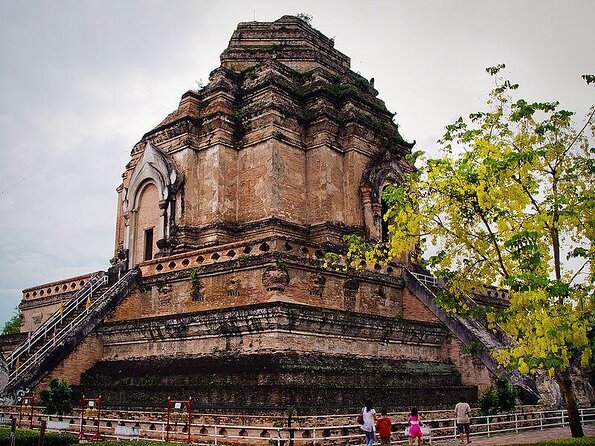
- Temples with real context: Wat Chedi Luang’s damaged structure story and Wat Phra Singh’s status as a major Old City highlight.
- Elephant Gate area = street food focus, not just a photo stop.
- Market tastings + dessert (not a full-on food festival, but enough to get your bearings).
- Rooftop night view at Xanadu Pub and restaurant with a panoramic look toward Doi Suthep.
Chiang Mai Old City in a Private Tuk Tuk: The 4-Hour Timing
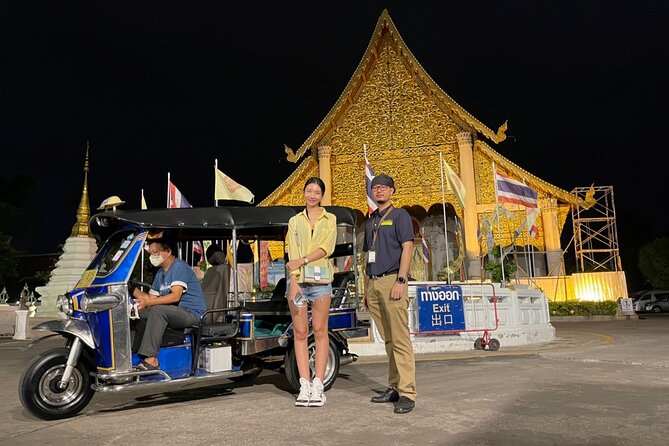
This tour is built for people who want the best of Chiang Mai without turning the evening into a logistical puzzle. You get pickup and drop-off from your accommodation, which matters in Chiang Mai because getting across town at the wrong time can eat your energy. You also get a private tuk tuk, so the route stays smooth and your guide can adjust based on what’s happening in the streets.
Start time is 4:30 pm, and the total duration is about four hours. That means you get a proper evening arc: daylight-era temple visits, then street-food time, then night views. You won’t be stuck out super late, but you also won’t feel like you missed the best parts because you started too early. There’s also a mobile ticket involved, plus bottled water during the tour.
One practical note: because this is open-air transportation, it helps to dress for comfort—light layers, shoes you can walk in, and something to handle sudden rain. The tour requires good weather, so if the sky doesn’t cooperate, you may be offered a different date or a refund.
You can also read our reviews of more food & drink experiences in Chiang Mai

Stop by Stop: How the Temples and Gates Set Up the Street Food
The tour is not just a checklist. Each stop puts you in a different “mood” of the Old City—walls and gates first, then major temple scale, then the gate-area streets where food shows up.
You move in a tight loop around the old walled zone, hitting places that are famous during the day and also meaningful in the evening. Your guide’s job here is key: they point out what you should notice quickly (architecture, where locals eat, what to try), then they keep you from losing time wandering.
Chiang Mai Gate (Pratu Tai Wiang): Where the Evening Market Story Starts
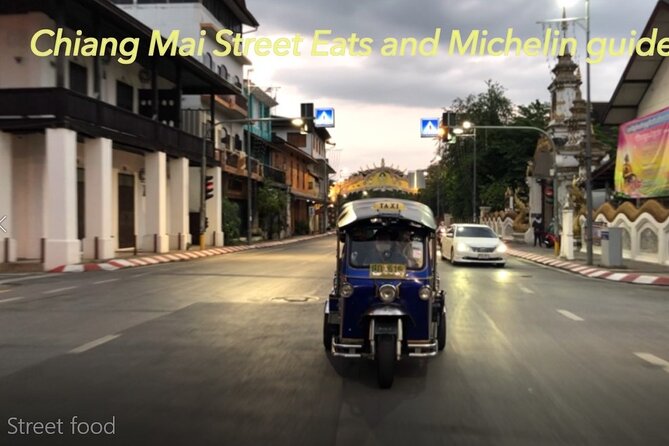
You begin at Chiang Mai Gate, also called Pratu Tai Wiang. This gate sits on the southeast wall and is connected to the area leading toward Wiang Kum Kam. It’s the kind of starting point that gives you context fast: you see the city’s historic boundary, then you understand why the streets inside the walls became such natural food and temple zones.
There’s an end-of-day market feel here, which can be a great way to ease into the tour. And the area is also described as a place where people may go to pay homage to monks, adding a spiritual rhythm to what could otherwise feel like a simple arrival spot.
Time at this point is not listed as a fixed “minute box,” but the goal is clearly to set up your evening before you zoom into temple mode. If you show up hungry, don’t panic—this is more of a warm-up stop than the final eating payoff.
Wat Chedi Luang Varavihara: The Temple That Still Looks Big
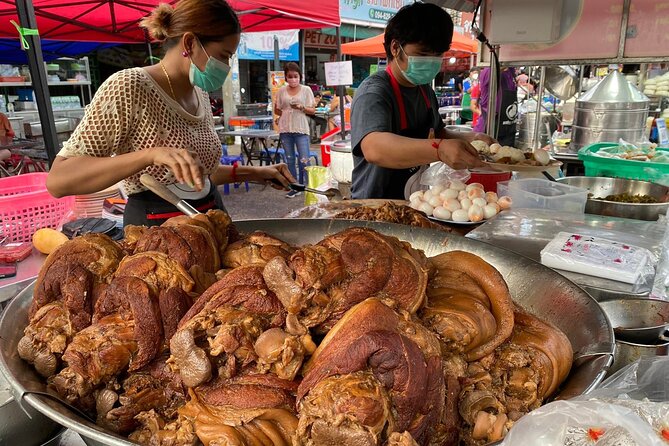
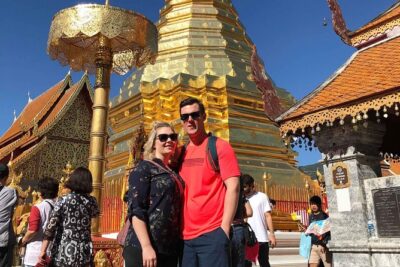
Next comes Wat Chedi Luang Varavihara. This is one of those temples where you can feel the scale even without spending hours inside. The stop includes an admission ticket, and the tour time there is about 20 minutes.
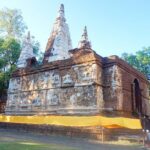
Here’s what makes this place more than just pretty stones: the temple’s main structure was famously damaged. The top of the chedi was destroyed by either a 16th-century earthquake or by cannon fire during the recapture of Chiang Mai from the Burmese. The result is that the pagoda’s height was reduced to about half of its original height, but it still looks impressive and solid from the ground.
In a short visit like this, the trick is to let your guide point out what the damage means. Instead of feeling like a “broken” monument, it becomes a history lesson you can actually see with your eyes—an old city scar that didn’t disappear when the centuries moved on.
Wat Phra Singh: A Major Old City Temple in UNESCO Orbit
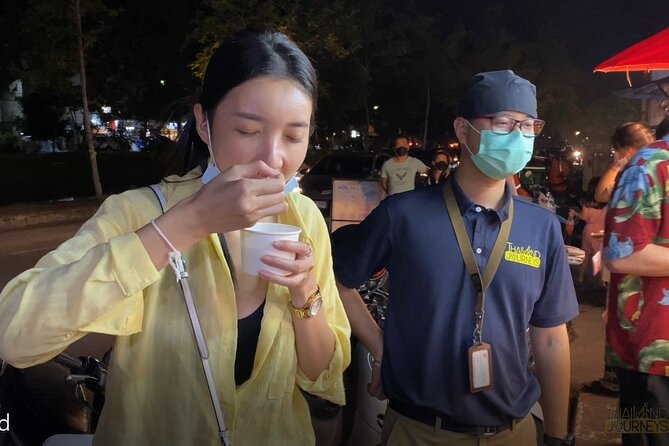
Then you head to Wat Phra Singh, another Old City highlight. This stop is about 15 minutes and also includes an admission ticket.
Wat Phra Singh is described as one of the highlights in the core zone of Chiang Mai’s UNESCO World Heritage project, and it’s also one of the most visited temples in the Old City. That means you’ll likely recognize the vibe quickly: people come here for good reason, and the temple’s prominence shows in how central it feels.
With only 15 minutes, you won’t do a deep study. But that’s exactly why this tour works for short stays. You get the main facts, you see the important spaces, and you move on while your energy is still good.
You can also read our reviews of more tours and experiences in Chiang Mai

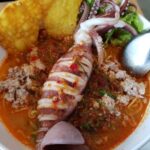

Chang Phuak Gate (Elephant Gate): Where the Street Food Energy Turns On
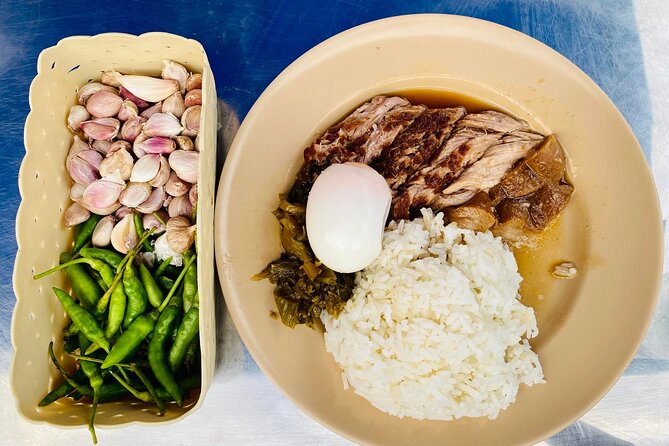
Now we get to the food-focused moment: Chang Phuak Gate, also known as the Elephant Gate. Your time here is about 30 minutes, and this stop is listed as free.
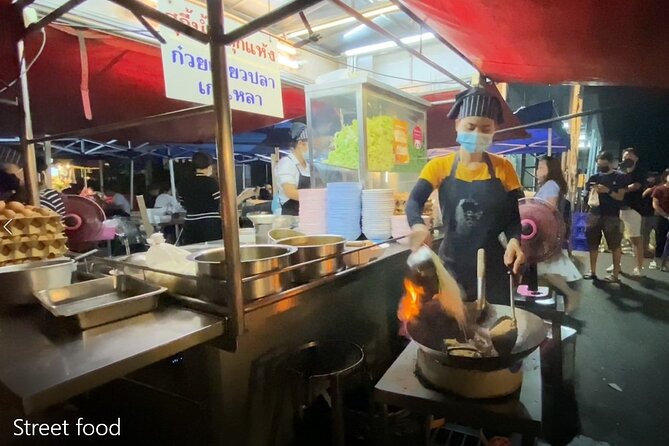
This is the area your guide uses as a street-food anchor. It’s specifically described as one of the best places for street food in Chiang Mai, and it even has a day-to-night rhythm. During the daytime it can feel like an ordinary street with shops (including a lot of backpacker presence), but the real value here is what shows up as the evening develops—locals gravitating toward their go-to stalls and flavors.
If you like street food, this is where you’ll start to feel the tour shift from temples to dining. Your guide should be making choices that match what you’re in the mood for, and—this matters—you should leave with a clearer sense of how Chiang Mai food is built, not just what random dish you happened to try.
Dinner Tastes and Dessert: Exactly How Much You’ll Eat
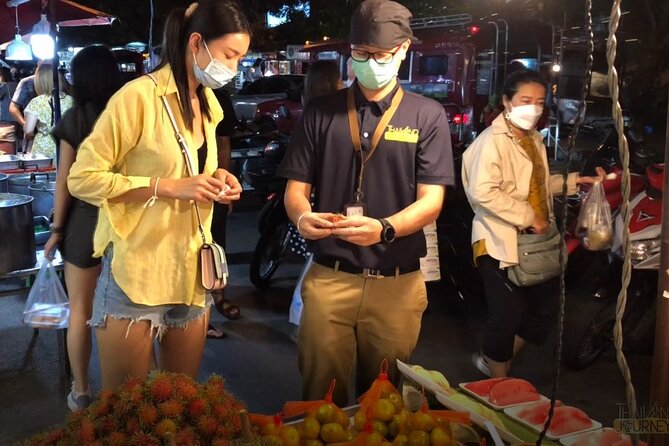
The included meal part is described as dinner testing 2–3 things at the local market and dessert. That’s a very specific approach, and it’s worth understanding before you book.
You’re not being asked to eat your way through ten dishes. Instead, you get a guided tasting set—usually enough variety to try a range of flavors without spending the whole tour chewing. If you want a food tour that lasts longer than four hours, you might find this approach too short. But for many visitors, it’s perfect: you taste a few signature items, learn what to order later on your own, and still have time for the temple highlights and rooftop view.
Alcoholic drinks are not included, so if you want beer or something stronger at the end stop, you’ll be paying separately. The tour does include bottled water, which is a big deal once you are eating and walking under evening heat.
Xanadu Rooftop Night View: The Part That Makes It Feel Like Chiang Mai
You end with a rooftop drink break at Xanadu Pub and restaurant. This stop is about 30 minutes, and it’s listed as free (admission ticket not required).
The big selling point is the panoramic view of Chiang Mai. You can also see Doi Suthep in the distance, and the tone is described as pleasurable and serene—basically a calmer landing after the temples and street-food buzz.
This is also where timing helps. By the time you reach the rooftop, the city has shifted into night mode, and you’re in a better position to appreciate the city’s layout rather than just rushing from place to place.
If you are not into alcohol, you can still treat it as a viewpoint break. If you do want a drink, just remember alcohol is not part of the included package.
Price and Value: Is $60 Fair for This Mix?
At $60 per person for about four hours, this is not the cheapest way to do Chiang Mai in an evening. But it’s also not overpriced when you break down what’s included.
You get:
- a private tuk tuk
- English-speaking guide
- pickup and drop-off from your accommodation
- bottled water
- temple admission tickets for Wat Chedi Luang and Wat Phra Singh
- tastings (2–3 market items) plus dessert
- a rooftop stop with a city night view
A big part of the value is the combination: transportation + guidance + temple tickets + targeted food. If you tried to recreate this on your own, you’d spend time figuring out routes, finding the right stalls, and managing entry fees and timing—none of which is what you came to Thailand to stress about.
For couples and small groups especially, the price tends to make sense because you’re buying convenience and a guided plan, not just “access” to a few sights.
Guides Can Make or Break It: The Names People Keep Mentioning
One reason this tour gets such a strong rating is guide impact. In the feedback, names like Minoi, Aimy, Kung, and Billy show up with very consistent descriptions: informative, friendly, and able to make history feel human rather than textbook.
More practically, good guides make the street-food part feel safe and smart. That shows up in how you’re guided to taste dishes that are Chiang Mai-specific and not just the most obvious international menu items. Aimy is described as making sure people don’t only try the usual things, which is exactly what you want from a street-food tour.
So when you book, treat the guide as part of the product. A great guide turns a route into a story, and a good story turns the whole evening into something you’ll remember.
Who Should Book This Tour, and Who Might Not
This is a strong match if:
- you have limited time in Chiang Mai
- you want Old City temples plus street food in one evening
- you prefer pickup and private transport over figuring out logistics
- you like the idea of learning what to order later, not just eating whatever is in front of you
You might skip it (or book a different food-focused option) if:
- you want a long, heavy food crawl where you eat many dishes without interruption
- you tend to hate being on a tight schedule—because the tour is structured, with short temple time windows
- weather is unpredictable for your travel day, since the tour depends on good weather
Should You Book This Chiang Mai Street Food Tour?
If you want a well-paced “first night in Chiang Mai” experience, I think this is an excellent choice. It hits the key landmarks inside the Old City, then hands you a focused street-food tasting plan, then ends with a rooftop view that helps you slow down and actually enjoy the city you just toured.
Book it if convenience matters to you and you like guided tasting. Consider alternatives if you’re a hardcore street-food eater who wants maximum calories and maximum sampling time. For most visitors, though, this is a smart value: temples, gates, guided tastings, and a proper night-view finish—all in about four hours.