REVIEW · CHIANG MAI
Chiang Mai City Culture Bicycle Ride
Book on GetYourGuide →Operated by Recreational Bangkok Biking · Bookable on GetYourGuide
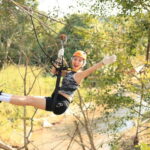
Nothing beats seeing temples by bicycle. This half-day Chiang Mai City Culture ride threads through quiet lanes and temple courtyards, then finishes with markets and a local snack stop. I love the simple joy of covering about 25 km on a bike, and I love how the guide connects the dots at every stop, with humor and temple stories I’d never have found on my own.
One thing to plan for: because you visit temples, you need long pants and you can’t wear shorts or short skirts, so pack accordingly.
In This Review
- Key highlights you’ll care about
- Why bike Chiang Mai’s temples at all?
- Meeting at Recreational Chiang Mai Biking: gear and a sensible pace
- The silversmith stop and the Silver Temple: craft work you can actually see
- Wat Chedi Luang: the 14th-century anchor of Chiang Mai
- Wat Phra Singh and the Phra Buddha Sihing: a statue with a name
- Wat Srisuphan and the temple circuits: why there are so many stops
- Flower market and the Chinatown area: color between temple moments
- Crossing the river to a local market: snack time with context
- The ride back: why the route matters as much as the stops
- Price and value: what $43 buys you in real terms
- Who should book this bike ride (and who might not)
- Should you book Chiang Mai City Culture Bicycle Ride?
- FAQ
- How long is the Chiang Mai City Culture Bicycle Ride?
- How far do you cycle?
- Where does the tour start and end?
- What’s included in the price?
- What temples and sights do you visit?
- Is food included?
- What languages is the guide available in?
- What should I wear since the tour includes temples?
- Is it a small group tour?
- What if I need to cancel or want flexible booking?
Key highlights you’ll care about
- Quiet-road cycling (about 25 km) that keeps the pace city-friendly
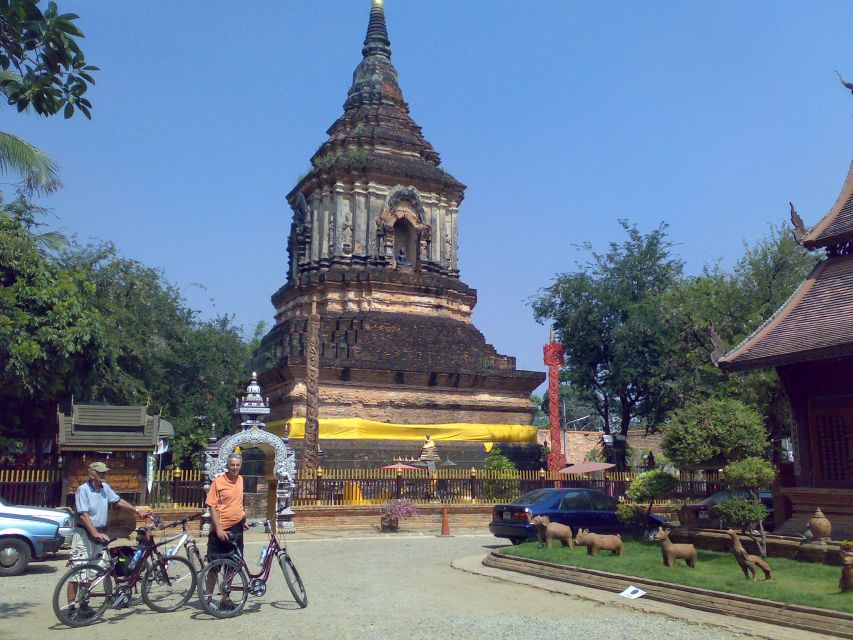
- Wat Chedi Luang with context on the Emerald Buddha’s history
- Silver Temple and a silversmith stop where you watch craft work, no shopping required
- Wat Phra Singh / Phra Buddha Sihing and why that Buddha matters
- Flower market and Chinatown area for northern color and everyday life
- Local market snack tasting plus water or soft drinks to keep you rolling
Why bike Chiang Mai’s temples at all?
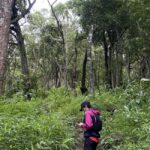
Chiang Mai’s old city can feel like a maze when you walk it. From the saddle, streets that look small on a map become manageable and even fun, because you get to glide through short stretches, turn corners fast, and keep your momentum.
This tour is built around that idea: you pedal through the cultural center on quiet roads and small lanes, passing temples and markets as regular people go about their day. You’re not just collecting photos. You’re moving through the neighborhood the way locals do, only with a guide to keep you oriented.
You can also read our reviews of more city tours in Chiang Mai
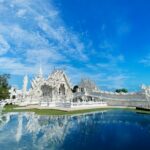
Meeting at Recreational Chiang Mai Biking: gear and a sensible pace
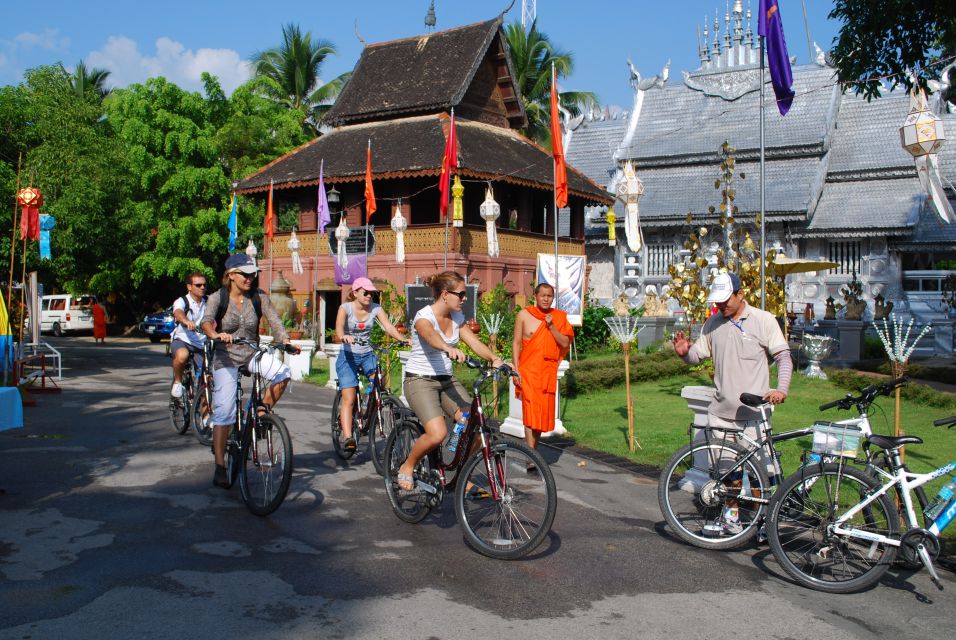
The ride starts and ends at Recreational Chiang Mai Biking. You’ll get a bicycle and helmet, and you’ll meet your English-speaking guide (English, Thai, and Dutch are also available). It’s a small group setup, which matters here because you’ll be weaving through narrow areas and temple approaches where space is tighter than you might expect.
Time-wise, you’re out for about 4.5 hours. That gives the ride enough room for stops at major temples and markets without turning into one of those full-day death marches. The pace is also where some of the best experiences seem to come from: guides like Deo are noted for being cautious on the bikes, which helps a lot if you’re not a daily cyclist.
Practical tip: wear the right clothes from the start. Since temples are part of the program, you’ll want comfortable long pants that you can sit on and move in, not something stiff or hot.
The silversmith stop and the Silver Temple: craft work you can actually see
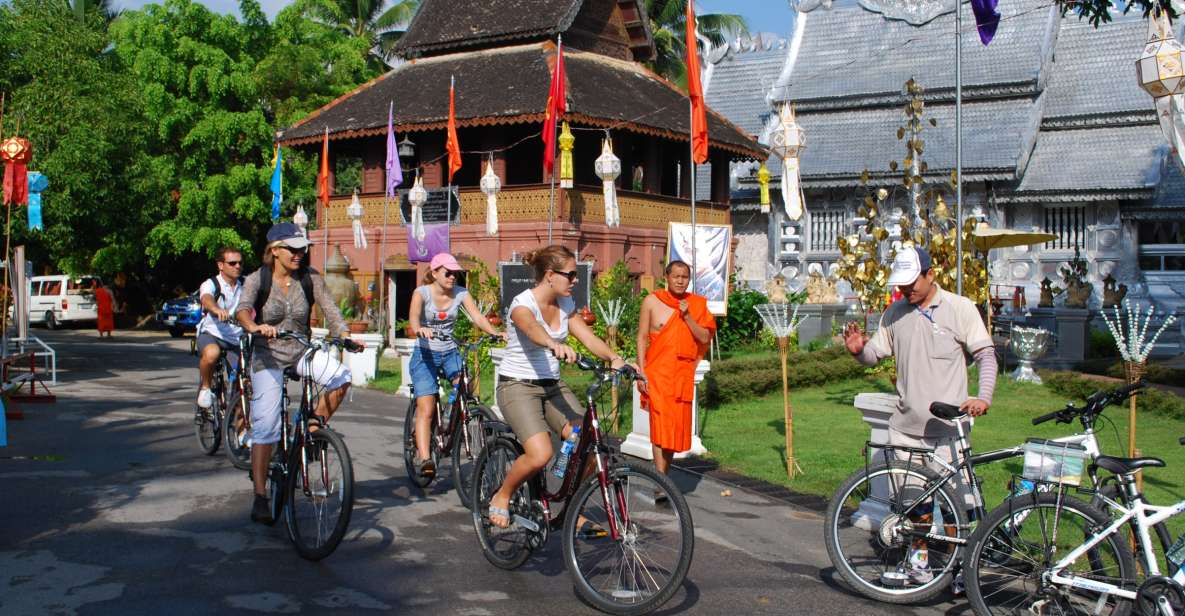
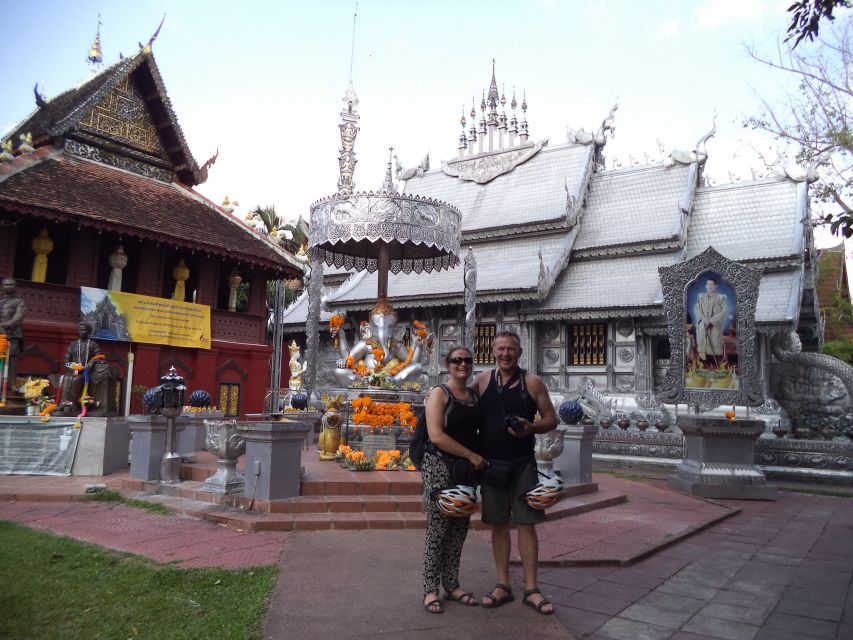
One of the coolest early moments is the stop with a silversmith. You watch jewelry being fabricated in different shapes and sizes, and the emphasis is on observation rather than shopping. The tour notes explicitly say no shopping, and honestly that’s a relief. You get to focus on the process.
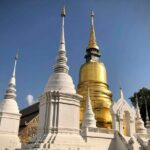
Right after that, you visit the Silver Temple, where monks are keeping busy making decorations from alloy used for the temple’s renovation. This part adds a different angle to temple visiting. Instead of treating the temple like a static landmark, you see it as a living place that’s being maintained and worked on right now.
If you like details, bring that curiosity to this stop. Look at the materials and the repeating patterns. Even without buying anything, the craft work gives you a better read on why these places feel so intentional and hands-on.
Wat Chedi Luang: the 14th-century anchor of Chiang Mai
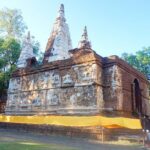
Next comes the old-city center, starting with Wat Chedi Luang, a temple built in the 14th century. It’s one of those stops where a guide’s explanation changes everything, because the building isn’t just impressive. It’s tied into Chiang Mai’s spiritual identity.
A key story here is about the Emerald Buddha. The tour explains that this temple used to house Thailand’s most revered Buddha statue, and that it was taken by a Laotian king to Luang Prabang around 1545. Today, the Emerald Buddha is found in Bangkok at Wat Phra Kaew.
Why this matters for your experience: you’ll understand Wat Chedi Luang less as a single point on a route and more as a piece of a wider regional story. That makes the visit feel larger than the street you’re standing on.
Downside to consider: if you’re the type who hates rules and lines at temples, this might feel a little formal. But the upside is you’re there with context, not just standing around.
Wat Phra Singh and the Phra Buddha Sihing: a statue with a name
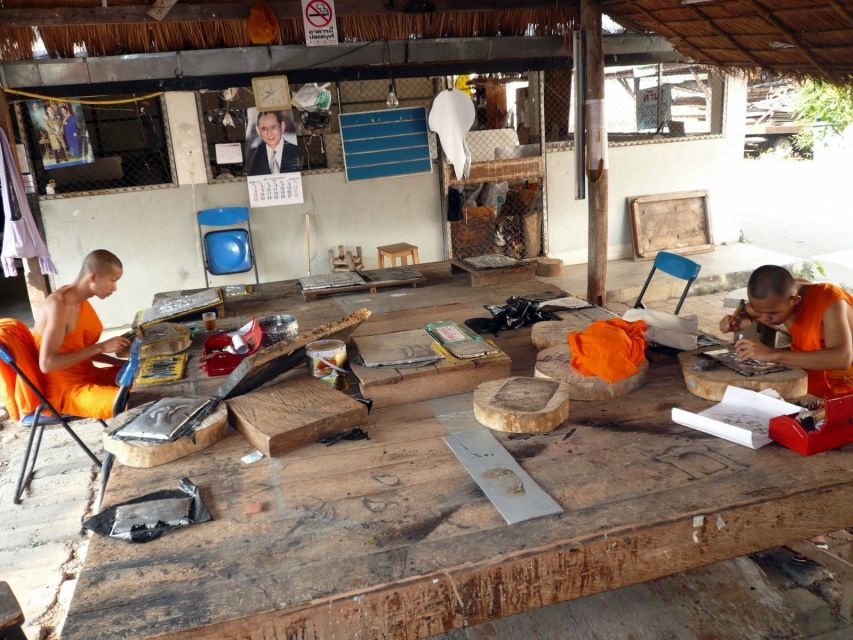
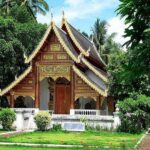
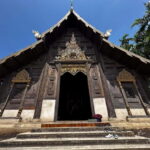
After Wat Chedi Luang, the ride takes you to Wat Phra Singh, described as the most visited and one of the most beautiful temples in Chiang Mai. The tour highlights the temple’s important Buddha statue, the Phra Buddha Sihing, which is also the reason the temple carries its name.
This is a great stop for people who like religious art and symbolism, because you’re not only looking at the architecture. You’re also connecting what you see to the statue’s role in the temple’s identity.
Also, this is where the guide storytelling tends to earn its keep. A review mentioning guide Dong described how the guide made each stop feel meaningful, turning the ride into an easy cultural lesson. Even if you’re not chasing history, you’ll likely appreciate how the guide keeps your attention on what’s worth noticing.



Wat Srisuphan and the temple circuits: why there are so many stops
The highlights list includes Wat Srisuphan along with Wat Prasingh. Even when temples can blur together in the middle of a day, multiple stops work here because the tour spaces them out with cycling segments through real streets and market areas.
Think of it like this: the ride gives you motion and variety, and each temple gives you a new focus. One is craft-related (Silver Temple), one is anchored by a major historical link (Wat Chedi Luang and the Emerald Buddha story), and one emphasizes the named Buddha presence (Wat Phra Singh).
If you’re short on time in Chiang Mai and want the main city-temple hits without doing it all solo, this structure helps. If you’re the type who wants one temple in depth and nothing else, you may find the number of stops a bit fast. But for a half-day format, this is a sensible tradeoff.
Flower market and the Chinatown area: color between temple moments
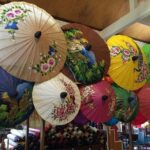
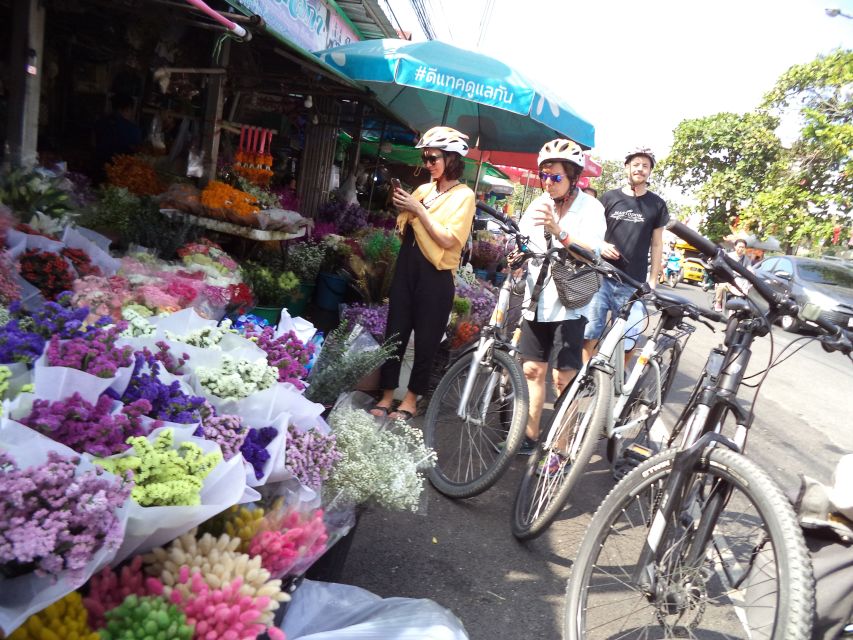
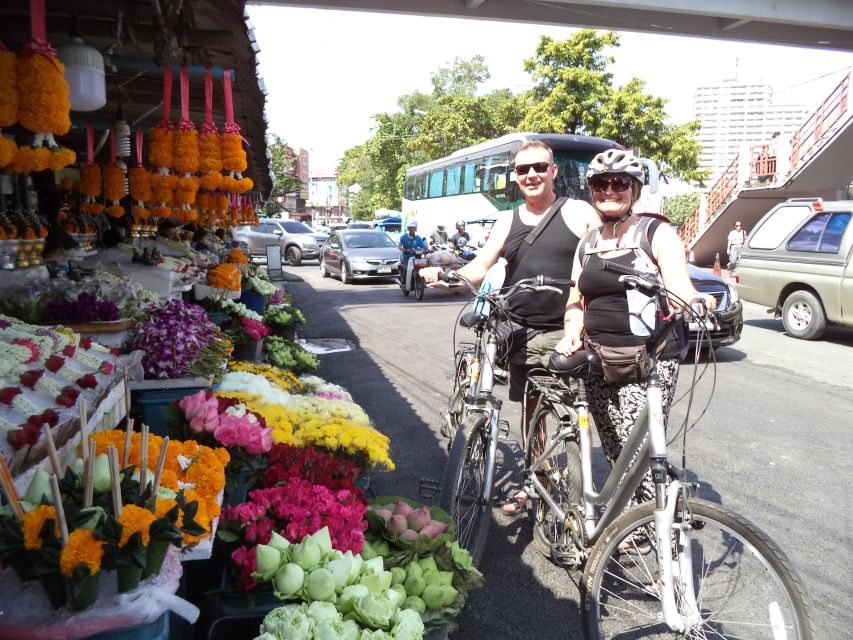
After the major temples, you pedal to the outer circle of the center and pass through a fresh and flower market. The tour calls out the beauty of the flowers of the North, and that’s exactly the kind of stop that works well on a bike tour. You’re not stuck wandering for an hour. You get the sights, you get the vibe, and then you’re back on the road.
This area is described as the China Town of Chiang Mai. Even if you don’t plan to shop, it helps to see the neighborhood’s daily rhythms, because markets change your mental map of a city. You stop thinking in terms of tourist zones and start seeing where commerce and routine happen.
A small caution: markets can be crowded. On a bike tour, that means you might have short moments where you slow down. That’s normal, and it’s usually managed by the guide and group spacing.
Crossing the river to a local market: snack time with context
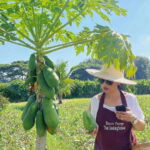
The tour includes a river crossing and a stop at another local market for refreshment. This is where you tend to get more interaction: you’ll have time for explanations, and you can taste exotic fruits and/or local snacks. The exact items aren’t specified, so treat it as a flexible sampler rather than a guaranteed menu.
This stop is genuinely useful, because it turns the day from only sightseeing into a cultural experience you can taste. Fruits and snack bites also work as practical energy for the final stretch of cycling.
If you have food restrictions, this is the time to mention them clearly to your guide. The tour says snacks and drinks are included, so the best outcomes come when you flag your needs early rather than later.
The ride back: why the route matters as much as the stops
After the market snack stop, you take a surprising route back to the meeting point. The value of that final loop is that it doesn’t just retrace the same roads. You get fresh streets, different angles on the city center, and a better sense of how the neighborhoods connect.
By the time you’re back, you’ve done two things at once: you’ve visited key temples, and you’ve also ridden through the connective tissue of Chiang Mai. That’s why bicycle tours often feel more satisfying than a standard walking checklist. You remember the way the city flowed.
Price and value: what $43 buys you in real terms
The listed price is $43 per person for about 4.5 hours and roughly 25 km of cycling. At first glance, it might seem like you’re paying for temples and a bike. But the value is in what’s bundled and what’s guided.
Included items matter:
- Bicycle and helmet, so you don’t need to rent or figure out sizing
- English speaking guide who provides context at each temple stop
- Entrance fees to the sites visited
- Thai meal/snack plus water or soft drinks
- Insurance
So you’re paying for convenience plus interpretation. If you tried to do this on your own, you’d spend time on bike logistics, figuring out which entrances to use, and then piecing together the stories about things like the Emerald Buddha connection and the Phra Buddha Sihing identity.
One more value point: the no-shopping note at the silversmith stop keeps it focused on learning and observation. That tends to improve the day’s quality, because you’re not herded into optional purchases.
Who should book this bike ride (and who might not)
I think this tour fits best if you want:
- a half-day plan that covers major Chiang Mai temples without long travel gaps
- a practical way to see the city center streets, not only the temple gates
- helpful guidance at stops like Wat Chedi Luang and Wat Phra Singh, where a short story can make your visit click
It might be less ideal if:
- you hate riding a bike for about 25 km even with breaks
- you’re sensitive to temple dress rules and you don’t have long pants ready
- you prefer deep, slow temple study rather than a moving route
For solo travelers, the tour is described as welcoming, but it only runs with a minimum of 2 participants, so it may require some flexibility in your schedule.
Should you book Chiang Mai City Culture Bicycle Ride?
If you want the highlights of Chiang Mai’s cultural center with a route that stays practical, I’d book it. The combination of temple context, a silver craft stop, and a market snack tasting makes the half-day feel more like a real city experience than a box-checking tour.
The main reason not to book is simple: if you won’t handle the temple dress code (no shorts, no short skirts, long pants needed), this won’t be comfortable. If you’re good with that, you’ll likely leave with a clearer sense of how Chiang Mai’s old city works, not just what its famous buildings look like.
FAQ
How long is the Chiang Mai City Culture Bicycle Ride?
The tour lasts about 4.5 hours.
How far do you cycle?
The ride covers around 25 km.
Where does the tour start and end?
It starts at Recreational Chiang Mai Biking and ends back at the same meeting point.
What’s included in the price?
Bicycle and helmet, an English speaking guide, entrance fees, a Thai meal/snack, water or soft drinks, and insurance are included.
What temples and sights do you visit?
You visit Wat Chedi Luang, Wat Prasingh, Wat Srisuphan, the Silver Temple area, and Wat Phra Singh, plus Chinatown and local markets.
Is food included?
Yes. You’ll have a delicious Thai meal/snack, and there’s also a refreshment stop at a local market with time to taste exotic fruits and/or local snacks.
What languages is the guide available in?
The live tour guide is available in English, Thai, and Dutch.
What should I wear since the tour includes temples?
Bring long pants. Shorts and short skirts are not allowed.
Is it a small group tour?
Yes, there is a small group available.
What if I need to cancel or want flexible booking?
You can cancel up to 24 hours in advance for a full refund. There’s also a reserve now and pay later option.