REVIEW · CHIANG MAI
Chiang Mai Doi Suthep Temple and Wat Pha Lat Hike
Book on Viator →Operated by WanderSiam Chiang Mai · Bookable on Viator
Chiang Mai temples come with a trail—and a view. You’ll pair Wat Pha Lat, a quiet jungle stop used by monks, with Wat Phra That Doi Suthep, the glittering northern icon on Suthep Mountain. Two things I like right away: the guide brings Buddhist context in plain language, and the route feels local because you ride in a traditional songthaew. The main trade-off is practical: temple fees are extra in cash, and the truck ride has no air-conditioning.
This is a solid 4-hour chunk of Chiang Mai for first-timers who want more than one photo stop. You’re in small groups (max 12), and you’ll see both the “peaceful forest” mood and the “pilgrimage grounds” scale. Just be ready for a bit of climbing and the usual temple dress rules—shoulders and knees covered.
In This Review
- Key things to know before you go
- Two temples, one mountain day: Wat Pha Lat plus Doi Suthep
- The songthaew ride: why the transport is part of the experience
- Monk’s Trail to Wat Pha Lat: the 30 to 45 minute hike you’ll feel
- Wat Pha Lat: the jungle temple stop where peace actually makes sense
- Wat Phra That Doi Suthep: gold pagodas, 300+ steps, and a big-view payoff
- Dress code, shoes, and weather: small things that prevent big annoyances
- Price and value: what your $26.09 covers (and what it doesn’t)
- Who should choose this tour (and who might want a different plan)
- Sunrise option: when to switch the order
- Should you book this Chiang Mai temple hike?
- FAQ
- What’s included in the tour price?
- Are temple entrance fees included?
- How long is the hike to Wat Pha Lat?
- Do I have to climb the steps at Wat Phra That Doi Suthep?
- Can I avoid hiking if I can’t do the mountain part?
- What should I wear for the temples?
- Does the tour run in rainy weather?
Key things to know before you go

- Wat Pha Lat via the Monk’s Trail: a 30 to 45 minute walk along a route monks used
- Doi Suthep’s Dragon Staircase: more than 300 steps, with an option to use the cable car
- Real songthaew transport: open-sided, no A/C, and pick-ups can start up to 45 minutes early
- Cash-only entrance fees: Wat Pha Lat Monk’s Trail (THB 100) and Wat Phra That Doi Suthep (THB 30)
- Two hours at each major stop: enough time to slow down, look closely, and not feel rushed
- Small groups, big atmosphere: max 12 per group, but the activity allows up to 300 travelers overall
Two temples, one mountain day: Wat Pha Lat plus Doi Suthep
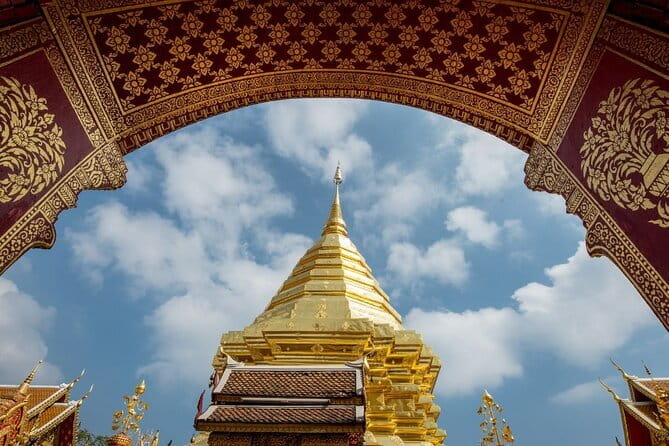
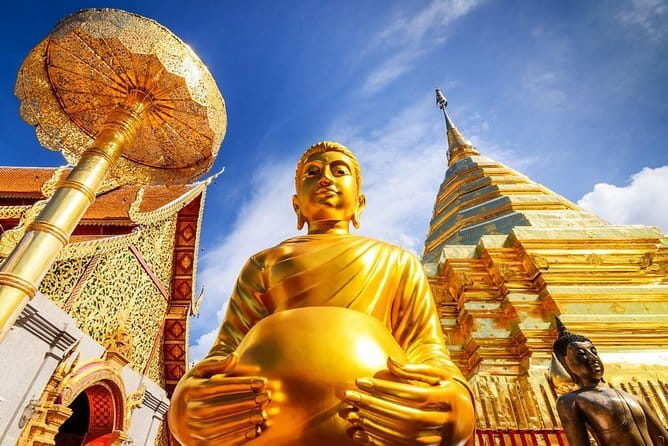
The smart move in Chiang Mai is to mix a temple that feels like a secret with one that feels like a celebration. Wat Pha Lat sits in the forest, and it’s tied to the Monk’s Trail, an old pilgrimage route climbing Suthep Mountain. Wat Phra That Doi Suthep is different. It’s one of the most sacred pilgrimage sites in Thailand, with gold tones, shrines, bells, and walls covered in Buddhist scenes.
What makes this combo work is the contrast. You start with a calmer, green, almost out-of-time feeling. Then you rise to a major pilgrimage complex where you’ll understand why people treat this mountain like a spiritual destination, not just a sightseeing spot. If you’ve only got half a day, this pairing gives you both the quiet and the big.
You can also read our reviews of more hiking tours in Chiang Mai

The songthaew ride: why the transport is part of the experience
This tour uses a typical Chiang Mai songthaew, which is basically a converted pickup truck with benches in the back, open sides, and no air-conditioning. That detail matters. On a warm day, you’ll feel the air flow and the movement of the road. On a rainy day, you’ll get a splash situation unless you plan for it.
I actually like this style of transport because it matches how locals move around. It also shapes your expectations: you’re not in a sealed bus. You’re riding in something that looks and feels like real neighborhood travel. One extra tip worth taking seriously: a review recommendation was to consider a face mask in the red truck to reduce irritation from fumes. Even if that doesn’t happen to everyone, it’s an easy comfort upgrade.
Also note the timing: pick-ups can begin up to 45 minutes before the scheduled start time. That’s normal for how these rides work, but it does mean you should be ready early and not plan a tight coffee stop right before.
Monk’s Trail to Wat Pha Lat: the 30 to 45 minute hike you’ll feel
Your day starts at the trail access point, reached by songthaew. Then you walk the Wat Pha Lat Monk’s Trail for about 30 to 45 minutes. This isn’t a technical hike, but it is walking uphill through a temple-adjacent route that’s been used for years by monks heading toward Wat Phra That Doi Suthep.
The vibe here is the point. You’re not rushing to “check off” a place. The trail sets the tone for the temple you’re going to see. By the time you reach Wat Pha Lat, you’re warmed up, a little sweaty, and ready to slow down.
Practical reality: bring shoes with grip. The tour asks for proper walking footwear for a reason. Even if you think the route sounds short, the ground and temple pathways can be uneven.
Entrance fee timing: the Monk’s Trail entrance fee (THB 100 per person) isn’t included. You’ll need cash on the day, so don’t count on swiping your card at the gate.
Wat Pha Lat: the jungle temple stop where peace actually makes sense
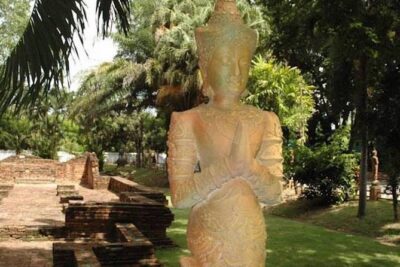
Once you arrive, Wat Pha Lat feels like a reset button. It’s described as a hidden jungle temple, and that matches what you’ll experience: a garden-like setting with statues, quiet corners, and a calmer energy than the main mountain temple.
This is where the guide’s role really matters. The tour is built around more than just walking. You’ll get explanations about the site and its meaning, and it helps to understand why a place like this exists along a pilgrimage route. One of the most praised aspects was the guide’s friendly depth—steeped in Buddhist precepts and with a background as a former monk. Even if you’re not a temple scholar, those kinds of details turn statues and symbols into something you can actually read.
You’ll have about 2 hours here. That’s enough time to notice the finer details—statues, arrangements, and the way the space is organized—without feeling like you’re on a conveyor belt.
Wat Phra That Doi Suthep: gold pagodas, 300+ steps, and a big-view payoff

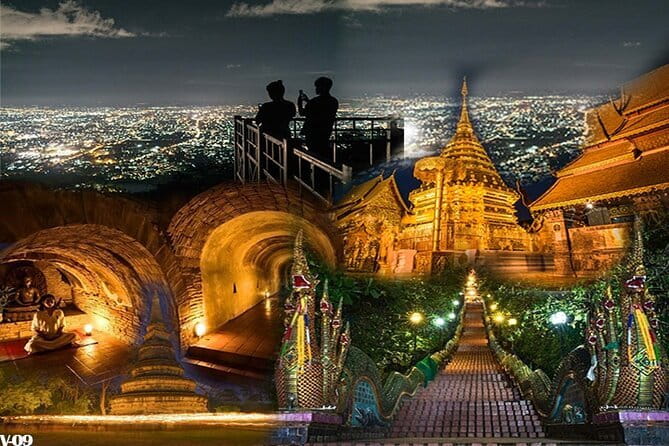
Next comes the main event: Wat Phra That Doi Suthep. This temple is considered one of northern Thailand’s most sacred pilgrimage spots. You reach it via the Dragon Staircase, a staircase with more than 300 steps flanked by a naga, a mythical serpent with seven heads.
There’s a practical option if steps aren’t your thing. You can also take the cable car up (cost not included). I like knowing this ahead of time because it lets you choose based on your body and the weather rather than forcing a one-size-fits-all plan.
Once you’re on the grounds, expect a rich mix of:
- statues and pagodas
- shrines and bells
- Buddhist drawings and wall paintings
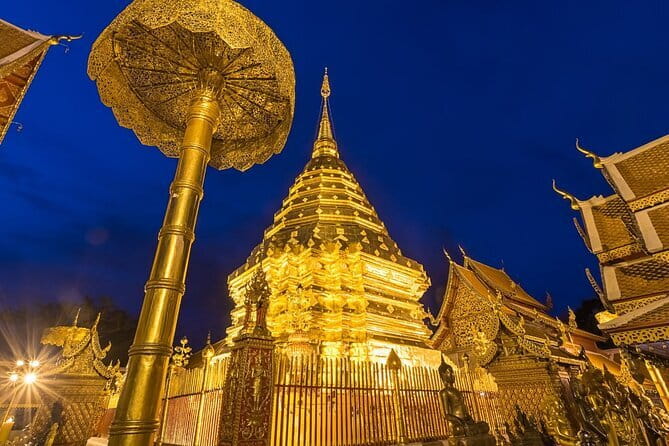
The original chedi covered with copper is treated as the most sacred part. If you want the big-picture meaning, ask your guide what the wall paintings represent. You’ll learn about the history of the temple and what the paintings depict, especially scenes from the life of Buddha.
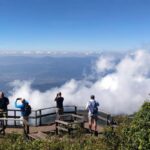
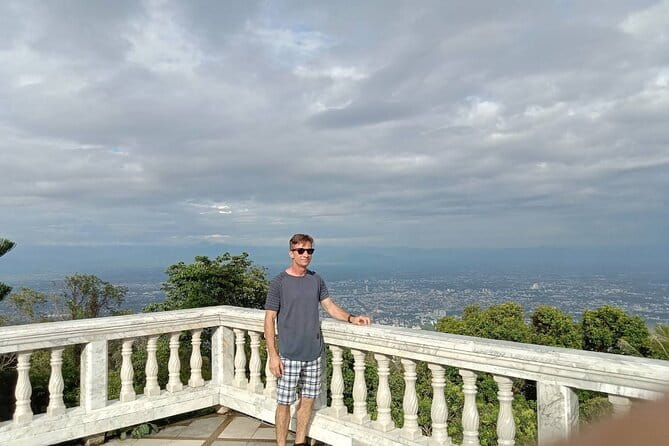
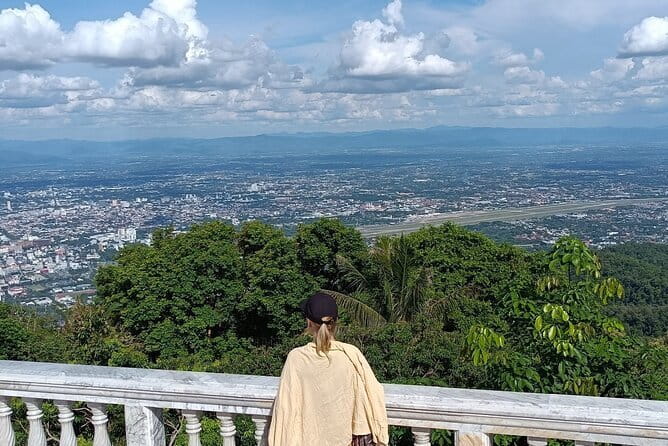
And then there’s the reason people make it a mountain day: you’ll get panoramic views over Chiang Mai from the top. Even with haze, you’ll still feel the scale of the city spread out below.
Plan for about 2 hours at Doi Suthep. That’s long enough for the staircase/cable-car choice, the main sights, and time to look without feeling rushed.






Dress code, shoes, and weather: small things that prevent big annoyances
Temples in Thailand have a simple rule: dress to show respect. This tour asks for clothing that covers shoulders and knees. It’s worth planning this even if the rest of your day is casual—temples don’t bend for comfort.
Shoes matter more than people think. If your footwear is more fashion than grip, temple steps and paths can get slippery. A good walking shoe keeps you steady and lets you enjoy the walk instead of focusing on balance.
Weather-wise, the tour runs rain or shine. Tropical showers often don’t last long, and the plan is to seek shelter if rain comes hard, then continue when it eases. If you’re going during rainy season, bring a poncho or raincoat. It’s one of those “annoying now, worth it later” items.
Price and value: what your $26.09 covers (and what it doesn’t)

The listed price is $26.09 per person, and what you get for that base fare is pretty fair:
- songthaew transport
- bottle of drinking water
- English-speaking guide
But the value hinges on the extra temple entrances you must plan for:
- Wat Phra That Doi Suthep: THB 30 per person
- Wat Pha Lat/Monk’s Trail: THB 100 per person (paid in cash day of)
So the true cost is base price plus those cash fees. The good news is that these are clearly stated and small compared with many tours that bundle in high entrance costs.
The other value factor is time. You’re not getting a 45-minute “hit and run.” You’ve got about 4 hours total, split into two meaningful temple blocks, plus the Monk’s Trail walk. And because groups are capped at 12 people, it doesn’t feel like cattle herding.
Who should choose this tour (and who might want a different plan)
This tour is a strong match if you want:
- a first taste of Chiang Mai temple culture without a full day commitment
- both the quiet forest mood of Wat Pha Lat and the major pilgrimage energy of Doi Suthep
- a guide who can explain what you’re seeing, not just point at it
It’s also a good fit for people who like small groups and practical pacing. You don’t need special gear. You do need sensible shoes and temple-appropriate clothing.
If you have mobility limits, there’s an important note: the tour mentions you can go up with the songthaew if you cannot do the hike up the mountain. That helps, especially for the more strenuous parts of getting to viewpoints. Still, the Monk’s Trail walk portion (30 to 45 minutes) is part of the experience, so think honestly about your comfort level before booking.
Sunrise option: when to switch the order
There’s also a sunrise program that starts at 05:00. In that version, you visit Wat Phra That Doi Suthep first, then after sunrise you continue to Wat Pha Lat and hike down the Monk’s Trail instead of hiking up.
This can be a great choice if you love cooler morning air and want the mountain temple in early light. It’s also a smart way to experience the same places with a different rhythm and energy.
Should you book this Chiang Mai temple hike?
Yes, if you want an efficient half-day that hits two of Suthep Mountain’s most meaningful temple experiences. I’d book it if you care about context—history, symbolism, and why these places matter—and if you’re comfortable with a short hike plus temple steps.
I would hesitate if:
- you don’t want extra cash entrance fees on the day
- you’re sensitive to heat and riding in an open-sided truck
- you strongly dislike any walking at all
If you do go, go prepared: wear covered clothing, bring grippy shoes, and consider packing a light rain layer. The payoff is a day that moves from quiet forest peace to gold pilgrimage intensity, with city views that make the effort feel worth it.
FAQ
What’s included in the tour price?
The tour includes songthaew transport (the red pickup truck), a bottle of drinking water, and an English-speaking guide.
Are temple entrance fees included?
No. You pay temple entrance fees separately in cash. Wat Pha Lat Monk’s Trail is THB 100 per person, and Wat Phra That Doi Suthep is THB 30 per person.
How long is the hike to Wat Pha Lat?
The Monk’s Trail hike to Wat Pha Lat takes about 30 to 45 minutes.
Do I have to climb the steps at Wat Phra That Doi Suthep?
The temple is reached via a Dragon Staircase with more than 300 steps, but there is also a cable car option if you prefer not to walk up.
Can I avoid hiking if I can’t do the mountain part?
The tour notes that if you cannot do the hike up the mountain, you can go up with the songthaew.
What should I wear for the temples?
You’ll need to dress appropriately for sacred sites. Shoulders and knees must be covered, and you should wear proper walking shoes.
Does the tour run in rainy weather?
The tour operates rain or shine. If it rains heavily, the group will seek shelter and continue when the weather improves.