REVIEW · CHIANG MAI
Chiang Mai: Doi Inthanon Park and Pha Dok Siew Trail Trek
Book on GetYourGuide →Operated by Chiang Mai Footsteps Travel · Bookable on GetYourGuide
Start early for Thailand’s highest peak. This one-day outing from Chiang Mai takes you up to Doi Inthanon (2,565 m) and then into the forest on the Pha Dok Siew Nature Trail.
I love the way the day mixes big-name sights with real walking time. The King’s and Queen’s Pagodas are a memorable stop, and the coffee experience at Baan Mae Klang Luang turns a break into something you can actually taste and talk about.
One heads-up: the summit views and pagoda gardens can be hit-or-miss if the weather is foggy or rainy. And it’s a long day with drive time, so plan for some traffic on the way back.
In This Review
- Key highlights you’ll care about
- From Chiang Mai pickup to Doi Inthanon’s cooler air
- Doi Inthanon Summit: 2,565 meters and fog roulette
- The King’s and Queen’s Pagodas plus a quick monastery break
- Pha Dok Siew Nature Trail: 2–3 hours of forest walking that stays calm
- Village market lunch and Hmong/Hill-tribe context without the rush
- Coffee tasting at Baan Mae Klang Luang: a real break with a story
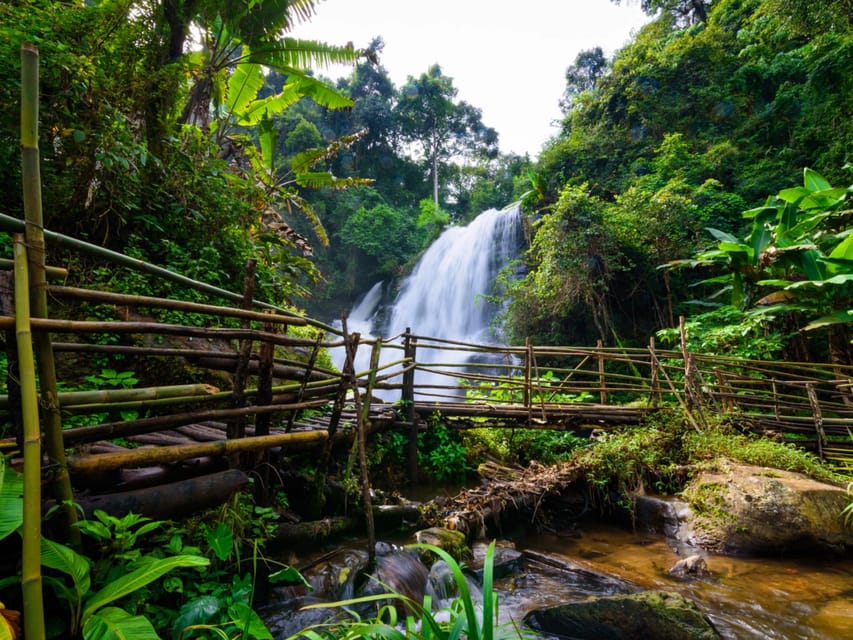
- Wachirathan Waterfall: big payoff, short sightseeing time
- The pacing, group size, and what to pack so the day feels good
- Guides and why the narration matters on this kind of day
- Should you book this Chiang Mai Doi Inthanon day trip?
- FAQ
- Where is the meeting point for the tour?
- What time does pickup usually happen?
- How long is the tour?
- How long is the Pha Dok Siew Nature Trail trek?
- Is the tour suitable for people with mobility impairments?
- What languages are available for the guide?
- What’s included in the price?
- What should I bring for comfort on this tour?
Key highlights you’ll care about
- Thailand’s highest peak at 2,565 m: a real altitude change that makes the air feel cooler.
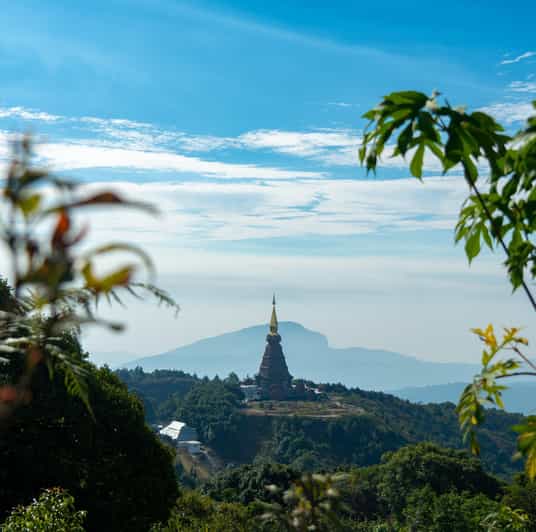
- Royal pagodas with sweeping valley views: beautiful even when the day is misty.
- Pha Dok Siew Nature Trail (2 to 3 hours): a guided jungle hike with narrow paths.
- Village stops that feel practical, not just photo stops: market browsing and terrace-farming glimpses.
- Baan Mae Klang Luang coffee tasting: a structured coffee stop in a local setting.
- Wachirathan Waterfall: short sightseeing time, but big payoff, especially after rain.
From Chiang Mai pickup to Doi Inthanon’s cooler air
This tour starts in the Chiang Mai old town area, with a meeting point at Baan Meesuk. If you choose pickup, expect it between 7:00 AM and 7:30 AM, and the day begins with a van ride out to Doi Inthanon National Park. It’s the kind of itinerary that works best when you’re ready to be “on the move” all day.
The payoff for that early start is temperature and atmosphere. Up at higher elevations, it often feels cooler than in the city. That matters because you’ll spend a chunk of the morning driving, then step into jungle air for the guided trek. I like that the day doesn’t waste time: you’re sightseeing early, not late.
Also, this is a small group format, limited to 12 people. That helps with getting attention from your guide, keeping the group together on the trail, and not losing people during quick transfers. English is available via a live guide, and from what I’ve seen with this style of tour, it’s the difference between a nature walk that’s just pretty and one where you understand what you’re seeing.
You can also read our reviews of more hiking tours in Chiang Mai

Doi Inthanon Summit: 2,565 meters and fog roulette
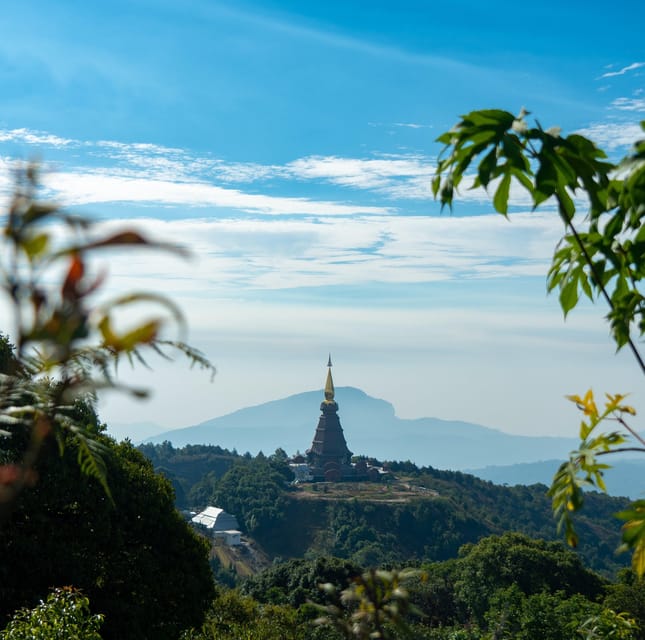
One of the first major stops is the Doi Inthanon Summit area. You’ll get a short visit, about 15 minutes, with scenic views on the way. That brief window is typical for a road-based tour, so you’ll want your camera ready and your expectations adjusted: if the weather is clear, you’ll see more. If it’s misty, the view can get swallowed fast.
Even so, the summit stop is still worth it because it marks the real high point of the day and gives you that elevation feeling. The tour plan also builds in time later for the pagodas and forests, so you’re not betting your whole experience on one perfect view.
Bring a light jacket or long sleeves. The higher-altitude drop in temperature is real, and multiple guides and groups note that even in warm season, it can feel noticeably cooler near the top. If you forget, you’ll still see things, but you’ll be thinking about warmth instead of the view.
The King’s and Queen’s Pagodas plus a quick monastery break
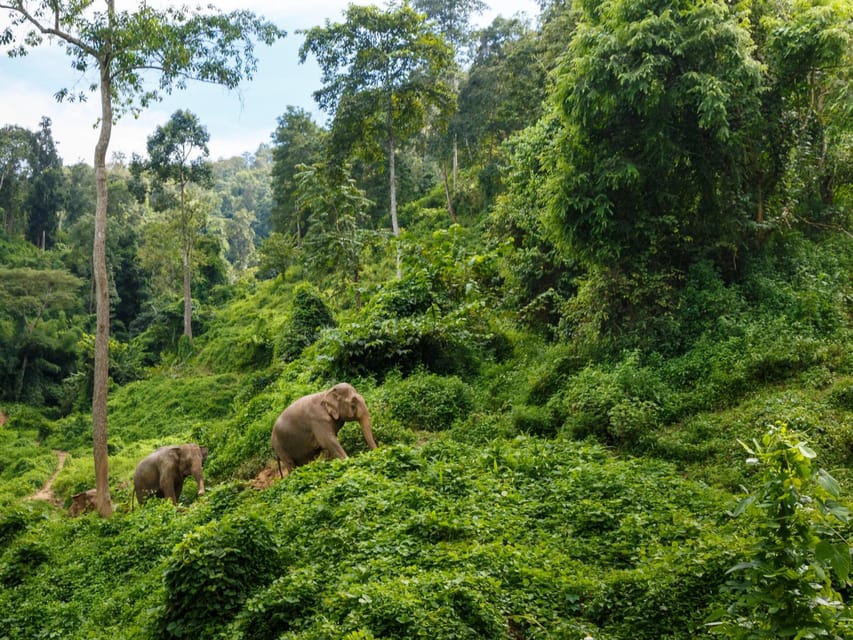
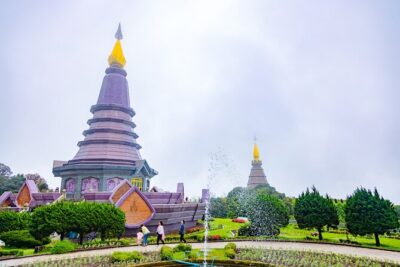
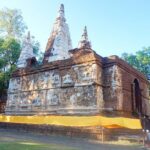
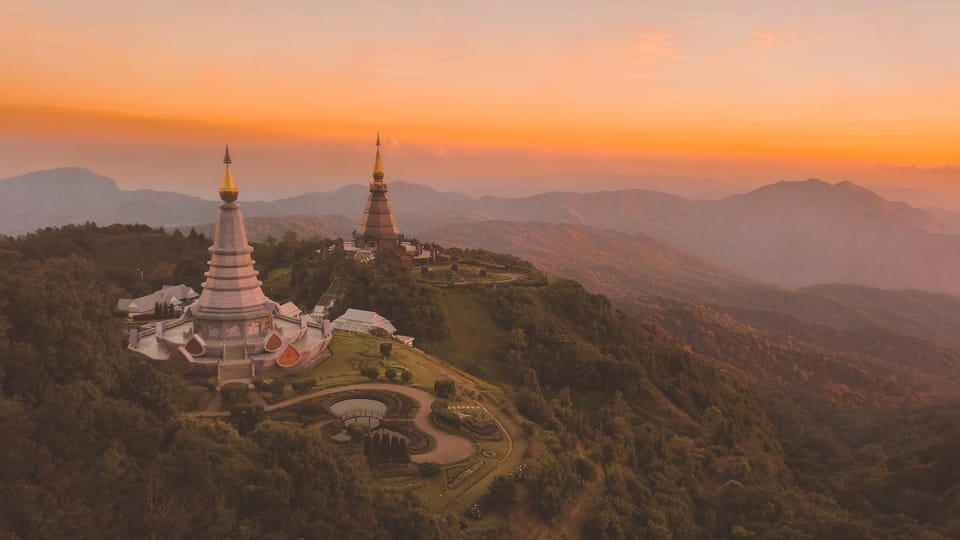
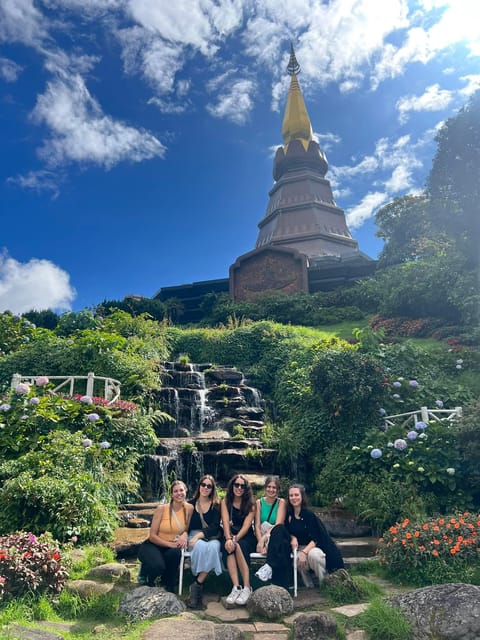
After the summit, you’ll stop at the King’s and Queen’s Pagodas, plus a monastery sightseeing pause. This section of the route is designed to give you contrast: you went up to the highest point, now you shift to cultural landmarks looking out over the valley.
The pagodas are a standout because they combine architecture with viewpoint potential. On a clear day, the gardens and outlooks can look like they’re built for photos. On a foggy day, they become more about mood: layers of haze and softened details still make the complex feel special.
One practical tip: some days, people find the pagoda timing a bit short compared with how much they enjoy lingering. If you care a lot about photos at the pagodas, have a quick plan in your head for where you’ll walk first, not last. You don’t want to burn your best angle while everyone else is moving.
Pha Dok Siew Nature Trail: 2–3 hours of forest walking that stays calm
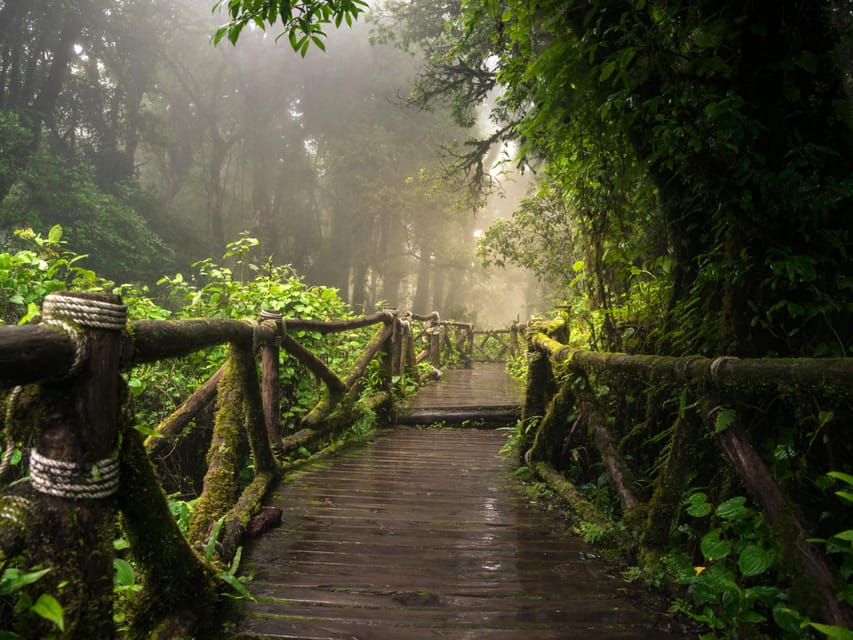
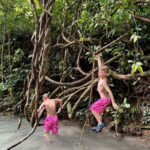
This is the heart of the day for many people, and for good reason. The Pha Dok Siew Nature Trail is guided and listed at about 2 hours in the itinerary, with the trek taking 2 to 3 hours total depending on conditions and pacing. Expect narrow jungle paths and a hike that’s more about steady nature time than summit-style effort.
A key detail: the route can be mostly downhill. That tends to make it more manageable for people who want a real hike without a brutal climb. Still, it’s not a flat stroll. You’ll be walking on uneven ground, so good footwear matters, and insect repellent helps if you’re dealing with bugs in the forest edges.
What I think you’ll enjoy most is the way the guide frames the plants, the quiet sounds, and the rhythm of the trail. The descriptions of chirping birds, dense jungle air, and the visual texture of forest life aren’t marketing fluff. When a guide points out what’s around you, the trail goes from scenery to something you can follow.
Also, bring clothes that can get dirty. Even when the trail is not extreme, jungle trails tend to be one splash away from mud on your pants. And if it rained earlier, watch your footing because narrow paths can get slick.
Village market lunch and Hmong/Hill-tribe context without the rush
Your day doesn’t end with trees and waterfalls. There are village stops that add local context and give you time to eat and reset.
You’ll include a lunch stop tied to the market and village area (the plan references a Hmong Market lunch, with local shopping time at a traditional village). This is a good moment to fuel up because you’ll still have the coffee tasting and waterfall portion after the hike.
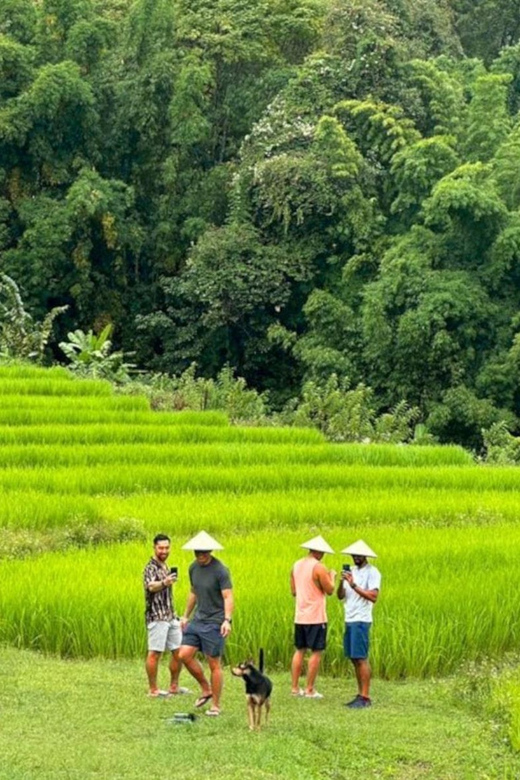
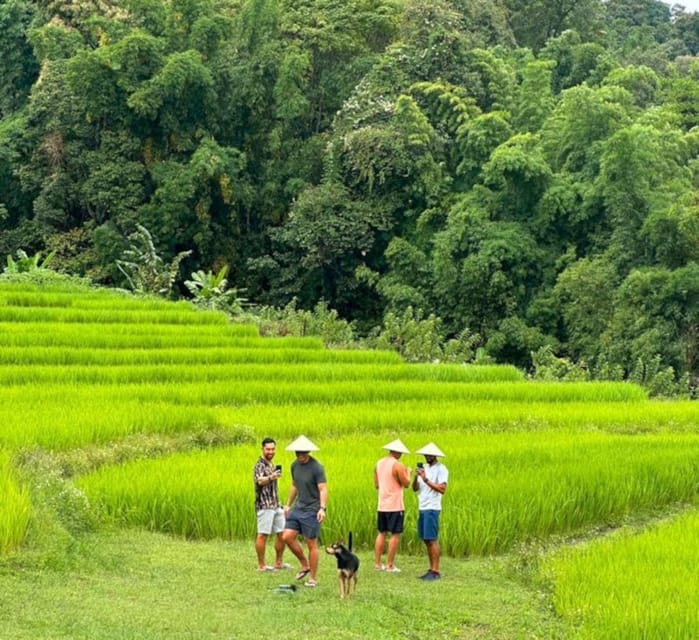
After that, you may visit the Karen Hill tribe area and see terrace rice fields and traditional farming methods. The value here is the practical, day-to-day side of hillside agriculture: you’re seeing how food grows where the terrain is tough. It also helps connect the trek to the people who live around it. You start in the forest, then you see the human patterns layered into that same environment.
One thing to keep in mind: these village stops can be brief, and some people prefer longer time for slow observation. The tour schedule aims to fit a lot into one day, so you get a snapshot rather than a deep stay.




Coffee tasting at Baan Mae Klang Luang: a real break with a story
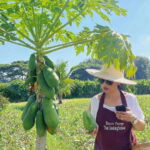
The coffee stop at Baan Mae Klang Luang is short in the itinerary (about 15 minutes), but it’s one of the more memorable parts of the tour for people who like food and drinks with background.
You’re not just handed a cup. The tour frames it as a local coffee-making experience in a natural setting. That makes the tasting feel tied to place, not like a random refreshment stop between sights.
If you’re choosing between coffee-people and not-coffee-people in your group, I’d still recommend it. Even if you don’t love coffee, the process and setting usually make it interesting. It’s also a nice timing reset after trekking and before the waterfall.
Wachirathan Waterfall: big payoff, short sightseeing time
Wachirathan Waterfall is the final major nature hit, and it’s a classic “powerful water” moment. The itinerary schedules a visit of about 15 minutes, plus some scenic drive time.
Here’s the practical angle: 15 minutes can feel either perfect or too brief depending on your personality. If you love waterfalls and want time to walk viewpoints slowly, you might wish for longer. If you like moving on to the next viewpoint, it will feel efficient.
Weather matters a lot. When conditions are wet, waterfalls often look fuller and more dramatic. The rain can also make the air cooler around the falls, which is welcome after the earlier parts of the day.
Just be ready for spray and damp ground near the waterfall areas. You’ll want footwear with grip, and you’ll likely feel better if you wear long-enough clothes to handle occasional mist.
The pacing, group size, and what to pack so the day feels good
This tour is a full-day loop: early pickup, summit and pagadas, a guided trail, lunch and village stops, coffee tasting, then Wachirathan Waterfall, followed by the drive back to Chiang Mai (including drop-off at Baan Meesuk and also Baan Meesuk area mention like Baan Meesuk and Baan Meesuk drop described as Baan Meesuk/Baan Meesuk listed route).
Expect a packed schedule. Even with a small group size, it’s not a slow “meander.” You’ll be switching environments all day: van to summit viewpoints, forest trail, village lunch, terrace farming, then waterfall.
That’s why packing is key. Bring:
- Hiking shoes (this is not the day for flimsy sandals)
- A light jacket or long-sleeve layer for cooler summit air
- Sunscreen and sunglasses (high UV is common outside the city)
- Insect repellent (the trail and village edges can have bugs)
- A hat and camera
- Comfortable clothes that can get dirty
- A jacket for warmth up high
Also, check your mobility comfort first. The tour notes it is not suitable for people with mobility impairments. The trail includes narrow jungle paths, and that alone makes it hard to adapt safely.
Finally, traffic happens. The drive back to Chiang Mai can take longer than you want, depending on road conditions. Starting early helps, but don’t plan a late-night dinner reservation far away from your hotel unless you enjoy stress.
Guides and why the narration matters on this kind of day
You’ll meet an English-speaking live guide, and the experience lives or dies by how well they explain what you’re seeing. This route gives your guide plenty of chances to connect dots: forest life on the trail, why rice terraces matter, and what makes the pagodas stand where they do.
From the guide names I’ve seen associated with this tour, you might travel with people like May, Chai, Nine, Paul, Steve, or Pan. Regardless of the name, the pattern is the same: friendly, talkative guides who help keep the group together while still giving you time at stops.
A quick strategy: ask one question early in the day and you’ll usually get better answers later too. It makes the forest walk feel personal, not like a checklist.
Should you book this Chiang Mai Doi Inthanon day trip?
Book it if you want one day that covers a lot of Northern Thailand without feeling like you’re sprinting through only temples. The combination of Doi Inthanon summit, the Pha Dok Siew Nature Trail, Wachirathan Waterfall, and village/coffee stops is strong value for a full day.
Skip it if you hate long driving days or you’re very weather-dependent on mountain views. Mist can hide the summit and pagoda scenery, and the waterfall stop is short. Also, if mobility is an issue, this one isn’t designed to be adapted.
If you’re the kind of traveler who enjoys guided walking, local food and drink stops, and a clear structure to a packed day, this itinerary fits your style.
FAQ
Where is the meeting point for the tour?
You meet at Baan Meesuk, an hotel/hostel in the old town of Chiang Mai. Pickup is optional if you choose that option.
What time does pickup usually happen?
Pickup is between 7:00 AM and 7:30 AM, depending on your selected option.
How long is the tour?
The tour lasts 1 day.
How long is the Pha Dok Siew Nature Trail trek?
The Pha Dok Siew Nature Trail trek takes about 2 to 3 hours.
Is the tour suitable for people with mobility impairments?
No. The tour is not suitable for people with mobility impairments.
What languages are available for the guide?
The live tour guide is available in English.
What’s included in the price?
Hotel pickup and drop-off, Doi Inthanon National Park admission fee, a guide, lunch, travel accident insurance, and coffee tasting.
What should I bring for comfort on this tour?
Bring hiking shoes, insect repellent, sunscreen, a hat, sunglasses, a camera, comfortable clothes (that can get dirty), and a light jacket or long-sleeve layer.