REVIEW · CHIANG MAI
Chiang Dao Cave & 5 Hill Tribe villages
Book on Viator →Operated by WanderSiam · Bookable on Viator
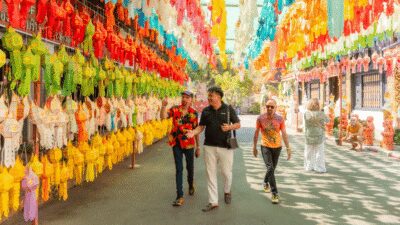
Lanterns and limestone plus hill-tribe villages. This Chiang Dao day trip stitches together countryside culture and the kind of cave you remember. You get pickup, a cave guide, and a nature stop that’s easy on the legs.
I love the hill tribe village stop because you’re not stuck with one “tribe theme.” You get to see day-to-day life and beliefs across Akha, Meo, Lisu, Karen, and Palong. I also love Chiang Dao Cave itself: lantern-guided walking, big formations, and a local guide bringing the stories to life.
One possible drawback: the cave route includes tight sections where you’ll need to crawl. If you’re claustrophobic, or if crawling feels like your personal nightmare, this tour is probably not for you.
In This Review
- Key highlights at a glance
- Chiang Dao Cave and 5 Hill Tribe villages: what you’re really booking
- Price and value: why this costs about $52 and who it suits
- Ban Huai I-Ko: meeting Akha, Meo, Lisu, Karen and Palong
- The good part: relationships and storytelling
- A fair warning: souvenir pressure can happen
- Chiang Dao Cave: lantern-led, big formations, tight crawl-through sections
- Physical reality: comfortable shoes, and be ready to crawl
- What you might see down there
- Rainy-season note
- Bai Orchid and Butterfly Farm: nature time before the hills
- What you should know before you go
- Timing, pickup and the pacing that makes-or-breaks the day
- Lunch: not included, but you should budget for it
- If your day feels rushed
- Who should book this tour, and who should skip it
- You’ll probably love it if you:
- You should think twice if you:
- What to bring: small list, big comfort payoff
- My honest verdict: book it or pass it?
- FAQ
- What time does the tour start?
- How long is the tour?
- What’s included in the price?
- Is a meal included?
- Do I need cash?
- Is Chiang Dao Cave safe for everyone?
- What should I wear?
Key highlights at a glance
- Five hill tribe villages in one day: Akha, Meo, Lisu, Karen, and Palong at Ban Huai I-Ko
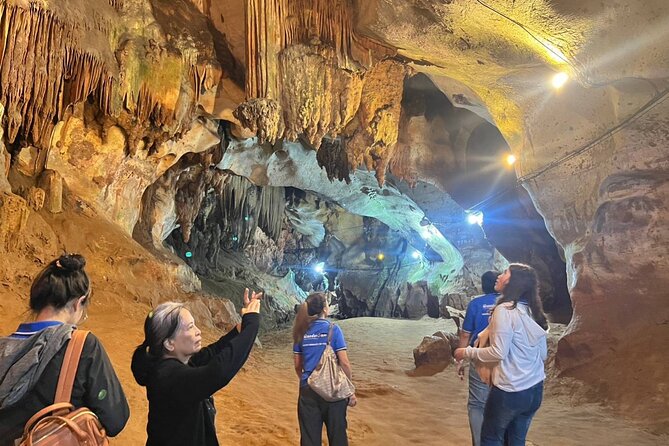
- Lantern-lit cave guiding: local guidance through Chiang Dao’s famous rock formations
- A real nature break: Bai Orchid and Butterfly Farm with butterflies over orchids
- Small group size: max 15 travelers, which helps keep the day calmer
- Go in with the right expectations: village time can be short, and the cave has narrow crawl-through spots
Chiang Dao Cave and 5 Hill Tribe villages: what you’re really booking
This is the kind of Chiang Mai outing that escapes the city without pretending it’s a theme park. You’re driving north into countryside hills for two very different halves of the day: human stories first, then underground geology.
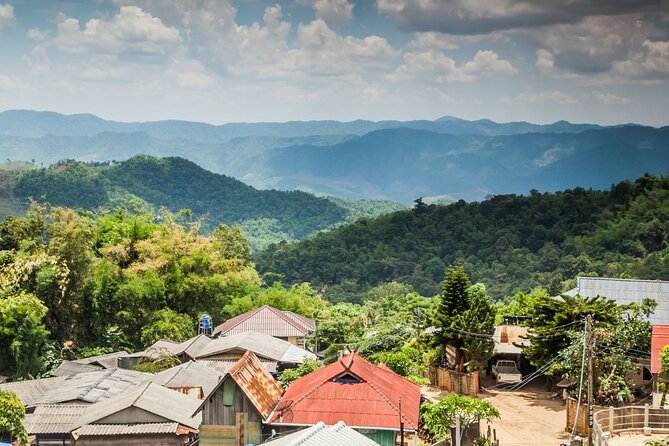
The village part is designed to show how different hill tribe groups live, work, and think. It’s not a “costume show.” You’ll be guided around Ban Huai I-Ko, where Akha, Meo, Lisu, Karen, and Palong families live close to their daily rhythms. Expect questions, hands-on moments, and the chance to buy small handicrafts if you want to support local livelihoods.
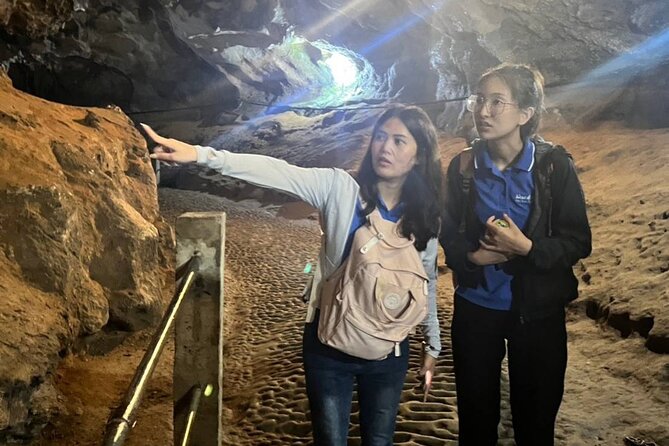
Then comes Chiang Dao Cave. This cave has a reputation for being large and story-filled, and the tour leans into that. You’ll walk in with local lantern guidance—no bright tourist lighting—so the cave feels like a real place with real shadows.
You can also read our reviews of more tours and experiences in Chiang Mai.



Price and value: why this costs about $52 and who it suits
At around $52.18 per person for an ~8-hour day, the value comes from the mix: transportation + an English-speaking guide + village guiding + cave entrance included, plus the lantern cave experience.
You’re also getting a structured flow. Pickup is included for Chiang Mai Old City area, and you’ll travel by air-conditioned vehicle. Cave guiding matters here. Without it, you’d just be walking in the dark. With it, you get the context for why specific parts of the cave matter.
That said, there are two “budget reality checks.”
- The tour price covers cave entrance, but meal isn’t included.
- The orchid/butterfly farm has its own entry cost, and several purchases/tips typically run on Thai baht cash.
If you’re the type who likes a full day with variety—culture, nature, then something physically interesting underground—this is a strong fit.
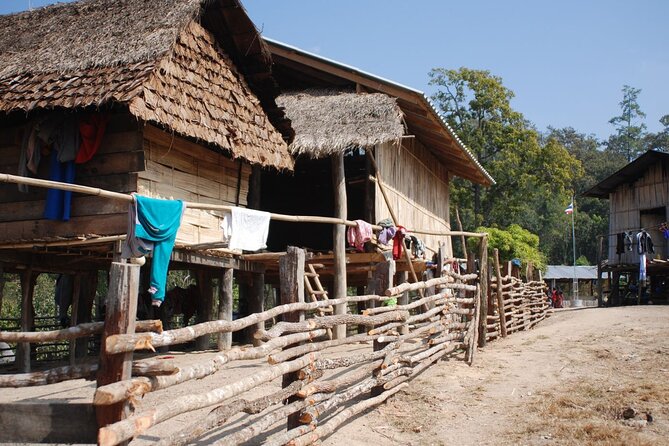
Ban Huai I-Ko: meeting Akha, Meo, Lisu, Karen and Palong
The village stop is the cultural heart of the day. The tour route centers on Ban Huai I-Ko, where five hill tribe groups are represented: Akha, Meo, Lisu, Karen, and Palong.
Here’s what to expect in a practical sense:
- You’ll be shown daily routines and local beliefs through the eyes of guides drawn from village areas.
- You’ll likely spend time moving between small village clusters rather than one big attraction.
- You’ll see handmade items offered for sale, and you may be encouraged to support families directly.
The good part: relationships and storytelling
The strongest compliments in this kind of tour usually go to the guide connection. Names like Jane, Saman, Tik/Tikky, Amy, Leo, Duang, Tuk, and Bry/Bright show up across departures, and what they have in common is a focus on local context. The best moments tend to be the ones where you can ask a real question—about plants, materials, or what life looks like up in the hills.
A fair warning: souvenir pressure can happen
Some departures can feel more sales-forward than you’d prefer, especially around crafts. It doesn’t mean the visit is fake; it means the economy of the day matters. If you don’t want to buy, you can still enjoy the conversations and politely keep it simple.
My advice: bring small bills of Thai baht so you can buy something small if you genuinely want it—and so you’re not stuck feeling uncomfortable when you’re asked to pay.


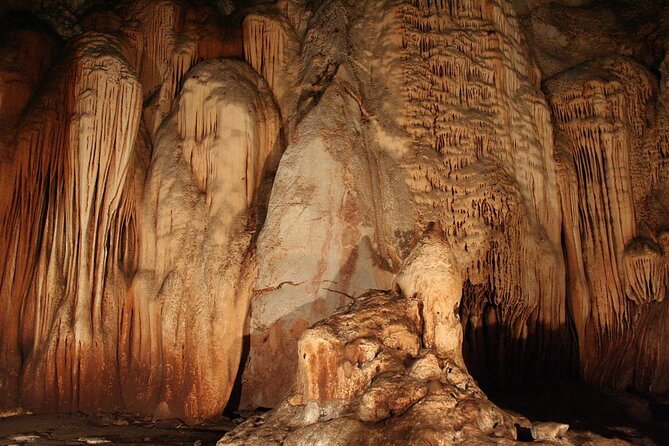
Chiang Dao Cave: lantern-led, big formations, tight crawl-through sections
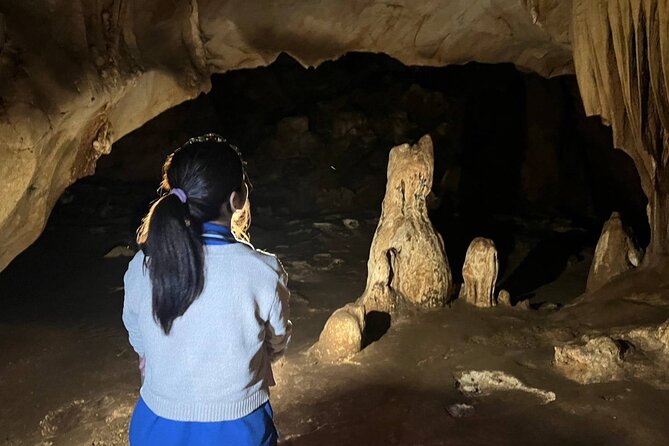
The cave is the headline. Chiang Dao Cave is described as one of the biggest caves around Chiang Mai, with dramatic stalactites and stalagmites.
What makes this experience different from a basic cave walkthrough is the guiding style. You explore with local guides using lanterns, which keeps the cave’s darkness real. Expect uneven footing, cool damp air, and a sense that the cave is a living place—not just a hallway.
Physical reality: comfortable shoes, and be ready to crawl
The tour specifically recommends comfortable walking shoes and says to avoid flip-flops for safety. That’s not a suggestion for show—it matters when the ground is uneven.
Also read the caution label carefully: two passages inside the cave are narrow and you’ll need to crawl through them. The tour is not recommended for anyone with claustrophobia.
In plain terms: if you’re thinking, I can handle caves, but not tight squeezes, take that seriously.
What you might see down there
Even when the focus is on formations, cave visits usually include a few moments of surprise:
- dark sections with lantern light doing most of the work
- local religious elements you’ll pass on the route
- tight turns and “get through this” spots that can feel tougher than expected
Some people also note that the cave can be harder than they anticipated, especially if the group includes older travelers. If you’re traveling with anyone who has mobility issues, plan carefully.
Rainy-season note
This area can flood in heavy rainy periods. The tour is rain-or-shine, and if conditions are rough you may get adjustments. Still, it’s smart to understand that caves and water don’t always mix on a predictable schedule.
Bai Orchid and Butterfly Farm: nature time before the hills
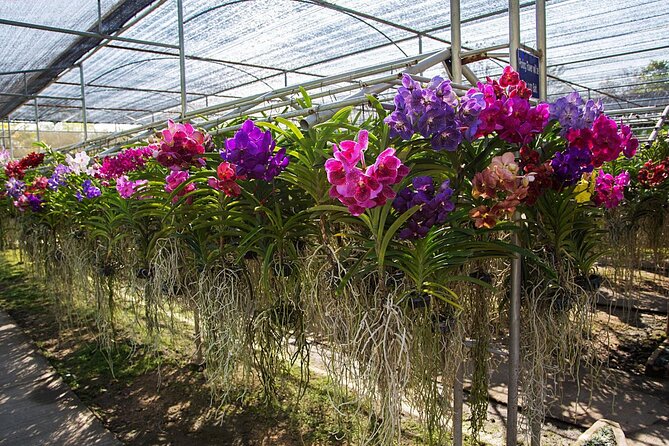
Between the villages and the cave (or early on in the route, depending on the day), there’s time at Bai Orchid and Butterfly Farm.
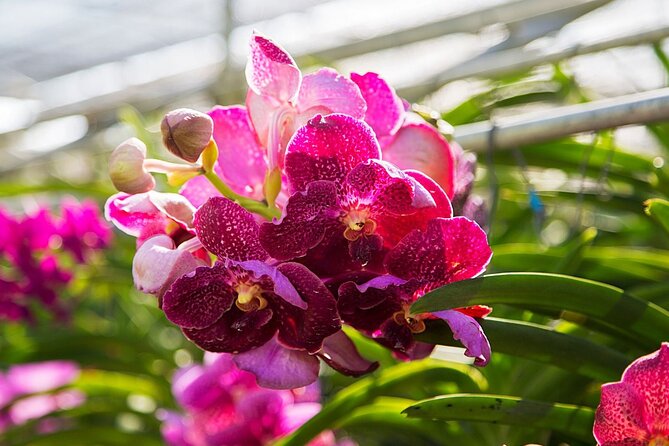
This stop is a breather. It’s a greenhouse-style setup where you can see butterflies and plants together. The star is the orchid collection, and the idea is you watch butterflies flutter around the blooms while you take photos and reset your brain.
What you should know before you go
- The farm’s admission isn’t included in the tour price.
- Cash rules apply more than you’d expect: the farm has been noted as accepting Thai baht cash.
- You can buy orchids there to take home, which is great if you like small souvenirs that aren’t plastic magnets.
This stop also makes the whole day feel more balanced. After sitting in the car and walking in hills, a greenhouse walk is a pleasant pace change.
Timing, pickup and the pacing that makes-or-breaks the day
This tour runs about 8 hours and starts at 9:00 am. Your exact pickup/departure time can fall between 8:00–9:00 depending on group size, and you’ll get the precise timing via message the day before.
A few practical points that matter:
- You’re typically picked up around the Chiang Mai Old City area.
- The group size tops out at 15 travelers, which is more comfortable than big buses.
- The tour can wait up to 10 minutes after the scheduled meeting time. After that, the guide starts.
Lunch: not included, but you should budget for it
Meal isn’t included in the tour price. In practice, there’s often a lunch break where you eat on your own. Plan for it—this is one of the most common reasons people feel surprised by the final cost.
If your day feels rushed
Some people mention late starts can make the day feel compressed, with less time at each stop than you’d like. That’s not unusual in Thailand where traffic and weather can shift schedules.
My recommendation: treat this as a structured day trip, not a slow travel day. If you want long village conversations, plan to come back another time.
Who should book this tour, and who should skip it
You’ll probably love it if you:
- want both culture and nature in one day
- like real countryside stops (villages, local guides, small-scale handicrafts)
- care about cave experiences that feel guided and story-driven
- can handle a moderate day with walking and some uneven surfaces
Guides are repeatedly a highlight, with people praising the way guides connect cave stories and hill tribe context. Names like Saman and Tik/Tikky come up often for turning the day into something that feels personal rather than scripted.
You should think twice if you:
- have claustrophobia (because of narrow crawl-through passages)
- dislike physically awkward walking spots underground
- need a fully accessible route (the cave route involves tight sections)
Also, if you’re only in Chiang Mai for a short time and want just one “must-see,” you’ll get two major hits here: Chiang Dao Cave plus hill tribe villages.
What to bring: small list, big comfort payoff
Here’s a simple kit that matches what the tour advises and what actually helps on the ground.
- Comfortable walking shoes (skip flip-flops)
- Clothing you don’t mind getting dusty—village areas and cave routes can be messy
- A hat if you’re sensitive to strong sun at the village stops
- A light layer for the cave’s cool, damp air
- Thai baht cash for tips, snacks/lunch, and purchases
- If you’re traveling in rainy season: a raincoat or poncho
If you’re bringing valuables, keep them secure. Some cave sections involve crawling and bumping along tight spots, and you’ll be happier if you’re not thinking about your phone every five seconds.
My honest verdict: book it or pass it?
Book it if you want an affordable, well-paced day trip that combines Chiang Dao Cave with village life beyond the city—and you’re okay with a few trade-offs.
This tour’s strongest perks are clear:
- the cave experience is often the emotional highlight
- guides can make both the culture and the cave feel meaningful
- the orchid-and-butterfly farm adds a calm reset
The main compromises are also clear:
- the cave has narrow passages that require crawling
- village time can be short, and crafts/tips can feel part of the deal
- if timing shifts, the day can feel a bit rushed
If that fits your travel style, this is a great day out of Chiang Mai. If you’re risk-averse about tight spaces, pick a different cave option.
FAQ
What time does the tour start?
It starts at 9:00 am, though the exact pickup/departure time can be between 8:00 and 9:00 depending on the number of participants. You’ll receive the final timing message the day before.
How long is the tour?
The duration is listed at about 8 hours.
What’s included in the price?
Included are a licensed English-speaking tour guide, pickup and drop-off in the Chiang Mai Old City area, air-conditioned vehicle, local village guides, a local guide at Chiang Dao Cave, and the entrance fee at Chiang Dao Cave.
Is a meal included?
No. Meals are not included. Lunch is typically something you handle yourself during the day.
Do I need cash?
It’s smart to have Thai baht for tips and for any purchases at villages and the orchid/butterfly farm. The orchid/butterfly farm is noted as taking cash.
Is Chiang Dao Cave safe for everyone?
The tour recommends comfortable walking shoes and warns that two passages inside the cave are narrow and require crawling. It is not recommended for anyone with claustrophobia.
What should I wear?
Wear comfortable walking shoes and avoid flip-flops. For the cave and village areas, dress so you’re okay with getting a bit dirty, and consider a hat for sun at the villages.