REVIEW · CHIANG MAI
️ Chiang Mai Instagram Tour: Most Famous Spots (Private and All-Inclusive)
Book on Viator →Operated by ForeverVacation Thailand · Bookable on Viator
A private photo day around Chiang Mai’s most famous sights.
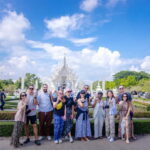
What makes it fun is the mix: classic temples, quick cultural context, and photo help so you get shots without playing tag with strangers. You’ll move between stops in a private air-conditioned vehicle, with hotel pickup and drop-off keeping the day low-stress.
I love the way the route is built around actual landmarks, from Tha Phae Gate onward, with several temple visits timed at about 45 minutes each. I also really like that your photographer takes the pictures, which means you’re posing without awkward interruptions. One thing to consider: it’s still a full 6 to 8 hours with lots of stops, so if you prefer slow wandering over photo targets, you’ll want comfy shoes and a patient mindset.
In This Review
- Key Highlights You’ll Care About
- The Real Point of This Chiang Mai Instagram Tour
- Price and What $121 Usually Buys You in Chiang Mai
- Starting at Tha Phae Gate: Your Easy Photo Warm-Up
- Old-City Temple Hopping: Silver Roofs, Golden Details, and Real Silence
- Wat Rajamontean: Elegant and easy to appreciate
- Wat Sri Suphan: The silver temple moment
- Wat Chedi Luang: The old center of gravity
- Wat Chiang Man: Old-city temple inside the old city
- Wat Suan Dok: Another classic temple pause
- Wat Buppharam: A historical ritual connection
- Wat Chet Yot: Snake-year pilgrimage vibes
- Wat Lok Moli and Wat Umong: Different kinds of temple atmosphere
- Wat Phra That Doi Suthep: The Hilltop Payoff
- Markets and Night Bazaar: Food and Handmade Stuff After Temples
- Warorot (Kad Luang): The main market hit
- Night Bazaar: the walking street energy
- Bo Sang Umbrellas, Khamthiang Flowers, and the Butterfly Greenhouse
- Bo Sang Village: umbrellas and parasols as Chiang Mai symbols
- Khamthiang Market: flower market next to a supermarket
- Greenhouse stop with butterflies, plants, flowers, plus a cafe
- Nature and Wider Chiang Mai: Doi Suthep–Pui and Doi Inthanon Options
- Doi Suthep–Pui National Park and Bhubing Palace
- Doi Inthanon National Park and waterfall climbs
- Wiang Kum Kam: an archaeological river-side contrast
- Other nature/monument notes: scenic cascades and a founders monument
- How the Photography Actually Helps (Instead of Feeling Cringey)
- Day Pace, Comfort, and the Realistic Trade-offs
- Who Should Book This Tour, and Who Should Skip It
- Should You Book This Chiang Mai Instagram Tour?
- FAQ
- How long is the Chiang Mai Instagram tour?
- Is this tour private?
- Is hotel pickup and drop-off included?
- Does the tour include a photographer?
- What is the price per person?
- Is there a mobile ticket?
- Are admission tickets included?
- Does the tour include local food?
- What happens if the weather is bad?
- What is the cancellation window?
Key Highlights You’ll Care About
- Hotel pickup and drop-off so you lose less time to logistics
- Photographer-led posing so you don’t beg strangers for photos
- Temple variety in one day from silver-roof Wat Sri Suphan to hilltop Wat Phra That Doi Suthep views
- Market and night-bazaar contrast like Warorot (Kad Luang) and the Night Bazaar walking area
- Optional craft and nature-style stops such as Bo Sang umbrellas, a greenhouse butterfly stop, and waterfall country
- Strong guide personalities praised across tours, including Nong, Poon, M, and Boy
The Real Point of This Chiang Mai Instagram Tour
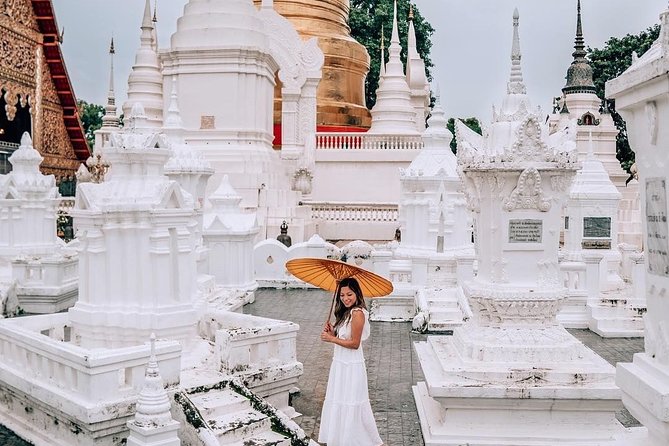
This tour isn’t just about taking pictures. It’s about using photo-friendly stops as a fast way to orient yourself in Chiang Mai—so you understand why locals care about each place, even if your time is short.
The structure helps. You’re not doing temple-to-temple navigation on your own. Instead, you get a private guide who can point out what’s worth seeing at each site, then you get time to actually look (and pose) without rushing every second. And because you’re in a private vehicle, you spend less time stuck between locations and more time at the good parts.
The other smart part: you sample local delicacies along the way. That turns the day from “sights only” into something closer to a real Chiang Mai experience, not just a checklist.
You can also read our reviews of more private tours in Chiang Mai

Price and What $121 Usually Buys You in Chiang Mai
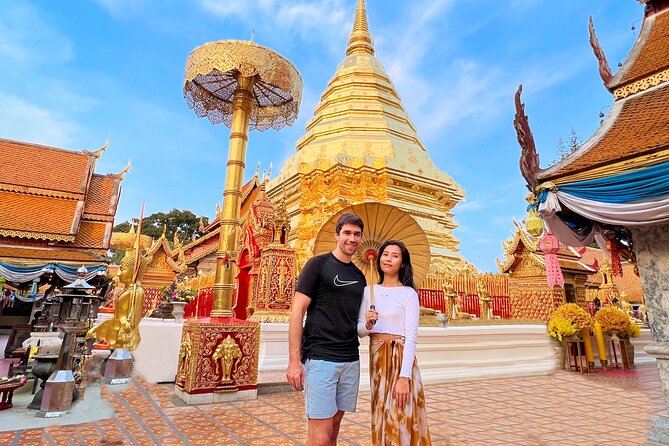
At $121 per person for a 6 to 8 hour private tour, the value is mostly in the package: pickup/drop-off, transport, a private guide, and photo support.
Here’s what stands out as “you’re paying for this” value:
- Private, air-conditioned transportation between stops (big deal in Chiang Mai heat).
- Hotel pickup and drop-off, so you start and end without negotiating rides.
- Photographer service included, so your photos are taken for you.
- Local tastings built into the day.
- Admission tickets included for the early temple stops (the Tha Phae Gate segment and several Wat visits in the first stretch).
What I’d watch: the day includes a lot of famous names, and not every stop is guaranteed to be the same kind of paid attraction. The info you have clearly says admissions are included for certain early stops, while other locations listed don’t spell out admission. In practice, you’ll want to confirm what’s covered for your exact route if you have strict budget limits.
Also, with a price like this, you’re not just buying transportation—you’re buying time saved and a guide who helps you get the most from your photos and your temple visits.
Starting at Tha Phae Gate: Your Easy Photo Warm-Up
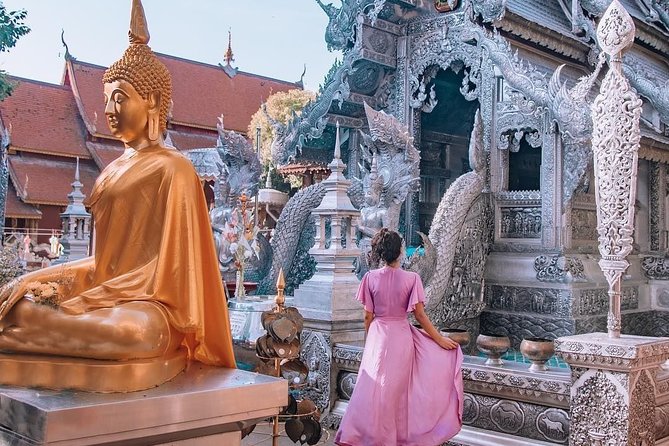
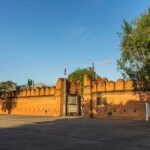
Tha Phae Gate is the kind of landmark that makes you instantly feel like you’re in the old-city story. It’s romantic-looking, historic, and designed for the “stand here and take a perfect angle” moment.
Practically, it’s also a good first stop because:
- You’re oriented fast—this area helps you “read” the old city.
- You’re not already exhausted by the time you start climbing temple steps.
- It’s a natural place to get a few confident photos before the day gets busy.
The stop is listed at about 45 minutes, so you’ll have time to look, snap a few shots, and still keep momentum for the next temples. If you’re traveling in the hotter part of the day, an early start helps. You’ll thank yourself later.
Old-City Temple Hopping: Silver Roofs, Golden Details, and Real Silence
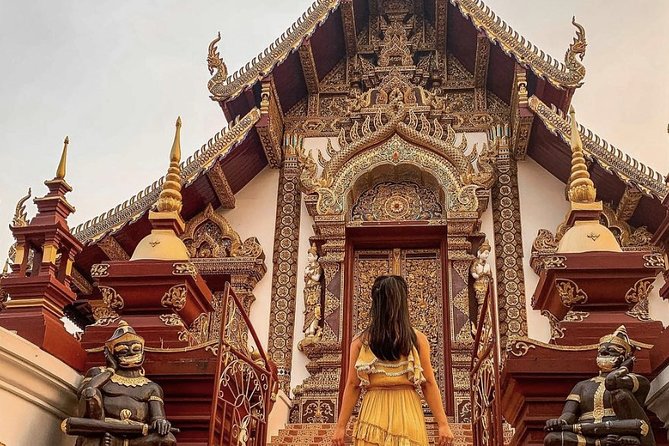
This is where the tour earns its keep. Chiang Mai’s temples aren’t interchangeable. Each one has a different “feel,” and the guide’s job is to help you notice that quickly.
Wat Rajamontean: Elegant and easy to appreciate
Wat Rajamontean is described as an elegant temple complex with beautiful decoration and distinctive qualities. It’s one of those stops where you’ll likely notice craftsmanship more than massive crowds or big “wow” moments. That’s good news if you prefer detail over spectacle.
You’ll get roughly 45 minutes here, which is long enough to walk around calmly and take photos without feeling like you’re being shepherded.




Wat Sri Suphan: The silver temple moment
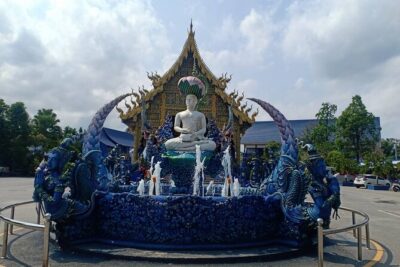
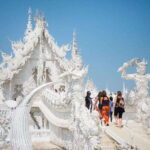
Wat Sri Suphan is one of the most striking places in the route. The temple is covered in silver—walls, roof, and detailed silver carvings of Buddhist legends. Even the Buddha statues are covered in silver.
This is a photo magnet for obvious reasons, but it’s also a lesson in how Lanna-era and regional styles can produce totally different visual moods. The drawback? Silver surfaces can be harsh under bright sun. If you want softer photos, ask your photographer for the best angle and lighting. (They’re there for that.)
Wat Chedi Luang: The old center of gravity
Wat Chedi Luang sits in Chiang Mai’s historic center. It’s not just one temple—it originally included three temple areas (Wat Chedi Luang, Wat Ho Tham, and Wat Sukmin). That means you’re seeing layers of the city’s religious footprint, even if the buildings you see today don’t look like the full original story.
This is also the kind of place where time matters. If you only rush through, you’ll miss the layout cues. The tour timing helps, but still: keep your eyes open for how the complex is arranged.
Wat Chiang Man: Old-city temple inside the old city
Wat Chiang Man is an old-city temple site inside Chiang Mai’s old city area. It’s another stop that reinforces the sense that the old city is still full of sacred space—not just sightseeing.
Wat Suan Dok: Another classic temple pause
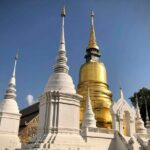
Wat Suan Dok (also known as Wat Buppharam in the naming notes) is described as a Buddhist temple on Suthep Road. You also see it referred to as a royal temple of the Third Class.
Why it matters on a “photo + culture” tour: you’ll often see different temple “personalities” back to back, and that helps you understand Chiang Mai isn’t one style—it’s a whole range.
Wat Buppharam: A historical ritual connection
The stop notes describe Wat Buppharam as founded in 1497 by King Mueang Kaeo, and it mentions a ritual circumambulation connected to reoccupying Chiang Mai after two centuries.
You might not remember every date, but it gives context for why people take these sites seriously. For photos, it helps too: when you know what you’re looking at, your captions write themselves.
Wat Chet Yot: Snake-year pilgrimage vibes
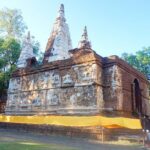
Wat Chet Yot is listed as a center of pilgrimage for those born in the year of the Snake. That’s a detail you won’t get from a generic temple stop.
Even if your own birth year doesn’t match, it makes you realize temple visits in Northern Thailand aren’t only about sightseeing. They’re calendar-based and personal.
Wat Lok Moli and Wat Umong: Different kinds of temple atmosphere
Wat Lok Moli is described as on the north side of the north moat area, about 400 meters west of Chang Phuak city. Wat Umong is described as a 700-year-old Buddhist temple.
These two feel different from the big “Instagram billboard” sites. That’s a plus. They help your day feel less repetitive, especially if you’ve been photographing bright, highly decorated spaces earlier.
Wat Phra That Doi Suthep: The Hilltop Payoff
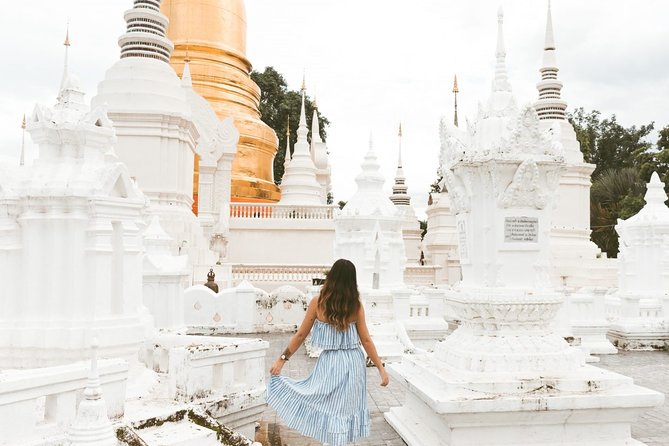
If you do just one “big ticket” temple moment, it’s usually this one. Wat Phra That Doi Suthep is sacred to many Thai people and sits about 15 kilometers from Chiang Mai city at an elevation of 1,073 meters. The route notes also connect it with Doi Suthep–Pui National Park.
This stop is worth it because it changes the whole scale of the day. Earlier temples are about details and close viewing. Doi Suthep is about reaching up, looking out, and feeling like you left the city and still stayed in it.
Practical advice: bring a little extra patience here. Elevation can mean cooler air than the city, but it can also mean breezier conditions and shifting light. Your photographer will help you time shots, but you’ll feel more comfortable if you dress in layers.
Markets and Night Bazaar: Food and Handmade Stuff After Temples
A Chiang Mai day that skips markets feels incomplete. This tour includes Warorot Market (Kad Luang), plus a night-bazaar-style walking area.
Warorot (Kad Luang): The main market hit
Warorot Market is described as one of Chiang Mai’s largest and best-known markets in the north region. It’s also tied to local shopping culture, so it’s not just souvenirs on display.
If you like tasting and browsing at the same time, this is a good slot. Also, it helps balance the day—temples can become visually similar after a while, and markets reset your senses.
Night Bazaar: the walking street energy
The Night Bazaar is described as being directly east of the city moat, between it and the Ping River, on Chang Khlan Road. It’s known for handicrafts and port-style shopping.
On a practical level, this part of the tour is ideal if:
- You want a last evening “wander” without planning routes.
- You want to keep momentum after temple stops.
- You like shopping, but only after you understand what you’re looking at.
The main drawback? Night Bazaar areas can get crowded. The tour being private helps here because your guide can steer where you spend time, instead of you being stuck in the densest lanes.
Bo Sang Umbrellas, Khamthiang Flowers, and the Butterfly Greenhouse
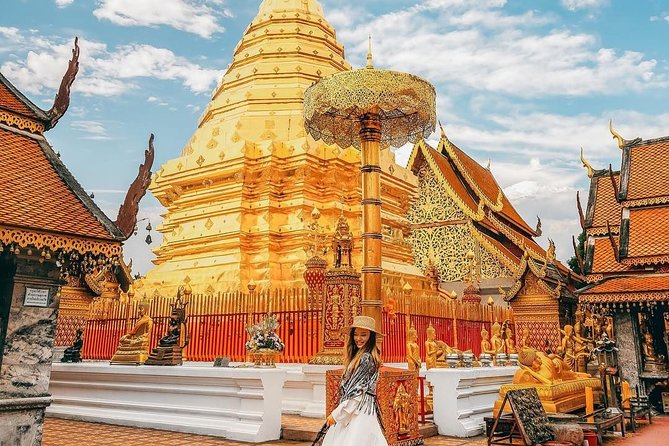
These stops add variety in a way that temple-focused tours often miss. They also make your photos look less like yet another set of temple shots.
Bo Sang Village: umbrellas and parasols as Chiang Mai symbols
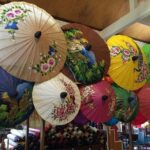
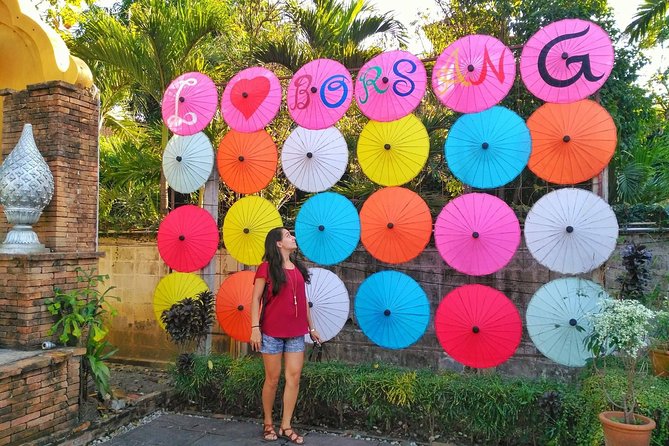
Bo Sang Village is described as known throughout the country—and abroad—for umbrella and parasol handcrafting. The umbrella becomes a symbol of Chiang Mai.
Photo tip: umbrellas give you built-in shapes and colors. If you’re trying to diversify your feed, this is one of the easiest wins.
Khamthiang Market: flower market next to a supermarket
Khamthiang Market is described as a hidden-away flower market with a wide variety of flora and fauna. It’s right next to Lotus Supermarket.
This is the kind of stop that feels “local daily life,” not staged tourism. The only drawback is that it can be less photogenic if your timing is off for lighting or if the day is rainy. Ask your guide what’s best to photograph right then.
Greenhouse stop with butterflies, plants, flowers, plus a cafe
There’s also a cozy greenhouse stop with butterflies, plants, flowers (including orchids), and a cafe.
If you’re starting to feel temple-fatigued, this is a relief. You get calmer visuals, plus a chance to slow down. The downside is that greenhouse style stops usually reward patience—you’ll enjoy it most if you take your time and don’t treat it as a “grab one quick photo and go” stop.
Nature and Wider Chiang Mai: Doi Suthep–Pui and Doi Inthanon Options
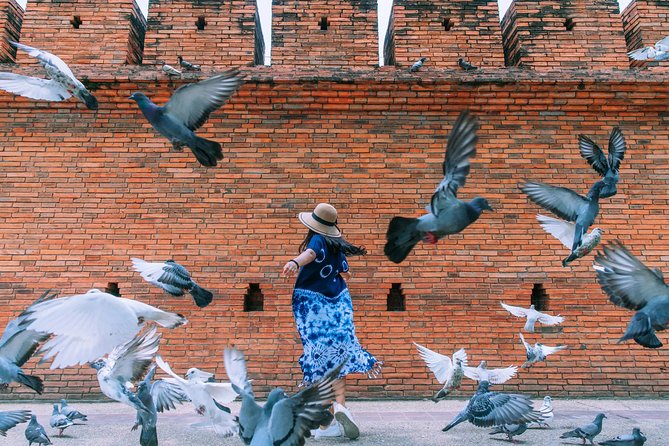
This tour includes nature-related areas in the broader Chiang Mai region: Doi Suthep–Pui National Park and Doi Inthanon National Park show up in the stop list. It also includes waterfall-style experiences and short walking trails.
Doi Suthep–Pui National Park and Bhubing Palace
The notes say Doi Suthep–Pui National Park includes Wat Phra That Doi Suthep and Bhubing Palace, the winter residence of King Bhumibol Adulyadej.
On days that include these areas, the tour becomes a mix of temple and mountain air. That helps the day feel like more than “old city only.”
Doi Inthanon National Park and waterfall climbs
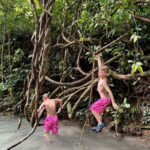
Doi Inthanon National Park is described as rugged mountainous terrain with lush tropical forests and rivers and waterfalls. One listed waterfall feature mentions you can climb directly up the rocks into the oncoming cascading water.
That’s an exciting detail, but also a reminder: water stops can turn from photo fun to wet discomfort fast. If you’re bringing cameras or you hate slippery surfaces, plan accordingly and listen to your guide on how to handle it safely.
Wiang Kum Kam: an archaeological river-side contrast
Wiang Kum Kam is described as an historic settlement and archaeological site along the Ping River, built by King Mangrai the Great before he moved the capital to Chiang Mai. It was flooded and abandoned.
This adds a different kind of Chiang Mai story—less “today’s temple life” and more “why this city exists.” It’s a great contrast if your day has already leaned heavy into busy markets and bright temple facades.
Other nature/monument notes: scenic cascades and a founders monument
You’ll also see mentions of a monument to the city’s three legendary founders and scenic cascades falling in several levels. If those appear in your route, they’re your chance for non-temple photos that still feel connected to Chiang Mai’s identity.
How the Photography Actually Helps (Instead of Feeling Cringey)
One reason this kind of tour can work is that it handles the hardest part: getting good shots without interrupting your own sightseeing.
The tour description makes it clear your photographer takes the pictures. That means you can:
- Pose without scrambling.
- Focus on where to stand rather than where to aim.
- Get more consistent framing across different temple and market backdrops.
And the guide piece matters too. In the praised guide experiences, people mention guides like Nong, Poon, M, and Boy for being knowledgeable, attentive, and helpful with taking good photos. One review also highlights avoiding crowds and lines. That’s not just comfort—it can make your photos look better because you’re not fighting the background chaos.
If you want the best results, wear something comfortable you can move in. Temple steps and market lanes are not ideal for uncomfortable shoes. You’ll get better photos when you’re not thinking about your feet.
Day Pace, Comfort, and the Realistic Trade-offs
Let’s be honest: a tour built around many “must-see” points can feel fast, even if each stop includes time.
Here’s what keeps it from feeling like a drive-by:
- Several temple visits are set around 45 minutes early in the day.
- The private vehicle cuts travel friction.
- You have time for photo stops rather than only transit.
Here’s what can still feel like a trade-off:
- You’ll cover a lot of ground in 6 to 8 hours.
- If you want long, quiet contemplation at every temple, you may want a slower add-on after the tour.
- If it’s hot or rainy, the “go outside and climb rocks” parts can feel less fun than the photos.
The good news: it’s private, and your guide can usually help you adjust your personal pace inside the time window.
Who Should Book This Tour, and Who Should Skip It
This is a strong match if:
- You only have one day (or less) in Chiang Mai and want a structured hit list.
- You care about Instagram-friendly shots but still want meaningful context at temples.
- You’d like help with photography so you don’t spend your day chasing strangers for pictures.
- You prefer the comfort of hotel pickup and private transport in a tight schedule.
You might skip it if:
- You hate crowds and packed itineraries and want fully independent slow travel.
- You’re not interested in photo targets and would rather spend hours in one temple or one market.
- You’re looking for a deep academic history course with long museum time. This is more “guided highlights” than “seminar.”
Should You Book This Chiang Mai Instagram Tour?
If you want a one-day plan that mixes temples, markets, and photo help without eating your whole schedule in transit, I think it’s worth booking. The price makes more sense when you treat it as a bundle: private vehicle + pickup/drop-off + guide + photographer + local tastings, plus admissions at key early stops.
Before you book, decide how you feel about the trade-off. This is built for famous photo moments, so you’ll move. If you enjoy variety, that’s a plus. If you crave slow calm, you may want a quieter private temple day instead.
If the weather is good on your dates, and you’re excited to get photos without asking strangers for help, this is the kind of tour that leaves you with both memories and better pictures.
FAQ
How long is the Chiang Mai Instagram tour?
It runs about 6 to 8 hours.
Is this tour private?
Yes. It’s a private tour, so only your group participates.
Is hotel pickup and drop-off included?
Yes. Stress-free hotel pickup and drop-off are included.
Does the tour include a photographer?
Yes. Your photographer takes the pictures so you do not have to ask strangers.
What is the price per person?
The price is $121.00 per person.
Is there a mobile ticket?
Yes. A mobile ticket is included.
Are admission tickets included?
Admission tickets are included for several of the early stops (including the Tha Phae Gate segment and multiple Wat visits listed at about 45 minutes each).
Does the tour include local food?
Yes. You sample local delicacies and get inside scoop on Chiang Mai culture.
What happens if the weather is bad?
This experience requires good weather. If it’s canceled due to poor weather, you’ll be offered a different date or a full refund.
What is the cancellation window?
Free cancellation is available up to 24 hours before the experience starts for a full refund.