REVIEW · CHIANG MAI
Half Day – Small Group – Doi Suthep Temple and Hmong Village Tour
Book on Viator →Operated by Touring Center · Bookable on Viator
Doi Suthep and a Hmong village in four hours. This tour ties together Wat Phra That Doi Suthep (a Chiang Mai icon) with hill-tribe culture at Doi Pui, and it does it with door-to-door convenience from central areas. You also get a guided route to the temple grounds and the big viewpoint over the city.
I love the temple part for the way it’s structured: you spend a solid block of time at Wat Phra That Doi Suthep with admission included, plus the lift. It’s not just a quick stop for photos; it’s time to understand the place and actually see Chiang Mai from above.
One consideration: the Doi Pui Hmong village visit is short, so if you want a slower, deeper cultural experience, the 45-minute timing can feel a bit tight.
Small-group pacing with a max of nine people means you can ask questions without yelling over a crowd.
Wat Phra That Doi Suthep time block (1.5 hours) includes admission and the lift, plus guided temple viewing.
Doi Pui Hmong Museum entry is included, so you’re not stuck only doing souvenir browsing.
Door-to-door pickup from central hotels (within 6 km of the Three Kings Monument) keeps the day from turning into taxi math.
Guide-led storytelling is a major value add, with guides like Bee, Tui, and Aom called out for their explanations.
In This Review
- Wat Phra That Doi Suthep: Golden Temple With Real View Time
- The Viewpoint Over Chiang Mai: Why People Make the Trip
- Doi Pui Hmong Hill Tribe Village: Museum Stop and a Real Taste of Daily Life
- Guides Make or Break This Tour (and This One Tries Hard)
- Door-to-Door Pickup From Central Hotels: The Time-Saver
- Price and Value: What $37.49 Covers (and Why It’s Not Just Cheap)
- Timing, Clothing, and How to Avoid the Usual Temple Mistakes
- Weather Rules and Day-Selection Advice
- Who This Tour Suits Best (and Who Should Consider Another Option)
- Should You Book This Wat Phra That Doi Suthep and Doi Pui Hmong Village Tour?
- FAQ
- How long is the tour?
- How much does it cost?
- What places does the tour visit?
- Is pickup included?
- What’s included in the price?
- What should I wear?
Wat Phra That Doi Suthep: Golden Temple With Real View Time
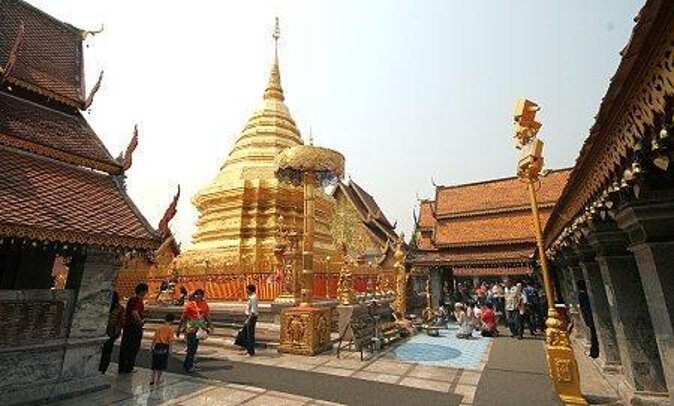
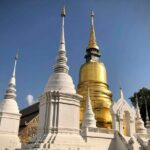
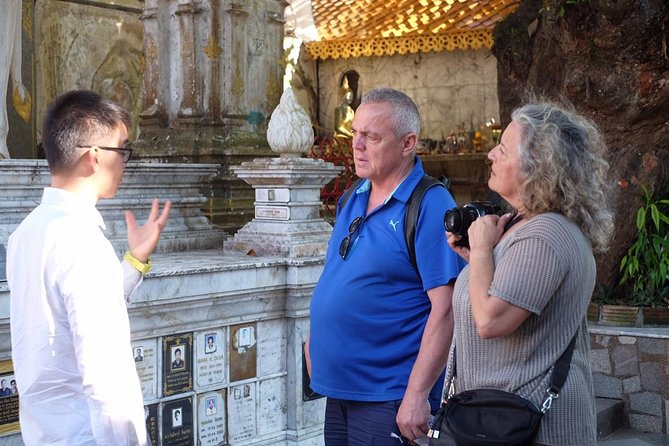
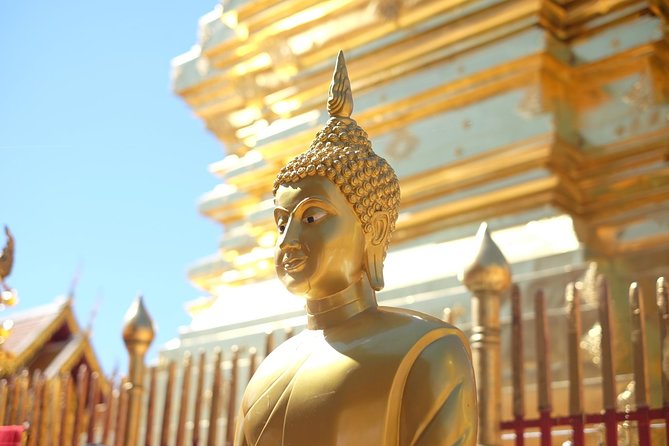
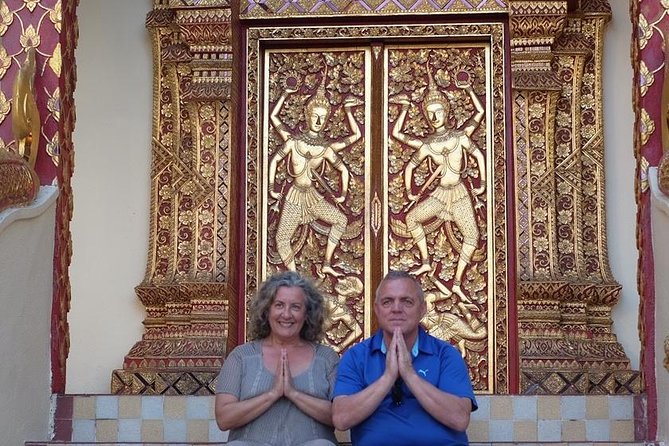
Wat Phra That Doi Suthep is the kind of place where your first reaction is usually, That’s it. The gold stupa, the devotional spaces, the stairs, the sightlines back toward Chiang Mai. This tour keeps your time practical: you get about 1 hour 30 minutes at the temple area, with admission included and the lift included too.
That lift detail matters more than it sounds. Doi Suthep is famous for its steep climb, and not everyone is up for the full stair slog. Having the lift option lets you spend your energy on the parts that actually benefit from being there—seeing how the temple compound works, walking at a comfortable pace, and lingering at the viewpoint.
I also like that the temple stop isn’t presented as just a backdrop. A good guide makes the rituals and design elements feel less like random decorations and more like something with purpose. This is where you’ll hear guides named Bee and Tui called out for clear explanations and easy conversation—especially if you’re the type who looks at temples and wonders what you’re actually looking at.
Practical tip: bring a layer. Even in Thailand, the hill air can feel cooler, and temple time often means standing around looking up and out for a while.
The Viewpoint Over Chiang Mai: Why People Make the Trip
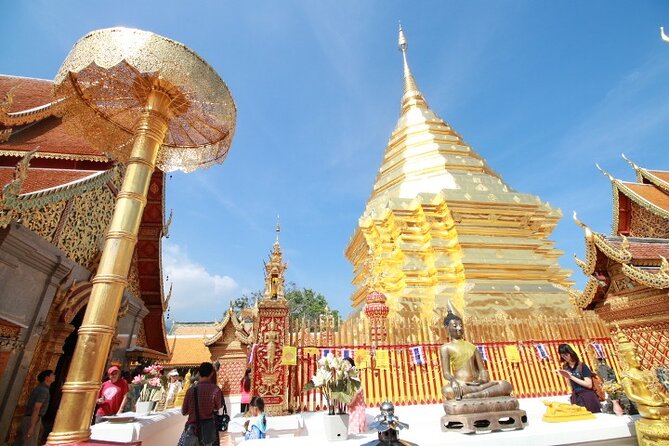
The whole reason Doi Suthep is on everyone’s shortlist is the viewpoint. From there, Chiang Mai reads like a map—roads, neighborhoods, and the sense that you’re looking at a city from a different scale than street level.
On a clear day, the visibility can be excellent, and it’s the moment that helps the temple stick in your memory. If the day is misty or overcast, it can still be pretty, but you’ll want to be realistic: you may not get the same crisp view. Since this tour requires good weather, you’re not being sold a miracle forecast. If weather doesn’t cooperate, you’ll be asked to pick another date or get a refund.
One more small note: during the temple stop you’ll also find snack stalls and coffee options. A guide tip that comes up a lot is to try the coffee around Doi Suthep while you’re there—simple, local, and convenient since you won’t be leaving the area to grab caffeine.
You can also read our reviews of more tours and experiences in Chiang Mai.



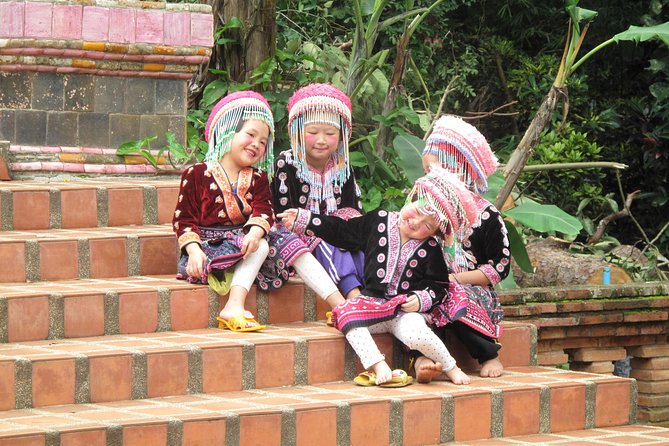
Doi Pui Hmong Hill Tribe Village: Museum Stop and a Real Taste of Daily Life
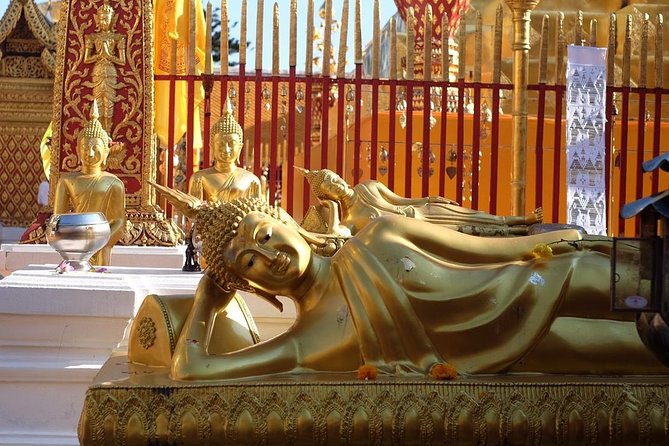
After the temple, the tour heads to Doi Pui Hmong Hill Tribe Village for about 45 minutes. That timing is the key tradeoff of this itinerary. It’s enough time to get oriented, see the village museum, and walk through the souvenir stalls, but it’s not enough time to turn this into a long, story-by-story cultural immersion day.
Here’s what makes the Doi Pui stop more useful than a standard market walk: the Hmong museum admission is included. That gives you context for what you’re seeing, and it can make the souvenir areas feel less random. If you’re hoping to understand the difference between a performance for tourists and everyday life, that museum component helps you ask better questions.
I also think the coffee moment is part of the appeal. In the village area, you may find a café-like break where people order drinks and sweet snacks. Guides with names like Aom are praised for explaining village life in a grounded way, and those explanations land better when you’ve got a visual anchor in front of you.
Souvenir stroll reality check: yes, there are stalls. The village visit includes time walking through shops, and you should expect that. If you’re shopping-minded, this can be a fun part of the day. If you’re not, just keep your eyes on the museum and the village route so the shopping doesn’t take over your time.
Guides Make or Break This Tour (and This One Tries Hard)
Small-group tours can go two ways: either the guide is the star, or you end up with a bus schedule and a checklist. This one is designed to avoid the checklist feel by capping the group.
You’re looking at a maximum of nine people for the small-group experience. And that shows in how the tour tends to run—more questions, more pacing control, less time spent waiting for someone who wandered off to buy a fridge magnet.
The guide quality seems to be the biggest reason the rating is so strong. Names that pop up in the guide conversation include Bee, Tui, Aom, Paul, and Lucky. The common theme across these names: good English, clear explanations, and a driver who stays calm on Chiang Mai’s tighter roads and traffic.
That last part is underrated. If you’ve ever been stuck in a crowded vehicle around hills and curves, you know how fast a half-day can become stressful. Here, you’re in an air-conditioned minivan with a professional driver, plus bottled water—small comfort items that matter when your day is mostly travel time plus two fixed stops.
Door-to-Door Pickup From Central Hotels: The Time-Saver
Chiang Mai can eat your day in transit if you wing it. This tour helps by offering hotel pickup and drop-off for hotels located within 6 kilometers of the Three Kings Monument.
That range is the practical boundary. If your hotel is outside that zone, you may face a pickup/drop-off surcharge (THB500 per way for 6–15 km, THB1,000 per way for 16–30 km). The tour is priced low enough that this surcharge is still worth checking, since it can turn a budget-friendly plan into a mediocre deal.
If you want the smoothest experience, plan for minimal friction:
- Choose a hotel that sits near the central pickup zone.
- Expect door-to-door pickup to reduce the mental overhead of finding the right van.
Also note the meeting point: the tour starts at Touring Center 14 and the activity ends back at the meeting point. If your pickup is included, you’ll still get the central convenience—but it’s smart to arrive prepared to check in smoothly.
Price and Value: What $37.49 Covers (and Why It’s Not Just Cheap)
At $37.49 per person for an approx. 4-hour half-day, this is one of those tours that feels fair because it includes the bits people often forget to budget.
Included highlights you’re getting:
- English-speaking professional guide
- Air-conditioned minivan transport
- Bottled water
- Admission fees for Doi Suthep and the Doi Pui Hmong Museum
- Lift at Doi Suthep
- Travelling accident insurance
A lot of tours advertise low prices but quietly remove the admissions from the deal. Here, admissions are built in, which makes the price feel more honest—especially for Doi Suthep, where you’re paying to access the important parts of the site.
Alcohol is not included, and souvenirs are extra, but that’s normal. The bigger “value” question is how you like to travel. If you enjoy guided context and you want a time-efficient route up to Doi Suthep and into a village setting, this fits well.
If you’re the type who prefers independent travel and hates structured timing, you might feel hemmed in by fixed stop durations. That brings us to the only real drawback people mention: the risk of feeling rushed when you can’t slow the schedule down.


Timing, Clothing, and How to Avoid the Usual Temple Mistakes
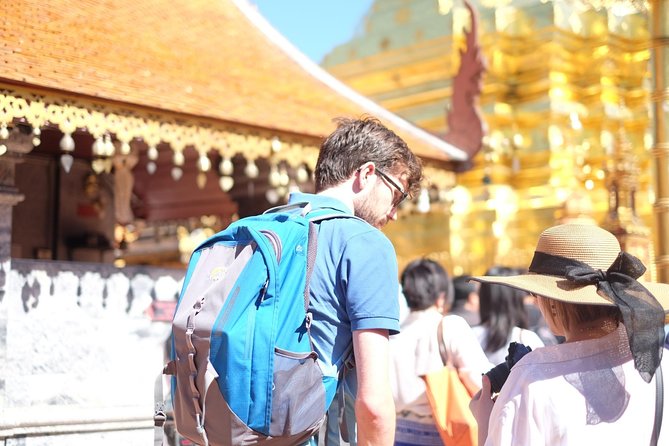
This tour is built around a short schedule, so you’ll want to show up ready. Two specifics matter:
Dress code: smart casual, with shoulders and knees covered for monastery entry. It’s an easy rule, but people often forget it when planning around hot weather. Bring a light layer if you’re wearing shorts and a tank top.
Monastery etiquette: keep your pace respectful and remember temple areas often involve worship spaces. That means quieter behavior, slower walking in crowded spots, and dressing appropriately so you don’t feel self-conscious in photos.
One more tip based on how the temple stop is timed: bring sun protection. Even with a guide, you’ll be standing outside and walking. The tour includes water, but it doesn’t replace hats and sunscreen.
For the village portion, think of it as a short cultural visit rather than a long community stay. That means you should go in with curiosity, not expectations of a full-day ethnography project.
Weather Rules and Day-Selection Advice
The tour requires good weather. That’s not just a fine-print detail. Doi Suthep’s viewpoints are the main payoff, and mist can change the experience—sometimes pleasantly, sometimes not.
If you have flexibility in your Chiang Mai schedule, I’d choose this tour on a day when you expect clearer skies. If your date gets cancelled due to weather, take the alternative date if it fits your itinerary, because the value here depends on actually seeing the viewpoint.
Who This Tour Suits Best (and Who Should Consider Another Option)
This is a great fit if:
- You want both a major temple site and a hill-tribe village stop in one half-day.
- You like having a guide explain what you’re seeing, not just telling you where to walk.
- You appreciate a small-group setting (up to nine) for easier questions and smoother pacing.
- You want included admissions and transport without spending extra time booking tickets separately.
It’s less ideal if:
- You need long, unstructured time in one place. The Doi Pui portion is 45 minutes, and that’s the schedule’s strongest limitation.
- You dislike shopping environments. The village route includes souvenir stalls, even with a museum stop.
- You’re the type who gets frustrated if a stop feels fast. On a tour with fixed time boxes, “slow” is not the default.
Should You Book This Wat Phra That Doi Suthep and Doi Pui Hmong Village Tour?
Book it if you want a smart, guided half-day that combines Chiang Mai’s most recognizable temple view with a village visit that includes museum entry and context. The included transport, admissions, and lift make the price feel grounded, and the small-group size helps the guide actually interact with you.
Skip or rethink it if you want the kind of deep, unhurried cultural experience that takes all day, because the village stop is intentionally short. If you book anyway, go with a clear goal: use the museum for understanding, use the village walking for orientation, and save “long lingering” for a different day in Chiang Mai.
If you’re planning your first visit to Chiang Mai and want a high-impact, low-stress use of a half-day, this is a strong candidate.
FAQ
How long is the tour?
It runs for approximately 4 hours.
How much does it cost?
The price is $37.49 per person.
What places does the tour visit?
You visit Wat Phra That Doi Suthep and Doi Pui Hmong Hill Tribe Village.
Is pickup included?
Hotel pickup and drop-off are included for hotels within 6 kilometers of the Three Kings Monument. A surcharge applies if you’re outside that area.
What’s included in the price?
The tour includes an English-speaking guide, air-conditioned minivan transport, bottled water, travelling accident insurance, and admission fees (including lift at Doi Suthep and the museum at Doi Pui).
What should I wear?
Dress smart casual and cover your knees and shoulders for entering a monastery.