REVIEW · CHIANG MAI
Chiang Mai: Jungle Kayak Adventure with Rapids & Elephants
Book on Viator →Operated by Chiang Mai Mountain Biking & Kayaks · Bookable on Viator
Kayaking with elephants is a rare mix. I love the Mae Wang rapids that let you start mellow and work up to real whitewater, and I love how the route keeps elephants close to the riverbank for bathe-and-drink moments. You also get a real change of pace from Chiang Mai, with jungle valley scenery under Doi Inthanon’s shadow and a day structured around safe guiding, not just speed.
One thing to plan for: insects. A prior rider flagged horse fly attacks, so I’d treat repellent like essential gear, not an optional extra.
In This Review
- Key highlights you’ll feel on this Mae Wang day
- From Chiang Mai to Mae Wang Valley: the 45-minute reset
- Getting on the water: safety gear, PFD fit, and being your own captain
- What to take seriously
- Upper Mae Wang: Class I and II rapids for learning your rhythm
- Elephant camps and wildlife sightings from the water
- How to improve your odds of seeing animals
- Lost Canyon for advanced kayakers: Class III and IV whitewater
- A practical way to decide if you go for it
- Lunch by the river: a real break, not just a stop
- What gear to bring (and what you can buy there)
- Price and value: why $81.24 can make sense here
- Who this Mae Wang kayaking trip is best for
- Should you book this Chiang Mai kayak and elephant adventure?
- FAQ
- What time does the kayaking start?
- How long is the trip?
- Is hotel pickup included?
- Do I have to paddle a whitewater kayak?
- What rapids will we paddle?
- Will I see elephants?
- What’s included for safety and gear?
- Is lunch included, and can I get vegetarian or vegan food?
- Do I need a passport for this tour?
- What if the weather is bad?
Key highlights you’ll feel on this Mae Wang day
- Class I–II fun first, with real skills coaching before you chase bigger water
- Elephant camps along the river route, with chances to see elephants bathe and drink
- Up to 10 people so the day stays organized and personal
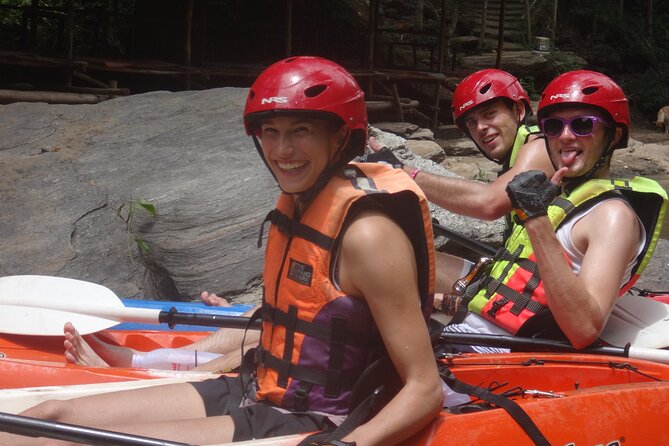
- Safety-first setup: helmets, PFDs, and (for whitewater kayaks) spray decks
- Support truck following for gear storage and backup support
- Riverside lunch with vegetarian and vegan options
From Chiang Mai to Mae Wang Valley: the 45-minute reset
Your morning starts with an 8:30am departure from Chiang Mai, with pickup offered from your hotel. The drive to the Mae Wang Valley is about 45 minutes, and that short transfer matters more than you might think. You go from city noise to countryside views quickly, which makes the rest of the day feel like a true break instead of a half-day outing.
Once you’re in the valley, you’re working against a scenic backdrop: Mae Wang is set in the shadow of Doi Inthanon, Thailand’s highest mountain. Even if you don’t study the peaks from the river, the setting is part of the payoff. This is northern Thailand green country, not a waterpark vibe.
That small-group limit also helps the day feel calm. With a maximum of 10 travelers, you’re less likely to feel like you’re being rushed through safety talk or equipment changes.
You can also read our reviews of more tours and experiences in Chiang Mai
Getting on the water: safety gear, PFD fit, and being your own captain
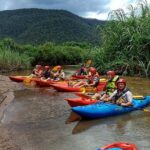
This trip is guided, but you’re not carried around like cargo. After meeting your guide team at your hotel and traveling to the launch area, you get technique and safety basics, then you’re the one paddling your boat. The day is designed for different comfort levels, with a boat choice matched to your skill.
Equipment is handled for you. Expect sized PFDs (life jackets) and helmets, and if you’re on a whitewater kayak you’ll also use spray decks. A following support truck comes along too, with secure storage for valuables and the ability to assist if something needs fixing fast.
One underrated feature is the pre-launch orientation using Google Earth. It helps you visualize what you’re about to do and gives you a quick sense of how the route connects, which makes the water feel less random. And because the instructors are certified in first aid and CPR, you’re not relying on hope if anything goes wrong.
What to take seriously
You’ll want a moderate physical fitness level. This isn’t a full-on gym workout, but you are paddling, getting in and out of the boat, and handling river movements. If you’ve never paddled before, it’s still workable because the route starts easy—just don’t plan on coasting the whole time.
Upper Mae Wang: Class I and II rapids for learning your rhythm
Your main launch is on the upper portion of the Mae Wang River. This is where the river does its job as a teacher.
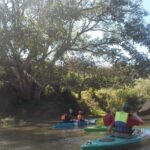
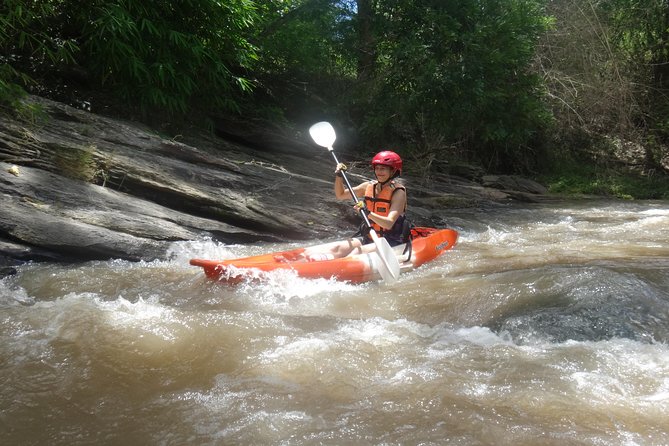
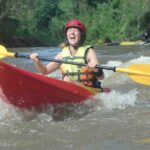
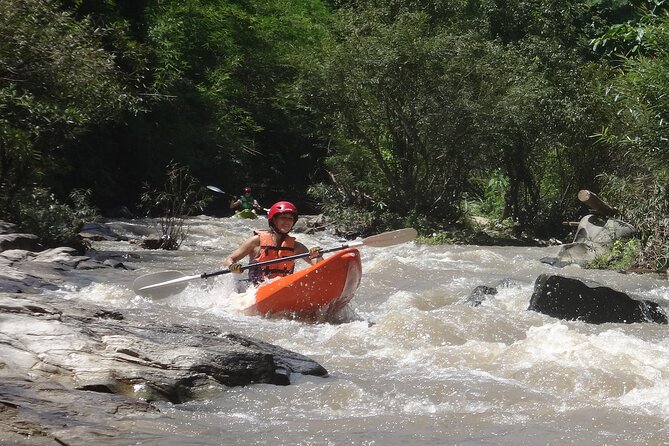
You’ll paddle through Class I and II rapids, which are the right range for beginning boaters. Think of it as water that nudges you into paying attention: read the current, keep a steady stroke, learn how to angle the boat, and don’t panic when the river pushes back. Between rapids, there are easy stretches that let you reset, look around, and enjoy the scenery instead of white-knuckling every minute.
This is a great fit for people who want to learn real river technique without jumping straight into scary water. It also makes the experience more fair across a group. If someone is new, they can focus on fundamentals while more confident paddlers still get plenty of play.
You also choose your setup based on comfort and ability: you might ride a river kayak or a sit-on-top boat, depending on what best matches your skill level. Sit-on-top kayaks can be especially friendly for those who want stability and easier adjustments, while traditional kayaks can feel more connected for people with paddle experience.
Elephant camps and wildlife sightings from the water
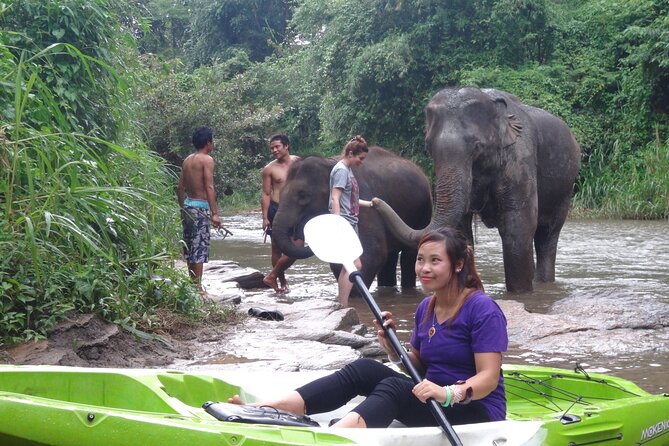
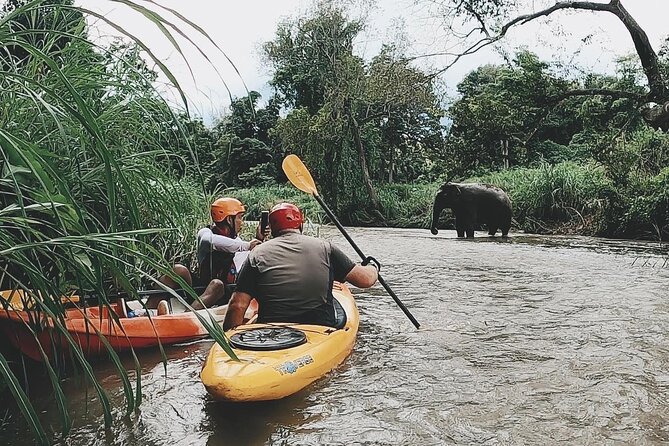
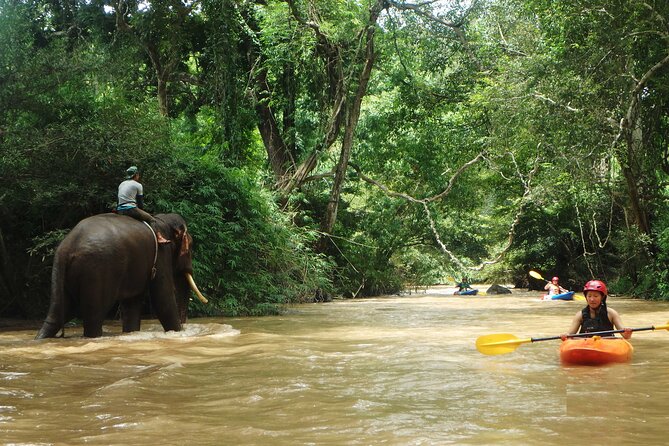
Here’s the part that makes this day memorable: the route passes a series of elephant camps. As you follow the river, you’re in a position to spot elephants that come to the water’s edge to bathe and drink.
The key detail is that you’re not watching from a distant platform. You’re paddling along at river level, which changes your sense of scale. An elephant’s presence near the bank is something you remember, and it’s built into the route instead of being a random bonus you hope for.
Beyond elephants, you’re also looking for butterflies, birds, and other jungle mammals. The day is paced with sun-and-shade stretches, so you get moments where you can scan the banks instead of focusing only on your next stroke. That combination is why this trip feels like more than kayaking: it’s nature time with a wild neighbor.






How to improve your odds of seeing animals
Stay alert during calmer sections. When the water is gentle, it’s your best chance to spot movement on the edges of the river. Also, keep your head up. If you paddle while staring at the front of your kayak the whole time, wildlife spotting gets harder fast.
Lost Canyon for advanced kayakers: Class III and IV whitewater
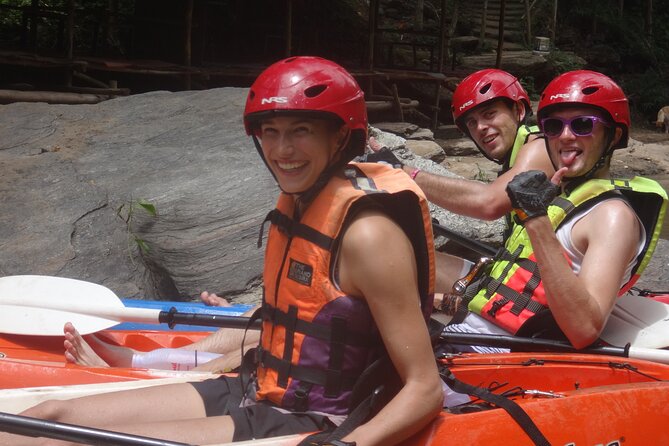
If you’re an advanced paddler (or you’re feeling ready for more), the trip can continue into the lower Mae Wang River for tougher water. This is where the grade jumps up.
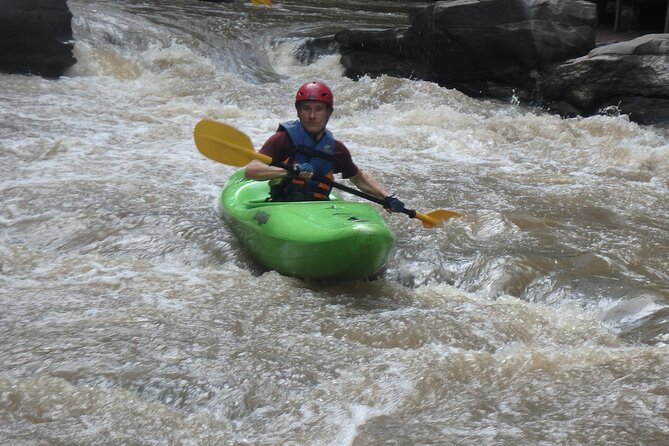
You’ll face Class III and IV rapids in the lower part of the river—bouncy, energetic whitewater that can hit boulders and squeeze past riverbanks. The description you should remember is Lost Canyon. It’s the section specifically called out for advanced kayakers who shouldn’t miss the white water and rocks.
This is not just a tougher version of the same ride. The river changes character. You’ll have to read currents faster, adjust your line, and commit to movement instead of reacting late. That’s why the tour mentions it as a fit for advanced boaters rather than something for everyone.
A practical way to decide if you go for it
If you’re new or only comfortable with mild rapids, you can still have a great day in the upper section. But if you know you can handle more forceful water, Lost Canyon is the reason many people sign up for this specific trip. Choose based on your actual comfort on the river, not on confidence from dry land.
Lunch by the river: a real break, not just a stop
You get a riverside lunch, and that matters because it keeps the day from feeling like nonstop exertion. After paddling, you’ll want a meal that doesn’t ask you to rush.
Vegetarian and vegan options are available. I like that because it’s a common point of failure on outdoor tours; here, the day is planned with choices in mind rather than treating special diets as an afterthought.
Hydration is also part of the plan. Water is available throughout the event, including water for hydration packs and bottled water. In Chiang Mai’s heat, this is not small stuff. You’ll paddle longer than you expect, and dehydration can sneak up if you treat water like a background detail.
What gear to bring (and what you can buy there)
This isn’t a gear-free fantasy day. While the important safety equipment is provided—PFDs, helmets, and the kayaking gear depending on your setup—you should bring the comfort items that keep you from regretting the day later.
For insect protection, take it seriously. Repellent is sold at the pro-shop, along with sunscreen. If you’re trying to pack light, you can also buy water shoes there, which is useful because you’ll be dealing with river access and wet footing.
A good rule: wear what you can get wet and still move in. If you’re thinking of sandals, you might find river terrain doesn’t love that choice. Water shoes give you grip and reduce the chance of slipping during boarding and exiting.
You’ll also be happier with a plan for valuables. The support truck follows, and storage is mentioned as secure, which helps. Still, bring as little as possible, and keep the essentials where you can manage them comfortably.
Price and value: why $81.24 can make sense here
At $81.24 per person for about 5 hours, this isn’t a budget-only activity. But it also isn’t priced like a luxury private tour. The value comes from what’s included.
You’re paying for:
- Guiding with safety gear (helmets, PFDs, plus spray decks for whitewater kayaks)
- First aid and CPR-certified instruction
- A support truck following with secure storage and backup readiness
- Boat time on the Mae Wang River, including rapids matched to skill levels
- Riverside lunch with vegetarian and vegan options
- Hydration during the event
- A small group size (maximum 10 travelers)
If you’ve ever done outdoor activities where you show up and realize you’re missing key equipment or that safety isn’t built into the experience, this trip is structured to avoid that problem. Also, the elephant element isn’t tacked on with a separate transfer to a distant site. It’s part of the river route, which increases the sense of “you get the day’s full story.”
The main value tradeoff is that you’ll spend energy paddling. If you want a purely scenic float with zero effort, you might find this more active than expected.
Who this Mae Wang kayaking trip is best for
This is a strong match if you want an active day that still feels like nature and not just exercise.
It’s suited for all ages and skill levels in the sense that the river and boat choice adapt. But the real dividing line is your willingness to paddle and your comfort with moving water. You’ll also want moderate physical fitness.
You’ll likely enjoy it most if you:
- Want real Thai jungle scenery and a day outside Chiang Mai
- Like the idea of combining paddling with wildlife viewing
- Want rapids progression, from Class I–II to tougher water for advanced paddlers
- Appreciate guided safety and equipment setup instead of DIY rafting
If you’re sensitive to insects, plan carefully. If you hate unpredictability, bring a flexible mindset: river days respond to conditions, and the experience depends on good weather.
Should you book this Chiang Mai kayak and elephant adventure?
If you want a day that balances Class I–II confidence-building with the option of Lost Canyon-style Class III–IV for the ready paddlers, this is a smart booking. Add in the built-in route through elephant camps and the riverside lunch with vegetarian and vegan options, and it hits a nice mix of adrenaline and real animal-and-jungle atmosphere.
The main reason to pause is practical: plan for insects (including horse flies) and don’t expect a totally hands-off ride. If you can handle that, this is the kind of Chiang Mai day trip that feels like you used your time well.
FAQ
What time does the kayaking start?
The start time is 8:30am.
How long is the trip?
The duration is about 5 hours.
Is hotel pickup included?
Pickup is offered. You meet your guide at your Chiang Mai hotel, and details for pickup are confirmed by email instructions in the morning.
Do I have to paddle a whitewater kayak?
Not necessarily. You’ll be able to choose a river kayak or a sit-on-top boat based on your skill level. Whitewater kayaks are provided for intermediates to experts.
What rapids will we paddle?
You’ll start on the upper Mae Wang River with Class I and II rapids. Advanced paddlers may continue into the lower Mae Wang River for Class III and IV rapids in Lost Canyon.
Will I see elephants?
The route passes a series of elephant camps, and you can spot elephants at the water’s edge as they come to bathe and drink.
What’s included for safety and gear?
You’re provided with safety equipment including sized PFDs and helmets. For whitewater kayaks, spray decks are included. First aid and CPR certified instructors guide the experience, and a support truck follows for assistance and secure storage.
Is lunch included, and can I get vegetarian or vegan food?
Yes. Lunch is included, with vegetarian and vegan options available at a riverside restaurant.
Do I need a passport for this tour?
Yes. You’re asked to provide your passport number at check-in for insurance ID.
What if the weather is bad?
This experience requires good weather. If it’s canceled due to poor weather, you’ll be offered a different date or a full refund. There is free cancellation up to 24 hours in advance for a full refund.