REVIEW · CHIANG MAI
Chiang Mai: Doi Inthanon National Park and Pha Dok Siew Trek
Book on GetYourGuide →Operated by Trips Chiang Mai · Bookable on GetYourGuide
Cool mountain air and waterfalls in one day. I love how the Pha Dok Siew jungle walk is gentle for most fitness levels, and I love the Twin Pagodas stop for big views and sacred, well-kept grounds.
The trade-off is time and footing: the hike is mostly downhill but still has plenty of steps, and the upper areas can feel quite cold, so pack a rain layer even if the forecast looks calm.
In This Review
- Key points
- Doi Inthanon: why this day trip actually feels like a different world
- Pickup and timing: the van day that still leaves room to breathe
- Doi Inthanon photo stops and the Twin Pagodas you came for
- Pha Dok Siew Nature Trail: gentle by design, challenging by the stairs
- Rainy-season reality check
- Karen village coffee and lunch: cultural stops that work best with curiosity
- Wachirathan Waterfall: the payoff, even when the weather shifts
- Price and value: what you’re paying for (and when you’ll pay cash)
- What to bring: the small gear choices that prevent big annoyances
- Who this tour is best for (and when to skip it)
- Should you book this Doi Inthanon and Pha Dok Siew tour?
- FAQ
- Are entrance fees included in the price?
- How long is the hiking part on Pha Dok Siew?
- Is lunch included, and can I get a vegetarian meal?
- What kind of hiking difficulty is it?
- What should I bring for the day?
- Where do I meet the tour if my hotel isn’t in the pickup zone?
Key points
- Pha Dok Siew Nature Trail: a mostly downhill, easy-to-moderate trek that still keeps you on your toes with steps
- Twin Pagodas: iconic photo views plus a real feel for Buddhist temple space
- Wachirathan Waterfall: the day’s big water moment, with multiple cascades in the park
- Hill tribe culture stops: Karen village coffee plus quick market time to taste local life
- Packed-but-managed itinerary: lots of stops, with breaks built in so you’re not rushing nonstop
- Options for entrance fees: either all paid upfront or you pay in cash on the day (park and pagodas)
Doi Inthanon: why this day trip actually feels like a different world
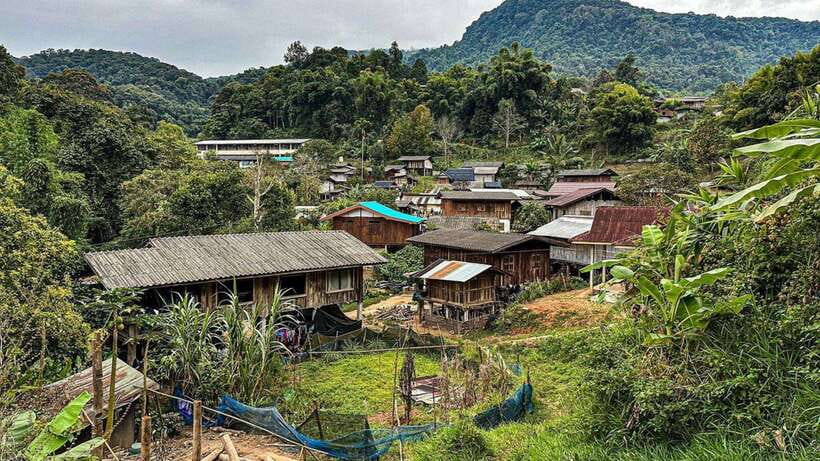
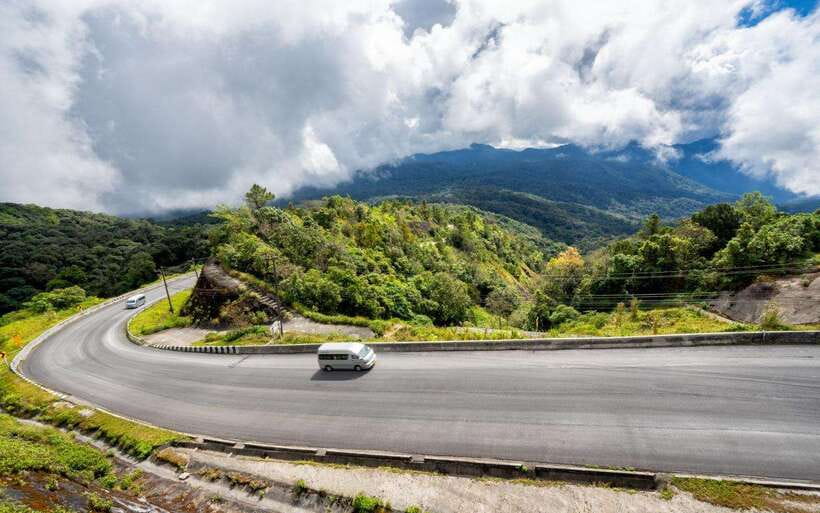
Doi Inthanon is the big-name escape from Chiang Mai. You climb into cooler air, swap city sounds for birds and insects, and get a national-park day that doesn’t require planning your own route. Thailand’s highest peak sits here at about 2,565 meters, so even when the day starts warm, the park areas can feel noticeably fresher.
What makes this experience work is the rhythm: short van rides connect real highlights, and the walking parts are designed to be doable. You get the cool-weather feel, waterfalls in the park, and a couple of cultural stops that are more than just quick photo moments.
I also like that the day is built around variety. You’ll see temple gardens, rice terraces depending on season, jungle plants, and then water at Wachirathan. It’s not one long trek—it’s several “mini-best-of” moments that add up to a satisfying day.
You can also read our reviews of more hiking tours in Chiang Mai

Pickup and timing: the van day that still leaves room to breathe
This is a full-day schedule, but it’s not a nonstop grind. You’ll get hotel pickup in Chiang Mai (downtown is typically easiest), then transfer by air-conditioned vehicle. Early on there’s a local café break (about 20 minutes), then more driving with another café stop later.
Plan your day around the reality that traffic and park access can shift timing. The experience isn’t designed for same-day arrivals with tight schedules, because the day runs on coordinated departures and set stop windows. If you’re the type who hates losing time to regrouping, this may feel like a lot—though the breaks help.
If you’re outside the pickup zone, there are clear start points, including McDonald’s Im Thapae and MAYA Lifestyle Shopping Centre. Either way, you’ll want a WhatsApp-enabled phone number so the guide can find you and keep the flow smooth.
Doi Inthanon photo stops and the Twin Pagodas you came for
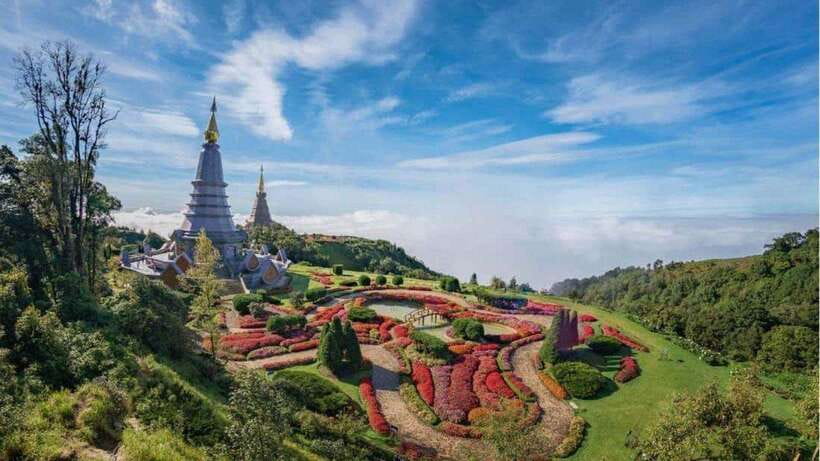
Once you’re in the park, you get about 1.5 hours for a mix of guided touring, photo stops, and free time. This is where the day’s “natural wonder” tone sets in. Even when clouds roll in, the park still feels dramatic because you’re higher up and surrounded by forest.
There’s also a visitor center stop for shopping and local snacks, plus a quick food market browse. This is the kind of stop that can be fun if you like nibbling your way through, but it won’t replace a full market visit. If you’re shopping for souvenirs, keep your energy for the later coffee and lunch too.
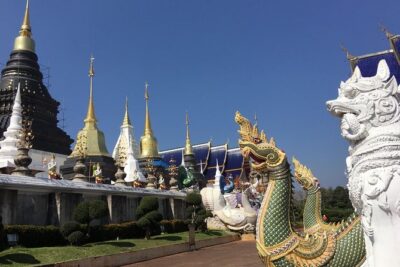
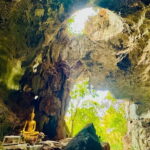
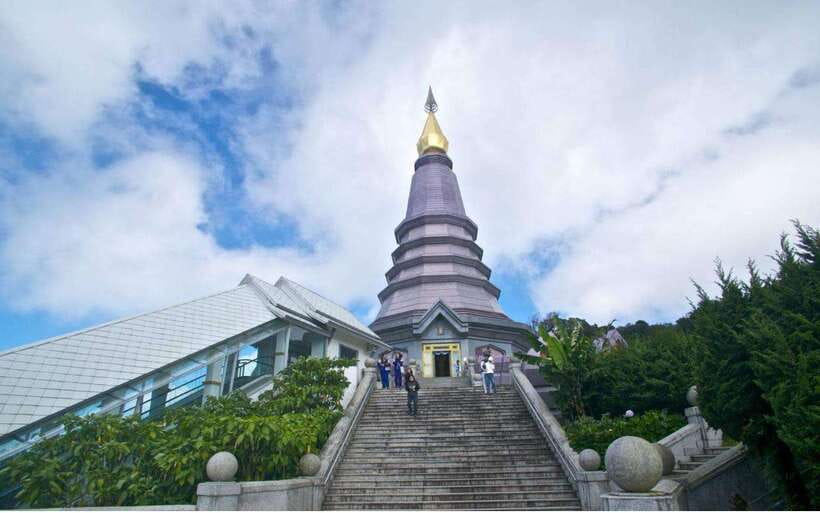
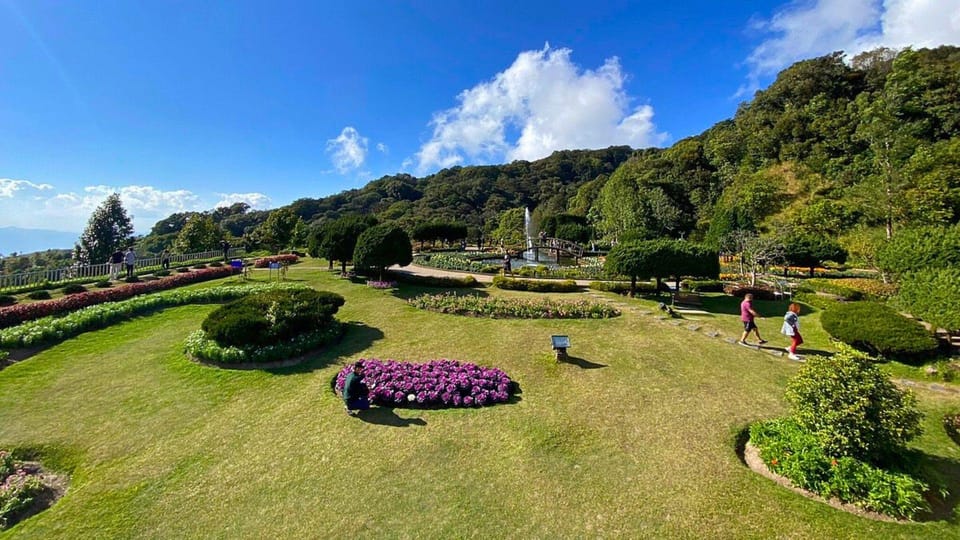
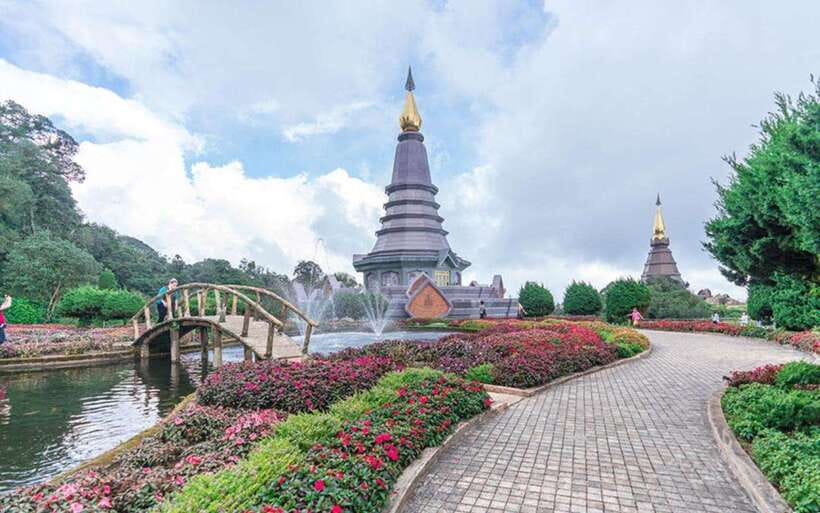
Then comes the landmark: the King and Queen Twin Pagodas—specifically Pra Mahatat Noppamethanedon and Pra Mahatat Nopphonphusiri. You’ll have around 45 minutes here for photo opportunities, sightseeing, and a walk. These pagodas are known for their manicured gardens and panoramic mountain outlooks, and they’re also used as sacred spaces by visitors.
One practical note: this stop is short enough that you’ll likely spend more time taking photos than reading every plaque or tracing every pathway. I’d treat it like a calm “reset” rather than a deep temple study. If you want extra time in the gardens, you may wish you had it—but for most people, the schedule keeps the day from dragging.
Pha Dok Siew Nature Trail: gentle by design, challenging by the stairs
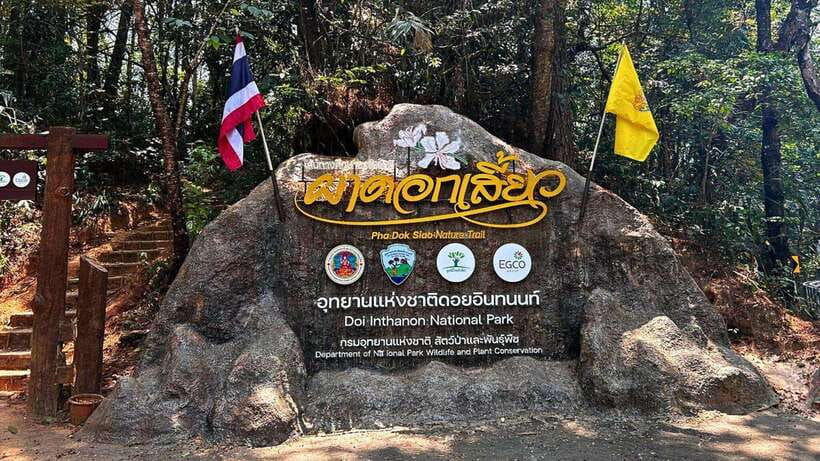
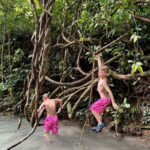
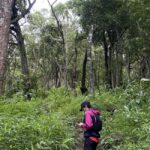
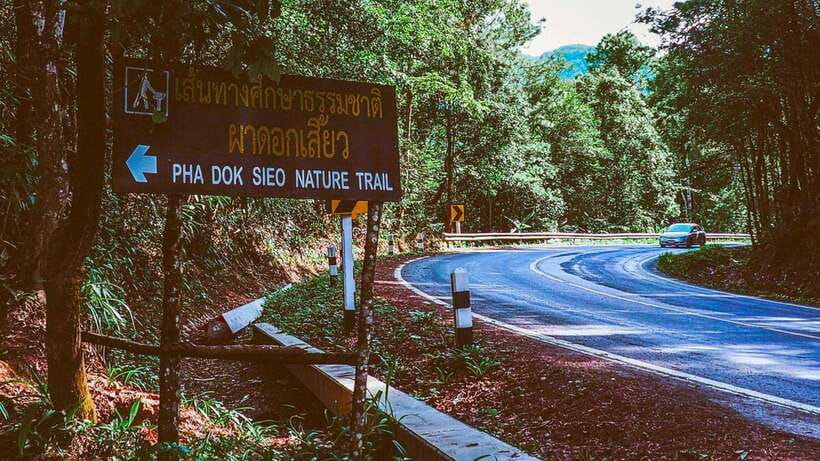
The star of the day is the Pha Dok Siew Nature Trail. You’ll do a guided hike of roughly 2 hours, following a mountain stream through rice terraces, forest paths, and (depending on conditions) hidden waterfall areas. Even though the trek is described as easy to moderate, your legs will notice the terrain.
Here’s the key detail: the day’s elevation change is about a 500 m descent, and that downhill can be great for cardio-light movement, balance practice, and knee support. But downhill also means your quads and ankles work overtime, especially with rocky steps.
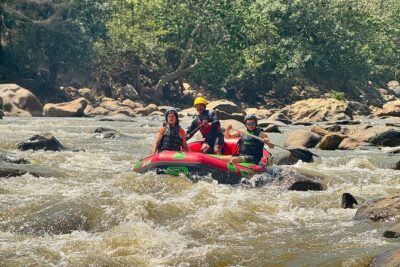
Expect multiple cascades and a water-and-jungle vibe. A local hiking guide also helps you read the area—pointing out plants and wildlife clues along the way. In past departures, guides have even helped guests spot things like snakes and interesting plants, which is exactly why a guided trek feels worth it even when you think you could do it alone.
Rainy-season reality check
If you’re coming during rainy months, don’t assume the hike stays “easy.” You can get muddy, slippery sections, and you may want long trousers. The park terrain plus water can also mean leeches in wet conditions, so protecting your lower legs is smart.
Also, traction matters. Several people specifically called out that sturdy shoes help. If you only have lightweight sneakers, this is the day where you’ll regret it.




Karen village coffee and lunch: cultural stops that work best with curiosity
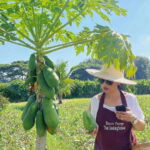
After the hike—or sometimes right after lunch, depending on the day’s pacing—you’ll hit local culture stops. One standout is the Karen village experience, including freshly brewed coffee from locally grown beans. The coffee part sounds simple, but it’s one of those “small detail that sticks” moments. It’s a break from rain and steps, and it gives you a taste of how locals work with what’s around them.
Lunch is a Thai set menu (with vegetarian available if you request it). Plan for hearty, basic comfort food—something that keeps you powered for the remaining waterfall drive.
There’s also a market stop and a tea/coffee style tasting window. Here’s the balanced take: these stops are typically short, so you’re not going to get a full behind-the-scenes processing tutorial unless the guide expands the conversation. If you want more than sampling, ask questions. A good guide can turn a quick stop into a meaningful one by connecting what you taste to the people and the land around you.
Wachirathan Waterfall: the payoff, even when the weather shifts
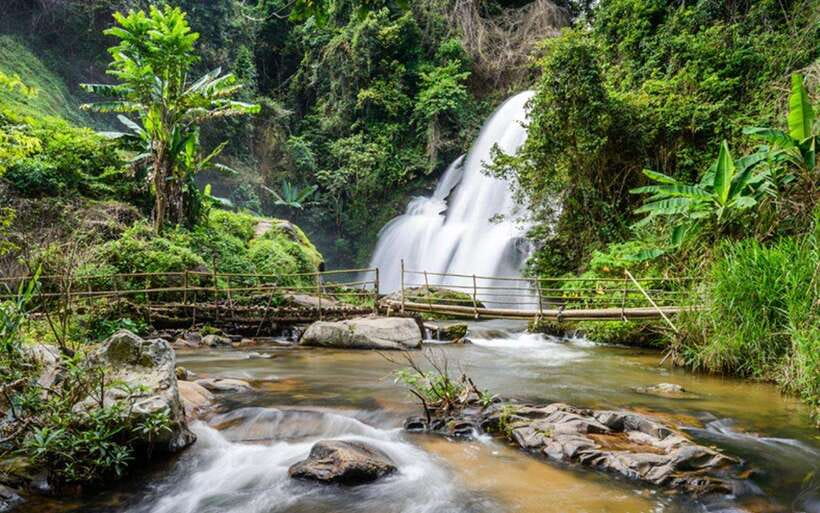
By the time you reach Wachirathan Waterfall, your body is ready for the reward. You’ll have around 20 minutes here for a break, photo stops, and sightseeing. It’s known for majestic, multi-cascade scenery, and it’s the kind of waterfall that keeps moving your attention along the viewpoints.
Even if it’s misty or cloudy, the waterfall usually still feels impressive because the forest context remains strong. What changes day to day is visibility and how dramatic the views look from the viewpoint areas.
The practical downside: only a short window means you won’t linger for long. So if waterfalls are your main mission, come with patience for the schedule and be ready to move quickly between photo spots.
Price and value: what you’re paying for (and when you’ll pay cash)
The advertised price is around $39 per person, and value depends heavily on whether you choose the all-fees-covered option.
- If you choose the all fees included option, you should not have to pay entrance fees on the day.
- If you choose excluding entrance fees, you’ll pay in cash: 300 THB per person for the national park and 100 THB per person for the Twin Pagodas entry (optional—if you skip, you can wait in the parking area).
What’s in the package for your money is more than just transport. You get:
- Hotel pickup and drop-off
- Air-conditioned van
- An English-speaking tour guide plus a local hiking guide
- Drinking water
- Lunch set menu (vegetarian available)
- Trek/hiking trail fee
- Accident insurance (they require a passport copy/photo)
That combination is the real value. If you tried to DIY this with your own transport and multiple admissions, the time and planning would add up fast. Also, the accident insurance coverage is a practical detail you’ll appreciate if anything goes wrong.
What to bring: the small gear choices that prevent big annoyances
Pack for jungle conditions, cold mountaintops, and wet or muddy ground.
Bring:
- Hiking shoes with grip (this is not a day for flat sandals)
- Sunscreen and sunglasses
- Hat
- Insect repellent
- Hand sanitizer or tissues
- A layer for the upper park area
In colder months, people have mentioned that the second half of the tour can feel chilly at the top. Even if you start warm in Chiang Mai, bring something you can throw on.
Also, insect repellent isn’t optional if you want a comfortable hike. The forest edge plus water is a magnet for bites.
Who this tour is best for (and when to skip it)
This trip is a strong match if you want a full-day Northern Thailand taste without overcommitting to a hard multi-day trek. It’s often a good fit for:
- Families and beginners who want nature with support
- Older hikers who prefer downhill walking over steep climbs
- Anyone who loves waterfalls and local village glimpses
- People who like guided storytelling, especially around plants and the area’s day-to-day life
It’s less ideal if:
- You have knee/ankle concerns. Downhill steps can be tough even when the hike is labeled easy-moderate.
- You need wheelchair access; this tour isn’t set up for wheelchairs.
- You’re pregnant; it’s not suitable for pregnant women.
The biggest “it depends” factor is conditions. If it’s raining hard, expect slick spots and more careful footing. If you’re comfortable with that, the payoff is huge.
Should you book this Doi Inthanon and Pha Dok Siew tour?
Book it if your goal is a well-paced, high-impact day: pagodas for culture, Pha Dok Siew for jungle walking, and Wachirathan for waterfall drama. The schedule is built for people who want variety without needing a rental car.
Skip—or at least think twice—if you dislike stairs and uneven ground, or if you’re chasing a slow, deep temple or market experience. This tour gives you highlights, not hours and hours of one place.
One last practical tip: pick good shoes and pack that rain layer. If you do, the day feels like a clean swap from Chiang Mai heat into cool forest air—and that’s exactly why this tour keeps earning high marks.
FAQ
Are entrance fees included in the price?
It depends on the option you select. Some versions include national park and Twin Pagodas fees, while others require you to pay cash on the day: 300 THB per person for the national park and 100 THB per person for the Twin Pagodas entry (optional).
How long is the hiking part on Pha Dok Siew?
The guided Pha Dok Siew Nature Trail hike is about 2 hours.
Is lunch included, and can I get a vegetarian meal?
Yes. Lunch is included as a Thai set-menu, and vegetarian options are available if you request them.
What kind of hiking difficulty is it?
It’s easy to moderate, with a mostly downhill trek and an estimated 500 m descent. That said, there can be many stairs and steps, so sturdy shoes help.
What should I bring for the day?
Bring sunglasses, a hat, hiking shoes, sunscreen, insect repellent, and hand sanitizer or tissues. A sweater or rain layer can be helpful since the upper area can get cold.
Where do I meet the tour if my hotel isn’t in the pickup zone?
If you’re outside the pick-up area, you can meet at McDonald’s Im Thapae or at MAYA Lifestyle Shopping Centre. Pick-up is in front of the building.