REVIEW · CHIANG MAI
Chiang Mai: Chiang Rai Temples & Black House Discovery Tour
Book on GetYourGuide →Operated by Chiang Mai Footsteps Travel · Bookable on GetYourGuide
Three temples in one strange, wonderful day. This Chiang Rai outing from Chiang Mai strings together Wat Rong Khun’s glassy shine and Baan Dam’s dark art mood, with a natural hot-spring stretch stop and a guided tour throughout.
I like the way the plan balances big sights with actual guidance. You get English-speaking interpretation at the main stops (with Thai also possible), and it’s run as a small group of up to 12, so the day doesn’t feel like one giant cattle line.
One drawback to plan around: the day can feel long and busy, especially around the White Temple and during van time. If you’re sensitive to crowds or want lots of deep historical detail on demand, you’ll want to set expectations early.
In This Review
- Key points before you go
- What This Chiang Rai Day Trip Really Delivers From Chiang Mai
- Morning Pickup and the Mae Kachan Hot Spring Stretch
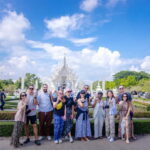
- Wat Rong Khun White Temple: Glass Light and a Calm Pond Moment
- Wat Rong Suea Ten Blue Temple: Tiger-Linked Legends Through Color
- Baan Dam Black House: Dark Architecture and Contemporary Thai Art Ideas
- The Pace, the Van, and How to Survive a 1-Day Circuit
- Price and Value: Is $51 a Fair Deal?
- Practical Tips That Make the Temples Way More Enjoyable
- Who Should Book This Tour (and Who Might Prefer Private Time)
- Should You Book Chiang Rai Temples & Black House Discovery Tour?
- FAQ
- How long is the Chiang Mai to Chiang Rai Temples & Black House tour?
- Where is the meeting point in Chiang Mai?
- Does the tour include hotel pickup and drop-off?
- What’s included in the price besides transportation?
- What should I wear or bring for the temple visits?
- Is this tour suitable for people with mobility impairments?
Key points before you go
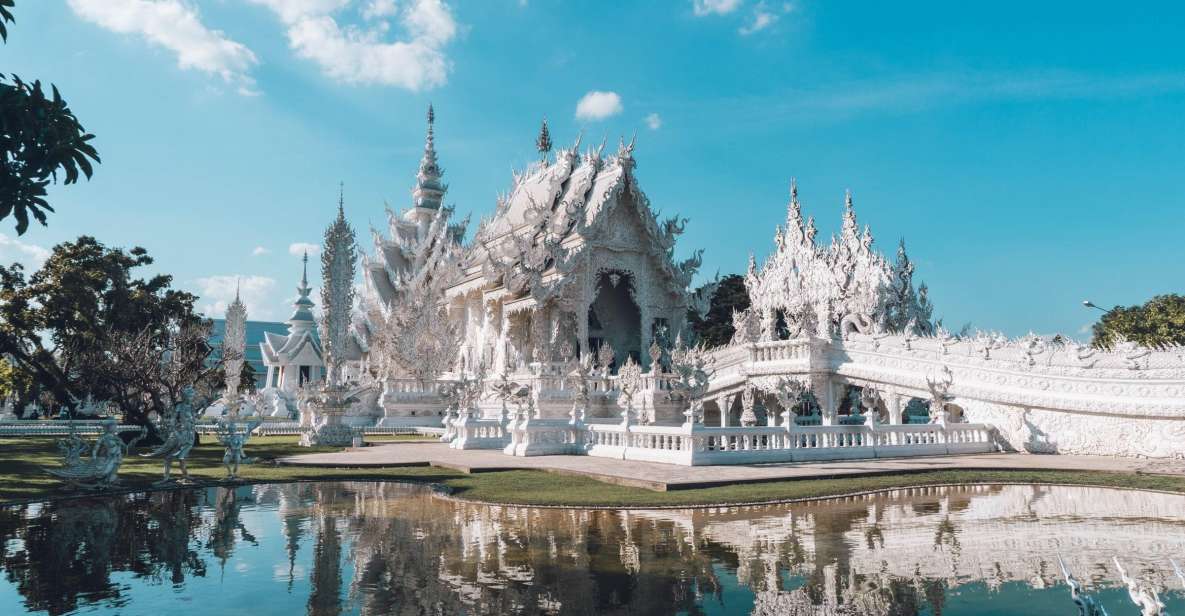
- Wat Rong Khun’s glass-and-pond effect makes the temple feel almost unreal, especially when the light hits the white surfaces.
- Wat Rong Suea Ten’s color-heavy design uses temple art to connect back to tiger-linked legends.
- Baan Dam by Thawan Duchanee offers a sharp contrast to temple religion, leaning into darker, contemporary Thai art ideas.
- Mae Kachan hot spring stop is for leg-stretching only, not a swim—still a good reset before the temples.
- Small-group guiding (up to 12) helps you move through faster without feeling lost, though guide style can vary.
- Lunch plus entrance fees and water included helps the day stay simple and predictable.
What This Chiang Rai Day Trip Really Delivers From Chiang Mai
This is a classic North Thailand “big icons in one day” route. You start from Chiang Mai, ride into Chiang Rai, and come back the same day—so it’s ideal when you want the headline temples without taking a second night.
What makes the day work is the contrast. You get the White Temple’s message of purity and Buddhist wisdom, then you switch gears to the Blue Temple’s dramatic storytelling through color and design. After that comes Baan Dam, created by the artist Thawan Duchanee, which feels almost like a different world—dark architecture with eclectic artworks that push you to think instead of just admire.
The tour also keeps things practical: hotel pickup and drop-off, entrance fees covered, and lunch included. That matters when you’re trying to squeeze in a lot but still want the day to feel organized rather than chaotic.
You can also read our reviews of more tours and experiences in Chiang Mai.


Morning Pickup and the Mae Kachan Hot Spring Stretch
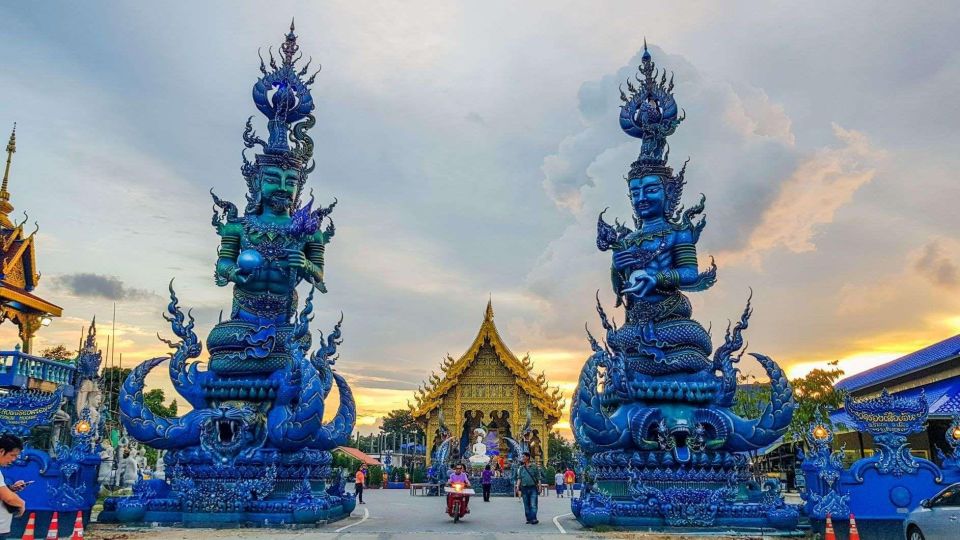
Your morning starts with pickup between 7:00 and 7:30 (if you select that option). If you’re staying near the old town, you may also meet at Baan Meesuk at the start of the tour. Either way, aim to be ready a bit early—temple days run on clocks.
Before the main temples, you pass by Mae Kachan Hot Spring. Don’t plan on swimming; this stop is there to break up the drive and give your legs a chance to loosen up. It’s a small pause, but after morning pickup and travel time, a short stretch beat sitting stiff in the van.
Tip: treat this as your moment to do the boring stuff—water refill, sunscreen check, bug spray, and a quick snack if you’re the type who gets hungry early.
Wat Rong Khun White Temple: Glass Light and a Calm Pond Moment
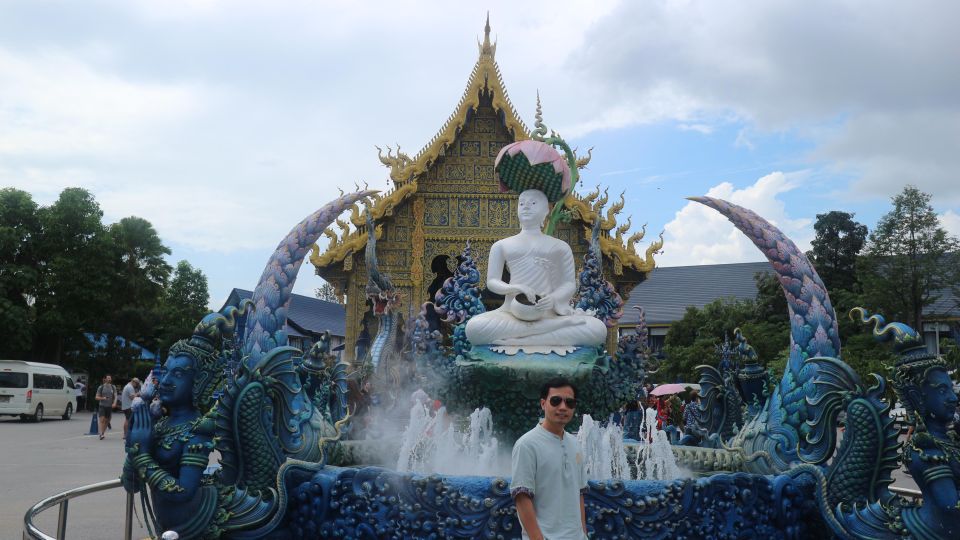
Wat Rong Khun, the White Temple, is the stop most people remember—even if you’ve never studied Thai temple art before.
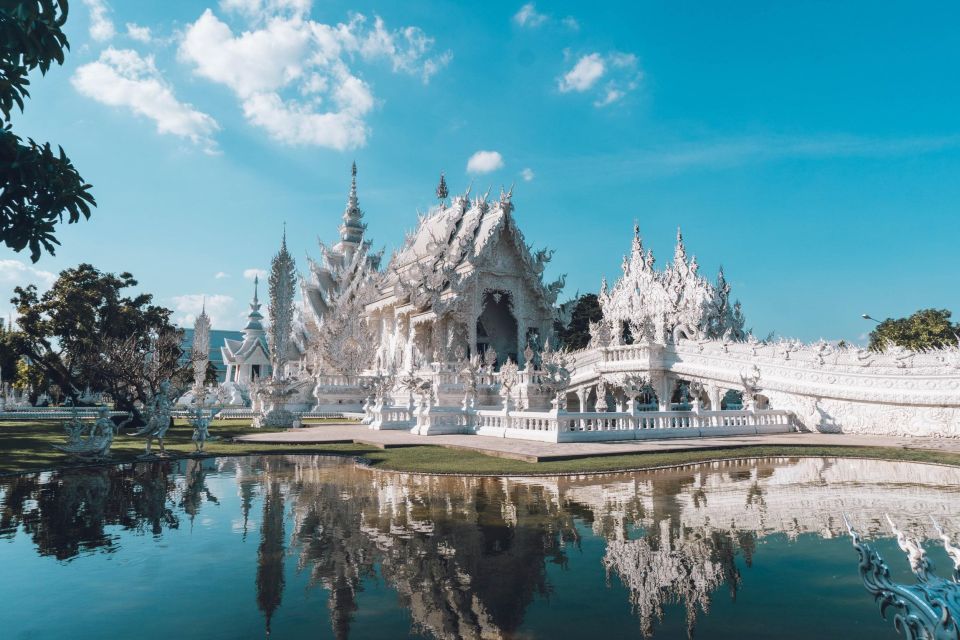
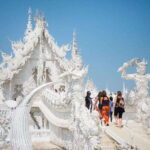
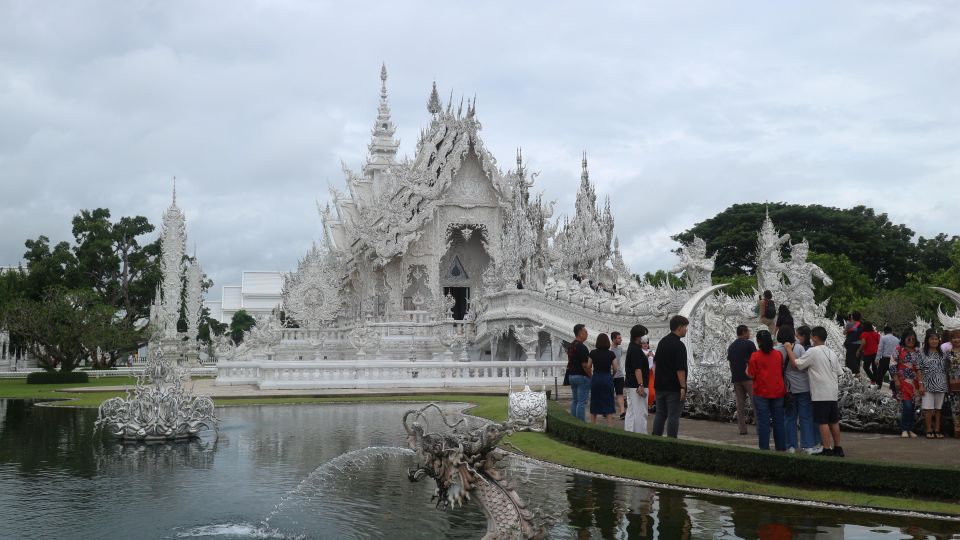
The outside is pure white and decorated with sparkling glass that catches the light. In the temple’s own symbolism, the look is tied to ideas of purity and Buddha’s wisdom. That means it’s not just decorative. You’re looking at a visual message built from materials and shine.
Then there’s the pond reflection. Even when crowds thicken, the pond adds a quiet, mirror-like calm that makes the whole place feel staged for photos—but not in a shallow way. The reflection helps you slow down and take in shape, not just detail.
How to make it work for you:
- Go in thinking you’ll need a minute to adjust to the brightness. White surfaces glow hard in daylight.
- If it’s packed, use the pond as your composure anchor. Step toward it, pause, and reset your brain.
- Wear comfortable shoes. The temple grounds ask for steady walking.
A fair warning: the White Temple can feel overcrowded, and that can drain the magic. If you’re claustrophobic with crowds, keep your expectations realistic about how free-flowing your visit will feel.
Wat Rong Suea Ten Blue Temple: Tiger-Linked Legends Through Color
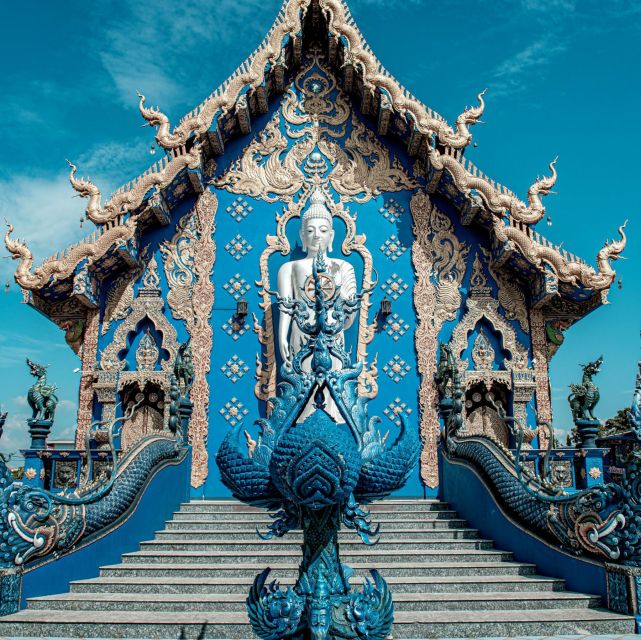
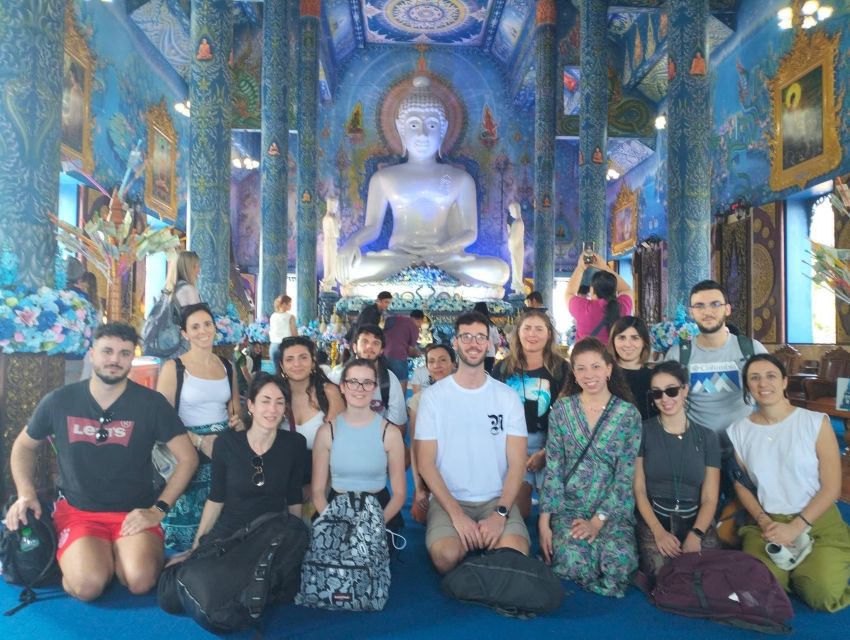
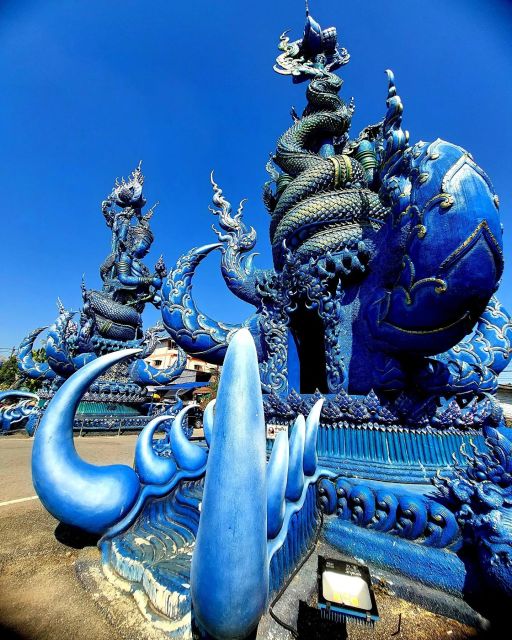
Next up is Wat Rong Suea Ten, often called the Blue Temple. If the White Temple is about brightness and purity, this one is about strong color and elaborate temple art.
The temple is designed with striking hues and decorative detail, and it’s tied to local storytelling—believed to connect to a past where tigers once roamed the area. You don’t have to be a folklore expert to get the point: the artwork is doing cultural memory work.
What you’ll notice is how much effort goes into visual rhythm. The blue tones are strong, and the decorative elements keep you looking around instead of staring at one “main” building. It’s the kind of place where photos help, but your eyes do more than your camera.
If you want the most value from this stop, ask your guide one simple question:
- What part of the design is most important here, and why?
Even when guides vary in depth, a good prompt gets you better context fast.
This is also a good moment to re-check your temple etiquette. You’ll want shoulders and knees covered, and you’ll remove your shoes when required. Those small rules are part of why the sites still feel respectful, not like an open-air theme park.
Baan Dam Black House: Dark Architecture and Contemporary Thai Art Ideas
Then the day takes a sharper turn: Baan Dam, also known as the Black House.
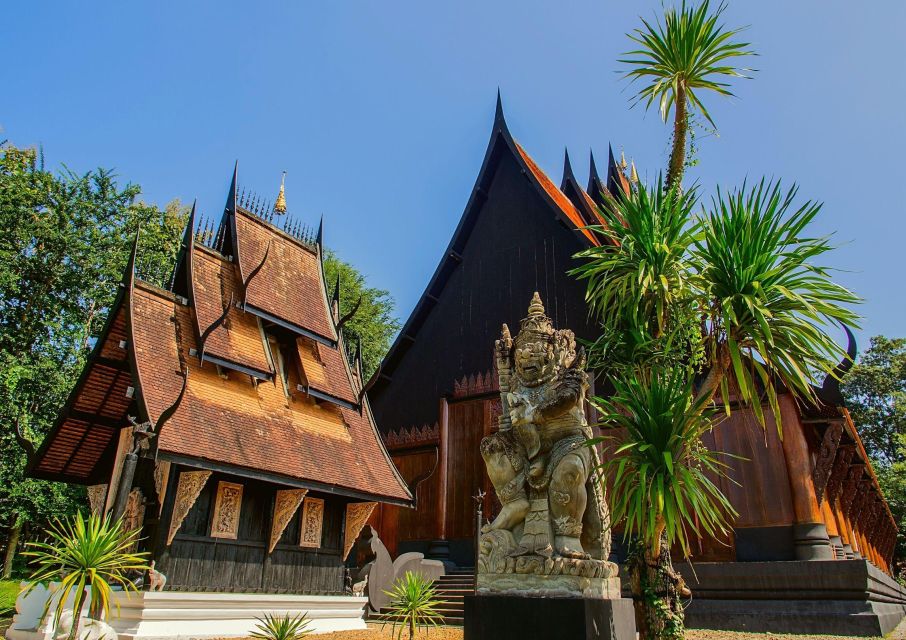
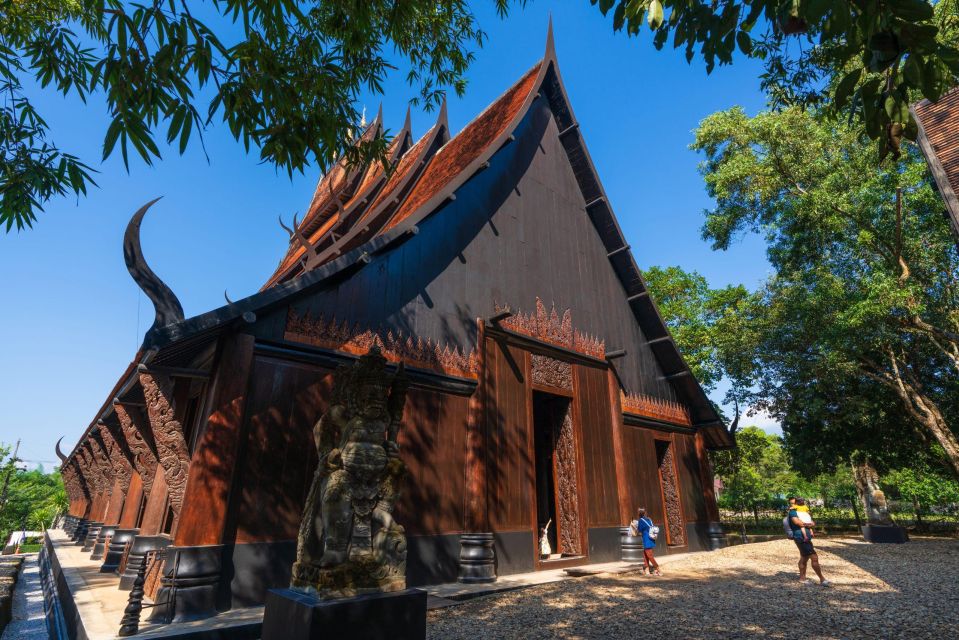
This is where the tour earns its “discovery” label. Instead of a bright religious display, you get dark, compelling architecture and an eclectic collection of artworks. The creator, Thawan Duchanee, is behind the concept, and the whole place reads like a deliberate contrast to the temple style you just saw.
The Black House feels less like a place to worship and more like a place to question. You’re looking at art that challenges perceptions. That can be a hit or miss depending on your taste. If you love contemporary art that pushes back, you’ll likely feel engaged. If you only want pretty scenery, you may find the mood heavier than expected.
One practical reality: by the time you arrive, energy can be low. This is not the stop to expect a full “slow museum pace.” The good news is that even a shorter visit can still feel meaningful because the buildings are visually strong and the contrast with the temples is obvious.
If you’re the type who gets tired quickly, plan a micro-break:
- Stand back for a minute and let your eyes take in the full forms.
- Then walk back in for details.
It keeps you from rushing while tired.

The Pace, the Van, and How to Survive a 1-Day Circuit
This is a 1-day route, and it uses a lot of road time. The schedule includes multiple driving segments between stops. That’s normal for Chiang Mai to Chiang Rai temple circuits, but it still changes the feel of the day.
Small group help: with a maximum group size of 12, you usually move faster and get a bit more personal attention than big bus tours. Still, you’re packed into a van and living by the itinerary’s clock.
A note from real-world experience: van comfort can be an issue for some people. If you’re tall, bring a small comfort trick—an extra layer or a travel pillow if you can. Long sits in a vehicle add up.
Also, plan your stamina around the main crowd magnet: the White Temple. Even with a good guide, crowd density can’t be negotiated. You’ll get the sight. Just don’t expect quiet solitude.
And yes, the day can feel like a lot—so do your part:
- Drink water.
- Avoid going hungry between meals.
- Pace yourself at each stop instead of trying to “win” the photo race.
Price and Value: Is $51 a Fair Deal?
At around $51 per person, the value mostly comes from what’s included.
You’re getting:
- Hotel pickup and drop-off
- Round-trip transfers by van
- All entrance fees
- An English-speaking tour guide
- Lunch
- Drinking water
- Insurance
For a day with three major paid attractions and guided interpretation, that’s not a bad deal. If you tried to stitch it together yourself—transport, tickets, and a guide—you’d probably spend more once you add up the details and time.
Where the value can wobble is in the “quality of the guidance” factor. In an ideal world, you get clear historical and cultural context at each stop. In the real world, guide styles can vary. One guide you might get, Eve, has been described as organized and attentive—exactly the vibe you want on a fast-paced day.
My practical advice: if historical context is your top priority, arrive ready to ask questions. With temple symbolism, one good question can turn a standard visit into a memorable one.
Lunch is another value wildcard. One person felt the lunch was bad, while the rest of the day stayed smooth. Treat lunch as included, not guaranteed to be a highlight.
Practical Tips That Make the Temples Way More Enjoyable
Here’s how you make the most of the day without getting cranky.
Dress and temple rules
- Cover shoulders and knees
- Remove shoes before entering the main chapel when required
- Keep things respectful and calm. These are active cultural spaces.
What to bring
- Comfortable shoes (you’ll do real walking)
- Sunscreen
- Insect repellent
- Sun hat
How to manage the crowd factor
- If you want the best light at the White Temple, don’t expect to choose your perfect moment. Instead, work with what you get: pause by the pond, then scan the glasswork details.
- Don’t rush through the Blue Temple. The design requires your eyes to wander.
If you care about explanations
Bring a simple mindset: look, then ask. Even on busy tours, a good question can pull you out of passive sightseeing.
Who Should Book This Tour (and Who Might Prefer Private Time)
This tour fits you if you want:
- A structured day trip with pickup and transport handled
- A guided visit to Wat Rong Khun, Wat Rong Suea Ten, and Baan Dam
- A “contrast route” that moves from bright temple art to darker contemporary art
- The convenience of lunch and entrance fees included
It may not fit you as well if:
- Mobility is a concern. The tour isn’t suitable for people with mobility impairments.
- You’re hoping for a calm, uncrowded experience at every stop. The White Temple can be crowded.
- You want heavy, deeply historical commentary throughout the day. Guide style can vary, and the route has a packed pace.
If you’re the type who likes to sit with art and take your time, consider a private day for more flexibility. But if you want an efficient route with solid coverage, this one is a sensible choice.
Should You Book Chiang Rai Temples & Black House Discovery Tour?
I’d book this if you’re on a tight schedule and want the top Chiang Rai sights from Chiang Mai in one shot. The price is reasonable for what’s covered, and the mix of White Temple, Blue Temple, and Baan Dam gives you a more interesting story than only doing religious sites.
I’d think twice if you hate crowds or need a slower pace. The day can feel full, and the van time plus crowded moments around Wat Rong Khun might wear you down.
If you do book, go in with the right expectations: you’re not trying to “complete” everything perfectly. You’re trying to experience the contrasts—purity and shine, color and legend, then the dark contemporary art mood of Thawan Duchanee’s Black House.
FAQ
How long is the Chiang Mai to Chiang Rai Temples & Black House tour?
It’s a 1-day tour.
Where is the meeting point in Chiang Mai?
The meeting point is Baan Meesuk, located in the old town of Chiang Mai.
Does the tour include hotel pickup and drop-off?
Yes. Hotel pickup and drop-off are included.
What’s included in the price besides transportation?
Entrance fees, lunch, drinking water, an English-speaking tour guide, and insurance are included.
What should I wear or bring for the temple visits?
Bring comfortable shoes, sunscreen, insect repellent, and a sun hat. Also plan to cover your shoulders and knees and remove shoes before entering main chapels.
Is this tour suitable for people with mobility impairments?
No, it’s not suitable for people with mobility impairments.