REVIEW · CHIANG MAI
Long Neck Village, Silver Temple & Chiang Mai Top Sites
Book on GetYourGuide →Operated by CanalTour x ExploreSiam · Bookable on GetYourGuide
A day in Chiang Mai can fit in just four hours. This tour mixes three major temples with one of the province’s most talked-about cultural visits, the Karen Long Neck Village. I like how the stops are tightly connected to Northern Thai Lanna beliefs and craft, and I also like that you ride around town by shared red Songthaew like locals. One catch: some temple entry costs may come up on the way, and a couple of temple interiors have gender access limits.
If you want the quick-hit overview—big chedis, golden pagodas, and silver temple details—this route is a strong way to get your bearings. You’ll end with hands-on culture at the Karen Padaung community, with time to learn about weaving and support artisans. The main consideration is timing: it’s a fast pace, so if you want long photo stops and deep explanations at every doorway, you might feel a bit rushed.
You also need to plan for temple etiquette. Shoulders and knees must be covered, and you’ll want cash since not every place takes cards.
In This Review
- Key Highlights You’ll Actually Notice
- Four Hours in Chiang Mai: Why This Route Works
- Getting Picked Up and Moving by Red Songthaew
- Wat Chedi Luang: The Great Stupa and the Emerald Buddha Story
- Wat Phra Singh: Golden Pagodas, Murals, and Phra Buddha Sihing
- Wat Sri Suphan (Silver Temple): Handcrafted Silverwork and Practical Limits
- Long Neck Village (Karen Padaung): Weaving Traditions and Supporting Artisans
- Price and Value: Is $22 Worth It
- What to Bring (and How to Avoid Temple Hassles)
- Who This Tour Fits Best (and Who Should Skip It)
- Guide Names to Look For: Magie and Mosquito
- Should You Book This Tour?
- FAQ
- How long is the tour?
- What’s included in the price?
- Are meals included?
- Do I need cash for anything?
- Where is the pickup?
- Is the tour suitable for wheelchair users or pregnancy?
Key Highlights You’ll Actually Notice
- Wat Chedi Luang’s massive chedi and the Emerald Buddha link
- Wat Phra Singh: golden pagodas, old murals, and the Phra Buddha Sihing
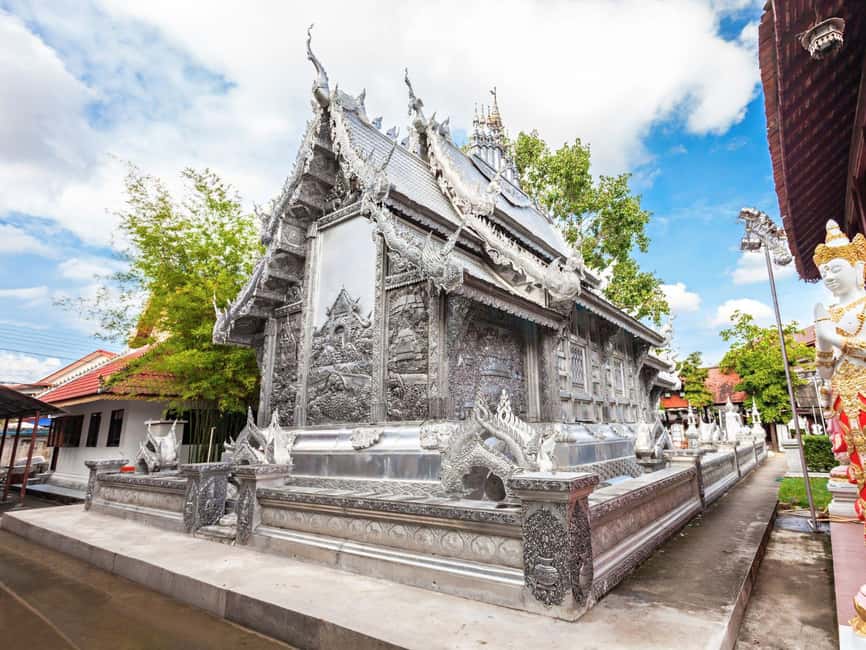
- Wat Sri Suphan, the Silver Temple: handcrafted silverwork and Buddhist symbolism
- Karen Padaung Long Neck Village: weaving traditions and chances to buy directly from local makers
- Red Songthaew rides: shared local transport instead of a private van bubble
- English guide-led flow across classic Lanna sites
Four Hours in Chiang Mai: Why This Route Works
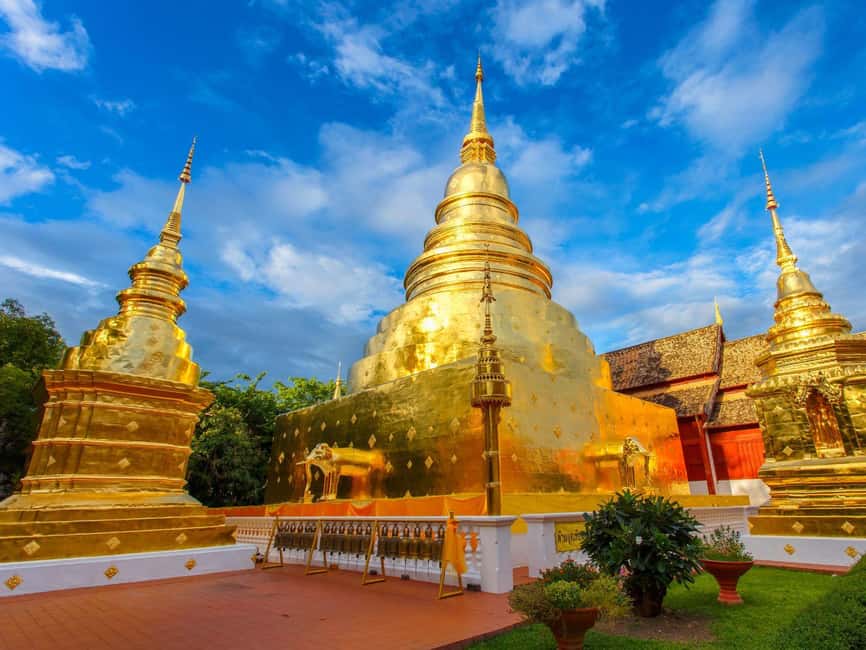
This is a compact tour with a simple goal: show you the spiritual core of Chiang Mai, then shift to a living culture experience. In four hours, you’ll hit three headline temples—Wat Chedi Luang, Wat Phra Singh, and Wat Sri Suphan—before finishing at Long Neck Village.
The value isn’t just the checklist of famous names. It’s the order. You start with Wat Chedi Luang to frame Lanna-era temple power, then move to Wat Phra Singh to see the sacred center of Northern Thai Buddhism in golden form. Finally you end at the Silver Temple, which turns Buddhist devotion into visible craft—silver details you can actually spot as you walk.
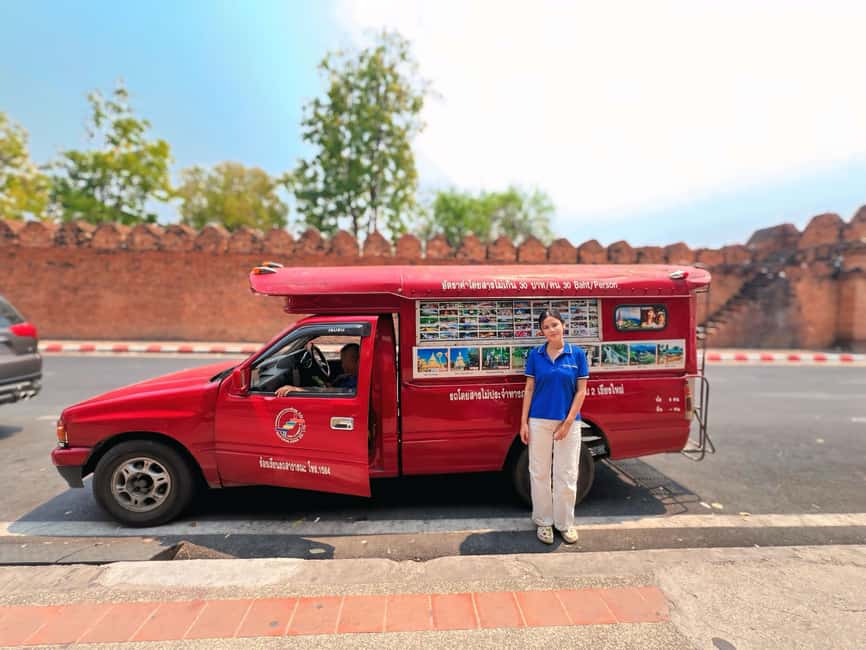
One more practical plus: the tour uses a traditional red Songthaew, the shared pickup-truck style taxi Chiang Mai runs on. It’s not about novelty. It’s about seeing how people move around and getting dropped at sensible points instead of wrestling your way between scattered sights.
You can also read our reviews of more tours and experiences in Chiang Mai.


Getting Picked Up and Moving by Red Songthaew

Pickup is built around staying near where you’ll actually spend your time. If you’re in Chiang Mai’s old city area (or just outside the city center), you’ll get picked up at your hotel or accommodation.
If you’re outside the pickup zone, you’ll meet at the Burger King in front of Thapae Gate. That’s an easy landmark to remember, especially if you’re tired after arrival day.
Once you’re on the road, you’ll ride in a shared red Songthaew. Expect a little seat shuffle and “local routing” energy: not everything is a straight line, but the route makes sense for a temple circuit.
A small note from real-world experience: I’d confirm the pickup time and exact meeting point the day before. There can be confusion when meeting instructions and hotel locations don’t match up, and it’s not worth losing time.
Wat Chedi Luang: The Great Stupa and the Emerald Buddha Story
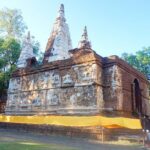
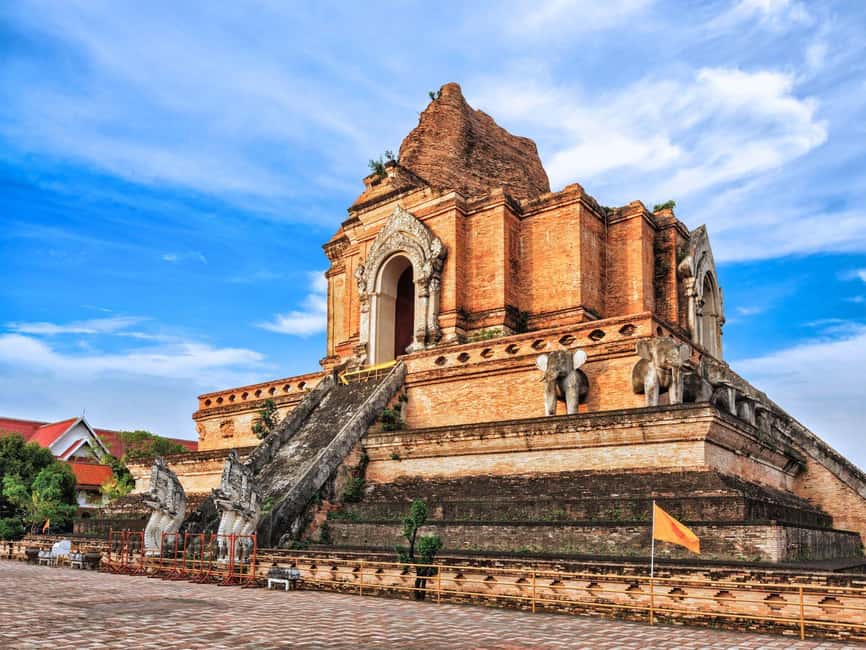
Your first stop is Wat Chedi Luang, often described as the Temple of the Great Stupa. The chedi here is partially ruined but still impressive—big enough that it dominates the space even after centuries of change.
What makes this stop more than “just a temple photo”? It’s the link to what the chedi once held. The chedi is described as the former home of the revered Emerald Buddha. Whether you know the full religious history or not, you’ll feel the weight of why this site mattered.
This is also where you’ll see the Lanna architectural style in a concentrated way. It’s not only about decorations. It’s about how the temple’s shape and scale communicate power and devotion across generations.
Tip for your first walk: slow down for 2 minutes and just look at the structure before you chase details. If you rush, you’ll miss the scale.
Wat Phra Singh: Golden Pagodas, Murals, and Phra Buddha Sihing
Next comes Wat Phra Singh, one of Chiang Mai’s most sacred temples. This is a different mood from Wat Chedi Luang. Instead of the big stupa presence, you’re drawn to golden forms—golden pagodas that catch the light and create a warm visual contrast to the stone.
This temple is also known for ancient murals. Even if you don’t read the artwork like a scholar, you can still appreciate the skill and the storytelling style. Your guide can connect what you’re seeing to Northern Thai Buddhism and local devotion patterns.
The key centerpiece is the Phra Buddha Sihing statue, described as a revered symbol for Northern Thai Buddhism. The statue’s importance explains why worship here feels central rather than casual. It’s one of those places where the setting helps you understand the beliefs.
If you like your temples with context (not just sightseeing), this is usually the stop that clicks fastest. You get meaning, not only architecture.
Wat Sri Suphan (Silver Temple): Handcrafted Silverwork and Practical Limits
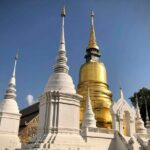
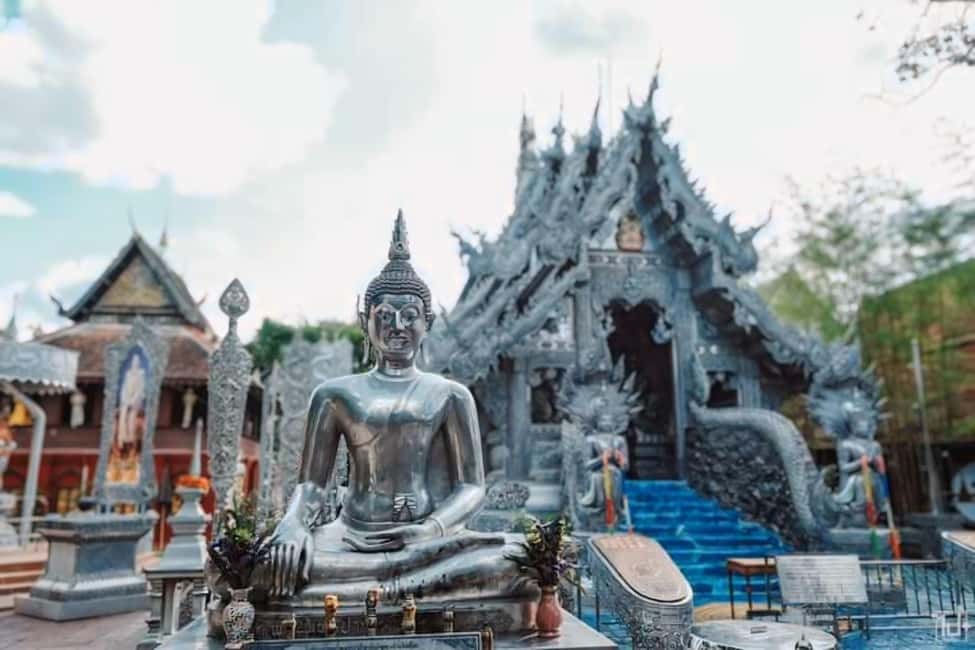
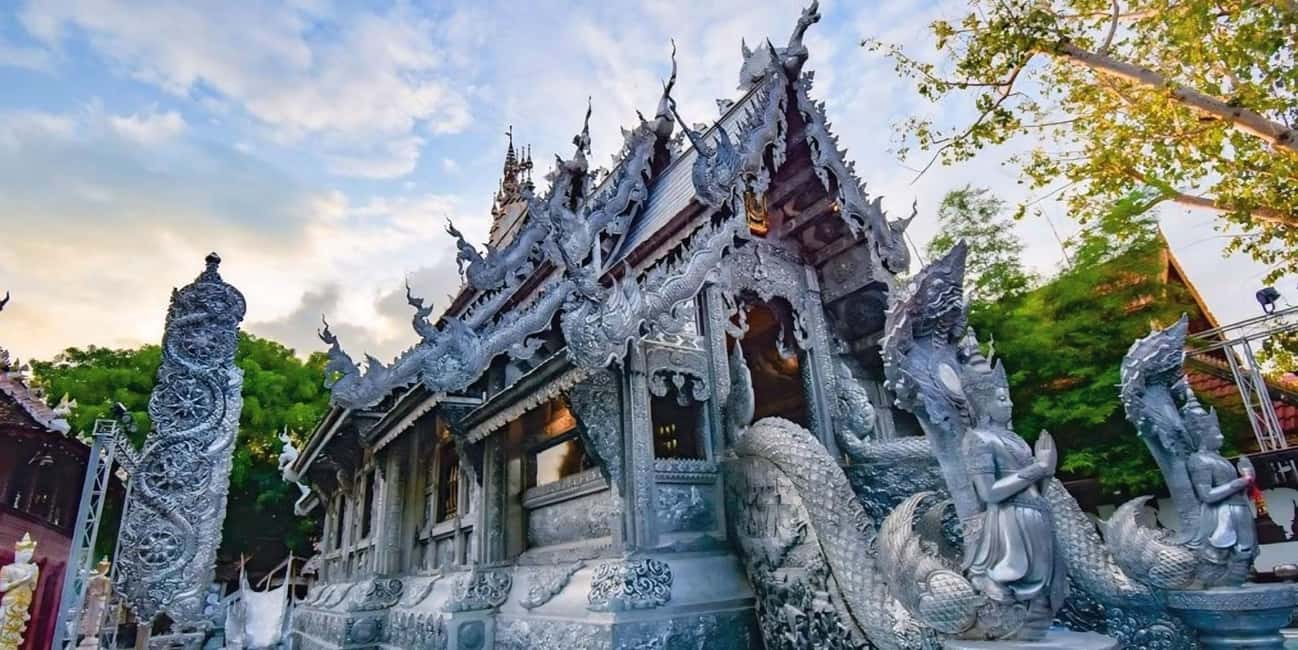
Then you reach Wat Sri Suphan, the Silver Temple. The main attraction is obvious when you arrive: silverwork crafted by hand, covering parts of the temple with Buddhist symbolism and Lanna artistry. It’s the kind of place where you’ll catch yourself looking closely because the details are literally made to be noticed.
Here’s the consideration to plan for. Some inner temple areas have gender access restrictions. In particular, the silver temple’s interior areas are not accessible to women, though you can still admire the outside. So if you’re traveling with someone who expects to enter every area, align expectations before you go.
Even with that limitation, the exterior view still gives you the best parts: the craft, the overall design, and the feeling of devotion expressed through metalwork.
Also keep your patience: the tour is time-tight. If you want to photograph the silver details, do it once you’re in the right spot, not while walking in circles. It saves time and stress.

Long Neck Village (Karen Padaung): Weaving Traditions and Supporting Artisans
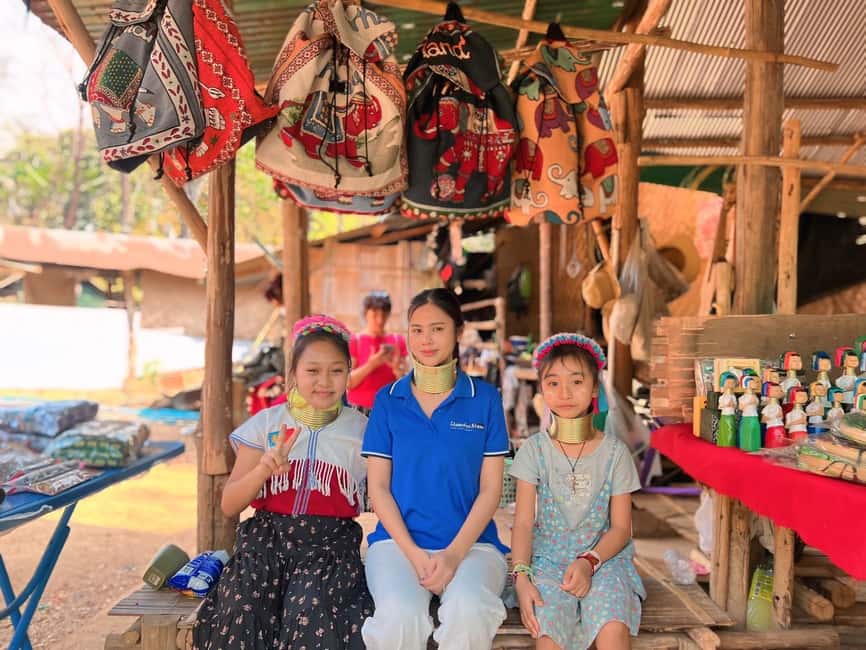
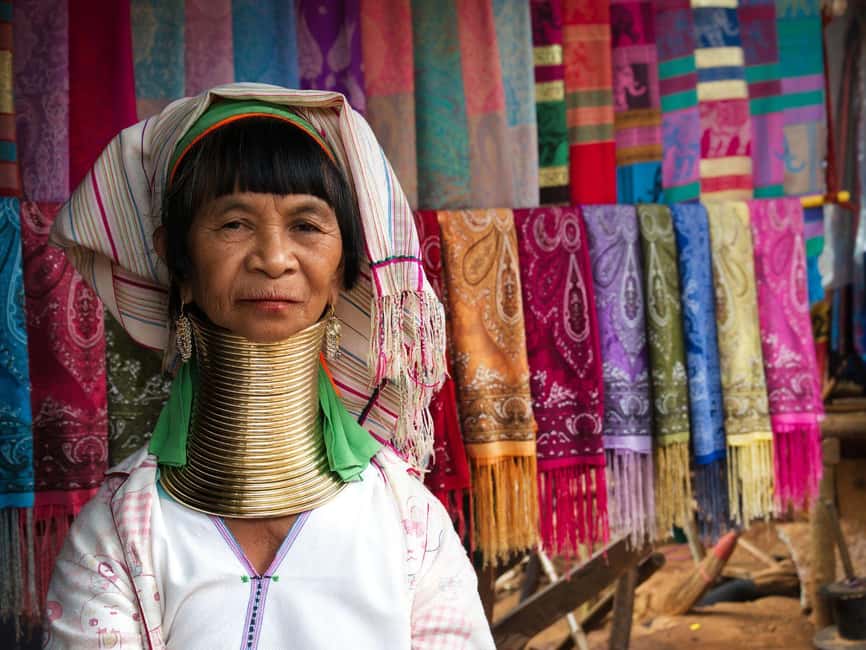
The tour finishes with Long Neck Village, connected to the Karen Padaung people. This part isn’t just “look and go.” You’re guided through the community’s traditions, including weaving techniques and a bit of the people’s background.
One of the strongest practical benefits here is that you can support local artisans directly. The tour also includes entrance fees for the Karen Long Neck Village, which helps your budget feel cleaner compared with paying everything separately.
You’ll likely see opportunities to purchase traditional clothing and small souvenirs made by locals. That’s usually what makes the stop feel more real: you’re not only observing, you’re participating in the local economy in a respectful way.
A quick mindset tip: treat this as a cultural visit, not a theme park. Go in ready to listen and learn, and you’ll get far more out of the time you spend there.
Price and Value: Is $22 Worth It
At about $22 per person for a four-hour tour, this is priced as a mid-range, high-efficiency city experience. You’re paying for an English-speaking guide, transport by red Songthaew, and temple-and-village access where the Karen village entrance fee is included.
What may change the final amount is the temple side. Even when the main ticket covers most of what you need, you should budget for small additional costs at some temples. A common ballpark mentioned is around 50 baht per temple. It’s not huge, but it can surprise you if you expected everything to be all-in.
What’s not included is also part of the value math: meals and personal spending are on you. For many people, this tour fits nicely as a morning or early afternoon block, then you can eat afterward without rushing.
So who gets the best value? First-time Chiang Mai visitors who want a guided overview across multiple major temple sites plus a distinct cultural stop, without building their own route.
What to Bring (and How to Avoid Temple Hassles)
Pack for temple rules and practical cash needs.
Bring:
- Comfortable clothes (you’ll walk and stand)
- Cash (not all places accept credit cards)
Wear:
- Clothing that covers shoulders and knees. Temples are sacred places, and you’ll be expected to follow the dress code.
This sounds simple, but it’s the difference between breezing through gates and getting stuck waiting while you fix an outfit.
Who This Tour Fits Best (and Who Should Skip It)
This tour is a good match if you want:
- A short, organized way to see top Chiang Mai temple highlights
- A guided look at Lanna architecture and Buddhist symbolism
- A cultural visit to the Karen Padaung community at Long Neck Village
It’s not suitable for:
- Pregnant women
- People with back problems
- Wheelchair users
That’s worth treating seriously. With temple stairs, uneven ground, and constant movement, “mostly fine” can turn into “not fine” fast.
If you’re traveling with limited mobility or you’re unsure about walking comfort, it’s better to choose a different format.
Guide Names to Look For: Magie and Mosquito
The tour’s quality often comes down to the guide, and you’ll see names repeatedly in positive feedback. Magie (Margareth) is praised for delivering an enjoyable, information-heavy experience. Another guide name you may run into is Mosquito, with strong recommendations tied to temple expertise and friendly guiding.
You can’t always choose the guide, but if you’re presented with options, it’s worth selecting a listing that shows those names.
Should You Book This Tour?
Book it if you want a fast, well-structured tour that strings together Chiang Mai’s top temples and finishes with a Karen cultural visit—without you planning transit and entry stops on your own.
Pass or adjust expectations if:
- You strongly prefer slow museum-style pacing
- You’re sensitive to additional on-site temple fees
- You need full access to all interior temple spaces (because some areas may be restricted by gender, including the silver temple’s interior)
- Your group has mobility limits that don’t handle stairs and uneven temple ground well
If your ideal Chiang Mai day is: ride local transport, see Lanna temples with context, then learn weaving traditions at Long Neck Village, this is one of the easier ways to make it happen in four hours.
FAQ
How long is the tour?
The tour runs for 4 hours.
What’s included in the price?
Transportation by traditional red Songthaew, an English-speaking guide, entrance fees for Karen Long Neck Village, and opportunities to support local artisans are included.
Are meals included?
No. Meals and beverages are not included.
Do I need cash for anything?
Yes. Bring cash, since not all places accept credit cards, and there may be personal expenses along the way.
Where is the pickup?
Pickup is included from hotels or accommodations in the old city of Chiang Mai or just outside the city center. If you’re outside that area, you meet in front of Burger King at Thapae Gate.
Is the tour suitable for wheelchair users or pregnancy?
No. The tour is not suitable for wheelchair users and is also not suitable for pregnant women (as well as people with back problems).