REVIEW · CHIANG MAI
Mastering Chiang Mai Temples in Halfday – Visit 7 Temples
Book on Viator →Operated by joinusthai · Bookable on Viator
Chiang Mai temples are a lot. This half-day tour turns that chaos into a tight circuit of seven must-sees. You’ll move between classic Lanna sights fast, with a guide helping you spot what makes each place different, from parade-famous Buddhas to hillside views.
What I really like is the time-saving setup: pickup offered and a direct route, so you’re not bargaining for rides or piecing together transport. I also like that most stops have admission handled or free, so the day stays focused on temples, not tickets and uncertainty.
One consideration: this is a fast tempo. You only get short visits at each temple, so if you like slow wandering, you might want to pair this with extra time somewhere afterward.
In This Review
- Key highlights you’ll feel right away
- Why 7 Temples in 4 Hours Actually Makes Sense
- Pickup, Rainy-Season Comfort, and Temple Dress Rules
- Wat Phra Singh: Chiang Mai’s Sacred Buddha and the Songkran Story
- Wat Chedi Luang Varavihara: The Massive Chedi That Dominates the Area
- Wat Phantao: A Teakwood Ordination Hall Worth the Quick Stop
- Wat Chiang Man: Elephant-Shaped Buttresses and the Oldest Temple Vibe
- Wat Lok Molee: Stucco Patterns and Lanna Pagoda Beauty
- Wat Suan Dok: White Chedis and the Flower-Garden Meaning
- Wat Phrathat Doi Kham: The 17-Meter Buddha and Hilltop Views
- Value for Money: What You’re Really Paying For
- Who This Tour Suits Best (And Who Might Want More Time)
- Should You Book This Half-Day Temple Circuit?
- FAQ
- How long is the Mastering Chiang Mai Temples in Halfday tour?
- What time does the tour start?
- How many temples are included?
- Is pickup included?
- Are temple admission fees included?
- Does the tour operate during the rainy season?
Key highlights you’ll feel right away
- Seven temples, one smooth route: see more without figuring out logistics
- Clear guide context: learn what to look for instead of just taking photos
- Songkran details at Wat Phra Singh: a living tradition, not just old stone
- Big, photo-worthy landmarks: Wat Chedi Luang and the Doi Kham Buddha dominate the views
- Rain still runs: the tour operates even in wet weather, so come prepared
- Temple attire rules are simple: cover shoulders and knees; sandals are okay
Why 7 Temples in 4 Hours Actually Makes Sense
If you’re visiting Chiang Mai for only a few days, the hardest part is deciding where to go and then getting there. This four-hour half-day circuit is built for that exact problem. You get a concentrated “greatest hits” mix of Lanna-style architecture, iconic chedis, and hillside scenery without losing half your morning to transit.
You’ll also get something many self-guided temple days miss: a sense of comparison. Seeing these temples back-to-back helps you notice patterns—how chedis sit, how teak and stucco are used, and how the style shifts from place to place. The guide’s explanations matter here because the places can look similar at first glance, especially if you’re tired from travel.
The pace is still real. Expect to arrive, get the key points, and move on. Think of it as a guided starter course, not a deep, slow buffet.
You can also read our reviews of more tours and experiences in Chiang Mai.



Pickup, Rainy-Season Comfort, and Temple Dress Rules
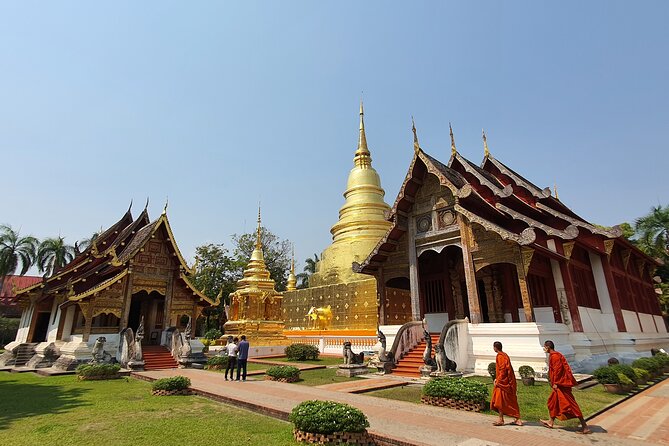
This tour starts at 9:00 am, and pickup is offered. That matters more than it sounds. Early in the day, traffic and finding parking can eat time. Being picked up keeps your schedule intact and helps you arrive before the heat and crowds build.
Even better, the tour runs in the rainy season (May to October). That doesn’t mean it’s a dry-day fantasy. It means you should bring an umbrella or raincoat and accept that you’ll still walk around temple grounds. The route is designed to keep the day moving.
For the temples, there’s a straightforward dress rule: shoulders and knees must be covered. You can wear sandals or flip-flops. That’s a relief if you travel light. My practical tip: bring a light layer for your shoulders and something that reaches your knees, even if it’s warm. It’ll save you from awkward outfit fixes on the spot.
Wat Phra Singh: Chiang Mai’s Sacred Buddha and the Songkran Story
At Wat Phra Singh, you’re looking at one of the city’s most sacred Chiang Saen-style Buddha images. This stop is short, but it’s a strong anchor for the whole tour because it connects the temple to a living calendar tradition.
The big detail to keep in mind: during Songkran (April 13–15), this image is carried in a procession around town. Locals bathe it with scented water for good luck, based on traditional belief. Even if you’re not there in April, it helps you understand why the place feels important to people beyond tourists. Temples here aren’t just scenic spots; they’re part of community life.
Time-wise, you’ll have about 30 minutes. That’s enough to take in the main features and get oriented, but not enough to fully wander every corner. If you love photographing ornate details, arrive ready to focus on the Buddha area and the temple’s defining structures rather than chasing every small shrine.
Wat Chedi Luang Varavihara: The Massive Chedi That Dominates the Area
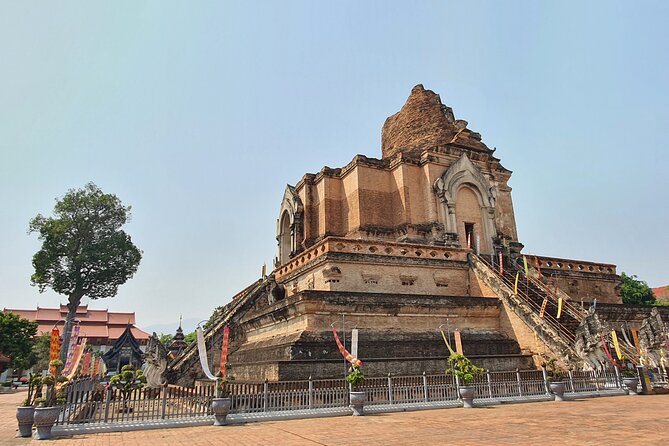
Wat Chedi Luang Varavihara is one of those places where you don’t need a guide to understand it’s important—the massive chedi dominates the grounds. This stop is also about 30 minutes, so you’ll likely spend your time looking up, walking around for the best angles, and capturing the structure at different perspectives.
It’s also listed as having admission included, which is a small but real convenience. When you don’t have to sort out ticketing here and there, you can spend your energy actually looking.
The drawback of short stops shows up again: you won’t have time for long, quiet contemplation. If you prefer to sit and absorb, you might want to return later. But for what this tour is—efficient temple highlights—Wat Chedi Luang delivers the kind of landmark moment you remember long after the morning ends.
Wat Phantao: A Teakwood Ordination Hall Worth the Quick Stop
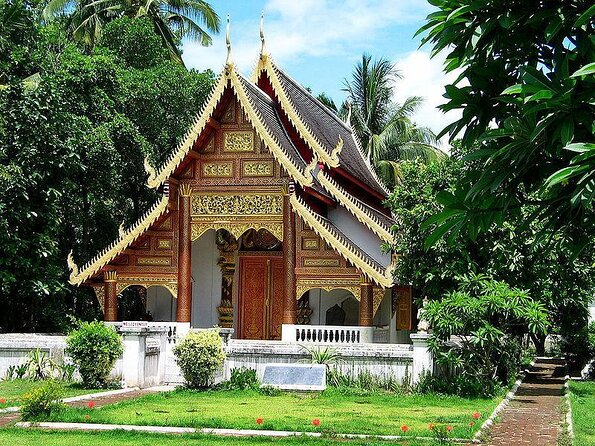
Wat Phantao is famous for its exquisite Lanna-style ordination hall (wihan) made of teakwood. That’s a big deal because it’s not just decorative. Teakwood changes the feel of a space—warmer, sturdier, and visually rich in a way that stone-only temples can’t always match.
You’ll have about 10 minutes here. That’s quick, but the place’s key feature is the kind you can’t fully appreciate from a distance. So when you arrive, plan to do one thing well: focus on the ordination hall itself and the craftsmanship around it. Think of it like a gallery stop, not a park stroll.
Admission at this stop is free, so this is one of the easiest “yes” moments in the whole circuit. If you’re the type who likes woodwork or architectural details, this brief window is still a good payoff.


Wat Chiang Man: Elephant-Shaped Buttresses and the Oldest Temple Vibe
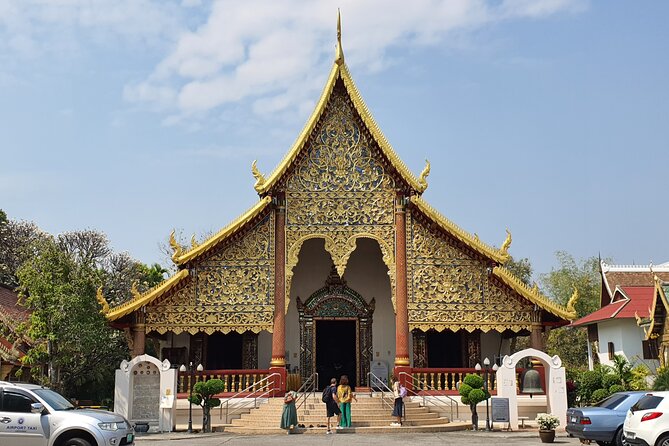
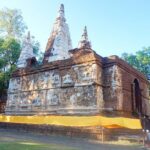
Wat Chiang Man is noted as the oldest temple in Chiang Mai town, which gives it a different mood from the newer-looking sites you might visit later. The headline detail is the Lanna-style chedi supported by rows of elephant-shaped buttresses.
Those elephant buttresses are what you should chase with your camera. They create a repeating pattern, so you can walk a bit and find new angles without getting lost. It’s also a good place to remind yourself how temple design here blends symbolic meaning with structural support.
You’ll get about 20 minutes, and the admission is free. That works well for Wat Chiang Man because it isn’t just one object. You can take in the chedi, scan around for details on the supporting shapes, and still move on before your legs get cranky.
Wat Lok Molee: Stucco Patterns and Lanna Pagoda Beauty
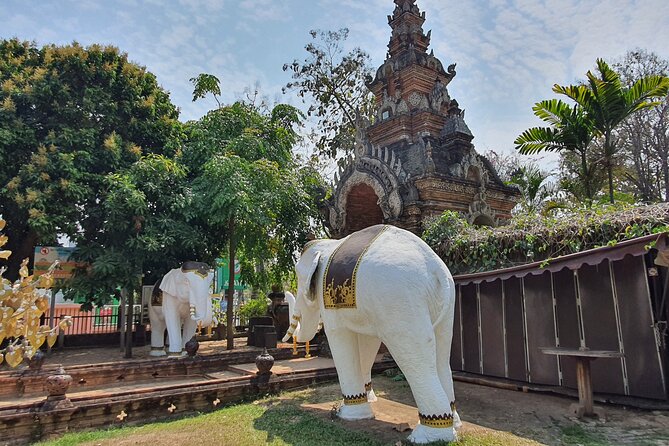
At Wat Lok Molee, the key appeal is art in the details—especially the pagoda and stucco pattern. If you’ve ever looked at a temple from far away and thought, I’m not sure what I’m supposed to notice, this is a great counterexample. The design here helps your eyes learn what to look for.
This stop is around 15 minutes, which is short enough that you’ll want to focus rather than wander. Look for the stucco textures and how the patterns wrap the forms. If your guide points out specific design features, follow that direction. Otherwise, it’s easy to spend the whole time admiring the overall shape and miss the craftsmanship that makes it special.
Admission is free here too, which means you can keep your budget in check while still hitting a distinctly styled temple.
Wat Suan Dok: White Chedis and the Flower-Garden Meaning
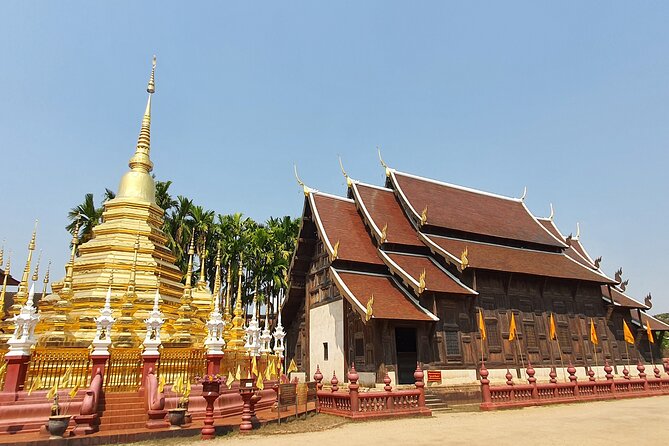
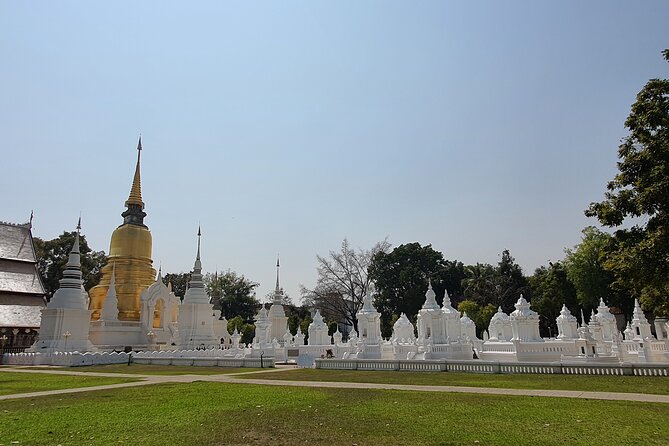
Wat Suan Dok is known for its large number of white chedis or pagodas. The name literally means flower garden temple, and the area was once used as a Royal flower garden by the ruler of Chiang Mai. That background matters because it explains why the space feels designed rather than purely religious in layout.
You’ll have about 20 minutes for this stop. The practical move is to scan the chedis in clusters, then slow down for a moment to see how the color contrast works against the surrounding temple grounds. White chedis can look uniform until you start noticing small differences in shape and placement.
Also, since this is one of the most visually distinctive stops on the route, it’s a great place for photos—without turning into a photo frenzy. Admission is free, which makes this feel like real value: you’re paying mainly for the ride and guidance, not extra entry costs.
Wat Phrathat Doi Kham: The 17-Meter Buddha and Hilltop Views
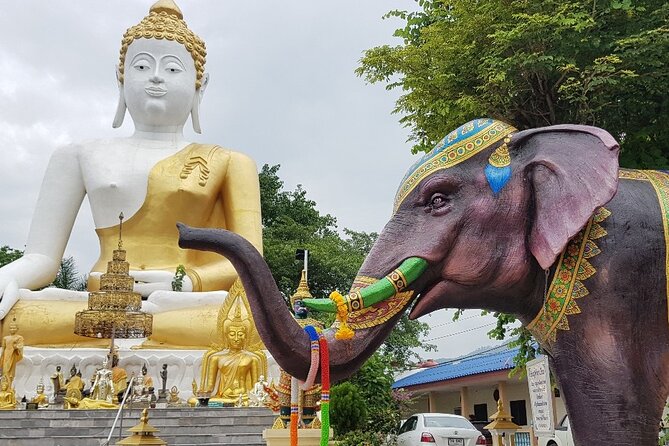
This is the most scenic-feeling stop. Wat Phrathat Doi Kham means Temple of the Golden Mountain, and it sits on Doi Kham hill, surrounded by mountainous landscapes. The standout feature is an enormous seated Buddha image displaying the mudra known as Calling the Earth to witness.
The statue is 17 meters high, and it’s visible from miles away. That scale changes how you approach the site. When you see it from a distance, your brain already starts framing what the climb or walk should reveal. Then, once you’re near enough, it becomes a full landmark you can’t ignore.
You’ll get about 40 minutes here, which is notably longer than most of the other stops. That’s smart. A hilltop visit tends to need extra time for viewpoint angles, walking, and just taking it in. Admission is listed as free, so you’re getting a big, memorable payoff without the cost of entry.
If the weather is clear, this is where your day might shift from temple-hopping into pure scenery watching.
Value for Money: What You’re Really Paying For
At $93.71 per person for roughly four hours, you’re not just paying for access to temples. You’re paying for three things that usually cost time (and sometimes patience) on your own:
First, route planning. Chiang Mai has over 300 Buddhist temples, and the question quickly becomes which ones are worth it. This tour handles the selection and order so you don’t waste energy second-guessing.
Second, you’re paying for transportation stress relief. Pickup offered plus driver logistics means you skip the back-and-forth of arranging multiple rides. The tour is also private to your group, so you’re not stuck waiting around for a mixed-schedule crowd.
Third, you’re paying for time with context. A guide helps you translate what you see: what kind of Buddha image is there, why Songkran matters at Wat Phra Singh, what the teakwood ordination hall represents, and how to read the architecture clues. In past runs, guides like Faan have been praised for giving lots of explanations and taking photos for the group, which is exactly the kind of small service that makes a short tour feel complete.
If you’re only in Chiang Mai briefly, this is one of those days where paying for coordination can actually be the cheaper move overall, because you avoid extra transportation costs and reduce the risk of arriving at the wrong time or missing key details.
Who This Tour Suits Best (And Who Might Want More Time)
This tour is ideal if you want a confident temple overview without over-planning. It’s also a strong choice for first-timers who are excited but not sure where to start. The group format and private nature make it easier to keep your day moving while still getting the guide’s attention.
You might want a different plan if you’re the type who needs long, quiet temple time. With stops ranging from 10 to 40 minutes, you’ll hit highlights, but you won’t do a full “soak in one temple” experience. Also, during rain, the pace stays brisk—so you’ll need to stay flexible and prepared to walk in wet conditions.
For families and mixed ages, the route can work because the stops are guided and time-boxed. For photo lovers, it can work well too, especially at Wat Chedi Luang and the Doi Kham Buddha, where scale gives you strong composition even in a short window.
Should You Book This Half-Day Temple Circuit?
Book it if you want seven iconic temples in one morning, with pickup, a guide who points out what matters, and minimal ticket hassle. This is the kind of tour that helps you get your bearings fast, then decide which temple deserves your next hour on your own.
Skip it or plan extra time if you crave slow wandering and deep temple immersion. This isn’t built for that. It’s built for efficiency plus good context.
If you can dress for the temples easily and you’re okay with a steady pace, you’ll likely feel like the day “paid off” quickly.
FAQ
How long is the Mastering Chiang Mai Temples in Halfday tour?
It runs for about 4 hours.
What time does the tour start?
The start time is 9:00 am.
How many temples are included?
You visit 7 temples during the half-day route.
Is pickup included?
Pickup is offered.
Are temple admission fees included?
Admission is listed as included for Wat Chedi Luang, and the other listed stops show free admission.
Does the tour operate during the rainy season?
Yes. From May to October, it runs even on rainy days. Bring an umbrella or raincoat.